



 Newsletter
 Search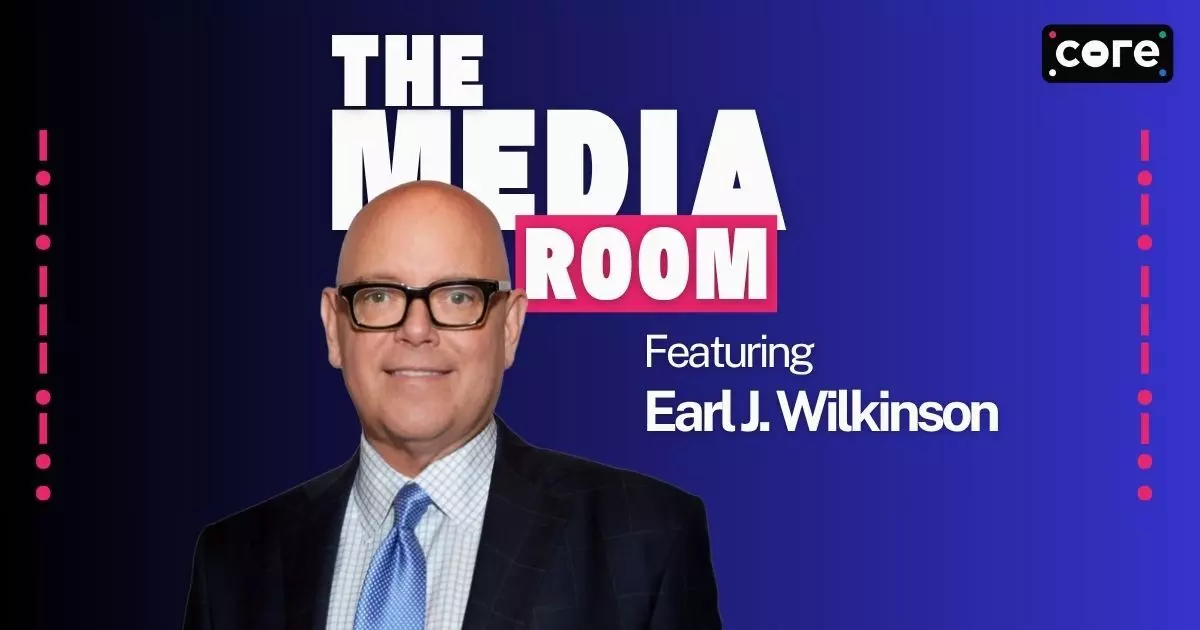
Can AI Save The News Business? Earl J. Wilkinson Explains
- Podcasts
- Published on 9 Sept 2026 10:00 PM IST

Earl J. Wilkinson on how news publishers are rebuilding digital businesses, diversifying revenue and adapting to AI
Can AI save the news business? INMA CEO Earl Wilkinson joins Vanita Kohli-Khandekar on The Media Room to discuss AI in journalism, digital subscriptions and why getting readers to pay remains a challenge for Indian news publishers.
When news is available everywhere, what makes journalism worth paying for? And can artificial intelligence help publishers build a sustainable business?
In this episode of The Media Room from The Core, Earl Wilkinson, Executive Director and CEO of the International News Media Association, explores how the news business is being reinvented as print economics give way to digital media.
He explains why India’s inexpensive newspapers make digital subscriptions harder to sell, why blanket paywalls may not work and why publishers need to look beyond copying The New York Times.
Yet Wilkinson sees reasons for optimism. AI could help newsrooms analyse vast amounts of information and develop journalism they previously lacked the resources to produce. The opportunity extends beyond cutting costs to creating something readers value.
In this conversation
* How AI is changing journalism and newsroom jobs
* Why digital subscriptions and paywalls need a different approach in India
* What makes readers willing to pay for news
* Why global news brands can grow while local newspapers struggle
* How events, e-commerce and reader revenue support media businesses
* AI copyright and the debate over paying publishers for their content
* Why adapting to technology requires a change in newsroom culture
Drawing on examples from India and international markets, Wilkinson examines what the news business needs to become commercially sustainable and where AI could make a difference.
What would make you pay for news? Tell us in the comments.
Subscribe to The Core for more conversations on business, media, technology and the forces shaping India and the world.
#AI #FutureOfJournalism #TheMediaRoom
NOTE: This transcript is done by a machine. Human eyes have gone through the script but there might still be errors in some of the text, so please refer to the audio in case you need to clarify any part. If you want to get in touch regarding any feedback, you can drop us a message on feedback@thecore.in.
—
TRANSCRIPT
Vanita Kohli-Khandekar: Hello and welcome to the media room. Today I have a guest who has a vantage view of the world's news media business. Earl Wilkinson is the executive director and CEO for the International News Media Association.
I've heard Earl speak at various forums in India and I've seen some of the work Inma does and I just wanted to plug into that and to what Earl has observed on where the news media business is headed especially given the challenges that it faces currently. Hello Earl, welcome to the media room.
Earl J. Wilkinson: Good morning and good afternoon.
Vanita Kohli-Khandekar: Good morning. Earl, okay it's a very basic question but you have to help my viewers to understand what shape is the news media business in today? If I was to ask you to succinctly tell me.
Earl J. Wilkinson: You know if we were starting from scratch I would say that we are building foundations for what I hope is going to be a lucrative next decade. If you say to me how are we compared to 20 and 30 and 40 years ago I'd say boy it's a real challenge. You know I was I've been doing this for 36 years and man I mean 30 years ago we're pulling down 30 percent profit margins.
The hardest decision we have to make every day is whether to tee off at golf at 7 a.m. or 7 30 a.m. and today you know we wake up and we're just constantly reinventing the digital economics of who and what we are. It's night and day in terms of the challenges of our industry.
Vanita Kohli-Khandekar: If this is the base we are starting at and we're looking at an exciting 10 years what is it that you see and which is the challenge then? If the challenges are not the challenges they were 30 years ago what are they today?
Earl J. Wilkinson: I'd say the long-term challenge is cultural and why do I say that? It's not the old newspaper culture issue. The issue is can we build a culture of people and an organisation that is going to constantly adapt to changing technology?
You know you organise around things that won't change and the speed of technology and the acceleration of the speed of technology simply won't change and I would say to you I certainly you know as long as I've been in the business you know when I first entered the newspaper business it was assumed that I took over from a guy who had been there 30 years and I'd be there for 30 years and today if I hire you let's say in 2025 you've got a totally different job in 2026. Can we retrain our workforces for that level of change?
That's to me the big challenge in the next five years.
Vanita Kohli-Khandekar: You know you look and you interact with news organisations from across the world and is it fair to say that these are largely newspaper and print media organisations because Inma started as a more as a print sort of thing. Is that fair to say?
Earl J. Wilkinson: That's fair to say you know it's interesting we changed our name we dropped the word newspaper but it's a cool story you'll like this. It was about 20 years ago and it was kind of accidental and it was at a board meeting but it wasn't news media people reimagining Inma it was newspaper guys saying we're not newspapers anymore and so I think that these legacy newspapers are a little slow to fully understand that they are not newspapers anymore. Secondly one of the big challenges not challenges opportunities of Inma these days is we are seeing a massive influx of broadcasters, magazines, digital news natives just this year.
CNN, Sky News, The Economist, what in the world are they seeing in us? You know I just think that all of these genres are smashing together right now. I suspect that you saying legacy newspaper or God forbid politically correct heritage newspapers these days is going to be among the last time we talk about this.
I think by 2030 we're just all going to be news media companies.
Vanita Kohli-Khandekar: Which is as it should be but I think the biggest element of change that has happened in the land this is something I wanted to ask you in Delhi when we met last month. The biggest change that has happened is of course the internet and then of course various levels of evolution of the internet itself you know and right now it is social media and AI going forward but one of the things it does is if the newspaper was a platform in the earlier days or if the television was a platform or a website was a platform now it is a technology companies which own the platforms which is the algorithm which determines what we see how much we see and that's fine that's the way of the world but it has also created a whole lot of and this is I am using a lot of the data from the RISJ and a whole lot of the other stuff that I read it has created silos and ghettos and that has led to more and more sort of what political analysts call polarisation but it is a natural evolution of things you know there are people who believe in one thing and who keep reading the same thing or watching the same thing or hearing the same thing you know those when you talk about the cultural changes within organisations the cultural changes outside the sociological changes outside how much of an impact do they have I mean how how really important is it to put the business and the texture of it globally and how do you tackle it and are there stories you're seeing from across the world because you you travel to Germany all over the US I've seen various in mass conferences so when you see stories which are the stories you see which are good stories coming out on how news media is tackling the challenges and this the shape the shape of you know you lose in India for example if I was to say there is one set of consumers for ex-political ideology and there's another set of and I'm sure that's true for the US and there'll be some little it's as if there are silos and there are an entire news ecosystem only serving that silo which is not the case earlier how do you tackle it sorry this is multiple questions and things being thrown at you well if what you're
Earl J. Wilkinson: saying is you know we've gone 30 years ago from a mass market you know one to many deal with it uh heaven forbid in some of the Hindi language markets you have a hundred editions uh etc and that was about as personalised as we get correct I don't necessarily I think it's just the path that we're going to navigate in the next few years I think that what we are seeing is somewhat the weakening of serendipity uh yes it is the diet um some somewhat the the dilution of a single voice I don't think that's necessarily bad I mean the truth is that relative to personalisation you make it sound like we we got there we're not there yet I mean I think that I think that a lot of these companies shipped it for example in the United States at our world congress a couple of years ago they lamented the fact that they have probably invested more in personalisation over the past decade than any other media company and they're nowhere close to being where they want to be in personalisation so I think that personalisation has had an effect I don't think it is quite created the ghettos that you're talking about okay not yet but it's well on its way I don't know I don't know about that no I mean I would I would I would hesitate to jump into the lines of 5,000 newsrooms and and say to you that 5,000 newsrooms have shut off uh serendipity and replaced with personalisation no I think that we're somewhere on a spectrum um and it's infinitely
Vanita Kohli-Khandekar: more complicated uh than than that one or zero okay let me put it this way what are some of the best examples you can think of and share with us here on news companies which are thriving in this
Earl J. Wilkinson: new uh ecosystem the easy ones are the ones that is the low-hanging fruit are the ones who as national news brands they were just stifled by print they were just I mean the New York Times was just bursting to get out of the United States the Guardian was bursting to get out of the United States the UK newspapers South China Morning Post bursting to get out of that that little uh inlet in Hong Kong uh to be uh China mainland China's portal onto the world so those who were able to easily develop a second face uh i.e you know I mean the New York Times is an interesting one it was a law it was a very smart local newspaper for New York until 1996 its CEO its owner basically said no we're gonna go national so they broke out of that shell and then the internet broke them out of that shell uh allowing them to to truly go global so the easy answer is that those companies that were able to develop a second face whether it is chasing a diaspora uh in India or whether it's chasing a high-end demographic English language readers around the world like New York Times and the Guardian uh I mean those have been the big short-term winners and going forward you know I I have talked with a number of our members about the strategy and the you know I'm from a small town in East Texas okay community newspaper there's no way they will ever develop a second face okay and and I guess those are the tough ones the tough ones are the locals they are what they are you know in the print world their denominator you know were the number of addressable number of addresses physical addresses in a local market and the digital world doesn't get them much beyond that those are the ones I think I'm most concerned about uh because the economics of digital obviously are not as lucrative as the economics
Vanita Kohli-Khandekar: of print okay um any quick comment on the India market what do you observe you made that some of those comments on at the in my conference last month but I'd like you to so I have a very
Earl J. Wilkinson: peculiar history you know I'm are you by chance are you an aunt just out of curiosity do you have nieces or nephews yes yes here's the thing with nieces and nephews you have no actual responsibility but you show up from time to time and you see them growing or evolving etc well I'm the I'm Uncle Earl for India I'm Uncle Earl and I show up for once or twice a year and I see god this this kid is groaning this kid has evolved wow I just can't believe this the India of when I first started travelling in India in 2004 you know you know digital was you know a funny thing that the west did and you know we sort of evolved after the pandemic India is as evolved in digital as their western counterparts even if the market itself is not quite there yet you know I I spent some time with the CEO of HT recently and he's sitting in a room of westerners and you know they're all digitally evolved and he said now wait a minute I've got two million circulation you know I mean so there you still have I think print that needs to be managed with intention the idea that print is going to be the dominant platform in 10-20 years is just not going to happen so the question is what do you do with it do you maximise it do you harvest it is it the capital bridge to a digital future I certainly think that India's western counterparts wish they could have played that over again 20 years ago so I would say you know digitally evolved especially on the advertising front especially on the revenue diversification front and I think on the digital subscription front where I think even the Indians still I think they're sceptical about it but what I'm seeing is in India because of the inexpensive nature of print premiumizing digital is a really hard transition so what I'm seeing is the smart ones other than the business newspapers that's actually the easiest transition you know I mean if I read a cute story in the times of India um that's not worth a lot but if I read something in business standard that might make me a million dollars that's a different level of content so you can charge for that I think what what the general interest newspapers are doing in India that I think are very interesting and could be a model for other similar markets around the world is that they are taking the instead of putting a dumb paywall around everything that they do they're slicing up their audience in their market and premiumizing you know coming out with products for that sliver high-end business information is an example so I think that paywalls do have a role in India I just don't think it's a a big dumb paywall that you're seeing in the west just throw your throw your wall around all your content that's just not going to work in India but does it work in the west I mean the
Vanita Kohli-Khandekar: examples you mentioned the Guardian Economist FT um I mean those are the those are the only ones maybe New York Times though I haven't seen newspapers put entire um repositories are everything behind a paywall and which are the newspapers which are because there's always that leakage of revenue which happens when you go from um the printed product to the online product and
Earl J. Wilkinson: how do you bridge that in India I'm talking hold on hold on hold on you got it except here's the thing okay kill the bridge if if this is all about getting us from here to there man if I've learned anything in 30 years of doing this that's painful it's awful you don't want to do it you just kind of want to wind this down okay and then create this over here it's the only way to do it if it's all if if success is only defined by how much revenue you poured over from your print business model it's not a good story anyway did I just say that more interesting is simply if you can recreate something in digital and there are lots of examples of that there are good examples in Europe there's good examples in Asia Pacific there are good examples in in certainly North America so yeah and they don't all have to be the New York Times I think but I think that companies and I'll pick on India I think if if I ask an Indian publisher at Times of India HT Hindu they're going to say oh but we're not the New York Times or let's compare it to the New York Times don't compare it to the New York Times compare it to the Dallas Morning News compare it to uh Frankfurt or Algamina compare it to uh Afton I just think okay as much as I love the New York Times and I love the Guardian those stories are not necessarily replicable or applicable to the average so but but again my point is if it's about this bridge oh god that's a that's a terrible story if it's about recreating the essence of what we're doing the brand the soul etc and monetising it and being willing and able to accept five percent margins ten percent margins instead of thirty percent margins over here that's the universe and by the way the owners that don't want that are exiting the business
Vanita Kohli-Khandekar: oh they're the ones selling out to private equity and to wherever they find a buyer or they're
Earl J. Wilkinson: shutting down their businesses you know back in the day when we would talk about the margins and what was it in 2020 the average profit margin of an American publicly traded newspaper was 24% you know they put people in jail for that you know I mean those are high profit margins right so I mean you go to your local grocer and you're more likely you know three percent margins are good five percent margins are good only in the news industry
Vanita Kohli-Khandekar: you know it's 10% just suicidal broadcasting to earlier not now cable cable and satellite had those kind of margins no but you know I'm just picking up the thread from here from what you said have you seen companies morph into what is needed in their markets you know I keep hearing from from in my keep hearing about skip stead and I keep hearing about several other companies but have you seen a complete of wholesome robust model emerge from any of the markets that in my
Earl J. Wilkinson: tracks observes and interacts with I mean there's successes everywhere I was just after before this India trip I was just in Kenya and Nigeria and you know it's a it's a tough those are tough markets they too have not really built subscription businesses but they have built robust event businesses that represent as much as 40% of their revenue so I mean there are lots of ways to skin this cat you know we're again we're locked into a print universe of 30% margins and anything short of that is failure and I'm just saying there's a lot of value creation coming from events e-commerce you know what did I what did I say to my friends in in Kenya and Nigeria I say the same thing to you which is at some point readers have to pay at some point you have to recreate the value of news and the value of journalism it's not it may not be all profitable but the idea of one penny here and one penny there that worked that worked in a print universe where the advertisers were paying the bills but the advertisers aren't going to be paying the bills like that anymore so how do you move you know news has essentially moved from scarcity to abundance correct okay guys and and you can't build a business on abundance so what is it that that is still scarce that you can pay for this journalism with what is and what are people
Vanita Kohli-Khandekar: discovering I find news media companies morphing into whether it's shopping whether it is events and and in India also there's nothing wrong with it but the core which drives it is is your ability to do good journalism or to gather news I think that is the centre of the ring
Earl J. Wilkinson: I don't think that is the centre of the monetization necessarily okay the western markets have figured out a way to I mean I've seen examples where they're generating enough digital subscriptions to pay for their newsrooms therefore everything they develop around news and around journalism is the margin of profitability to me that's the dream okay okay in your market you're not generating enough reader revenue for literally anything you're not generating enough reader revenue even in print to dispose of the print so I mean I mean there is a there is a a 10-year horizon I think in India from a promotional perspective uh collectively uh the the broadcasters the newspapers the magazines you've got you've got to change the value proposition of news right now in India the average person you know the average person five years ago 10 years ago was getting canvassed right knocks on doors getting you know offered newspapers they were taking three or four newspapers per household now they weren't reading those three or four newspapers but they were taking them because they were just cheap and they don't have any value except for the advertising okay that's got to change um your counterparts in the west have spent the last 20 years trying to recalibrate this so it's not unique to India but the starting gun is is different and in in I'd say North America and Europe that starting gun started around 2007 2008 and they've only gotten to this point now where they can charge a premium almost 20 years later now compare that to the context and the timeline of India in India of
Vanita Kohli-Khandekar: course the the oft-repeated thing that I always hear from publishers is that home delivery gives us a huge edge and that's why newspaper circulation does not fall that quickly and um the the appetite to pay for not just news media but for any media is very low but then I turn to entertainment streaming where you have 270 million subscribers now in India but in news you have less but people won't pay oh people won't pay so so so hey you're making my point it's wonderful yeah um well you know my big but it's probably the biggest question and probably second last on my list is on AI what are you seeing across the world how are companies tackling it tackling it in the sense how are they internalising it whether it's on the business side whether it's a you discussed it briefly at the Inma conference but I want you to bring your insights to this one here well we were
Earl J. Wilkinson: you know Inma was probably the first out of the gate saying you know it's about efficiency effectiveness and productivity it's going to take about three years it has taken about three years and I think that storyline played out what I feel that we're at now and maybe I'm an optimist but I find that companies are we just did a CEO roundtable in Vail Colorado this last week so my brain is full of AI and what they're thinking I think that a lot of CEOs think that AI is now taking us into the art of the possible into things that we never imagined we could do whether it's journalistically commercially etc um I mean here for example the ability to drop you know this you know this what is this latest uh version of Claude called Fable 5 this just incredible thing infinitely further along than where we were one year ago and you can drop it you can drop the AI across oh I don't know let me let's just make up a million words of journalism and they can distil that that would literally we couldn't have enough human we couldn't employ enough human beings to achieve that task but AI allows us to get into that space that is value creation beyond anything we could have imagined six months ago or 12 months ago so I mean call me an optimist I kind of went through the effectiveness efficiency and productivity states oh these CEOs they're just they're going to cut our budgets and they're going to move this from humans to AI and I think that the commodity side of the business has gone that way but now then AI is getting us into some value creation crevices that we never imagined I'm getting excited for the next year can you give me an example here on both the commodity side the big the biggest example for me personally is that ability to take wide-ranging information and make sense of it put it into some kind of context you know you don't have enough human beings even in India you don't have enough human beings to distil and read all that content bring it together come up with meaning and this AI can now do this in what 10 minutes 15 minutes I mean that's an entire new category of journalism at least from my vantage point I give that as just one example but I'm I'm I'm amazed and I think we're going to see more stories like that in the next year as opposed to oh we're going to cut 200 people you know because AI allows this you may still have those stories but I think there's going to be more positive stories than negative stories
Vanita Kohli-Khandekar: but are you seeing jobs uh being slashed in the U.S. especially with AI are you seeing
Earl J. Wilkinson: happened but it's not happening in massive you know the massive quantities it's five here and it's 10 there I mean I'm you know you need a you need a an organisation um you know to sort of quantify what that looks like across 12 months but I it's not anything I mean my local newspaper which is right down the street from me here in downtown Dallas um I mean they're not they're not laying off people because of AI at this point you know on the AI question and this is something
Vanita Kohli-Khandekar: I ask everybody who's in the business how what is where does in mind you stand on the whole copyright issue I know two uh U.S. judgments have been against uh publishers um your your copyright office has also come out and said this is go say beyond fair use uh of protocols the usage of um whether it is journalistic sources books research resources so ultimately this learning based on what humans have created but without being adequately acknowledged or paid for
Earl J. Wilkinson: where does it must stand on that I don't know if it must stands I think that we are trying to inform our members of what is happening internationally certainly we've been the in connecting the dots on um the content rights settlements uh ranging from Australia to Canada to Germany um you know even a couple of the efforts in India and South Africa I think you know one of the things that we have seen over time is that uh you know seven or eight years ago it was fascinating to me that if you were in India you had mostly no clue what was happening in Australia we simply connected the dots and introduced the Indians to the Australians and said listen you guys need to talk and that's also where it's happening at the regulatory front I I I think the the you know the the case that I think is actually the two bullets that are most interesting are the anthropic settlement 1.5 billion dollar settlement with the book industry okay it was a settlement not a judgement but it at least put a price tag on content that's you know you got to start somewhere the second bullet really is um what the New York Times is doing with with some of these tech platforms uh they have chose a litigation over partnership uh and I think in the next certainly the next year uh there's going to be a settlement and like the book industry settlement I think it's going to set the bar set the parameters for what's going to happen next uh in terms of content rights
Vanita Kohli-Khandekar: because when it was at the search remember in search also about five or ten years ago there was a lot of thing that you guys are using our content and driving your search businesses but it was the big companies which got a payout a lot of the medium and the small scale companies were left out of the all the deals and is that something that you know is there a fear that I know in India we're still at early stages case is still going on blah blah blah but meanwhile the AI engines are still consuming huge amounts of data and regurgitating it so I'm just well I think I think
Earl J. Wilkinson: I agree it's kissing cousins of the same issue so 10 years ago 20 years ago uh do the tech platforms have the right to harvest our content in an encapsulated way and sell advertising against it I think you know obviously publishers said no the platform said yes and the legal settlements were ambiguous at best now as it comes to harvesting all of our content using it for training purposes I think there's a lot of support across the spectrum including some of the platforms that yeah okay now that goes a little far the question just is what's the number is anthropic uh 1.5 million a billion with the book industry the floor or is whatever the New York Times going to do uh and their lawsuit going to be the floor find the floor and then build upwards very
Vanita Kohli-Khandekar: interesting very interesting which are your um okay last question and this is one of those trivia questions which are your top three markets favourite markets I don't know if you'll get flack
Earl J. Wilkinson: from someone who name but I make well for history India has to be there um just my my my odd history in India having gone for 22 years at least 50 times in the market I mean I used to go three times a year as we were building uh the Inma community uh in India so I have this you know it's a cute story I would go from Calcutta this is long time ago Calcutta to uh Delhi to Mumbai and then I'd go down to Kerala now from an American perspective I'm just going to India I don't understand that there's 40 Indias and so I'm going to Kerala and they're saying Earl Mr. American tell me what's happening in the Hindi belt you're asking an American what what sort of what sort of uh system are we dealing with here so for those emotional reasons um I I like that I also uh lately have uh been responding positively to the German market uh and I'll tell you why the German market is you know I mean you you can I can I can tell you good American jokes good Indian jokes good German joke the good German joke was just you know very conservative very inward looking and I'd say in about the last six seven eight years Germany just exploded Germany just suddenly said you know what we can't find our answers with looking at each other we're going to have to look outward and they started using Inma to do that and for that reason you know we've got probably as many members in Germany uh I think the most members in Germany versus any other country except the United States right now so it's kind of fun to see their journey of connecting with the rest of the world and creating value building cash uh that that's that's the market that I'm
Vanita Kohli-Khandekar: really looking forward to seeing the next five years super lovely thank you so much Earl for your time and for talking to us in the media room thank you thank you


