



 Newsletter
 Search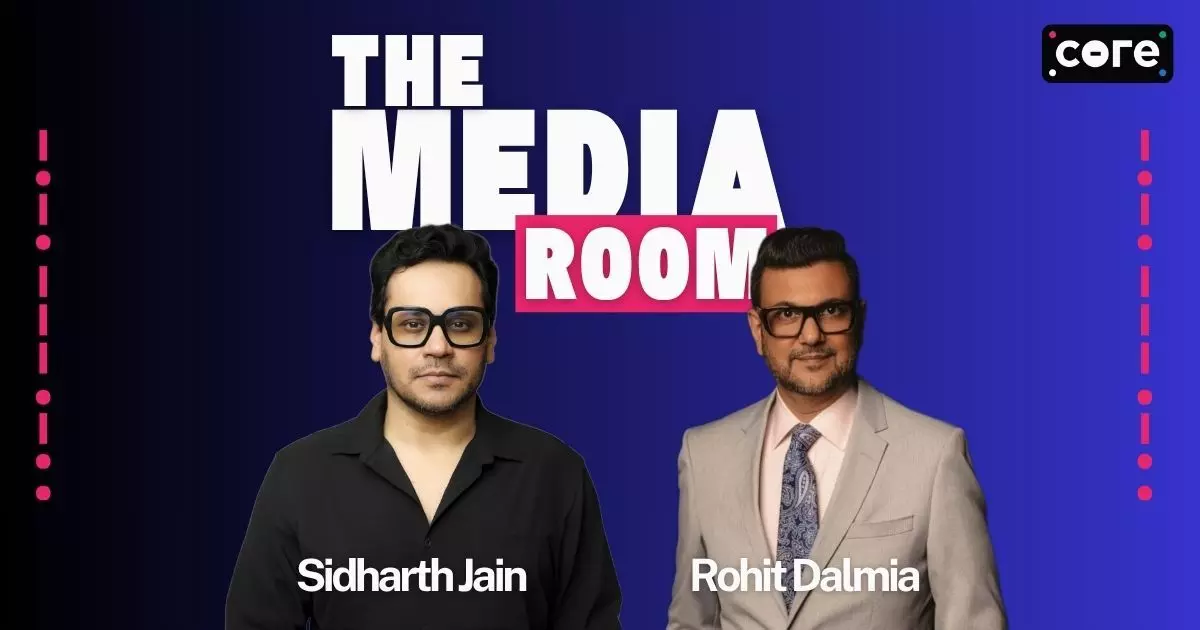
Are Indian Films the Next Big Alternative Investment?
- Podcasts
- Published on 15 July 2026 5:30 PM IST

Rohit Dalmia and Sidharth Jain on building film funds, managing risk and investing in content.
Are Indian films the next big alternative investment? In this episode of The Media Room, Vanita Kohli-Khandekar speaks with Sidharth Jain, founder of Film Money Global, and Rohit Dalmia, founder of CineNow, about how new film funds are trying to turn Indian films into a structured investment opportunity for institutional investors, hedge funds, HNIs, and global capital.
The conversation explores the rise of film financing in India, the economics of the Indian film industry, and whether films can become a credible alternative investment asset. Film Money Global plans to finance genre films through international SPVs, while CineNow is building a ₹1,300 crore fund focused on capital, technology, IP monetisation, tokenisation, and structured exits.
Can Indian films deliver predictable returns despite uncertain box office outcomes? Can tokenisation solve the problem of investor exits? And can film IP, theatrical revenues, streaming rights, and franchise potential be packaged like other financial assets?
The discussion also covers film budgets, genre cinema, regional films, theatrical-first release strategies, investor confidence, intellectual property rights, portfolio diversification, data-led decision-making, and the challenge of deploying large pools of capital into the Indian movie business.
For business leaders, investors, consultants, media professionals, filmmakers, and anyone tracking India’s media and entertainment economy, this episode offers a rare look at how finance and technology could reshape Indian film financing.
Watch the full conversation to understand whether Indian films can truly emerge as the next big alternative investment.
#IndianFilms #AlternativeInvestment #FilmFinancing #IndianFilmIndustry #TheCore
NOTE: This transcript is done by a machine. Human eyes have gone through the script but there might still be errors in some of the text, so please refer to the audio in case you need to clarify any part. If you want to get in touch regarding any feedback, you can drop us a message on feedback@thecore.in.
—
TRANSCRIPT
Vanita Kohli-Khandekar:
Hello and welcome to the media room. Two new film funds have come into the market. One is Film Money Global, which is run by Siddharth Jain.
And it has a structure and a model which is completely different from the other, which is Cine Now. The big thing about both these film funds is they are not, they're pure financial investments. They're going to be making pure financial investments into film.
This is not normal. This hasn't happened in the Indian movie business before. There's been private equity investment.
There's been strategic investment. If you remember a couple of years back, Aadhaar Poonawalla invested in Karan Johar's company or Universal bought a stake in Farhan Akhtar's Excel Entertainment. Various deals have happened.
But for pure financial investment to come into the film business is an unusual thing. And that is why I sat down with Siddharth Jain and Rohit Dalmia, the two men, running these two different funds to have a chat. Hi Siddharth, welcome to the media room.
Sidharth Jain: Hi, Vanita, good to be here.
Vanita Kohli-Khandekar: Thank you. Take my listeners quickly through what Film Money Global is attempting to do. How is it?
Sidharth Jain: Yeah, so Film Money Global is a series of international SPVs. They're all housed outside India. And these are all of sizes between 5 to 10 million dollars.
And they are basically focused on financing genre films in India as equity money. And, you know, basically taking them to the theatrical first window in the least possible cost. So it's a series of these funds, and they will all be between US, UK, UAE jurisdiction, and will be run by Film Money Global as the manager of those SPVs.
Vanita Kohli-Khandekar: Rohit, do you want to take us through what CineNow is doing, how it is structured and what it is looking to do in the Indian film business? Quick overview for my listeners.
Rohit Dalmia: Sure. So CineNow is basically an offshore fund we set up in BBI about a year ago. The journey itself is three years in the making.
And the idea was, again, very similar to what Sid said. We do see a capital deficit in the industry. And honestly, for us, it is sort of an opportunistic move.
Because if we are able to bring in institutional capital to an industry that needs it, keeping in mind that the returns are quite favourable, you know, we do hear a lot that, you know, movies have made a loss or stuff like that. But in a macro level, or on a long term level, it is a profitable and a viable industry. The reason capital hasn't flowed in the past, in our opinion, is because of lack of transparency.
It's quite unstructured. So we're coming in from a capital and tech standpoint, in order to be sort of the backbone and the platform on which the industry can thrive. That's essentially what CineNow is here to do.
So it's mostly, yes, there are a few HNIs, but it's more focused towards hedge funds. And we are looking at investors from the Middle East, from the UK and the US.
Vanita Kohli-Khandekar: Okay. And how are you looking at funding? I mean, you'd mentioned the token system and Leon on IP, if you could just take my viewers through that.
Rohit Dalmia: So we have a two prong approach. One, we are going to be working with production houses. At the same time, we also want to work with independent filmmakers or independent producers.
The idea, it's sort of, it's similar to a studio model with one key difference, that we don't actually own the IP. You know, in a typical studio setting, you have a 50-50 sharing of the IP or whatever the negotiations might lead to. We keep a lean on the IP, because we're not interest based.
And we don't take business equity, we're profit sharing. So for example, if you're an independent film producer, and you want to make a film, and your budget is, let's say, 10 crores. First thing is that we advance the entire 10 crores.
It can only be single funding. It cannot be, you know, we don't take any partners or the producer cannot onboard any investors. So that's step one.
Step two, IP is, we usually like to get in at the script stage, so that we can control the aggregation of IP over a period of time. Now, every time, you know, so let's say the producer signs up for a script, he attaches the talent, he gets a director on board, all this starts forming the IP packaging. And we take a first ranking lean on the IP, up until the point that the principal and the profits have been repaid back to us.
So in a nutshell, the unique proposition is, if the movie made a loss at the box, you know, it includes, of course, the box office and the SDM rights. If the film made a loss on a COP basis, that loss is ours. Because we are doing significant due diligence on the creative side, as well as on the commercial side, to green light a project.
So it's not a sort of a handloan, or a relationship based finance, it's very structured and is very governed. So we given the investment on set milestones that we agree with the with the production, with the producer or the production house. And once that's done, again, if there is a loss, it's our loss.
But in that scenario, the IP comes to us, because it is a loss making.
Vanita Kohli-Khandekar: That was my point to you, actually, Rohit, that if you have a lean on the IP, till you've recovered your money in the agreed for profit, then you in effect, you own the IP, right? So how is it that you do not own the IP? Because that producer cannot try to monetise that IP anywhere else, because you, it seems like an Eros kind of situation.
I don't know.
Rohit Dalmia: It's not necessary. So think of it this way, we are we are participating in the first round of monetization, right? So it includes your theatre.
So we are theatre first, by the way. We don't want to go pre sell the rights to the OTTs or music rights for that matter. So now think of a scenario here where you have a producer, he has a good script, he needs the support, he needs the mechanisms, he needs the structure, the discipline, we provide that.
If there is a loss, of course, that IP loses value anyways. So for us, it's sort of a residual exit, because our fund is six years. So at the end of six years, we can't have any assets on board.
We can't continue, you know, exploiting the IP beyond that period.
Vanita Kohli-Khandekar: So that IP reverts back to the producer?
Rohit Dalmia: No, so if it is a loss making and the IP is with us, then we have the option to liquidate it in the open market. But of course, we give the first right of refusal to the producer who has that IP. If there is a profit scenario, if there is a profit scenario, and we finish the first round of monetization, the IP is completely that of the producers, he can go make a prequel sequel, he can do whatever he wants with it.
So we're not here to own the IP ecosystem, please understand, we're not coming as a business house. We're coming as an ecosystem. Our job is capital and tech.
The IP lien is only for our protection. It's not for our single exploitation.
Vanita Kohli-Khandekar: No, no, I understand that. Yeah. But my point is that having that lien till the money come, all the money has profits come in is like owning the IP.
Rohit Dalmia: It is indirect control over the IP. It is true that in order to monetise, the producer needs an NOC from us, doesn't matter which avenue he has. But that's where the advantage is when we have a basket of films, we feel that we can monetise it better than what an independent production house a producer can do.
Because keep in mind that we want to do theatre first. Even if I go to a likes of Netflix or Amazon or whatever, I'm not pitching them single stories, I'm pitching them a pipeline for six years. And the valuation they have to give me is on that IP valuation during the production.
So I don't have to pre-sell it to them. I can come back after theatre and say, OK, let's make a deal. But now I have these many releases left.
So the timing of monetization is most important to us. Are we going to monetise it on the fifth film, 20th film, 30th film? We don't know yet.
But we are going to monetise it as a basket when we feel that the total slate value is justifiable. So they're not going to sort of get away by signing a pre-deal with us. They will have to pay a premium on it.
So the idea is, at what point do we derive that value?
Vanita Kohli-Khandekar: Interesting. I'll come back to this deal and getting more value out of it. Siddharth, your structure is different.
You're looking at individual SPVs. And sorry, for my viewers, SPVs are special purpose vehicles and HNIs are high net worth individuals. So you're looking at different SPVs.
But are you looking at genre centric? You and I had talked about this. Are you looking at genre centric?
And how is it different? I mean, what is a little more detailing on this?
Sidharth Jain: So we are slightly different in our approach. One is, our SPVs will own 100% of the IP of everything that we fund. We will share the upside with the producing partners.
But the IP will be owned by the fund. We are a very genre focused company. So we are very focused on the maths of the budget.
My protection is the budget. And number two is the genre, which are largely under 30 audience globally. So we're very focused on that bit, not the whole spectrum.
So we will have, like our SPVs have a term of five years. And investors have an option to exit after three years. We are obviously, because you know, we'll take a higher risk, because we are not backing big projects, which are big film stars.
The entire risk is on the SPVs 100% financing. Again, it's a it's a theatre first model. But the whole franchise popping is our business plan, actually.
And if you do a slate of 10, if you do a slate of 10, if one film pops, like in a large way, breaks out, then that franchise gives the return to the entire slate of the SPV. So we are playing, you know, outsized returns on like the portfolio management approach of small caps. So that's the approach, but the IP will be owned by the SPV.
That's the I think the key difference in this.
Vanita Kohli-Khandekar: And what does Story Inc, I mean, your previous role of getting books to being adapted into stories, what does that bring into this particular fund?
Sidharth Jain: Yeah, so it brings in two things, right. So we've been supplying stories to the industry since 2018. And I've been developing since 20 years, as you know.
So I think what you're bringing in is understanding of the material source or the pipeline, which goes to producers. So what, you know, our SPVs will do is actually, in most cases, connect the production house with the right story as well. You know, I mean, because I feel that has been the missing link in the business.
In the last two years, the business is declining. And the star system has collapsed because the budgets are not right. And the I think the filmmakers, the choice of content that they're choosing consistently has going wrong, because they're not in sync with what the audience really wants to consume.
The shift in audience consumption pace is permanent after COVID. It's not temporary. And you know, our filmmakers are not realising that because 50 60 year old want to write scripts and make films for the younger audience.
And I think there is the disconnect. And I would give an example of say films like Obsession, where if you keep your maths right, and you keep your creator profile, right, we're just curating the pipeline also as a financer. I don't want to pick from what comes to us, we want to make sure that we're helping the producer produce the right films for us.
So there is a slight more involvement in the slate creatively. But you know, I would say not in terms of producing it. The producer will have a free hand in packaging the film that they want to make.
Vanita Kohli-Khandekar: So you're financing the producer, but if helping them make the right choice, you help them make the choice. You know, I had, I just did a today, the pieces appear I did on how the marketing of Mai Wapas Aunga got it totally wrong. And you know, India's worth etc.
But it's a question I've asked every senior guy in the business. And, you know, you mentioned both of you have talked about choosing projects. I think research is such a big hole in this business.
You know, so you have box office number research happening or some sampling, which gets you box office, you have a rent rack, etc. But that loop of a period's database on what is working in cities, plugging into a studio, so that the studio also, it's like a dashboard. Nobody has that dashboard of what is working in theatres, in pockets, etc.
Which you get in television. I don't know if both of you have ever worked in television.
Rohit Dalmia: You get it, Nielsen ratings.
Vanita Kohli-Khandekar: Yeah, a rating, not necessarily just ratings, just even quality feedback. I think that loop, that feedback loop is completely incomplete. I've asked this of theatre owners.
I've asked this of studio heads. I've never got a satisfactory answer. And you're talking about marrying projects to finance.
How do you do that? And theatrical first. So, is research somewhere a percentage of your budget?
Because I don't see that in any fund, whether it's private equity or studio. So, I'm just curious. Is that there somewhere?
Sorry, long winded question to ask you that.
Sidharth Jain: Sid, go ahead. Okay. So, my answer is no.
Because, you know, there is no way research can tell me that, that we should make a paranormal activity obsessional or Argini MS. Right. So, you know, I'm not in favour of research. I'm completely in favour of instinct.
And that is very important. Instinct, right.
Vanita Kohli-Khandekar: Sid, Sid, Sid. No, I'm not talking about research for making. I'm talking about research for mapping how best to monetise.
Yeah, but see, I don't see, I'm not.
Sidharth Jain: Yeah, but I'll tell you something in my experience of all these years. If something connects with the audience, the audience and the, you know, they figure it out. The challenge has never been all the other things.
The challenge always is the audience is not interested in the content. And if they're interested, they'll figure it out. Look obsession started with, I think, 1 crore in India and ended to crossing 100 crores.
It doesn't matter. What matters is, do you have the right product for the right audience? I think that is the key.
And I'll give you like one example of my approach, you know, this specifically with the fund is, you know, when you enter a theme park, there are some people who will rush for the roller coaster, no matter how the roller coaster is, what is the design and there are some who are not right. But I'm talking about the ones who go to the roller coaster first are going for a certain experience. They don't care whether it has four loops or six loops is the car red, green, yellow, it does not matter.
That is the horror film genre. You know, when I created Ragini MS 15 years ago to the one profile, right? I created and produced that film for Balaji the first Ragini MS in which he launched Rajkumar Rao was a new actor.
And that franchise has become really profitable for Balaji. Now they're making the fourth instalment or whatever they're making, right? There was no, it only happened because we followed the formula.
I feel when you have to scale up, you know, film financing, you have to be agnostic of talent in a certain way, up to a certain point in the formula has to work like a Mills and Boone book. It just works. It has a formula.
So I, you know, I'm leaning towards a formula of the craft of filmmaking, then the talent, who is the hero should not matter, who is the director, it doesn't matter if you've got the formula, right? Because, you know, I've spent 20 years on the formula side. So you know, that's what I am bringing to the table.
So my approach will be slightly different, you know, instinct is instinct is how do you fill the formula? See, the incident comes in, how do you fill the form? If you look at Blumhouse, what do they have?
They have a formula? No, no, no, let's study. It's the best case example.
If you look at Japanese horror, you look at Korean horror, Thai horror, Indonesian horror, horror is popping around the world, along with America, because they have figured the formula works, the maths works, instinct helps you fill in the details. Instinct will help you pick the right filmmakers. That's what you have to do.
The right filmmaker, not the star filmmakers. That's my little view on this.
Vanita Kohli-Khandekar: Rohit, any point of view here on the research bit?
Rohit Dalmia: So one, I think, I think Sid put it very well. Appreciate that I have to talk less on this. You see, we, you know, one, we work backwards.
I actually disagree that there is not enough research out there. It's the question is, who has, who has cumulated that data over a period of time? Yes, more data is available about the box office, but trust me, there are significant data points that are there with the big force whom we have hired for benchmarking services.
And these data points allow us to sort of do a probability analysis. There is no formula that can tell you yes or no success or failure. It's not binary, but they do, they do give us a sense of probability.
Now, when I say we work backwards, what do I mean by that? We, every time we look at a script, we're actually looking at it off the release window. So we, for us, it's understanding when we're going to release it, keeping in mind that we're not worried about the OTTs or the SDM rights or whatever.
We're only worried about the theatre side of things. So let's say there's a movie that's going to go on the floor in the The benchmark study that we get is what are the other potential releases at that time? There is always a risk factor, right?
You can have, you know, a national risk. You could have, you know, a Dhurandar popping out of nowhere. You know, there are, there are elements of risk, but the only logical way for us to do it is to work backwards.
Yes, everything is important. The director, the cast, the script, but most important is what's your release window and what's happening around that release window. And that's, that reflects in the risk analysis that we, that we look at.
But I, but believe me when I say this, there are data points available in the market. They're very, very expensive to get, but it's sort of, you know, that's an investment for us so that we don't necessarily make the mistakes and lose big money.
Vanita Kohli-Khandekar: You know, this is something I always wonder about. How much science can you bring to this? It's a, it's a creative, subjective, inherently risky thing to do, whether it's writing a book, creating a piece of music, it's art at the end of it.
This is a performing art that you put. So it is, it, there is a, it's genetically coded to be subjective and it's, so how much science can you bring? And I know we can look at Hollywood and say, talk about the science that has been brought into it, but how much science can come into the whole process of making the film or funding the film?
Rohit Dalmia: So if you do a comparative, for example, you mentioned Hollywood, see at the end of the day, let's look at films as a product. Let's not over glorify it. When you have a, you know, there are millions of products available on Amazon, there is always the situation whether someone's going to buy it or not.
The people behind that product have done the engineering, they've done the research they can. And then in the end, they have to take a punt whether the, the customers are going to buy it or not. The similar thing works in the film industry.
In Hollywood, for example, it's sort of become an assembly line. It is a manufacturing system. Films keep getting produced.
Films keep getting released. Their USP is not the production side. It is not necessarily the scripts side.
It is the distribution side. They have mastered the art of global distribution and marketing, right? And that's where the franchises come from.
So is there a science? I think there is. Even, you can't make creative into a science because then it would defeat the whole purpose, right?
So there is a science on the systems that you implement on how you're going to take it from the floor all the way to monetization. So it's not a, it's a system. You can follow that system, have a higher probability of success, but that's the best you can do.
Yes. In the future, we want to increase the distribution. We want to support rural cinemas.
We want, we have very good connections with taking our productions digital. Those are sort of the backend distribution plans that we have. So I don't, I wouldn't go after science.
I would go, is there a system? And, and yes, there is a system.
Vanita Kohli-Khandekar: Okay. So, you know, one of the things which, when we did that piece last week on film funds, which I did, a lot of the questions which came up on that LinkedIn page were about indies, smaller filmmakers. Would you think of an SPV for indies?
Because then the scale is even smaller than your million pound or million dollar thingy. Could be. And to Rohit, I would ask how are you, I know you have indies baked into your business plan, but first Sid, if you can tell me about.
Sidharth Jain: Indies is a way little like ahead in terms of a plan. I've got very two baskets to focus on. One is genres.
One, and indies is difficult because, you know, I want to make genres with experienced producers because it's very important to, you know, make it right and distribute like Rohit said. The other basket that you will eventually look at, I think is prestige, because a lot of investors, sometimes their passion comes from prestige cinema. You want to be associated with certain kind of cinema that travels, that gets a little more recognition.
Like say my trial by fire, it's less commercial, it's more prestige drama. So I'm focussing on two baskets. Only one is if you want to make money, then you go for genres, which are called printing money, you know, gambles.
And the other is prestige. In between, I think for me, it's not, you know, extremely important right now to focus on.
Vanita Kohli-Khandekar: Rohit, you want to take the indie question? Because a lot of the questions on the.
Rohit Dalmia: So for us, OK, it's what we are commercial first. The investors expect an ROI. We can't necessarily compromise on that.
But there are two things that are happening. One, when there is an independent filmmaker, let's say he's less experienced. We can't necessarily invest in him because he doesn't have a pedigree, he doesn't have a profile, he doesn't have a track record.
What we want to do is link him up with the studio. So we're not supporting him directly, but we're supporting him indirectly. That's step one.
Vanita Kohli-Khandekar: OK.
Rohit Dalmia: Step two, it's a little premature for me to go into detail, but we do plan to take a smaller fund where you can have, you know, films that are more artistic, films that are more festival based, more on the indie style of festival. I don't have a lot of details as to the percentage of that, but because we are sort of a recurring ecosystem, we do want to build that in because it's not a one off thing. Right.
Today, it's one fund. Tomorrow will be a duplication of 100 funds. So we don't want to create that pool.
But like Sid said, it is commercial first at the end of the day. So are we going to look at supporting them? The answer is yes.
How and when? They also have to have some flexibility, right? There's a lot of there's a lot of ego that comes with creative.
And the idea is, you know, it's my script. I want to do it. It should be my name, etc., etc. They have to somewhere understand that there is a certain they have to meet halfway between the creative side and the commercial side in order for this to work. So good things are coming. It's just a little too premature to talk about it.
Vanita Kohli-Khandekar: Sid, Rohit, both of you, have you signed on any projects, any films in the pipeline? What stage of the fund is the fund at? Sid, you take that first.
Sidharth Jain: So we are closing the financing, the paperwork, all of that. Like I said, I'm not very. Yes.
And we already started work on the second one because they're geographically also in different countries. You know, for me, it's not like about the project as much as, you know, tying up with the right producers. So we'll go the production house route and then we'll see what we can pick from the slates that fit the parameters of the fund.
So I'm not really focused on it. I mean, I live in the world of stories. I get 100 pitches a month.
So I mean, I have a huge database of projects and scripts and stories. So that is not at all the, you know, that's not the block. The block is capital as you start flowing.
Vanita Kohli-Khandekar: Rohit, any projects identified?
Rohit Dalmia: So for us, our timeline is very similar to that of Sid's. We're closing the fund by the end of July and we're going to start looking. So we have an investment committee format.
It's unfortunately, I don't make all the decisions. So we've got the... You said, unfortunately.
Well, because I like Sid's position where he can talk about instinct. He can talk about, you know, see, there is a good and bad side to everything, right? So on an individual level, I'm sort of jealous.
But from a commercial standpoint, yeah, we do have an investment committee of seven members. We've got five of them locked in. Two of them were onboarding at the end of this month.
And all our investments go, decisions are made by the investment committee. So it is a structured format. And we've already got a lot of scripts because, you know, when the word gets out, everybody wants to be the first one to send you your scripts because we've seen some very interesting scripts.
But there are no commitments because it's all going to happen in the month of August. So August to December for us is locking in the slate of 30 plus films that are going to go on the floor the next six years. And if it's locked in in August, they're funded in September.
If it's funded in September, it's on the floor in October. So August to December is a time period when we'll be getting a lot more scripts, we'll be making a lot of announcements. And then, you know, a lot of films will even go into pre-production and possibly on the floor.
So we do have a...
Vanita Kohli-Khandekar: On the floor won't be possible, I think, by October because some production would take a lot of time.
Rohit Dalmia: We also do regional cinemas, right? So regional cinemas is sort of a three crore budget, a five crore budget. And they are very quick turnaround formats.
So those are the ones that could possibly go on the floor in the next 90 days. But August is the month where we're actually evaluating the scripts. And I'm, you know, so that it is sort of a four-month window for us, August to December.
Vanita Kohli-Khandekar: What are the typical issues coming up now as the fund closes and as you start looking at projects? What are the typical issues coming up? Have you had to tweak strategy, tweak anything?
What's happening there?
Rohit Dalmia: For us, I think the bigger challenges we're having, we're starting to see the deployment of 1300 crores is not an easy job. Yes, there is an abundance of scripts. Not every script deserves the finance.
Not every filmmaker can qualify. A lot of the scripts have, you know, multiple, I don't know, encumbrances on them. Rights is a big issue.
We're working with two very big law firms in India and the UAE to sort of, you know, understand how the rights is actually going to work. We are seeing a big challenge on how to deploy this money. And that's why we've taken 60% committed capital until now.
And we sort of put the 40% on hold. Because keep in mind...
Vanita Kohli-Khandekar: Of the 1300 crore, you've taken only 60%.
Rohit Dalmia: We have the 40 ready, but we haven't taken it yet. Because the biggest cost of a fund, an active fund per se, is non-utilisation of that money. If that money sits idle, it's actually eating into your profits.
So we are having challenges. You know, it's not a matter of, tomorrow if I want to fund a 500 crore film, I can deploy the money. I can finish my 1300 crores in a week.
But given the sort of diversification we want to do, the sort of safety measures we want to have, we are seeing a challenge on how to deploy this money. And it's not as easy as one would think. So that, I think, is a problem, but it's a good problem.
Happy problem. Happy problem.
Vanita Kohli-Khandekar: Lot of money, not enough place to spend it. I'd love to have that problem when I'm shopping. Sid?
Sidharth Jain: Yeah, you know, I would echo exactly what he's saying. Because at every level, the problem, challenge has been deployment. And I think that has been the whole issue of Hindi film, the Hindi film business.
You know, at this point, I'm not looking at regional, but you know, regional is, I think, where you have better quality of projects to probably pick from. I think in Hindi, you know, my friends, filmmakers, producers do not like it. But the challenge is, we just don't, we're just terrible at making bad films.
And it's so consistent at making bad films, that the challenge for deployment is always going to be what to finance and how to say no creatively in different ways. And you know, I think this because you're in the business of saying no's, it's going to be really challenging. I'm already stressed about where are the projects.
And like you said, if we take the money, and we're sitting on idle money, it's a problem. So this is going to be a huge problem.
Vanita Kohli-Khandekar: But Sid, you told me that the easy part is matching the project to the production.
Sidharth Jain: Instinctive, that is what I'm saying. Still, the challenges of your filmmakers, your producers, they're not, they're not, they don't listen. They don't want to make something for the market.
You know, like I always say, there are two ways, there are two kinds of filmmakers. One is he says, you know, I want to tell this story. And the other is, you know, I think the audience would love this story.
And therein lies the difference between, you know, commercial cinema.
Vanita Kohli-Khandekar: Instinct, a filmmaker's instinct, it's like a writer writes something based on instinct. He's not writing because...
Sidharth Jain: No, I disagree. I disagree. My model is not that.
So if I'll ask you a question, so like, for example, and I made a horror film Ragini, who's the director and the writer? You wouldn't know. It doesn't matter.
If I'll ask you who's the director of the world's most profitable franchise paranormal activity, you can't tell me the name. Hmm. That's that is the way where you make money, where you can only start hinging on big names, and their instincts of filmmakers and writers and actors.
Vanita Kohli-Khandekar: No, not just names. I mean, why would it be? I'm saying a good story doesn't have to have a name.
Sidharth Jain: Good stories do not make successful films. I completely disagree. This is an outsider's content view.
A good story may not be the best film for the audience to watch and experience. Obsession is not the best story.
Vanita Kohli-Khandekar: There can be many good stories. There are many good stories.
Sidharth Jain: Good stories can also work.
Vanita Kohli-Khandekar: And what is good for you maybe could not be good for audience.
Sidharth Jain: Absolutely. Absolutely right. Absolutely right.
Vanita Kohli-Khandekar: There are different audiences also.
Sidharth Jain: I agree on that. But I'm saying still deployment, given all these resources that we have, deployment still, I think is the biggest challenge for capital. If you have to give a return to our investors, if I'm saying that.
For studios which want valuation, it's different. But if you want to give a real cash return to your investors in three years and five years and seven years, deployment will be the biggest challenge.
Vanita Kohli-Khandekar: You know, I said last question, but I want to ask you this, both of you. We've had private equity. See, we've had a, you know, this, we had studios, then we had all kinds of nonsensical capital.
Plus, we had Mr. Shetty, Manmohan Shetty coming in, financing a whole parallel cinema movement. We had NFDC in the 80s. We had a very dodgy capital also coming in at times.
But I think since the early 2000s, things have sort of got a little better. You know, you can raise debt. Some private equity guys have come in.
People have tried to do various forms of financing. The studios came and left. But my point is, is there some particular reason by pure financial investment?
We've had private equity investors. We've had studios coming in and investing. Disney came in, but they were broadcasters who came in and invested.
And studios happened to be ancillary to the investments they were making, whether it's Fox or Disney or anybody. I have not seen a pure financial fund, so to say, pure financial investor at this scale. You're talking about 10 SPVs each with anywhere from 5 to 10 million dollars each.
You're talking about about 1,350 crore of rupees at this scale. Is there a reason a pure financial investor has not come in? Is there something here in the history that one should watch out for?
I'm just curious about, you know, has it? I'm sure it struck you. Not has it.
Has it struck you that it's all been private equity or, you know, Aadhar Konawala comes and picks up equity or, you know, that Universal comes, Saregama is put in money. So that kind of investment, strategic investment.
Sidharth Jain: I can go first. I've got a short answer. See, the challenge is in the film business, unlike the TV business, you know, the predictability of outcome is always fantastical.
So because of lack of predictability, it becomes difficult for large structured capital to take big bets. Secondly, exits. You know, all the examples who've got private equity so far are companies which have a very strong likelihood of getting listed.
But most production houses do not have the history and scale to get listed. So the exits become difficult. And then the third case is the transparency issue that has always been dog-eat-dog industry.
So I think because of these three reasons, the large structured capital at large always finds it very, very difficult to get consensus from their boards to really take large bets. But I think if we get successful exits from at least two of these investments on IPO listing, if we show more history of transparency, if, you know, all the investors invest in these funds, see their capital, you know, actually making cash profits, I think this will change. But this needs a few things to work in the next two to three years.
Vanita Kohli-Khandekar: Rohit, do you want to take that?
Rohit Dalmia: I agree with Sid. It's all about the exit. Big capital will only come in when they see a systematic, structured, disciplined exit.
And that's where we face the same challenge. But that's why we brought in tokenization. For us, tokenization is the liquidity mechanism for the institutional investors before a film is released.
So see, neither Sid nor I are changing the industry or rewiring it. Or removing the risk. What we're both trying to do with structure is distribute the risk.
So that one financier or one party doesn't have to take a binary decision. Either I'm going to make a lot of money or I'm going to lose all my money. So tokenization is what attracted the institutional investors that we have onboarded.
Because they see it, they're happy to support the creative risk or the creation of the IP. But they don't want to take a punt on the films. The token holders, on the other hand, don't want to take a creative risk because they want everything served on a plate.
The script's ready. The actors are locked in. The directors are there.
It's gone on pre-production. But they're happy to take a chance on whether the film's going to do well or not. It's the same way that you operate in a share market.
You don't buy the shares because of knowledge of the industry or the dividends that you get. You do it for the speculative side of things. So there is no difference between a token and a share.
And like Sid rightly said, for us, it is sort of an easier way of going IPO with a basket of scripts through the route of tokenization. And that's where the bigger finance institutions fail because either they don't have an exit or IPO is not going to come easily. So I think the idea is correct.
It's just that we somehow, with the background that we have, manage to marry capital with technology and based on that, get the confidence of the investors that they will walk away with money irrespective of whether the film performs or doesn't perform at a box office.
Vanita Kohli-Khandekar: It's interesting. I'd like to see these funds roll out, actually, because before I ask more questions, we're bursting with questions. But the point is, you cannot answer them till I see some films on the floors.
And I'm assuming if your fund is successful or this, you will have another round of fundraising.
Rohit Dalmia: Yeah, the whole idea of setting up a fund, I'm sure it's the same for Sid, is to create, I wouldn't say a pilot, but to create a structure that is repeatable. So if he's got 10 SPBs in the line and he's got investors lined up, he's going to do 100 SPBs tomorrow. If we have one fund, we're going to do multiple funds.
We're already talking to a sovereign country that wants to put in $500 million. Of course, we're not going to talk about it at this stage. But again, they've got to see proof of performance, not proof of concept.
They've got to see the system working. They're not bothered whether the films are performing or not. In a six-year trading window, if I can make 50 films, at the end of the day, I'm not going to walk away with a loss.
You know, it's how quickly you can recycle. That's the idea. That's the idea.
So it's similar to any trading business. Here, the product is a film. But again, like Siddharth Lee said, it's all about the exit.
The ones who can master the exit are the ones who can bring in the capital. That's all it is.
Vanita Kohli-Khandekar: But you know, there's an adage in the media business and not necessarily film. And film is part of the media and entertainment business. And I've seen this in 20 years of covering this sector.
Exit is the toughest part, even for private equity investors. You remember the Jagran buyout of Tariq Smithday? Tariq got a 2.5% share in Jagran at the end of it. So exit, you know, it's very few people are lucky. Ronnie Scruvalla, maybe at Disney, which got a superb exit when it sold to Fox. That was strategic investment, of course.
But my point is, exit is very tough in media businesses. Globally. It's not true for India alone.
Sidharth Jain: Exactly why we can exit slates. We can bundle IPs, sell those to people instead of selling companies. So that's why the approach to invest in slates and not production houses is purely for exit.
Also, I'd like to add one thing, which is interesting. I don't know if you noticed it, you know, Vanita. Sid Jain and Sid Roy Kapoor on the other side, Cine Now.
We both are the same school, same batch, same class for 10 years. Same division. Both Sids.
Which schools? GD Somani.
Vanita Kohli-Khandekar: I must tell my viewers that Siddharth Roy Kapur is on the advisory board for Cine Now. So that's amazing.
Sidharth Jain: Both the Sids from the same class, same batch, same school are helping get more money into the industry.
Rohit Dalmia: Sid, it's a very small world. It's a very small world.
Vanita Kohli-Khandekar: It's a 22,000 crore business at the end of the day. It's hardly a couple of billion dollars, maybe a little over a couple of billion dollars.
Rohit Dalmia: It's 2.2 billion.
Vanita Kohli-Khandekar: I think, yeah, it will be hit 5, 10, 15, 20 billion. You know, then we are talking. I mean, then, you know, you're talking about really, I think even 5 billion will be a good number to hit.
Rohit Dalmia: Well, as they say, inshallah.
Vanita Kohli-Khandekar: Hopefully, if it's big money coming from both of you, yeah, both of you guys, we should hit those numbers. Sid, you wanted to say something?
Sidharth Jain: No, I'm just saying that, you know, just to this point, I feel the response from investors generally has been very heartening. You know, for me, you know, after 20 years, I've, you know, I've always, it's always been difficult to get people to look at this business as an investment, as an alternate asset. And I think this year has been an amazingly amazing year for the change in mindset, the shift in looking at this in a positive way.
I'm not sure what are the reasons. It could be Durandar, I have no idea. But, you know, I just feel this year I've gotten the best response from potential investors on looking at this more favourably.
So, you know, I'm a little more optimistic. Yeah, exactly.
Vanita Kohli-Khandekar: Rohit, you had that experience when you're raising money that investors are more interested or less interested?
Rohit Dalmia: I think the profile of the investors is slightly different. I can definitely see that happening on Sid's side. From an institutional side, you know, a lot of these, the hedge funds we have from DIFC and ADGM haven't even seen Durandar.
They're not Indian. So it is, it's a difference in investor profile, I think. So we haven't actually seen that.
Vanita Kohli-Khandekar: Oh, so you have more NRI investors. Is that correct, Sid?
Sidharth Jain: Yeah, yeah, yeah. Mostly. 99%.
Vanita Kohli-Khandekar: So they have a feel for that particular cinema.
Sidharth Jain: Yes, absolutely.
Vanita Kohli-Khandekar: And yours is more sort of, is atheist in that sense, not wedded to that particular cinema.
Rohit Dalmia: Yeah. Look, when we pitched them, and I'm happy to say this, we didn't pitch them entertainment as glitz, glamour, performance. We pitched it to them as a product, as an industry that requires capital.
And as long as they get an early exit and a clear exit, they were happy to put money. We didn't have a lot of issues or convincing to do. The numbers speak loud and clear.
The industry does have a lot of good numbers to support it. It was really, we had a three deck slide. It's actually interesting.
We went backwards. We said, this is the team that's going to manage your money. This is the governance we have in place.
This is the money we're asking, minimum, maximum. And this is your exit. And that's it.
Three slides. Because everybody knows the business. It's not, you know, we've been fortunate that for the last 50 years, Bollywood has really travelled far, far and wide.
So people know the business. They've just never had an opportunity to invest in a systematic way.
Vanita Kohli-Khandekar: You know, it's funny. Both of you are talking about treating films as an investment class. And currently, there's this whole discussion about treating IPL as an investment class.
And maybe tomorrow, there will be one about Kabaddi. I don't know. But to create media properties or sports properties as an investment class, I know it happens in the US and in many developed countries.
But for it to happen in India, it is very heartening, I find. In the case of IPL and the team valuations, I worry about the valuations and, you know, up to the future investors getting an exit. But that's a problem for them to solve.
But this whole thing of creating asset classes out of what are intangibles in many ways. So that I find fascinating. So, yeah, sorry.
Rohit Dalmia: See, everything's a commodity. Everything is commodity. Only time something catches the attention and gets an investment is when it becomes a commodity.
Now, when the share system started or the bond market, whatever, it commoditised every industry. You're not trading the asset. You're not actually, you know, for example, if you buy a share, you're buying it into the usefulness of the assets that they have.
So why should it be any different? It's not rocket science. You know, I mean, IP is I think we have inflated the value in our own minds because at the end of the day, everything in this world is a commodity, whether it's food, whether it's companies, whether it's businesses, the minute they go public or they have, they take in capital either as a private equity or an IPO, they've actually commoditised their business anyways.
So why should IP be any different? In fact, IP is the one that's been left behind for reasons I may not know. I'm not an industry insider.
I think Sid is better at that. But I'm surprised that it is a big business. It's such a, you know, a visible business.
And it remains so unstructured. And, you know, it's just the economics are weird, to be very honest.
Vanita Kohli-Khandekar: There's history to that, that I can take you to some of the history on that. So I'm very protective about the film business in India. So there is history to it.
There is a lot. And I think it is one of the most resilient. It is the most non-Hollywood market in the world.
And we have no quotas like China. We have no import restrictions. Everything can come in.
But 90% of the Indian box office is Indian. So I think it is one of the most resilient industries in the world. And more importantly, it's evergreen.
To me, it doesn't matter. When you make 1900 films, quality will be up and down. Everything can't be a classic.
Rohit Dalmia: But, you know, if you're sad, you're going to watch a movie. If you're happy, you're going to watch a movie. If there's war, you're going to watch a movie.
If it rains, you're going to watch a movie. For every scenario of life, you're going to watch some content. You know, that's what it is.
Totally, totally.
Vanita Kohli-Khandekar: I so agree.
Sidharth Jain: I was just saying that, you know, I think tokenization of IP is the way to go. And also, you know, we've been exploring that, that, you know, with little SPVs and slates we'll have. Tokenization will actually help, I think, solve a few problems on the exit side.
On the IPL bit, you know, I just want to point this out that a lot of investors, HNIs, they actually told me that, you know, you should look at the potential of the IPL audience. And that's how they see the growth potential in the content business in India. If IPL can have that, you know, audience and viewership, you know, there is so much more, you know, room to grow.
So it is, you know, IPL does come up in a, you know, a lot of these conversations that I've been having.
Vanita Kohli-Khandekar: Yeah, because the team value, I think two teams have exchanged hands or equity has been sold.
Rohit Dalmia: I know RCB has.
Vanita Kohli-Khandekar: But lovely, this has been so good. I hope you guys go on to make many interesting, successful films and your investors get successful exits and loads of good luck. Because capital coming into this business is always good news.
Rohit Dalmia: Thank you, Vanita.
Vanita Kohli-Khandekar: Thank you.
Rohit Dalmia: Thank you so much.
Vanita Kohli-Khandekar: Thanks, Rohit. Thanks, Sid.
Rohit Dalmia: Thank you, guys. Bye-bye.


