



 Newsletter
 Search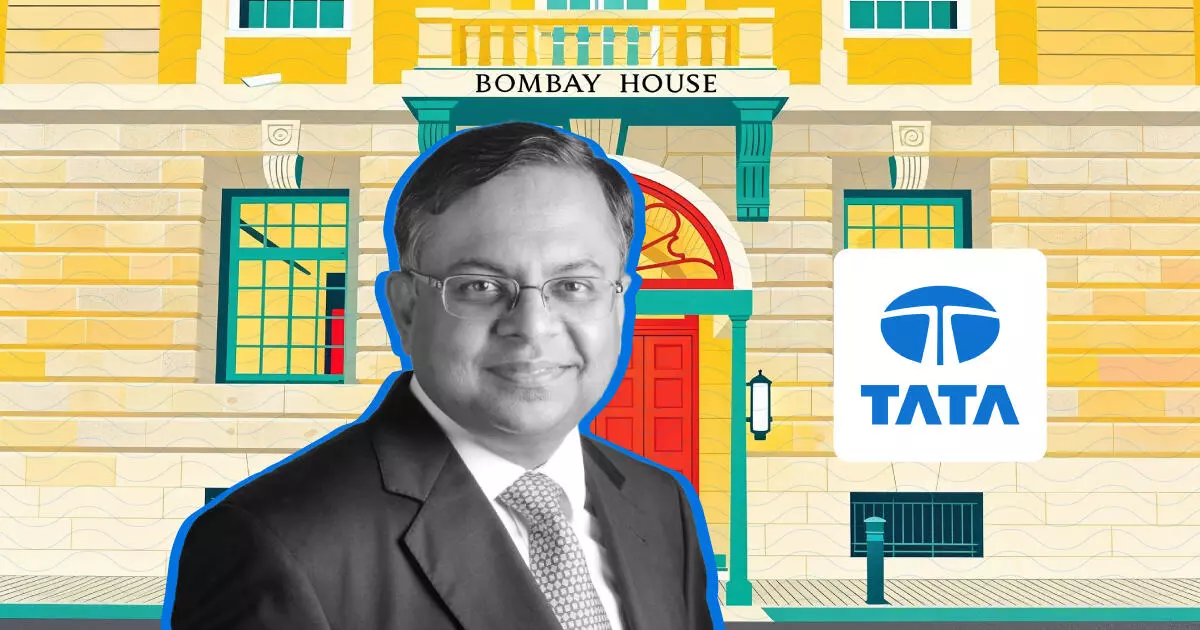
Tata Sons' Next Chair Faces A High-Stakes Balancing Act
- The Take
- Published on 17 Aug 2026 12:40 PM IST
As Chandrasekaran exits Tata Sons, his successor must choose between cautious cash preservation and bold bets on semiconductors, EVs, and defense.
When Natarajan Chandrasekaran steps down as Chairman of Tata Sons in February 2027, ending a decade-long tenure, his exit will trigger more than a routine boardroom succession.
It will force a referendum on the direction of Indian corporate capitalism.
The Chairman of Tata Sons does not merely oversee a holding company; he sits atop a sprawling industrial empire comprising more than two dozen publicly listed entities, from tech titan Tata Consultancy Services (TCS) to Tata Motors and Tata Steel, alongside volatile unlisted ventures like the recently reclaimed, but still struggling, Air India.
Moreover, in the nature of conglomerates, the ultimate accountability for strategic missteps or breakthroughs lands directly on the Tata Group chairman’s desk.
Though all Tata Group companies have empowered and seasoned CEOs and MD to run their businesses, as Chandrasekaran was when he ran TCS.
The Professional Steward Model
India’s commercial landscape has historically belonged to family-run dynasties.
But while families like the Ambanis and Adanis maintain active owner-manager control, the Tatas have attempted professional stewardship.
Though the possibility remains that a family scion, such as Noel Tata or one of his children, could mount a bid for the chair, modern precedent favors a professional drawn from the group’s executive ranks.
The role also demands a technocratic mindset capable of managing hard, physical infrastructure or manufacturing at scale.
Technocrats often come from engineering backgrounds and some of India’s big investments would likely, though not necessarily, be driven by such business leaders.
Reliance’s Mukesh Ambani is a chemical engineer by training from Mumbai’s UDCT.
Incidentally, Cyrus Mistry, Chandrasekaran’s predecessor and Ratan Tata’s successor was a civil engineer from the Imperial College, London.
It is another matter that Ratan Tata, an architect from Cornell University and Mistry, whose family owned a substantial stake in Tata Sons had a rather messy falling out.
Quarterly Returns Versus Long Bets
Under Chandrasekaran, a masters in computer applications from Trichy and who started his career with TCS, Tata aligned its balance sheet with New Delhi’s strategic industrial priorities, deploying capital into iPhone manufacturing and multi-billion-dollar semiconductor foundries.
Like its peers in energy and ports, the group recognised that long-term outperformance requires pairing private capital with national ambition.
The supreme test for Chandrasekaran’s successor will be managing the tension between Dalal Street’s demand for quarterly returns and the prolonged gestation periods of high-tech manufacturing, a point highlighted by veteran market analyst Deven Choksey in a conversation with this writer last week.
The easier path for any CEO is conservative cash preservation and margin optimisation.
But deciding whether to finance the next wave of data centers, semiconductor fabs, electric vehicle supply chains, and defense hardware, or whether to hold onto sentiment-driven money pits like Air India, requires a risk tolerance level higher than normal.
For all the recent challenges, India is still considered one of the most promising aviation markets in the world.
The Cost Of Caution
The stakes extend far beyond the walls of Bombay House.
If India’s private titans lose their nerve and retreat into defensive balance sheet management, the government will inevitably step into the breach with state-directed capital and industrial policy.
That outcome rarely bodes well for economic efficiency.
The next leader of Tata Sons must be more than a prudent manager of legacy assets; they must possess the vision to take the giant bets that keep private enterprise at the center of India’s economic future.
Core.
Core.


