



 Newsletter
 Search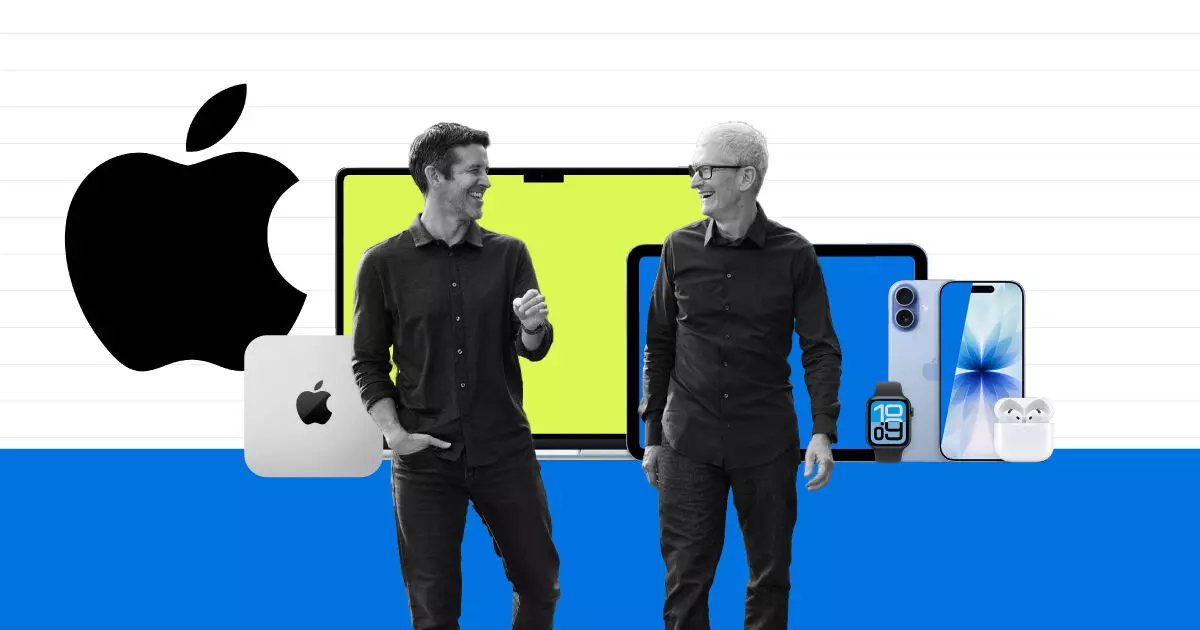
The John Ternus Pick Shows How Apple Sees The AI Era
Apple’s elevation of John Ternus is a powerful reminder to shareholders and boards everywhere. A company’s choice of CEO is a declaration of its strategic priorities.
When Apple announced John Ternus as the successor to Tim Cook on Monday, the tech world erupted into a highly predictable debate. Is a hardware guy the right person to lead the world's third most valuable company into the age of Artificial Intelligence?
The 51-year-old Ternus has spent 25 years at Apple — nearly half his life. He rose through the ranks to become Vice President of Hardware Engineering and then Senior VP in 2021.
When he officially takes the helm on September 1, with Cook transitioning to Executive Chairman, he will inherit an empire generating over $415 billion in annual revenue.
But Ternus is definitely not an artificial intelligence (AI) visionary or a software savant. And that is exactly what makes Apple’s choice so revealing — not just for Silicon Valley, but for corporate boards worldwide.
Tim Cook’s 15-year tenure will be remembered for its supply-chain mastery, lifting Apple’s market capitalisation by a staggering $3.6 trillion.
He oversaw the launch of the Apple Watch and AirPods, among others, massive successes, but also presided over the Vision Pro headset — a multi-billion-dollar flop — and a scrapped $10 billion autonomous car project.
The Internal Sceptic
In both failures, Ternus was reportedly the internal sceptic, with his instincts leaning toward caution and rigorous execution, a Bloomberg report said.
He has excelled at ensuring the relentless, high-quality annual iterations of the iPhone, iPad, and Mac.
Ternus’s most surprising and successful strategic departure was championing the $599 MacBook Neo, a budget laptop aimed at younger users that bucked Apple’s premium-only orthodoxy.
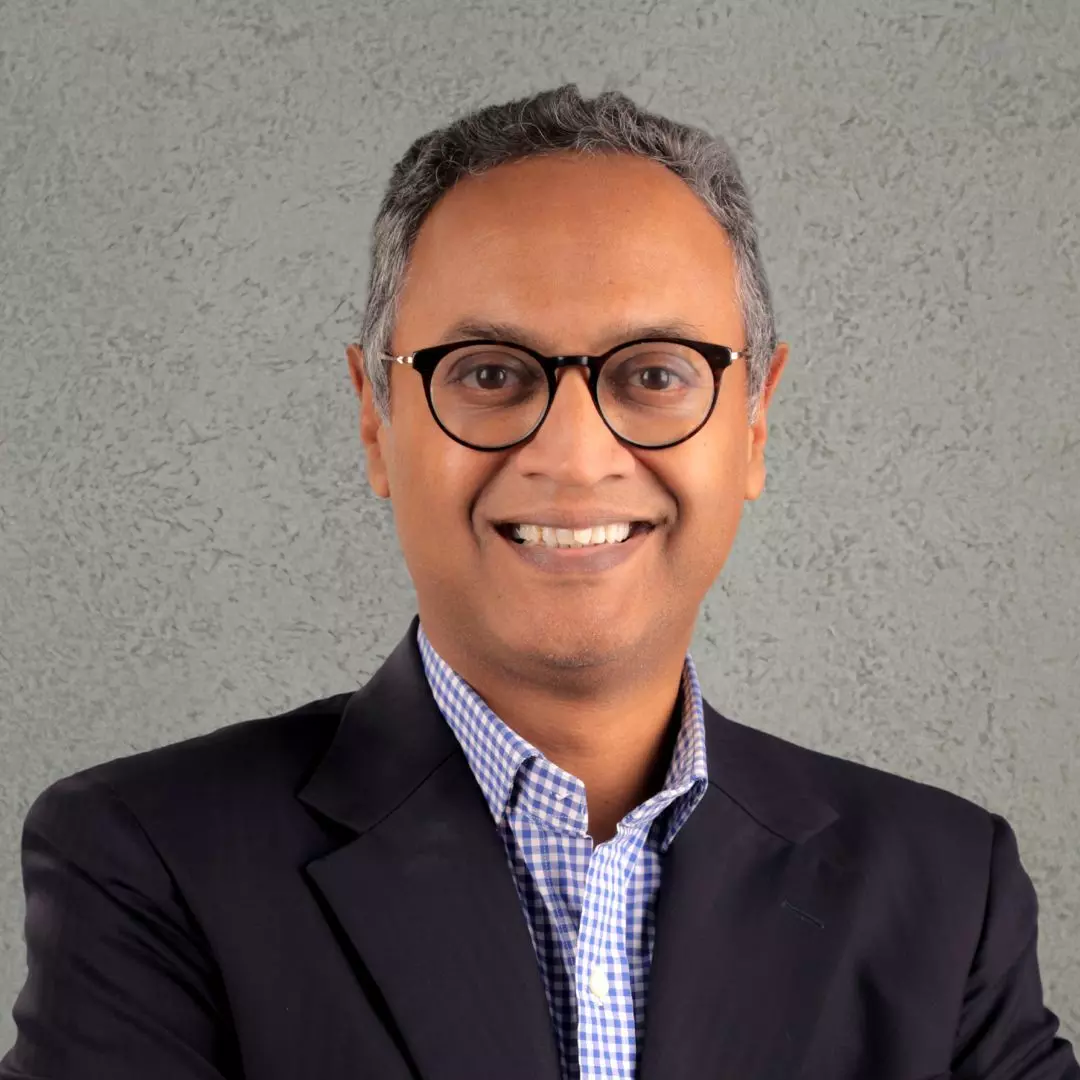
Yet, as a Forrester Research analyst, Dipanjan Chatterjee said in a blog post, Ternus "must resist the temptation of incrementalism that has plagued Apple of late. As Ternus assumes the helm, he must define Apple’s future as ferociously as he defends its past."
What Makes A CEO?
This brings us to a fundamental and evergreen corporate question: What factors should dictate the choice of a CEO?
Apple has made its calculation clear. It believes its core competence — and the source of its consumer worship — remains hardware perfection.
The integration of AI is viewed as a feature to be blended into that hardware, rather than a reason to abandon the company's manufacturing DNA.
This tension between defending the core and chasing the frontier is playing out globally, including in India.
For family-owned conglomerates like Reliance, succession is currently a complex transition of businesses and power to the next generation, where it remains to be seen if the third generation inheritors possess the first and second generation's aggressive chops.
But even professionalised, non-family businesses are facing profound succession dilemmas.
Consider India's private banking sector.
A report in Mint pointed out that major institutions like ICICI Bank, Axis Bank, Kotak Bank, and HDFC Bank are all navigating or preparing for leadership changes.
The founders and early leaders of these banks — figures like Aditya Puri and KV Kamath — were essentially entrepreneurs operating within a corporate structure. They injected fierce aggression and a win-at-all-costs mentality to capture market share.
But now, as Mint reports, there is a growing tendency to look at and elevate Chief Financial Officers (CFOs) to the top job.
Incidentally, HDFC Bank’s current CEO, who took over in October 2020, was its CFO earlier.
While that may not be the only reason for his promotion, the rationale is sound: regulatory environments are ever tighter, and there is a heightened premium on governance and reputational stability.
Elevating a CFO also signals an organisation is entering a more defensive, mature phase of its life cycle.
ICICI Bank is a prime example; its current CEO (not a CFO earlier) successfully stabilised an institution previously rocked by scandal.
Innovation Trumps Defence
But defensive leadership has limits. A growth market — whether in banking, computing devices, or consumer goods — eventually demands aggressive, front-facing leadership.
Defensive leaders must either transition back to a growth mindset or step aside when the stabilisation job is done.
Top-performing companies in India are currently logging double-digit growth, but not always by expanding the market.
Overall, private consumption has slowed, hurting sectors like fast-moving consumer goods (FMCG) and retail.
Reigniting consumption on the supply side requires radical innovation, not just careful management.
Look no further than the pharmaceutical industry, where weight-loss drugs have suddenly surged to become the highest-selling category by value in India — a disruptive prospect unimaginable just six months ago.
Apple’s elevation of John Ternus is a powerful reminder to shareholders and boards everywhere.
A company’s choice of CEO is a declaration of its strategic priorities.
Apple has decided it wants a master executor of hardware to navigate the AI revolution.
Boards must ask themselves: In the race for market leadership, are we hiring an entrepreneur to build the future, or an operator to manage the present?
For better or worse, Apple has placed its bet. Is your organisation doing the same?
Core.
Core.


