



 Newsletter
 Search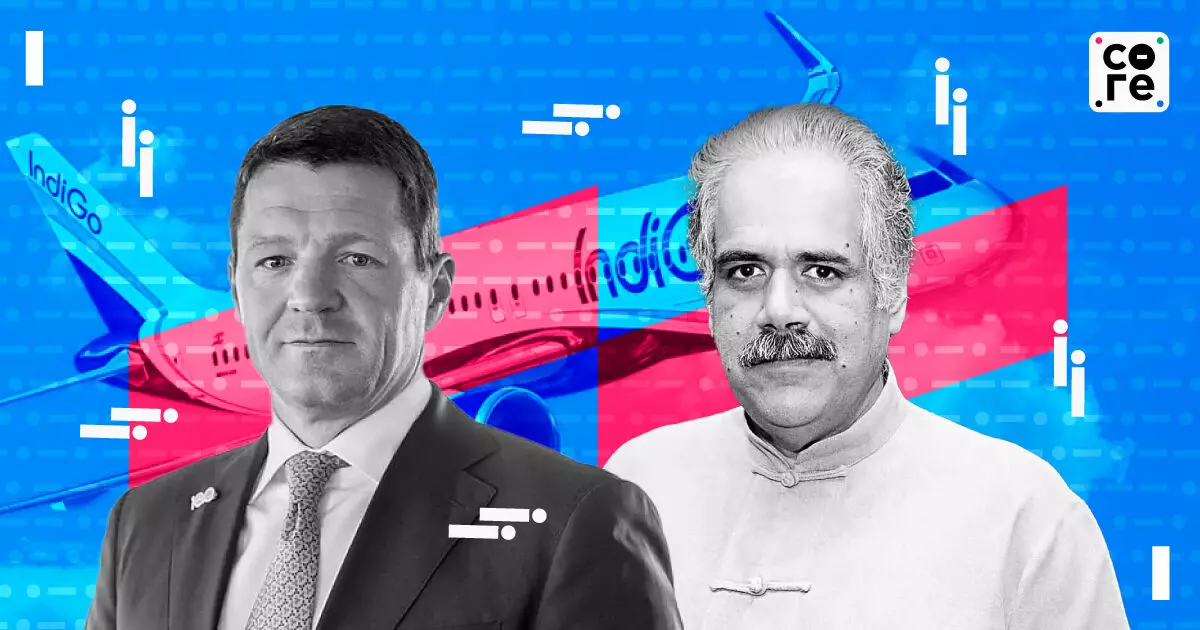
IndiGo Is No Infosys
- The Take
- Published on 8 Dec 2025 1:11 PM IST

As IndiGo chaos unfolds and scrutiny targets CEOs and regulators, founder Rahul Bhatia remains missing from blame — silent, invisible, unanswered.
The Gist
IndiGo faces a crisis of operational failure amid a blame-shifting exercise between its founders, Rahul Bhatia and Rakesh Gangwal.
- Bhatia and Gangwal co-founded IndiGo in 2005, with Gangwal later accusing Bhatia of running the airline like a personal fiefdom.
- Recent operational issues stem from the airline's attempt to maintain an expanded winter schedule without adhering to new pilot duty regulations.
- Despite reputational damage, the stock market remains optimistic about Bhatia's leadership amidst ongoing accountability questions.
Indian business is currently witnessing a blame-shifting exercise of unprecedented intensity.
At the centre is IndiGo, an airline that needs no introduction, now mired in a crisis of operational failure and evasive accountability.
To understand the present, one must examine the genesis. Founded in 2005, IndiGo was the brainchild of Rahul Bhatia and Rakesh Gangwal, holding near-equal stakes of approximately 38% and 37%, respectively.
Bhatia brought his experience from a successful travel and logistics business established in 1989. Gangwal, an aviation veteran and former CEO of US Airways, represented the technical expertise.
Their debut was audacious: a June 2005 order for 100 Airbus A320-200s at the Paris Air Show.
When operations commenced in July 2006, sceptics dismissed Bhatia as another flamboyant aspirant in India’s treacherous private aviation market.
They were mistaken. IndiGo emerged as a sharp, efficient carrier, eventually going public in 2015. Its stock performance has since defied the gravity that typically weighs down global aviation equities.
Friendship In The AirBut by 2019, the Bhatia-Gangwal friendship soured. A battle that must have raged within the boardrooms and corner offices for a while exploded in the open. Gangwal went public with his grievances.
In a complaint with the Securities & Exchange Board of India (SEBI), he alleged that Bhatia was running it like a personal fiefdom.
He accused Bhatia of several violations of SEBI norms and said he was running IndiGo like a paan ki dukan (paan shop), adding he had lost confidence in the current composition of the board and its ability to discharge its fiduciary duties, as most of them were Bhatia appointees.
Amongst other charges, Gangwal said Bhatia entered into related-party transactions with firms owned privately by him.
Bhatia’s response was that Gangwal’s complaints were an attempt to dilute the founders' rights and control, which were agreed upon. He added that all related party transactions were transparent and legally approved.
In a corporate battle, there are two sides. Of the two, Bhatia’s side has been more careful with its responses, seemingly not addressing the substance of some of the charges, like the one about running the airline like a fiefdom.
No doubt it is a subjective statement.
Fiefdom or not, Gangwal decided to exit the company and worked out a gradual exit where he pared down his stake. A Mint report from August this year said that through 15 transactions starting September 2022, he sold 32.5% and earned Rs 45,146 crore.
The Excel Sheet Airline
Now to the present.
The fiasco of the last few days needs no further elaboration except to highlight that the company clearly took a decision to not abide by the new flight duty time limitations on pilots that kicked in on November 1, 2025.
The airline was effectively attempting to service an expanded winter schedule with the same number of pilots, who would fly fewer hours than before.
Pilots often refer to IndiGo as "the Excel sheet airline," a moniker that acknowledges its ruthless precision. In this instance, however, no amount of spreadsheet manoeuvring could avert the collision with reality.
The Directorate General of Civil Aviation (DGCA) has issued show-cause notices to the CEO and the head of operations, both expatriates. Conspicuously absent from regulatory scrutiny is Bhatia, the Group Managing Director of the parent company, InterGlobe Aviation, and a director at IndiGo. While media coverage targets the Civil Aviation Ministry and the corporate entity, Bhatia remains shielded by silence.
Observers of Indian promoter-led businesses recognise that strategic decisions rarely occur without the owner's endorsement. It is implausible that IndiGo bypassed impending regulations without Bhatia’s knowledge. Consequently, accountability must extend to him, regardless of whether official notices are addressed to the C-suite. The board bears responsibility, but primarily as the final layer of oversight, not the source of the directive.
Boardroom Fiefdoms
While investors often tolerate autocratic governance as long as returns are delivered, the distinction in corporate structure is vital.
Consider Infosys. Even when its founders stepped back, the board maintained clear control over professional CEOs.
The governance disputes there centred on cultural values, not the locus of control.
IndiGo is no Infosys. It remains an owner-controlled entity where the promoter has not ceded influence.
While the brand has suffered reputational damage, the stock market remains bullish, implicitly betting on Bhatia’s continued firm hand.
Gangwal once accused his partner of running a corner shop; to prove him wrong, the airline must now demonstrate institutional maturity over promoter dominance.
Core.
Core.


