



 Newsletter
 Search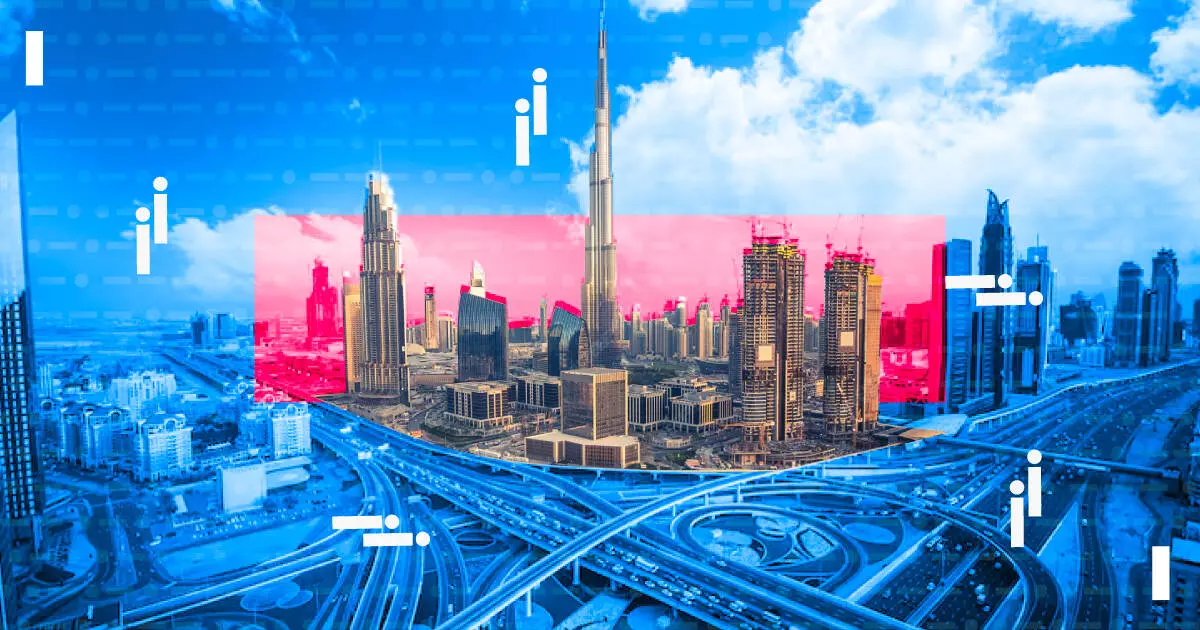
Indians Built Dubai’s Oasis. Why Can’t We Build Our Own?
- The Take
- Published on 9 March 2026 5:11 PM IST
If India truly wants to become a destination for global investment—and retain the vast wealth and talent of its own people—it must get its act together.
The escalating conflict in the Gulf is forcing Indian expats and millionaires to flee. The tragedy is that returning home isn't on their itinerary.
About 25 years ago, Ravi Ruia, who founded the Essar Group with his late brother Shashi, asked me a simple question: Had I seen how countries like the United Arab Emirates were scaling up their infrastructure?
At the time, my answer was no. But his response has stayed with me ever since.
“You should visit and see,” Ruia told me in his expansive new office in south Mumbai. “It is all being built by Indians.”
It would be a few years before I finally took his advice.
Around 2004, I found myself driving down Dubai’s arterial Sheikh Zayed Road—then well on its way to becoming one of the city’s most recognisable landmarks—en route to Dubai International Academic City.
My destination was the SP Jain School of Global Management, which founder Nitish Jain had just established.
As Jain showed me around the campus and the broader city, Ruia's words came back to me.
In more ways than one, the vision unfolding in the desert was ahead of its time. And Indian hands were laying the foundation.
How Much Do Indians Contribute to the Gulf?
Over the last few decades, some nine million Indians have settled in West Asia.
What began primarily as a migration of blue-collar workers has evolved into a sprawling diaspora that owns, operates, and staffs a vast array of businesses, from heavy construction to elite financial services and education.
For many travellers flying out of Mumbai, Dubai is regarded as the closest "first-world" city—a mere two-and-a-half-hour flight away.
Yet, while Ruia referred to the role of Indians in building the hard infrastructure powering this Middle Eastern oasis, over the years, soft infrastructure has joined the list as well.
The economic ties are staggering. According to a Citi research note recently cited by CNBC, the Indian diaspora in the Gulf contributes nearly 38% of India’s total remittance inflows. Based on inflows of $135.4 billion for the 2025 financial year, the Gulf’s share equates to a massive $51.4 billion.
But as conflict engulfs the region, that vital economic pipeline is under threat.
The Gulf’s Uncertain Future
The unfortunate developments of the past few weeks have forced many to question the very assumptions that created the allure of cities like Dubai, Abu Dhabi, and Doha.
The most pressing question for the ultra-wealthy: Is it still worth staying in Dubai simply for the tax benefits if the geopolitical roof is caving in?
The answer, it seems, is no. According to a Reuters report last week, several Asian and Indian millionaires who had previously offshored their wealth and residency to Dubai are now frantically attempting to transfer their funds to Singapore and Hong Kong.
There is a rich irony here, of course, given that many of these same investors fled Hong Kong just a few years ago as Beijing tightened its grip over the once-autonomous financial hub.
But the glaring takeaway from this capital flight is what is missing from their list of alternative destinations.
Why Aren’t Millionaires Returning To India?
While Indian millionaires are exploring all available options to safeguard their assets, India itself does not appear to figure prominently in the equation—certainly not from a tax residency standpoint.
This raises a much larger, albeit rhetorical, question: How is it that Indians can build the Gulf states, contribute to their modern efficiency and opulence, and relocate their wealth there, yet remain entirely unable to reproduce that same degree of attractiveness in Mumbai or other major Indian metros?
For decades, India has treated the Gulf as its outsourced first-world playground—a place to earn tax-free wealth, enjoy world-class infrastructure, and send billions back home. But if there is one lesson to be drawn from the escalating crisis in West Asia, it is that outsourcing your quality of life is a fragile economic strategy.
If India truly wants to become a destination for global investment—and retain the vast wealth and talent of its own people—it must get its act together. That means moving beyond basic economic reforms and doing the hard work of making its own mega-cities livable, efficient, and attractive. Until we can build our own oasis, our capital will always be at the mercy of someone else's war.
Core.
Core.


