



 Newsletter
 Search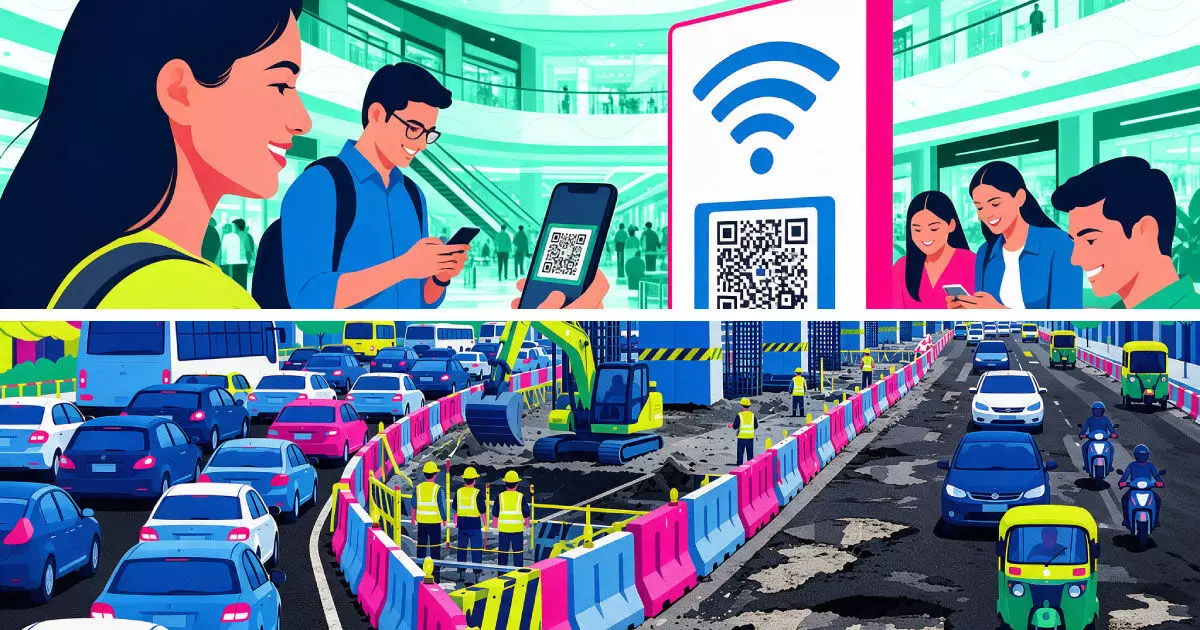
India's Fintech Speed Meets Mumbai's Infrastructure Gridlock Paradox
- The Take
- Published on 14 Sept 2026 1:43 PM IST
UPI runs at fintech speed. Mumbai's traffic runs on its own clock.
The Gist
The Global Fintech Fest 2026 showcased India's digital advancements amidst significant infrastructural challenges in Mumbai.
- Delegates faced severe traffic delays in Bandra Kurla Complex despite the event's focus on cutting-edge financial technology.
- Prime Minister Modi emphasized international expansion of UPI and innovations in digital finance.
- While India leads in digital payments, the need for improved physical infrastructure remains critical for economic growth.
A half hour-long crawl to travel a single kilometer through Mumbai’s Bandra Kurla Complex (BKC) is enough to test the resolve of even the most ardent economic optimist.
As thousands of global delegates, tech founders, and executives descended on the Jio World Convention Centre for the Global Fintech Fest 2026, they encountered the defining paradox of modern India: world-class digital velocity colliding head-on with legacy physical friction.
Just a stone’s throw from the convention hall sits the site of the Bandra Kurla High Speed Railway station, the planned terminal for India’s flagship Japanese-backed bullet train to Ahmedabad.
Already roughly four years behind schedule, the rail link promises to slash travel times between the two commercial hubs from up to nine hours down to two hours and seven minutes.
Yet for commuters navigating BKC’s daily gridlock, reaching the platform may ultimately prove more arduous than the 508-kilometer journey itself.
Innovations Take Center Stage
Back inside Jio World’s air-conditioned halls, however, India's financial economy is moving at breakneck speed.
Prime Minister Narendra Modi opened the conference by outlining the next frontier, expanding Unified Payments Interface (UPI) technology internationally while pushing digital rails into pensions, insurance, and asset tokenisation.
On the floor in hundreds of brightly attired stalls with flashing screens and even podcast booths, private enterprise and state-backed platforms demonstrated remarkable agility.
For example:
Agentic Commerce: Launches ranged from Amazon Pay’s "agentic AI" wallets, already executing automated flight bookings with biometric security, to open-source Android ATMs and NFC-enabled smartphones transforming into tap-to-pay terminals.
Cross-Border Expansion: Visa introduced QR-code payment scanning across 14 foreign markets, Jio Financial Services partnered with Citi on cross-border settlements, and specialized players like PayGlocal targeted friction-free clearing for exporters.
Tokenised Capital: Real estate ownership models showcased a shift away from reams of legal paper toward fractionalized, verifiable digital tokens.
The dual imperative on display was unambiguous: expand and speed up market access while aggressively building defenses against digital fraud, a rising concern.
Infrastructure Must Catch Up
India’s regulators and innovators have undeniably created one of the world's most dynamic payment ecosystems.
Yet economic modernisation cannot take place entirely on a server.
Navigating gridlocked streets or battling to snag an autorickshaw at peak hour should be treated as a symptom of a larger failure rather than a routine tale of urban conquest.
High-speed financial rails are a massive achievement, but India will only realise its full economic trajectory when its physical infrastructure finally matches its software.
Core.
Core.


