



 Newsletter
 Search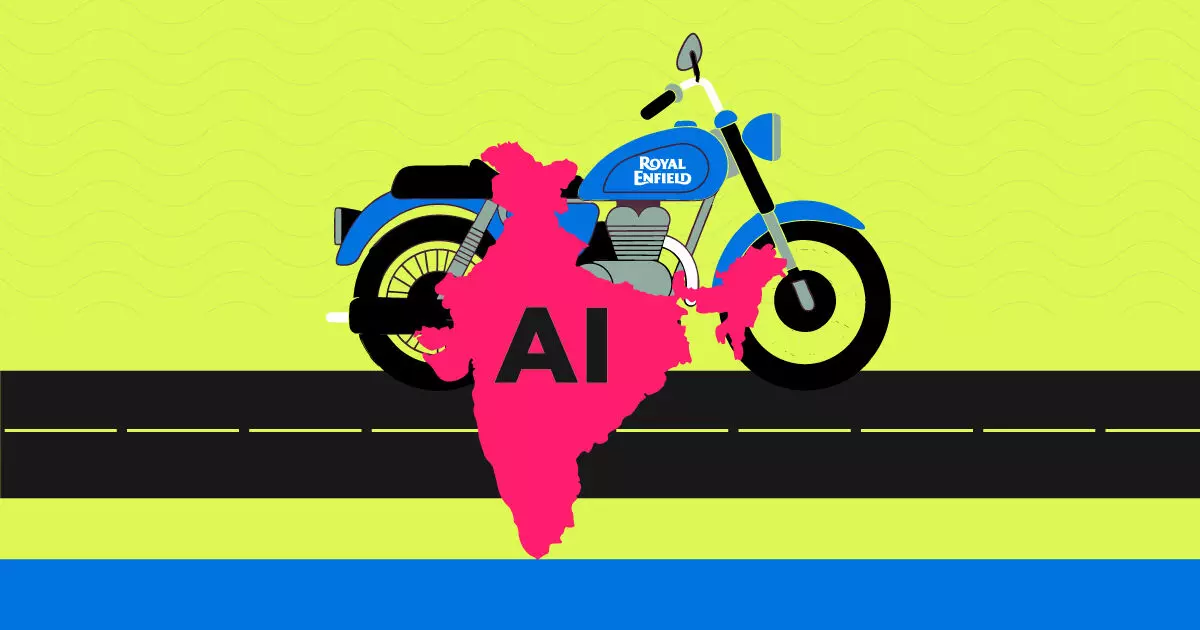
From Royal Enfield to AI: India's Next Global Champion Should Be Built, Not Debated
- The Take
- Published on 4 May 2026 3:49 PM IST
India's Royal Enfield became a global giant through enterprise, not debate. The same playbook could script India's AI story, if founders lead the way.
American biking enthusiasts have dubbed this the most dramatic power shift in motorcycling history.
But the company behind this shift is one that many American motorcyclists, until quite recently, had never heard of.
It all started with a frontal assault 11 years ago.
In 2015, Chennai-headquartered Royal Enfield, a subsidiary of the Eicher Motors group, boldly opened its North American headquarters in Milwaukee, Wisconsin, right in iconic motorcycle brand and company Harley Davidson’s backyard and the epicenter of American motorcycling.
Fast forward to the present. Royal Enfield sold over 1.2 million motorcycles globally last year. Harley-Davidson struggled to move much over 100,000.
Today, Royal Enfield exports more motorcycles than Harley-Davidson produces in total.
Harley Loses The Plot
A quick scan of motorcycling enthusiasts and reviewers across platforms like YouTube reveals titles that range from “How a $5,000 Indian bike is stealing Harley’s future customers” to “How one small Indian brand just put Harley out of business.”
The prevailing tone among the authors of these reviews who are mostly American and British by the way is a mix of dismay and anger directed at Harley-Davidson for losing the plot, trying to sell the same overpriced, over-complicated heavyweights to an aging demographic.
Royal Enfield, meanwhile, has been universally praised for returning to the fundamentals of the open road.
They offer highly affordable, first-class motorcycles with a deliberately analog feel.
Free from over-the-top electronics, these air-cooled machines appeal to both young and old riders who want a bike they can actually tune up in their garage.
As one former Harley loyalist noted, "Royal Enfield models have replaced Harley-Davidson to me. They are affordable, classic looking... and you can customise them."
For the price of a single Harley, a consumer can essentially buy two Royal Enfields, others quipped.
And finally, the stock market too reflects the sheer scale of this disruption.
Harley-Davidson has been losing sales in recent years and its market capitalisation currently hovers around a diminished $2.7 billion.
Eicher Motors commands a valuation north of $21 billion.
Harley's Deeper Problem
During his first term, US President Donald Trump notably complained about India’s tariff barriers on Harley-Davidson motorcycles.
He wasn't wrong to point out trade imbalances, but he missed the deeper structural irony: Harley wasn’t just struggling to export to India; it was taking direct punches from an Indian brand right on its home turf.
And Enfield is winning on more than just price.
With a 123-year legacy as the oldest continuously produced motorcycle brand in the world, Enfield has successfully replicated the very thing that made Harley a titan: a fiercely loyal, well-nurtured global community with strong cultural roots.
Even back in India, where Harley and British rival Triumph attempt to compete in the 400cc segment via joint ventures with Hero and Bajaj, the results tell a familiar story.
While Bajaj-Triumph has found some success, the Hero-Harley partnership is making limited headway.
India's Next Frontier
There is a lesson here for the hand-wringers currently lamenting India’s supposed lag in the next great technological frontier: artificial intelligence.
Every day, the chattering classes engage in national breast-beating over whether India should develop its own large language models (LLMs) to compete with the likes of ChatGPT or Claude, or simply adopt them to drive enterprise productivity.
The debate is largely a distraction. If a visionary wants to build an Indian LLM, they will secure the capital, assemble the talent, and build it, they won't wait for validation from social media commentators or a government white paper.
When Eicher Motors bought a stake in a struggling Royal Enfield in 1990 and eventually acquired it, there were most likely no debates among armchair opinionators about whether India "should" export motorcycles.
Eicher simply scaled up a product that already existed, built the aura around it and then marched into Harley’s hometown, quite literally.
The Founder's Playbook
If an engineering product seems too far, consider the pioneers of India's IT revolution. When NR Narayana Murthy, Nandan Nilekani, and their co-founders launched Infosys in 1981, they did not wait for a national consensus on the potential of software services.
As they have noted on several occasions, the software industry flourished in India precisely because the government had no idea what it was.
Bereft of state meddling and central planning, the industry was spared the very "help" that would have throttled it.
Innovation is almost always best left to entrepreneurs armed with hunger, desire, and passion.
There are two points here.
First, the Royal Enfield story is a testament to the power of free enterprise and a solid homegrown success that should cut through the current air of economic despondency.
Second, global champions can emerge from anywhere in India, in almost any industry.
Maybe even in large language models.
But they will be built in the garages and boardrooms of driven founders, not in the comment sections of their doubters.
Core.
Core.


