



 Newsletter
 Search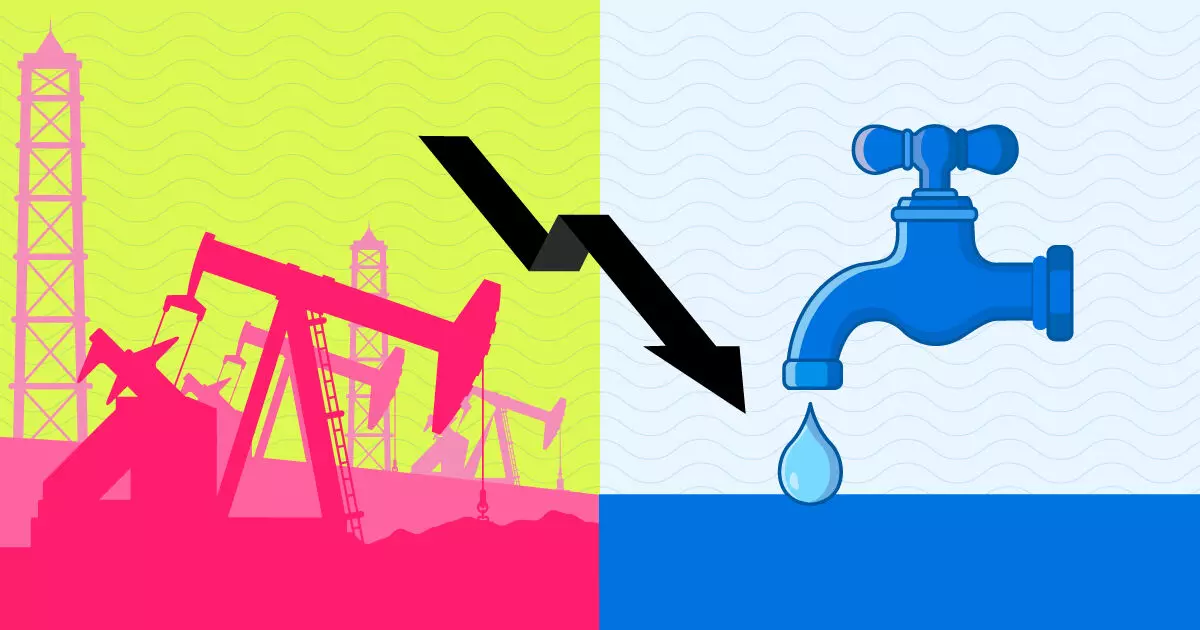
From Oil Shocks To Water Limits, Scarcity Must Be The Norm
- The Take
- Published on 29 Jun 2026 1:32 PM IST

Oil markets shrug off renewed US-Iran strikes, but India's water crisis exposes the real limits of resilience in an age of permanent scarcity.
The Gist
- India's economy grew 7.8% driven by private investment, but energy price suppression has led to market distortions.
- Water scarcity is becoming a critical issue, with significant rainfall deficits impacting Mumbai.
- The shift towards a 'scarcity mindset' is essential for sustainable resource management in the face of future challenges.
The US missile strikes against Iran over the weekend, a direct response to the attack on an oil tanker in the Strait of Hormuz, have once again tested the fragile ceasefire.
Yet, in a testament to the resilience of the global economy, oil prices have remained muted, pulling back below $73, a level not seen since before the four-month conflict began.
This resilience invites a necessary audit of the last six years.
We have navigated the body blow of Covid-19, which effectively rewired global supply chains and permanently altered the nature of work.
While the "Zoom era" brought us the convenience of remote work, it also underscored the decline of productivity without the social cohesion of an office.
Looking back, one wonders: had the pandemic lasted four months instead of three years, would we have permanently abandoned the office, or would we have recognised the screen as a poor substitute for real-world collaboration?
It's not like the latest crisis did not help, following as it did, from the tariff war crisis, which hit economies around the world and caused more damage to businesses with the uncertainty rather than the actual flow of goods.
But the net result was that supply chains became even smarter, and the US economy, fueled by a massive AI investment boom, proved remarkably robust.
Even with layered supply shocks, the S&P Global report from last week suggests the US will maintain trend-like growth of 2.1% through 2026.
This resilience is no surprise; it is the natural outcome of substantial domestic energy production and lower energy intensity.
Populist Pricing, Real Costs
In India, the story is similar in its vigor but different in its risks.
The economy grew a robust 7.8% in the January-March quarter, driven by private investment and construction.
Yet, the government’s response to the West Asia conflict has been a study in the dangers of the "populist energy" model.
We have not achieved much in terms of moderating energy consumption because price signals were suppressed for months.
When the government delays price hikes, it does not prevent inflation; it often creates a black market.
The LPG shortage is the most visible byproduct.
By keeping the price of 14.2 kg cylinders artificially low while market costs soared, the government incentivised the diversion of supplies, in this case to commercial use.
Government officials, including elected representatives have offered half-hearted promises to reduce the size of ministerial convoys, but like most such displays, these gestures are being forgotten as quickly as they were announced.
The most pressing challenge, however, is not the price of oil, but the availability of water.
Scarcity As The New Baseline
The India Meteorological Department (IMD) says cumulative rainfall for the country between June 4 and June 28, 2026 stood at a 45% deficit.
Mumbai is now staring at 7% water levels in its primary lakes. The rains which made a brief appearance after a two week delay last week are awaited once again.
Unlike oil, which can be secured through global markets, water is a local necessity with no substitutes.
We may find ways to manage oil or gas supplies, but we cannot engineer our way out of a drought. Or only partly.
The lesson of the last four months is clear: whether it is energy or water, we are entering an era of greater scarcity.
The "scarcity mindset" must now shift from a crisis response to a baseline for future sustenance.
Individuals and organisations should stop waiting for state-directed solutions, which are often delayed and distortive, and start managing their own consumption with discipline.
The last four months may not have been as instructive as the previous crises of this decade, but they have provided a sound warning.
The year ahead promises to be the true test of whether we are capable of adapting to a world where resources are no longer guaranteed.
Core.
Core.


