



 Newsletter
 Search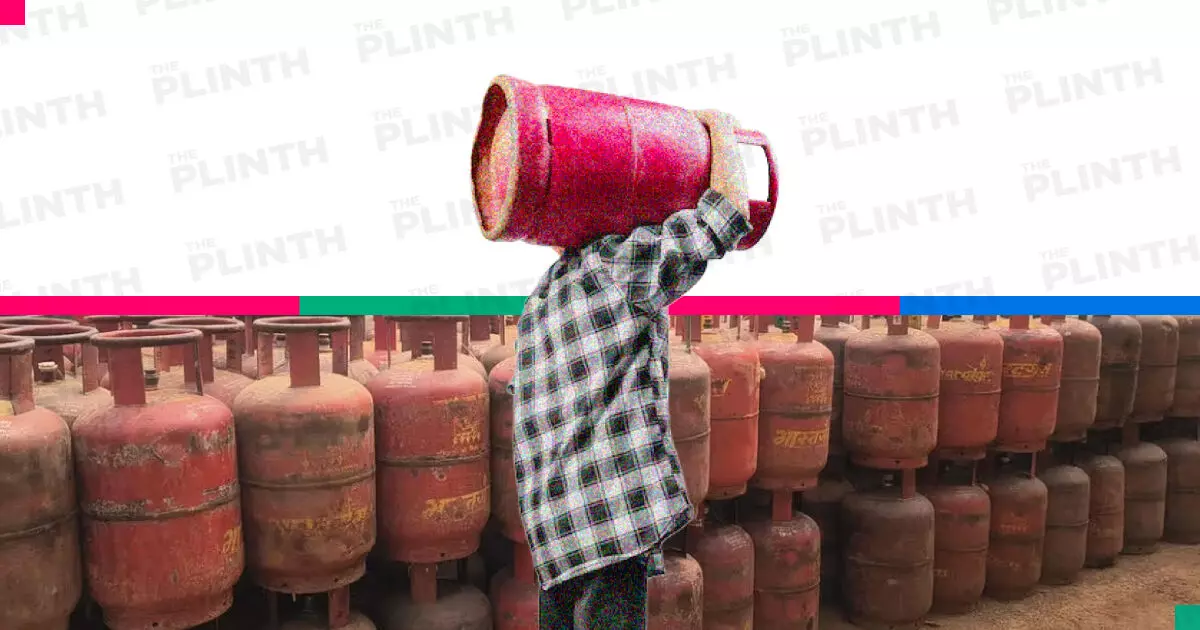
India’s Gas Pivot Amid West Asia Crisis Reveals Decades-Old Industrial Blind Spot
- The Plinth
- Published on 19 March 2026 6:00 AM IST

The Natural Gas (Supply Regulation) Order reveals a gap that pre-dated it — between piped gas infrastructure and the cylinder-fed commercial activity that sits beyond its reach.
On the night of March 9, as Brent crude crossed $110 per barrel and LNG suppliers invoked force majeure on Hormuz-routed cargoes, the Ministry of Petroleum and Natural Gas (MoPNG) published the Natural Gas (Supply Regulation) Order, 2026. It sets a four-tier priority hierarchy for all natural gas in India, overriding the existing Gas Sale Agreements under Section 3 of the Essential Commodities Act, 1955. GAIL is the coordinator; the Petroleum Planning and Analysis Cell (PPAC) is the nodal agency.
For 33 crore domestic households, the Order is a guarantee. Tier I — domestic piped gas, CNG for transport, and LPG production — gets 100% of its six-month average consumption. Fertiliser plants get 70%. Grid-connected manufacturing and commercial city-gas users get 80%. The cut falls on petrochemical facilities, power plants, and refineries.
For the glass furnace in Firozabad, the dhaba in Dharavi, and the tile kiln in Morbi, none of this applies. The Order covers methane-based piped gas. Commercial LPG cylinders are propane-butane blends. A separate MoPNG directive dated March 5 diverted propane-butane to domestic LPG production and capped commercial users at 80% of their normal allocation. The Order then left them there.
The asymmetry is not an oversight. It is inscribed in the regulation.
India has no industrial LPG buffer stock, no priority allocation for cylinder-fed commercial users, and no pooled price mechanism to cushion the shock. To its credit, the new Order did not create these gaps. But it did reveal them.
The Arithmetic Of Two Markets
The non-subsidised domestic consumer pays Rs 913 per 14.2-kg cylinder — Rs 64.3 per kilogram. The market-linked price is around Rs 987; the Rs 74 gap is a direct fiscal transfer, part of the Rs 30,000 crore that the Cabinet sanctioned in August 2025 to cover OMC losses. The commercial 19-kg cylinder in Delhi costs Rs 1,883 — Rs 99.1 per kilogram, up Rs 300 since January 2026, and 54% more per kilogram than the non-subsidised domestic rate.
The Rs 34.8-per-kg gap is not a market outcome. It is the price of belonging to the segment the regulation was not built to reach.
Who The Order Leaves Behind
The users outside the Order's reach are not marginal. They are manufacturers whose fuel costs determine whether India's price advantage survives a sustained shock.
Glass furnaces run continuously at over 1,500°C and cannot switch feedstock for weeks. They are cylinder-fed, not grid-connected; the Order's Tier III protection for grid-connected manufacturing does not reach them.
Morbi tile manufacturers — roughly 70% of India's tile output — face a 5% cost push on glost firing; on thin export margins, that makes booked orders unprofitable.
Pharmaceutical sterile facilities running LPG autoclaves risk batch failures: Schedule M validation for alternative heat sources takes months, not days.
Textile dyeing units in Surat, Tirupur, and Ludhiana see fuel costs rise from around 6% to 6.8% of COGS; Bangladesh competes on a subsidised industrial gas tariff, and that 80-basis-point compression redirects buyer sourcing decisions over a fiscal year.
None of these sectors is on the national gas grid. None appears in the Order's tier structure. The 20% allocation cap applies in full.
The same gap also reaches people, not only businesses. India's roughly 100 million internal migrant workers rely on neighbourhood dhabas for daily meals — they have no cooking facilities at their place of work or lodging.
A 19-kg commercial cylinder now costs Rs 1,883 — Rs 300 more than at the start of the year — and powers a high-throughput kitchen for roughly two days. Fuel cost per meal has risen Rs 3 to Rs 4 against early 2025: a 5% to 7% margin squeeze at a Rs 60 to Rs 80 price point that cannot be raised without losing the customer.
The Federation of Hotel & Restaurant Associations of India (FHRAI) has written to the Petroleum Minister flagging widespread disruption. Bengaluru's hotel association reports supply halted, with closures mounting. Pune's crematoriums shut on March 5. These are not edge cases. They are the visible face of a policy that protects the domestic cylinder user completely and leaves the commercial user exposed to the full force of the market.
For the migrant worker, a forced price rise at the dhaba is not a preference adjustment. It is a reduction in caloric intake. The welfare loss is real, immediate, and entirely unmeasured.
The Gap, And What Might Close It
The Order's logic is sound: protect the most visible consumers first, extract the adjustment from sectors with operational flexibility, and implement through metered, monitorable grid infrastructure. It also creates a useful data mandate — all producers, importers, transporters, and distributors must report stocks, allocations, and consumption to PPAC on an ongoing basis. That infrastructure is exactly what a commercial LPG buffer stock would need to function.
What the Order also reveals is the gap that pre-existed it. India has no industrial LPG buffer stock mechanism. A crude oil strategic petroleum reserve exists across Visakhapatnam, Mangaluru, and Padur — but no LPG equivalent. No priority tier for cylinder-fed commercial users. No pooled price mechanism. No emergency PNG connectivity for commercial kitchen clusters.
The Order builds legal undertakings preventing priority recipients from litigating price adjustments; commercial LPG has no such architecture.
The remedies are not complicated. A budgetary transfer to oil marketing companies to cover the crisis premium on commercial cylinders could be operationalised through existing MoPNG and DPIIT channels within days, at a fraction of the Rs 30,000 crore already sanctioned for domestic LPG. This could be conditional on maintaining 80% allocation to industrial users, mirroring the Order's own Tier IV standard.
Emergency PNG connectivity for commercial kitchen clusters in Delhi-NCR, Mumbai, Pune, and Surat would bring those users into Tier IV protection. City gas distribution licences already exist, and piping infrastructure is largely in place.
An LPG strategic reserve, drawing on the PPAC data mandate the Order itself created, requires only a gazette amendment to existing petroleum storage rules.
The contrast is not between policy and its absence. It is between a sector built for regulation and one that was never designed for it. Building a commercial LPG buffer costs far less than the cumulative damage of leaving glass furnaces, tile kilns, pharmaceutical autoclaves, and 100 million migrant workers' daily meals exposed to a 20% allocation cap and a price up Rs 300 in ten weeks.
The Order saves the kitchen connected to the pipe. For the dhaba that runs on cylinders, the Order is simply silent.
Core.
Core.


