



 Newsletter
 Search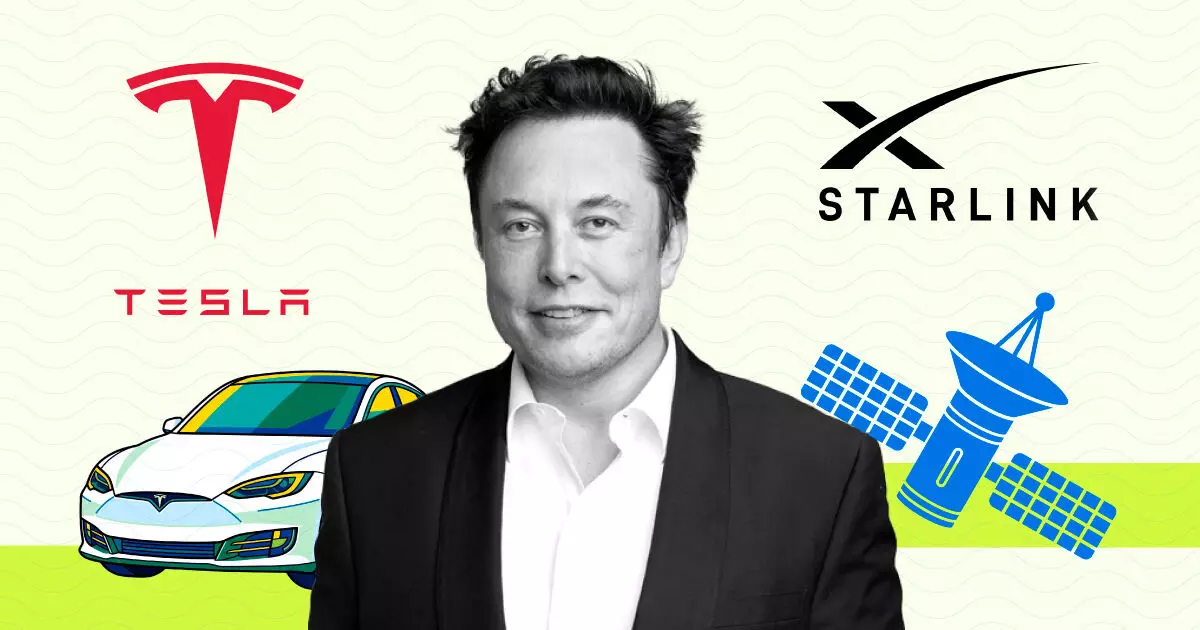
Musk Saga Shows Perils Of India’s Trade-By-Exception Approach

Musk’s Starlink grievances trace back to a bespoke Tesla EV policy that brought no investment, offering a stark lesson in negotiating trade by exception.
It is tempting to dive into Elon Musk’s latest public spat with the Indian government over its reluctance to authorise his Starlink satellite broadband service.
Yet, doing so misses the forest for the trees.
Musk’s current frustrations are merely the predictable fallout from New Delhi’s poorly scripted dealings with him more than two years ago.
The entire saga should serve as a stark object lesson in the perils of economic negotiation by exception and the cost of trying to outsmart global trade dynamics.
The Tesla Red Carpet
India’s trade policy has rarely been described as nimble.
For decades, it has penalised its own consumers through prohibitively high tariffs.
Until around 2015, it appeared that tariffs were headed down and trade would further liberalise.
Instead, the opposite occurred.
Tariffs began to creep upward again, a reverie broken only when US President Donald Trump imposed penal tariffs on Indian exports in April 2025, jolting New Delhi’s trade mandarins awake.
Enter Elon Musk.
In June 2023, the billionaire famously declared himself a "fan of Modi" and proclaimed that India possessed "more promise than any large country in the world."
He assured reporters that Tesla would enter India "as soon as humanly possible." The market was soon buzzing with reports of an impending $24,000 Tesla tailored for India.
But there was a catch. Tesla wanted to test the waters by exporting cars to India first, and Musk understandably balked at the country's punitive 110% import duties.
A protracted back-and-forth ensued. For a year, it appeared Tesla might actually bend New Delhi to its will, raising the hackles of established domestic and multinational automakers, from the likes of Tata and Toyota to Hyundai and BMW, who rightly protested the prospect of an unfair advantage.
Eventually, in March 2024, the government unveiled a bespoke policy: it lowered import taxes on specific electric vehicles for automakers willing to commit at least $500 million and commence domestic manufacturing within three years.
The red carpet had been explicitly rolled out for Tesla.
Yet, Musk, perhaps sensing that the addressable market for his vehicles in India was narrower than projected, began to backtrack.
In April 2024, citing "very heavy Tesla obligations," he abruptly canceled a planned trip to meet Prime Minister Modi. Instead, he landed in Beijing the same week.
The promised mega-investment never materialised.
Underwhelming Indian Debut
When Tesla finally did enter the market between July and August 2025, it was with a whimper, not a bang.
It opened two showrooms in Mumbai and Delhi and began selling fully imported cars.
Thus far, Tesla has sold a grand total of around 1,000 vehicles in India, all Model Ys. Even a "record" September for auto sales saw just 291 units moved.
Categorised as a luxury EV, Tesla is hardly setting the Indian market ablaze.
Predictably, competitors are vastly outperforming it. In September 2026, Tata Motors sold 14,791 EVs; Mahindra moved 7,780; JSW MG Motor India sold 5,242; and the Vietnamese brand Vinfast, which only launched last year, sold 2,964 units.
Even BMW outsold Tesla in the electric segment.
Tellingly, Tesla’s global archrival, BYD, sold 836 cars that same month. Interestingly, while Tesla received the royal treatment, BYD, burdened by strained Sino-Indian relations, has faced heavy regulatory headwinds for six years.
BYD also has a manufacturing presence in India, though not for cars.
India’s Twin Policy Blunders
Looking back, Indian policymakers made two fundamental miscalculations.
First, they suffered from the illusion that Tesla would replicate the "Apple effect," ushering in an entirely new electronics-automotive ecosystem that would galvanise investment and employment.
This ignored the reality that India’s automotive ecosystem was already highly developed, boasting massive investments from nearly every major global auto giant.
Wooing Tesla essentially meant discounting the domestic industry’s own hard-won successes.
Moreover, by the time New Delhi was beginning to make its EV policy moves, the global EV market was maturing rapidly, and Tesla’s preeminent brand positioning was already eroding in the face of technologically comparable, better-priced alternatives from companies like Hyundai and Kia, which possessed vast sales and service networks in India.
The second, and perhaps graver, mistake was the geopolitical gamble: believing that appeasing Musk was a backdoor strategy to win brownie points with Donald Trump, who secured the presidency in November 2024.
In hindsight, it is glaringly obvious that attempts to mollycoddle the Trump administration, directly or indirectly, have failed. If anything, these maneuvers have backfired spectacularly.
Can India Move Faster On Trade Policy?
Certainly.
The recent Free Trade Agreements with the UK and Europe demonstrate a capacity for agility, however delayed.
But conducting trade policy by exception, attempting to contort national frameworks to satisfy the singular demands of even the world's most famous innovator, has proven to be a series of unforced errors.
This brings us back to Starlink. The rationale for widespread satellite broadband in India, where terrestrial mobile data is cheap and ubiquitous, is debatable in itself and The Core Report has argued this on several occasions last year.
The real error was allowing Musk and his team to believe that changes to India’s regulatory architecture could simply be rammed through, or that broadcasting displeasure on social media could force sovereign capitulation.
That impression was likely cemented during the initial, overly eager engagements in 2023.
India is now paying the price for projecting weakness in the face of celebrity capital.
Core.
Core.


