



 Newsletter
 Search
The Mythos Factor: Why India Must Build Its Own Frontier AI
 By TK Arun
- Janus View
- Published on 1 May 2026 6:00 AM IST
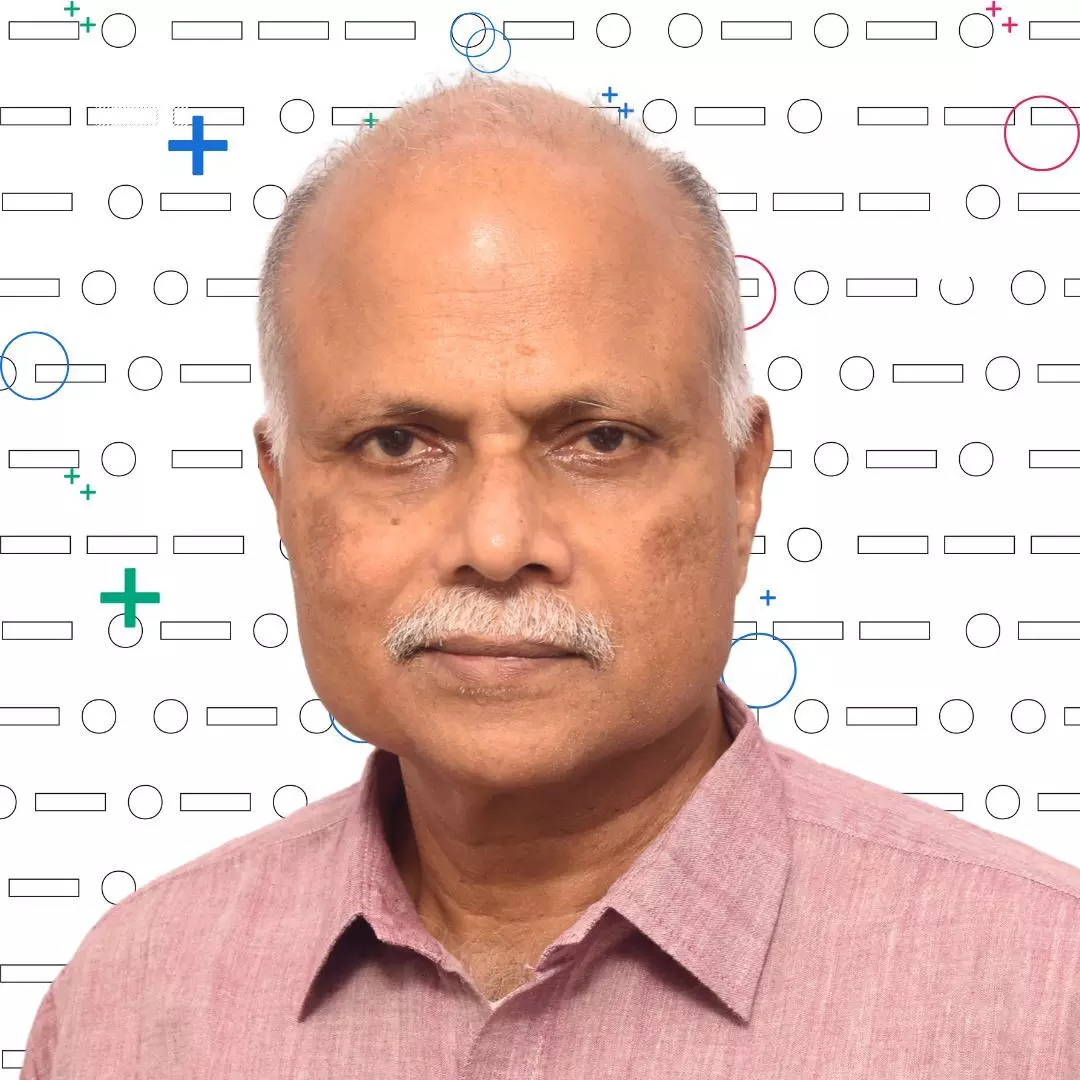
From Mythos to the Hormuz blockade, India faces compounding crises that demand strategic autonomy in AI, energy, and economic policy.
The globe-spanning impact of Artificial Intelligence (AI) is yet another factor that makes contemporary human lives interdependent across borders. AI development is pioneered by a handful of companies, most of them located in the US, a lone champion, Mistral, headquartered in Europe, and a handful in China. But AI’s ability to disrupt the world of work will be felt worldwide, with many low-skilled office jobs being fully automated away. Information technology stocks have been pummelled around the world, on the news powerful AI tools can code better than several humans put together. These claims are probably exaggerated, as it still requires human agency to decide which AI tools to be put to what use.
However, the American AI major Anthropic’s latest release, dubbed Mythos, presents the world with another kind of risk. This is a model-cum-agent (a model waits for a human prompt to perform its inference tasks, while an agent can go ahead and execute the conclusions reached via inference), with such advanced capabilities in spotting bugs and vulnerabilities in the layers of software on which the world’s business is performed that, were it to fall in the hands of a hacker or a rogue state, the result would be havoc.
Therefore, Anthropic has chosen to make the release of Mythos extremely restricted, under what it calls Project Glasswing. Only 40 entities have been given access, 39 of them based in the US, the only non-American entity in the select 40 being Britain’s AI Safety Institute.
This makes Mythos the equivalent of a weapon of mass destruction (WMD) in the hands of the government that can exercise control on the company that has developed it. It might sound strange to think that, in a vibrant democracy like the US, the government can control the assets of a private company, unlike, say, in China, where the government has recently asked Meta to reverse the acquisition it had made of a Singapore-based AI company, Manus, for $2 billion, because Manus uses AI developed in China.
The US legally prohibits the sale of advanced NVIDIA chips to China, restricts such sales to India and other jurisdictions. Washington bars the sale to Chinese entities of Dutch company ASML’s Extreme Ultra-Violet Lithography machines, used to produce semiconductor chips, because it employs American technology. There is no reason why the US cannot legally restrict the sale of high-end AI tools, or even deploy them ‘in the national interest’ against foreign entities.
Mythos confronts India with the question as to what its AI strategy should be. Is it enough, as some of our tech leaders suggest, for India to develop applications, agents and other tools based on foundation models developed abroad, to solve business problems? Or should India aim to develop its own frontier models?
Given India’s desire to maintain strategic autonomy, and given the increasing use of AI and other advanced technologies for strategic ends, not least in making warfare potent, it is not viable for New Delhi to be bereft of the most advanced AI that cannot be withheld by any foreign power. Strategic autonomy calls for India’s own AI models. To rely on AI models developed in other countries would be to pave the way for strategic dependence.
Can India leave to private enterprise to develop cutting-edge AI models? Given the abysmal level of spending on R&D by India’s biggest companies, such hopes would be in vain. The government would have to initiate action to create advanced AI in India.
Globalisation survives the Trump Shock
Globalisation is alive and kicking. That is the silver lining to the dark clouds gathering over the world economy, as President Trump’s Iran war enters what seems to be a prolonged phase of deadlock. Oil prices are zooming, stock markets are tanking, fertilizer and food prices are rising, and growth forecasts lowered. What happens in a narrow stretch of the Persian Gulf raises pump prices for motorists in the US, portending mid-term election upsets that could strip President Trump of his power trifecta.
Failure of the US Fed to cut policy rates could cause stock markets to tank in Asia. Some members of the Fed’s rate setting committee are bristling at the suggestion that rates could come down later in the year. Russian oil and fertilizer sales to Southeast Asian nations could zoom, messing up Ukraine-related sanctions. Economic impulses and impacts remain globally interconnected, despite the best efforts of the 47th President of the United States to derail global trade, scupper the rules-based international order, and destroy the US dollar’s role as the anchor of global finance.
It might seem strange to accuse President Trump of wanting to disturb the dollar’s global role, especially when he has threatened BRICS with steep tariffs, if they went ahead with any scheme to create an alternative to the dollar. The logic of extensive holding of dollar assets by nations other than the US is underpinned by the US current account deficit. To finance the deficit, the rest of the world has to export capital to the US, and hold dollar-denominated assets, primarily US government bonds.
As it is, the share of global foreign exchange reserves held in the dollar has been coming down, from about 65% at the beginning of 2017 to about 57% at the end of 2025. Dollar remains the dominant currency, but its dominance would be hurt if the US runs up a current account surplus, as President Trump wants it to, and the US holds foreign assets.
Address Iran-war fallout on the economy
Thanks to the continuing and indefinite blockade of the Strait of Hormuz, oil prices are high, fertilisers are in short supply, the feedstock for fertilizer production, natural gas and ammonia, face curtailed supplies, as also sulphur, essential for manufacture of some fertilisers.
India faces a shortage of LPG, thanks to disrupted flows of the fuel from the Persian Gulf. The government is thinking of instituting GST concessions to encourage the production and sale of induction stoves. Someone in the government should realise that the real challenge in switching over to electric cooking is increasing the electrical capacity of the wiring and circuit-breaker infrastructure of buildings where cooking takes place, and strengthening the grid to take on the additional load that would be generated by mass adoption of electric cooking. This is the problem to be addressed, not so much the price of induction stoves.
India also needs to produce more power. Ideally, India should boost gasification of coal, India’s most abundant fossil fuel, to generate relatively clean power, and gain energy independence. The technology to convert coal to liquid fuels to run trains, tanks and aircraft is old — Hitler’s forces ran on liquid fuels produced from coal mined from the Ruhr Valley, Silesia (now in Poland), and other territories under German control.
Solar and wind power utilisation is constrained by the failure to invest in storage, whether traditional forms such as water pumped to an elevation and stored, to be run down a pipeline to turn a turbine, or new forms such as battery electric storage systems or green hydrogen.
Battery storage is problematic, as the technology and supply chains are dominated by China, dependence on which would become a source of strategic vulnerability. Using the electricity produced by renewable means to electrolyse water into hydrogen and oxygen is the route to green hydrogen. While India has a policy infrastructure in place for green hydrogen, and large companies have announced bold plans to produce green hydrogen that costs a dollar a kg, little has happened on the ground. That must change.
Hydrogen can be stored and transported. It can be converted into electricity either in combined cycle gas plants or in fuel cells inside automobiles that run on electricity without large storage batteries.
A crisis is an opportunity to carry out major reform, minimising political resistance. Will the government stop pretending there is no crisis, or will it use it to implement intelligent reform?
Core.
Core.


