



 Newsletter
 Search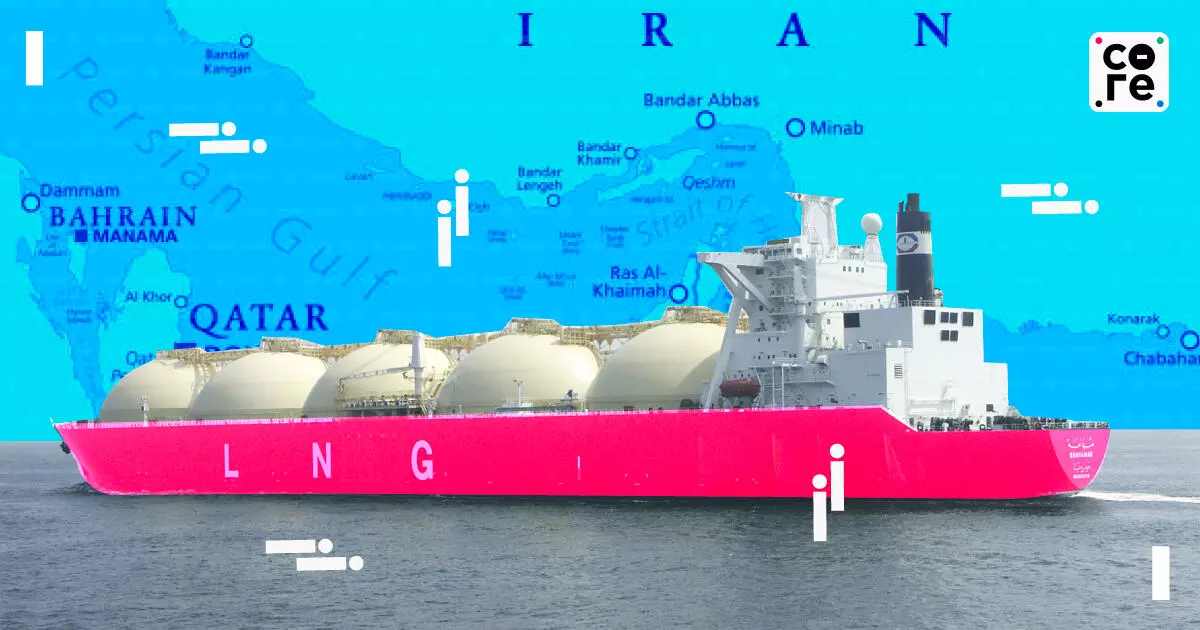
India Must Build Strategic Gas Reserves Before The Next Global Supply Crunch

As the Strait of Hormuz becomes a volatile chokepoint, India’s dependence on Qatari LNG exposes a critical gap in energy security that only dedicated strategic storage can bridge.
Rising tensions involving the United States, Israel, and Iran have pushed the Strait of Hormuz, one of the world’s most important energy corridors, toward an active conflict zone. Iran’s restrictions on vessel movement, combined with major shipping lines suspending transits, have disrupted a corridor that carries nearly a fifth of the world’s crude oil and LNG.
The disruption has driven sharp increases in war-risk premiums, delayed tanker schedules, and triggered a sudden ~9% jump in Brent and WTI in a single trading session. For India-highly dependent on imported energy, the impact is both immediate and material. With over 85% of crude oil and around 50% of natural gas sourced from abroad and a substantial share transiting Hormuz, even partial disruption (short of a full blockade) can raise costs, delay deliveries, and tighten supply
India’s Most Exposed Vulnerability
Owing to adequate petroleum storage capacities, with India’s Strategic Petroleum Reserves (SPR) holding 5.33 million metric tonnes (MMT) of crude in underground caverns, India’s crude ecosystem is relatively protected in the short term, but the same cannot be said for the resilience and robustness of India’s natural gas reserves. LNG storage capacity is limited, leaving the system highly exposed during disruptions.
India’s sectoral dependence on imported gas illustrates the scale of this exposure. The fertiliser sector depends on imported gas for more than 80% of its requirement, followed by the refinery and petrochemical sectors with a dependence of three-fourths and three-fifths, respectively. City Gas Distribution (CGD) — central to India’s gas-based economy ambition—still relies on LNG imports for roughly a third of supply. The power sector would also be impacted, however, given that India largely depends on coal-based power for its national requirements, the effect is unlikely to be as noticeable as it would be for other sectors.
With Qatar’s LNG shipments—most of which must transit the Strait of Hormuz — already facing interruptions, India could face a supply squeeze lasting two to three weeks (or longer) if the conflict persists. More than half of India’s LNG imports originate in Qatar — and must pass through a now-volatile chokepoint. Globally, this has already resulted in soaring gas prices, with Europe experiencing 30% to 50% spikes. These pressures are now spilling into India. Early strain is visible in industrial clusters such as Morbi (Gujarat), where gas rationing has begun, and propane is being considered as a temporary substitute. However, even this alternative is unlikely to sustain operations if the crisis persists. Indian industries are already facing supply cuts in the range of 10% to 30%, which is being done in anticipation of a tightening supply scenario.
Gas Shock More Disruptive Than Oil Shock
India’s LNG logistics are structurally more rigid than its crude oil movements. India’s LNG trade is a tightly timed chain with limited room for diversion. Any redirection of LNG cargoes imposes delays and incremental costs, which is why gas markets often react more sharply than oil markets to geopolitical shocks.
The lingering effect of this crisis could be a gradual shift in the Asian LNG market away from long‑term contracts toward greater spot‑market dependence, driven by uncertainties in supply security. Such a shift creates tighter spot markets, heightens volatility, raises energy prices, and adds to broader inflationary pressures, often forcing central banks to respond with stricter monetary measures.
India’s Strategic Weak Point
India’s LNG terminals are designed mainly for operational balancing rather than long‑term strategic storage, which is a major structural challenge. A proposal to mandate an additional 10% storage requirement is under review, but current conditions underline the urgency of building stronger storage capacity. Dedicated LNG storage—such as overground tanks near existing terminals—would materially strengthen India’s defences against global supply shocks.
What India Must Do Now
The current disruption is a timely trigger for India to strengthen its LNG ecosystem. India has already taken steps by changing Gail’s US LNG volumes through its Singapore trading presence. Building on this, India can deepen supply diversification and increase destination-flexible FOB contracts to reduce concentration risk — taking cues from large buyers such as China.
In parallel, India should pursue meaningful equity stakes in producing LNG assets to improve long-term security and strengthen control over supply. Expanding trading capability and gradually developing modest shipping flexibility would also help India participate more confidently in global markets. Advancing these pillars together would help India evolve from a developing LNG ecosystem to a resilient LNG architecture—capable of absorbing shocks with greater stability and strategic autonomy.
Prepare-Don’t Panic
Geopolitical tensions are cyclical in nature; however, India’s energy system does not have to remain perpetually vulnerable. India has already made progress by expanding its gas pipeline network, increasing LNG import capacity at locations beyond the west coast, and boosting the integration of domestically produced compressed biogas (CBG) into CGD networks.
Yet, this crisis is a clear reminder that natural gas remains India’s most sensitive energy link. Building resilience requires reducing reliance on concentrated supply routes, creating robust strategic storage, and adopting proactive long‑term planning- rather than reacting to crises as they present themselves. The sustainable path is clear: diversification, storage, and strategic preparedness.
Sourav Mitra, Partner – Oil & Gas, Grant Thornton Bharat, is an energy professional with almost two decades of diverse experience in consulting and industry roles within the Oil & Gas, Biofuels, and Chemicals sectors.
Core.
Core.


