



 Newsletter
 Search
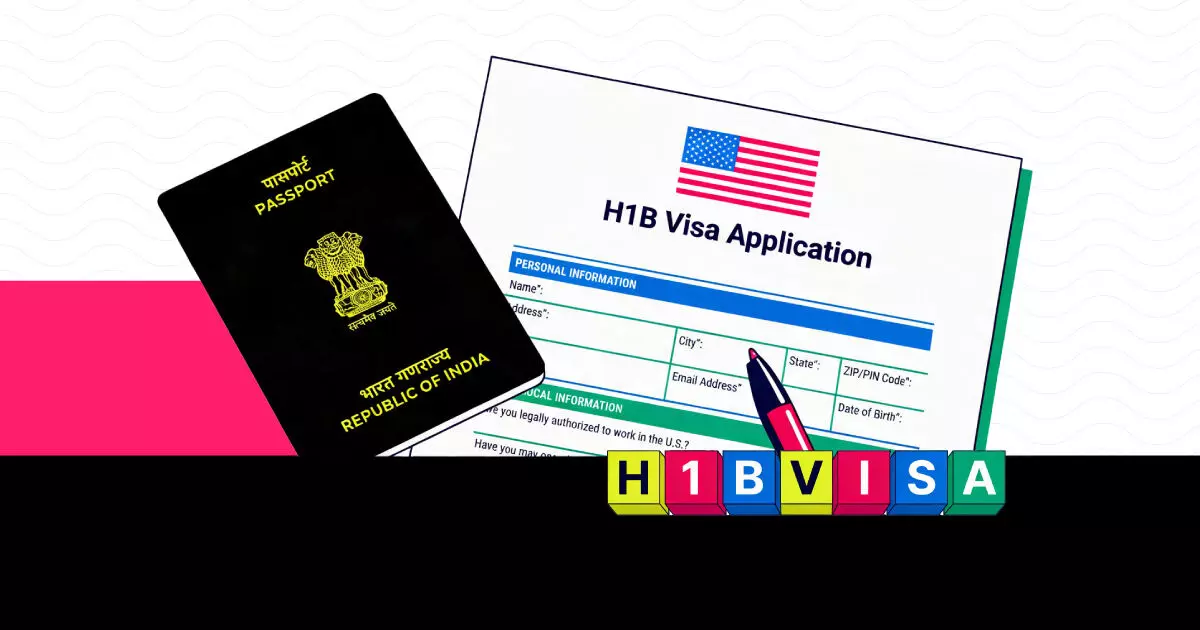
US Green Card Freeze Forces Indians To Rethink Jobs, Homes And Visas

Indian tech workers face stalled applications, expiring work visas and mortgage payments as a US crackdown clouds their future.
The Gist
Karthik S, an H1-B visa holder in San Jose, is anxiously awaiting his green card approval amidst a freeze on applications from eight major tech companies.
- The US government has halted the green card program for firms like Microsoft and Infosys, affecting many applicants.
- Visa holders face uncertainty as they can only remain in the US for six years without approved PERMs.
- Alternative options for staying in the US are limited and often temporary, leaving many considering returning home.
Karthik S, who lives in San Jose, filed his green card application two months ago and is waiting for approval. His H1-B visa runs out in 2028. Like many H1-B visa holders in the US, he is furiously refreshing the Department of Labour website to check the status of his application.
The US government has frozen the green card programme of eight tech companies – Microsoft, Capgemini, Cognizant, Adobe, TCS, Infosys, Wipro and HCL. They can no longer file fresh PERMs (Permanent Labor Certification), and even pending PERMs will not be processed.
While Karthik is hoping against hope, he knows that his six-year clock has started ticking.
Many like him, those waiting in the line for PERM approval, also might now have to consider returning home. Those on H1B visas whose PERMs are either not filed or approved can only stay in the US for six years.
There are only a few workarounds to stay in the US temporarily, apart from leaving the country and finding an employer outside the eight banned companies who can.
“Those who have a spouse working in the country can file a dependent visa and stay temporarily until their PERM is reactivated,” Gnanamookan Senthurjothi, an immigration attorney and the founder of immigration services company, The Visa Code, told The Core.
“There are a few other temporary ways, like taking up a tourist visa to travel or a business visa to attend conferences. But these are temporary ways,” Senthurjothi said.
Some can change their status to that of a student, but this too is not easy. “One cannot do a second Bachelor's or a Master's degree but must move to the next level of progression in education. Like, say, a Bachelor's degree holder must do a Master's, and a Master's degree holder must move to a PhD,” added Senthurjothi.
A US green card freeze has thrown Indian tech workers’ plans for permanent residency into disarray, leaving them to weigh years of uncertainty against the cost of staying, the risks of leaving and the prospect of starting over elsewhere.
The PERM Journey
While H1-B visa holders sponsored by the aforementioned eight are in the worst possible state, even those a step ahead with I-140s are not in a very secure position either. Form I-140, or the Immigrant Petition for Alien Workers, qualifies a foreign national for an employment-based green card.
Gowri Maddoori, who moved to the US in 2015, has an approved I-140 and lives in Ohio with her husband and two kids. But she too says her nerves are frayed.
“We have a long wait in our pathway to a green card. We have to wait at least 20 years, is what we have been told. I am in my 30s, and I guess I would be rather old by then. But that is not our only worry. We invested in a house last year, and now we are extremely scared as to what will happen in case of a job loss,” Maddoori said.
This fear is shared by a lot of those in the Indian community around her, she added.
The number of green cards issued per year is limited, and the number of applications filed is enormous. Hence, the priority date for a green card that a visa holder gets after getting an approved I-140 can be as long as 20 years.
With each passing year, the wait has gotten longer.
“For many people, it’s a wait-and-watch game. A lot of people hold onto hope that before their time in the US ends, the government will change and the policies might change,” said Rahul Borude, founder of StampMyVisa, an AI-powered visa processing platform. H1B holders who travel home for visa stamping too are finding it hard to get an appointment in India, he says. Customers often tell him the wait is long.
Some H1B holders can look at the O1 visa instead. It is a three-year visa for people with extraordinary ability, such as scientists, artists and sportspersons. “O1 is for artists, sportspersons, researchers and people with extraordinary ability. Founders can qualify too, but they have to show real evidence of that ability,” Borude said.
Waiting For Godot
While workarounds are available, most Indians have resigned themselves to waiting for decades for a green card.
The wait itself is arduous at every stage of the PERM process. The ability of H1B visa holders to extend their stay depends on the stage at which their application is.
“H-1B workers may qualify for extensions beyond six years in one-year increments if their PERM application or I-140 petition was filed at least 365 days earlier. An approved I-140 may allow extensions of up to three years at a time if a green card number is unavailable,” said Poorvi Chothani, Esq., immigration attorney with offices in Mumbai and Florida.
Immigration experts, however, believe that if an I-140 holder loses a job, it offers portability — wherein their new employer can sponsor the green card programme.
An approved I-140 locks in the priority date, which could be mostly retained even amidst job switches – that needs an employer to restart the PERM process. The best milestone to have crossed is to have a pending I-485. This allows foreign nationals already living in the US to apply for a green card without having to leave the country for consular processing.
“If you have a pending I-485, you can apply for work authorisation, but you cannot work on that basis until you receive approval. If your green card route requires PERM, you may have fewer options if you approach the six-year H-1B limit and are not at an advanced stage in the PERM process,” said Chothani.
The Other Rarer US Visas
A few Indians are also exploring US green cards beyond the basic EB-2 category, which is common for tech workers. However, the ‘other’ pathways are much rarer and specialised, and few qualify for them. The queues here are much shorter too.
“The EB2 NIW can be filed without the PERM process, but the people eligible for it must have made a contribution to critical projects of national interest — be it the energy sector or AI. This is, however, for highly qualified people and requires an MS degree in the US with 10 years of experience. They can self-petition for it. Under premium processing, it can be approved in 45 days to five months,” said Senthurjothi.
Then there is the famous Einstein visa – also called the EB1. It is provided to people with extraordinary abilities across various fields like arts, sports, science, or published writers. This is, however, for a select few, keeping it out of bounds for ordinary folk.
Taxes In Testing Times
Indian immigrant workers in the US are facing the same pressure as other Americans do — like inflation and higher interest rates.
For recent homebuyers such as Madoori, increased property taxes in 2025 have been pinching hard too. On top of these local problems, the green card-related anxiety is adding one more layer of stress.
“We have been told that even if we have to leave the US on short notice, we can continue to hold it legally. But can we afford to pay the mortgage without a job and back in India? We stress about how to unload the property before we go there,” she said.
Visa experts said that a lot of such stress is making a few people take their American dream elsewhere to Canada, Australia, and even Europe.
“The US has become extremely difficult even for H1Bs, as they are allotted on a lottery basis. We have had a client who has his US visa expiring in 2027, but realised a year back that he needs to move and has applied for both Australia and Canada. He is now in the second stage of approval for both Canada and Australia,’ said Adhira Dev, head of sales at Hodophiles Xplore Visas.
Core.
Core.


