



 Newsletter
 Search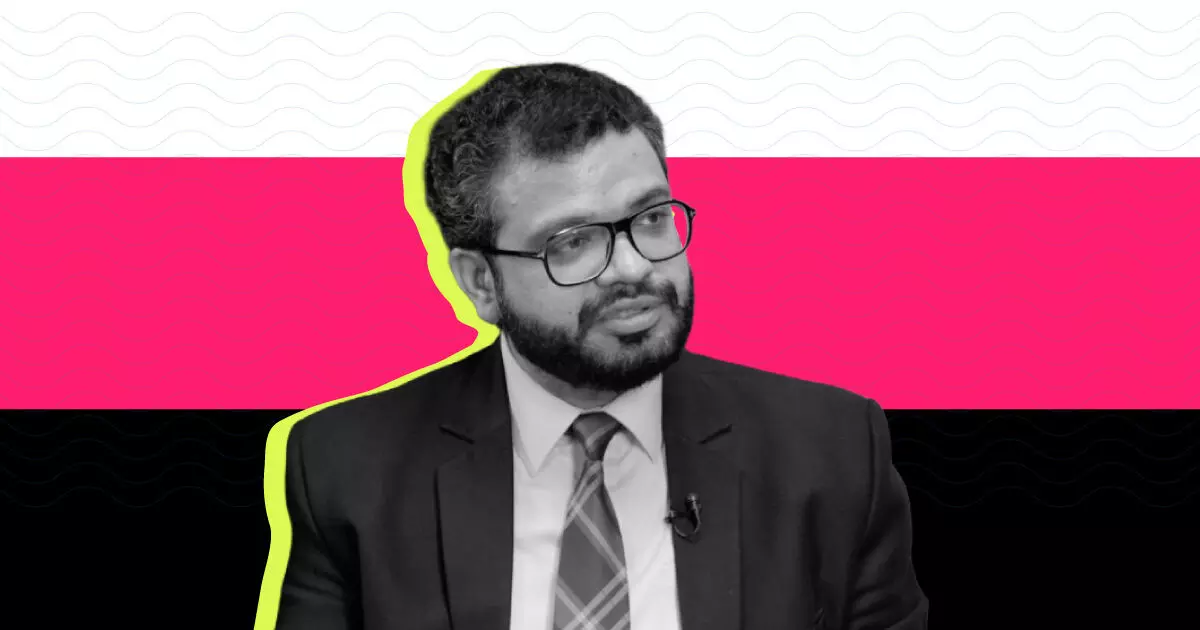
India Is Now the First Country To Report Credit Data Weekly: TransUnion CIBIL CEO Bhavesh Jain
- Economy
- Published on 8 Aug 2026 6:00 AM IST

Bhavesh Jain, Managing Director and CEO of TransUnion CIBIL, says the shift from monthly to weekly credit reporting has already brought delinquencies down giving lenders real-time visibility and borrowers faster recognition of repayments.
The Gist
In a recent interview, Bhavesh Jain, CEO of TransUnion CIBIL, discussed significant trends in India's credit landscape.
- Credit activity in India has surged from 11% to 28% in the last decade, indicating increased consumer engagement.
- Young borrowers, particularly Gen Z, are driving the demand for short-term consumption loans, such as personal loans and credit cards.
- Women borrowers have increased their participation in the credit market, now representing 30% of the credit-active population.
NOTE: This transcript contains the host's monologue and includes interview transcripts by a machine. Human eyes have gone through the script but there might still be errors in some of the text, so please refer to the audio in case you need to clarify any part. If you want to get in touch regarding any feedback, you can drop us a message on feedback@thecore.in.
Hi and welcome to this special edition of the Core Report. I am in conversation with Bhavesh Jain, the Managing Director and CEO of TransUnion CIBIL, in our studio in Mumbai. Bhavesh, thank you so much for joining me.
Okay, so I have got two reports from you which are very exhaustive but give a complete sort of landscape of what is happening on the credit side with consumers in India. So let me ask you, in a somewhat lazy way, to sum up for us what are the big mega trends when it comes to consumer behaviour, and then I am going to try and link it to what that reflects about what is happening in India's economy.
So thanks, Govind, it is always a pleasure to be on your show. In our latest report, Unlocking Credit Access, we try to look at what are the mega trends that have come out over the last 9-10 years. The first and most important aspect is that credit activity has gone up in India. So if it was 11% say 10 years back, it has gone to 28%, which means that we are bringing not just consumers into the credit fold, but we are engaging with the consumers for their day-to-day and business needs, first.
So credit activity means 28% of all consumption spend?
No, so it is out of the credit-eligible population of 89 crore, 28% is credit active, which means in the last one year they have taken a loan, they have a loan running, they are paying their EMIs or their credit card bills. So that has grown up significantly.
So you are saying 28% of almost 900 million people, which is almost 300 million more than the population of most other countries, is active?
Yes, credit active, which is a very, I would say, healthy sign, because we have seen over the last 25 years the direct correlation between credit growth and economic growth. And while the credit-active population has gone up and the delinquencies look good, with multiple recent policy interventions and consumer awareness, the delinquency of the retail portfolio is at around 1.3%. For most retail credit products it is at a decade low, and what is also emerging is that borrower behaviour is changing, as is lender behaviour. So today credit institutions have a higher affinity for existing-to-credit borrowers and consumers, and that change has led to the new-to-credit proportion falling significantly in recent times. So where it was in the 20-30% range 10 years back, now it has come down to as low as 12-13%.
And that means? That means that today it's the existing-to-credit borrowers, those who have already been exposed to credit, who are getting possibly the second or third line. So there is an opportunity to bring more consumers from the informal credit sector to the formal credit sector.
For a growing economy like India, new-to-credit should continue to be a focus area for us. So while those big headline changes are happening, what is also changing — in terms of consumer behaviour or preference, I would say — is what we always get asked about: what is happening with Gen Z, what is happening with the consumption economy. So let me share some data and statistics on that.
Of the credit-active population, over 50%, 51%, have a consumption loan, meaning a credit card, personal loan, or consumer durable loan, and 9% have an entrepreneurial or business-oriented loan. Now, credit activity has gone up, as I mentioned, from 11% to 28%, and the biggest jump has happened in two segments: one is consumption loans, the second is business loans. And it's important to highlight that consumption loans have been largely driven by youngsters, or Gen Z.
They prefer credit products that are short-term. So less than three years of tenure is their preference.
So this is under 25 years?
Under 35 years. And their most preferred product, their entry point into credit — so youngsters in India today enter the credit fold through consumer durable financing, or phone financing.
What's the average age for that? It mimics the median age of India, so around 28-29. So that's their most preferred product, and then obviously there are two-wheelers, and then agri and priority sector lending continue, but today they prefer to buy a phone and a two-wheeler on financing.
So that's one big change. Second is that today, in business loans, the proprietors and partners behind those loans are actually taking them in their individual capacity, which means they have skin in the game. They are not just taking credit in the firm's name; they are also taking it in an individual capacity to grow their business.
But from a rating perspective, both are treated equally, right? For small enterprises, whether it's an individual taking a loan or the firm taking a loan, the same rating applies to both.
Yes, today when banks look at the borrower, they look at their credit exposure across both the firm's name and the individual's name. But it's also that the consumer, or borrower, today is comfortable taking on both.
But why would people take it on individually?
Because of the ease of getting the loan, and also their documentation readiness.
So if I were to flip that around, it would appear that getting a loan as a company is much tougher in India, or continues to be tough, whereas getting a loan as an individual is easier — isn't it?
So I would say the growth has been far more pronounced on the retail side, and in fact in recent quarters the most significant growth has happened in gold loans. When we look at the logic behind why gold loans have grown in recent times, in fact, 40% by value and volume is gold loans. It's one-sided.
And the gold loan book today is worth 20 lakh crore, just behind mortgages. And I draw this parallel because the average mortgage ticket size is 38 lakh, with a much longer tenure, whereas the gold loan ticket size is 1.8 lakh with a 12-month tenure. Despite that, the gold loan book has grown to 20 lakh crore. And when we look at why both the consumer and the lender are excited about gold loans today, for the consumer, it's all about convenience and paperwork.
The consumer can actually walk into a credit institution's branch and get a gold loan in the shortest possible time with the least documentation. And in the same way, for the lender, the collateral most Indians have is actually gold.
And are you saying that gold loans also link to SME borrowing, or do we not know what people are borrowing for?
It's actually a combination of both, individuals taking it, and using it for business purposes. There is a good proportion of women borrowers who actually take gold loans for business purposes.
And I think your data says that women borrowers have risen quite sharply too.
Yes. To your question about which borrower profiles have risen in the last 10 years, the first, obviously, is women borrowers. Their participation in India's credit story has gone up to 30%.
The second-biggest jump has come among youngsters, those aged 35 and below. Third, in terms of credit-mature borrowers — over the last 10 years, the proportion of borrowers who have been exposed to credit for more than five years has gone up to 54%, which is a very good thing, because today Indians are not just accessing credit, they know how to work with it.
And it's important, as we build our credit story and our economic story, that the two go hand in hand. One other aspect to highlight is credit monitoring: 35% of the credit-active population actually check their credit report and score, and we have published that data.
And all of that is a revenue opportunity for you as well.
Yes, it is revenue, but the first report is actually free, every Indian is entitled to one free report. But the point I want to make is that Indians and consumers are becoming aware that they need to maintain a good credit history and pay their loans on time.
And the moment you create credit awareness and the consumer starts monitoring their credit, portfolios behave very differently. In our report, we try to highlight that the portfolio quality of consumers who monitor their credit is significantly better than that of consumers who don't monitor their portfolio or credit report. It's very similar to health vitals.
If you check your health vitals, you are bound to take care of your health. Otherwise, you have no idea what your health vitals are, and you may not take care of your health in the same way.
So these are some of the big emerging trends we have seen. And also interesting to look at is the diversity in the geographic spread of credit growth over the last few years, in fact, over the last 10 years.
Maharashtra and Tamil Nadu were the traditional markets, and now it has expanded beyond them.
Yes. In fact, if I call out the three states with the highest credit growth, Uttar Pradesh, Madhya Pradesh, and Bihar. Today, the most populous state in the country, Uttar Pradesh, also has the highest proportion of credit-active population.
And I highlight this because it gives us an indication of a continuous stream of consumers moving from the informal credit sector to the formal credit sector. This is very important for the borrower, for the lenders, and for the respective state, because it brings in a lot of opportunities for both individual consumers and MSMEs.
Right. Let me spend some time on MSMEs. In the case of UP, Maharashtra, and Bihar, is the figure composite for individual borrowers as well as MSMEs, or is there a difference in behaviour?
For retail, Uttar Pradesh has now emerged as the highest in terms of credit-active population. For MSMEs, it has now —
Highest in the country.
Yes, highest in the country in terms of number of consumers and credit-active population. For MSMEs, UP has now broken into the top five states for credit growth. It will take a few more quarters or years before it reaches the top spot, but it has entered the top five.
The reason you're saying this is happening is not that people weren't borrowing or doing business at that level before, but because they are simply moving from informal to formal credit.
Yes, it's a large proportion of borrowers moving from the informal credit sector to the formal credit sector. Credit has existed for almost as long as humans have, but it's more about the transition that's happening, which helps everybody in the ecosystem.
And you said that apart from UP, Bihar and Madhya Pradesh have also shown growth. Are there any differences between the three, or are they all following a similar trajectory?
A similar trajectory, but Uttar Pradesh stands out significantly.
And what about value? Which state has the highest value, or is the pecking order different from the volume figures?
I would say it's growing in value too, but it's more about small- and mid-ticket-size growth happening across all these states. Because if you look at the gold loan story, historically it was concentrated in the southern states. Now the western and northern states are joining the growth in gold loans as well.
So it's a combination of credit penetration, availability of credit, and multiple other factors.
Coming back to MSMEs or small businesses — tell us a little more about the trends you've seen there, and what has changed, perhaps more significantly, in the last few years?
I would say a few callouts. First, the credit-active population is more or less stable, but there is huge headroom, because with over 8 crore MSMEs, the proportion that is credit-active is significantly lower compared to retail.
Second, the new-to-credit percentage is much better than in retail, but it has come down over the last 10 years. And third, a very encouraging sign is that almost 88% of MSME credit is given to proprietorship and partnership firms, up from around 70% ten years back, a very healthy sign, because those are the borrower segments that really need access to formal credit. The second big shift is that almost 37% of MSMEs are now low-risk borrowers.
Why is this important? Because that number moved from around 13% to 37% post-COVID, over the last five years. The credit guarantee programme announced during COVID really helped with handholding MSME borrowers.
Now they have come out really strong over the last five years. Second, today the MSME borrower knows that if they have a good credit history and profile, they will get the best rate of interest in the country. If they get a lower rate, they can deploy that available capital back into their business operations or growth.
So it's a very good circular approach, which helps everybody in the ecosystem. Those are the two big highlights. Third, geographically, MSMEs — whether in a metro or a rural location — have access to credit.
Let me ask you the same question, but framed slightly differently. If you look at the supply of capital to MSMEs first, and then we'll come to retail and demand what is changing there? I am also guessing that the reason people are taking more credit in the MSME space is that it's more easily available to them, marketing is more aggressive, and banks are actively reaching out, which they may not have been doing earlier or earlier, perhaps the processes were so onerous that most people either lost out or wouldn't proceed with the loan.
That's the supply side. On the demand side, have things changed too? Because I am trying to link this to what is happening in the economy between supply and demand, what are your thoughts?
I would say demand has always existed, but the demand mix has changed. Today, most small businesses go for working capital, and in some ways this mimics the young retail borrower's behaviour, small businesses are also going for short-term needs. They are not looking for long-term, capital-intensive financing; they are looking for working capital for their day-to-day business operations.
So today, working capital makes up almost two-thirds of the demand mix. That's a shift happening on the borrower side, and from a supply side, obviously everyone is tilting towards better-profile, low-risk borrowers. Today, lenders prefer low-risk borrowers, as well as borrowers with an established credit history.
As I mentioned, even in MSMEs, the new-to-credit proportion has come down significantly year on year compared to 10 years back. So on the supply side, the tilt is more towards borrowers who have an established credit history.
So is that a good thing or not, if it also means that newer ventures aren't taking on debt?
I would say there is huge headroom, because with 8 crore MSMEs in the country, we should try to bring all of them, if they need credit, into the formal credit sector. That's a huge upside for us as a country. Of those 8 crore, only 3.5 crore MSMEs have taken credit in their firm's name. So there is huge headroom, and that translates directly into GDP contribution. I see a huge opportunity here.
And when you say that almost two-thirds of demand is working-capital-linked, what does that tell us structurally about what's happening in the economy, in terms of the nature of business people are doing?
It reflects a few things. Today, they are comfortable using formal credit for their business operations or day-to-day functioning, whereas earlier they might have relied on friends, family, or trade credit. So the demand that was previously happening outside the formal credit sector is now getting formalised.
We've seen multiple initiatives over the last 10 years — indirect taxes, demonetisation, UPI — all moving in the direction of formalising small businesses, of which credit is a part.
Let me come back to MSMEs in a moment, but let's go to retail now. I know you said delinquency is encouragingly low at about 1.3%, but what are the outstanding levels, how are people repaying, and who are the problem segments, so to speak?
While delinquencies have come down significantly, there are still certain —
And we checked just before this — this level is similar to most developed countries, except America, I think.
Yes, you're right, Govind, that the delinquency levels are quite acceptable, but there are still some outliers. What we need to continuously monitor is that we should encourage credit, but need-based credit. Second is the ability to pay, because we see certain segments where leverage has gone up — say, among younger borrowers with consumption loans — and we can't fully qualify that, because as a credit bureau we don't have income information.
So we're not in a position to fully assess whether increased leverage means the consumer is able to pay or not, but we have seen that balances are going up. Today the retail book stands at 160 lakh crore, at a delinquency rate of 1.3%. One thing to watch is the leverage piece something we've recently addressed in our newly launched gold loan report.
Two very different and unique trends have emerged from the gold loan story. One: one in five gold loans is actually given to an NPA borrower, meaning that before the consumer gets a gold loan, they already have a delinquency on a personal loan, car loan, or credit card. So that's something to watch gold loans being given to NPA borrowers.
Second: one in five gold loan borrowers are actually youngsters, or Gen Z, which raises the question of where the gold is coming from. Exactly where is the gold coming from? Naturally, one would think gold loans are taken mostly by people above 40, but we're seeing an emerging trend where one in five gold loan borrowers are youngsters or Gen Z something one couldn't have imagined 10 years back.
Okay, coming back to the economic growth question, credit is obviously fuelling something, including, let's say, more products or services. We haven't touched on services, but I'm assuming that's also part of the growth. What is driving credit growth, and how are you linking it to what's happening in the economy at a larger level?
I would say there is a direct correlation over a 25-year horizon, which is a fairly good sample size. 25 years back we were a half-a-trillion-dollar economy, and the credit market was 4 lakh crore. Come 2026, the economy is worth 4.2 trillion dollars, and the credit market is 288 lakh crore, which means credit growth has enabled economic growth, and vice versa. 25 years of data show a direct correlation — individual consumers are able to buy assets or fulfil their consumption or emergency needs through credit, which then flows back into the economy.
Similarly, for MSMEs, they have always tapped into credit, but now they are increasingly coming through the formal credit sector. So credit growth, along with responsible credit practices, will continue to contribute to economic growth. What's important is that we keep educating consumers, whether retail borrowers or small businesses, that yes, you may take credit, but take it when you need it.
And if you take credit, you have to repay it on time as well. That ecosystem-wide responsibility is important teaching our consumers, our youngsters, and our small business borrowers that it's important to pay on time and build a credit-fit India, because that will lay the foundation for Viksit Bharat.
Okay, let me spend a few moments on credit cards. The number of credit cards people hold has gone up, so there is obviously some arbitraging going on.
But how are you seeing this at a top level? One is the number of credit cards is it affecting people's ability to borrow afresh? Is it a good sign or not to have so many credit cards? And what other trends have you seen, at least in the last year?
I would say that on a 10-year basis, the credit card market has grown considerably, both in terms of number of cardholders, cards issued, and balances. But looking at the recent period, it's more or less flat. A year back it was 5.2 crore cardholders, and even after a year, it's the same number. Similarly, the outstanding balance a year back was 3.1 lakh crore, and it continues to be 3.1 lakh crore. What this means is that borrowers who already have a credit card in their wallet are taking a second or third card.
That's the big shift happening in recent years. When we look at the personas whether heavy card users or other categories what stands out is that today youngsters don't think of a credit card as their entry point into credit. It's actually a consumer durable or phone loan they take first, followed possibly by a personal loan; the credit card is the second or third product in the hierarchy. Once they take a credit card, the next credit product they take is often another credit card.
That's one big shift. Second, almost two-thirds of new credit cards issued go to consumers who already have a card in their wallet. So today, lenders are focused on borrowers who already hold a credit card more of a "card on card" approach, rather than acquiring new-to-card customers.
Something to think about is why this is happening over the last couple of years. Looking at it from the consumer's side, someone who was using a credit card as a payment tool today has multiple options credit card, UPI, net banking. Let's draw a parallel between credit cards and UPI. Today, UPI has over 600 million access points, versus credit cards, which have only around 11 million POS terminals or access points.
So even if a consumer had a credit card and used it for payments, there's a huge difference in accessibility. Today, if someone with a credit card wanted to buy milk or vegetables, they likely couldn't use it.
Yes, you'd have to use UPI.
I'm just trying to draw the parallel to explain why the credit card industry has remained where it is over the last couple of years, accessibility plays a big role. Second, if a credit card is used as a credit product, today the consumer has multiple choices. The same consumer can buy a phone through consumer finance or a consumer durable loan —
Without having a credit card.
Without a credit card or they can get a personal loan. So today the consumer has choices, whether it's being used as a payment tool or a credit tool. So choices, options, and accessibility are all playing a role.
And I guess that says something about how you're able to use data on the debit or banking side, as opposed to the credit card side, to assess whether someone is loan-worthy. Because I'd think that if someone wanted to buy a mobile phone, traditionally a credit card was the most obvious way to assess repayment capability. But in this case, that data doesn't even exist. So are people looking at bank balances, spending patterns, or other inputs instead?
So today, when someone is giving a consumer durable loan and consumer durable loans bring in a lot of new-to-credit customers — they look at multiple aspects: bank statements, existing relationship with a bank, and if there is a credit history, that as well. For credit cards, it's the traditional underwriting process based on limit size. For a higher-ticket-size limit, everything is looked into, including income and employment information. So credit cards go through the traditional underwriting route.
My point is, if loans are being given without a credit card, and the credit card itself isn't growing as a product — you said 52 million is the current number?
Yes, cardholders.
So what does that tell us about how Indian consumers are consuming? Of course, they've traditionally focused on using debit cards, which then slowed down and gave way to UPI, and perhaps some growth in credit cards. But are there any other shifts within that?
Yes, I'd draw attention back to accessibility. Today, if you go to any electronics shop, from Mumbai or Gurgaon to the remotest village in the country, you'll find everything from a television to a phone being offered on finance. There may not be a credit card POS terminal in a village, but you can buy a phone on finance in almost any village in India.
So the customer today looks at accessibility and convenience. Why would a consumer prioritise a credit card when they can't even access one in the remotest village, but can get financing on electronic goods or a mobile phone there? That's what has driven the biggest shift. In any electronics showroom in a big metro, you'll have five financiers chasing you — you won't see the same proportion chasing you for credit cards. So it's a combination of accessibility and convenience.
And you don't see anything negative in the fact that credit cards aren't growing faster than this?
I see a huge opportunity, because we need to continue making multiple products available to the market and the consumer. Today, a consumer should have UPI, but someone using a credit card as a payment tool can also explore that option. Similarly, for business credit cards, a small business might be receiving inward payments through UPI today, but there's an opportunity to grow business credit cards, where the same small merchant could make all their purchases using one. That would mean continuing on the path towards formalisation.
So there's a huge opportunity to grow the number of credit cardholders, both personal and business, and continue on that path.
I'll come shortly to your advice for borrowers, particularly younger ones. But before that, tell us what's happening on the back end. Last time we met, you talked about the velocity of information sharing increasing, and how that empowers you to become more responsive in credit scoring. What's the latest there?
I'm happy to share with your viewers that India has probably become the first country in the world to move to weekly reporting of credit data. Does that just showcase our technological prowess? Yes, it does, as a country, it reflects our technology capability, but also the sheer scale of consumers and the depth of credit data.
More importantly, how is it helping? If I look at two data points, historically we were on monthly data. About 18 months back, we moved to fortnightly data. A month back, we moved to weekly data. Since moving to fortnightly data as a country, delinquencies have come down, for two reasons.
One, a borrower today knows that if they make a part payment or a full payment, their information is updated as quickly as possible, which gives the consumer a lot of confidence when applying for another credit facility. From a lender's point of view, if a borrower has taken credit and not paid on any facility, the lender finds out sooner. So their credit decisions are based on the most up-to-date information.
So yes, it's a huge step forward, and we have enough evidence to say it has benefited everyone — credit growth continues, but portfolio quality has also improved.
And when you say weekly, that means every bank in the Indian banking system is sending data to you?
Banks, NBFCs, cooperative banks, RRBs — all of them.
All of them are plugged in and able to upload data every week, at a set time and so on. So how many active users are you tracking at any given point in time?
Essentially the entire country. There are 60 crore consumers who have been given access to credit at some point in their lifetime — whether as an individual, co-applicant, or guarantor. So the universe is around 60 crore Indians who have ever accessed credit, of which 28% is credit active, meaning they have at least one credit facility running in the last 12 months, on which they've been making some form of payment.
Okay, so that's roughly 180 million people, give or take.
If I take, yes, roughly 30% of...
Right, so these are people who have loans running, repaying EMIs, and so on.
Yes, yes, absolutely.
So if I look at the overall population, you're saying roughly 180 million Indians are currently taking credit, buying things, transacting, out of the entire population?
Let me clarify further. Of the 89 crore credit-eligible Indians, largely above a certain age and meeting other criteria, 74% have ever been extended credit, individually, jointly, or otherwise, and of that, 28% is credit active. So that's 28% of the credit-eligible base, roughly 25-27 crore consumers.
Who are active right now, that you're tracking? Okay. So, last question, or set of questions. You mentioned you're getting data faster, and that people are self-monitoring more and being more responsive to their credit needs. What would you tell people — let's start with enterprises, since our readers, listeners, and viewers are mostly enterprises — about how they should engage with the credit system? And secondly, what would you tell retail users, based on your understanding and the data you've been tracking, particularly in recent years?
For small businesses, I would say, yes, you may have to go through the formal lending process, but formal lending —
It's always tougher to get a loan as a business, isn't it?
I'd say turnaround times are longer compared to retail borrowers. But I would encourage small businesses to go through the process and tap into the formal credit sector, because I'm sure they'll get better financial terms and conditions there compared to the informal sector. Second, it helps you build a credit history, so as a small business you can approach banks, NBFCs, and cooperative banks and continue building on that. You also get the benefit of multiple government initiatives — Mudra loans, credit guarantee programmes, and other schemes for small businesses. Once you move into the formal sector, it always helps.
Similarly, for retail borrowers, I would say: take credit when it's required, take credit when you can repay it on time, and, most importantly, continue to monitor your credit. The more aware you are, the more likely you are to pay on time — we've seen this pattern among Indians. I'd also like to highlight that women borrowers who monitor their credit show a stark difference in portfolio quality, which reflects the old saying that if you educate the women in a household, the entire household gets educated. It's the same with finance and credit, the data shows that if you teach women how to manage or work with credit, they perform exceptionally well.
And do a better job than the men.
I'd say they raise the benchmark so high that it encourages everyone to bring more women borrowers into the formal credit sector.
Right, right. And that's a very positive note to end on as well. Thank you so much, Bhavesh.
Sure. Pleasure seeing you again.
Thank you.


