



 Newsletter
 Search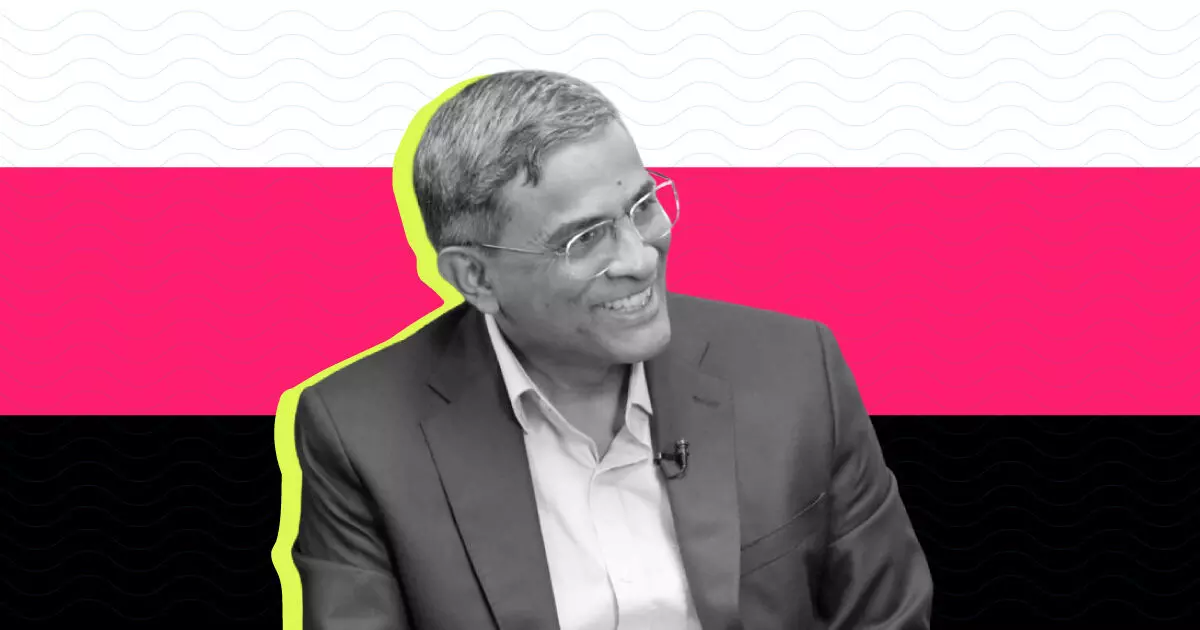
If Solutions Exist, Why Wouldn't We Do It: Saint-Gobain's Sreedhar N on India's Climate-Resilient Building Push
- Economy
- Published on 15 Aug 2026 6:00 AM IST

In this weekend edition of The Core Report, Sreedhar N CEO - Asia Pacific and India Region , Saint-Gobain talks about why insulation should be mandatory, how waterproofing can double a building's life, and why India's next construction boom must be built smarter, not just bigger
The Gist
N. Sreedhar, CEO of Saint-Gobain Asia Pacific, discusses the company's commitment to sustainable construction and energy efficiency.
- Saint-Gobain's purpose is to create better buildings that are lighter, stronger, and energy-efficient.
- The company has invested heavily in various construction products, including glass, gypsum, and insulation solutions.
- Sreedhar emphasizes the importance of insulation in reducing energy consumption and addresses climate change impacts in India.
NOTE: This transcript contains the host's monologue and includes interview transcripts by a machine. Human eyes have gone through the script but there might still be errors in some of the text, so please refer to the audio in case you need to clarify any part. If you want to get in touch regarding any feedback, you can drop us a message on feedback@thecore.in.
Hi, and welcome to The Core Reports Weekend Edition. I'm joined by N. Sreedhar, CEO of Saint-Gobain in Asia Pacific and earlier CFO of Saint-Gobain globally, and he's here with us now. Thank you so much for joining me, N. Sreedhar.
Thank you so much for having me here.
It's a pleasure. Wonderful. So, perhaps not everyone knows much about Saint-Gobain, because it's a brand that sort of resides behind, let's say, walls and construction edifices and so on.
But as you look around you, or if I look around me, what are the products that you make that are keeping this building literally standing today?
You know, when I look at this building, it's not standing necessarily because of all the products that we make, but because of the products that we really want to promote in India, the products that can make the building better. So, when you look at the purpose of the group... for the first time, you know, the French group didn't really talk about vision or purpose. This is not something that came to them naturally.
The first time the group articulated the purpose of the group very clearly was in 2019, and the whole idea behind that is: how do we make buildings much better? What we mean by "better" is making the building lighter, but without compromising on the strength of the building, and at the same time making sure the building is energy efficient. Energy efficiency also comes with making sure all the living spaces we create in any building are healthier, healthier in terms of the comfort you need, making sure noise pollution and air pollution are addressed, and making sure air quality is good. Thermal comfort is another important aspect for the efficiency we want to achieve.
So, in India, we have all these products I mentioned. It's all performance-driven. Glass, basically, is the story we started with.
Even the group — that's what everyone remembers you for.
Exactly, and it's good that they remember, because that's how we were born in France 360 years ago. Now in India too, it's the same story. While we had a small presence in industrial solutions, the real story started with the glass investment, when Saint-Gobain decided to do a greenfield project in India. But glass is just one part of the story, because over time we've made a lot of investments. After glass came gypsum, where we acquired British Plaster Board worldwide.
I was part of that acquisition while based in France at the time. Then, in the last five years, we've moved into the minerals space, which is extremely important for insulation. Insulation is one of the most important products our country needs. Then there's construction chemicals — another area where we've invested heavily at the group level.
We've invested more than 4 billion euros to strengthen our technology and the offerings we can provide in construction chemicals, and I'll tell you why it's important for our country. I lived 15 years in the Western world, and I witnessed the impact these products can bring when provided as a complete solution. We no longer focus on being just a product seller — selling glass or gypsum or insulation products — because when you combine all these products, they can actually deliver energy efficiency even in a country like India.
We now have a few use cases. We've been able to demonstrate energy bill reductions of up to 40 percent, which is a significant impact even at the country level.
And are these retrofit cases, or...?
These use cases are from new construction. We haven't yet done retrofits, but in France — and across Europe — we have hundreds of examples where we've been able to show a 70 percent reduction even in retrofit cases. The Saint-Gobain headquarters, a 42-story building made entirely of Saint-Gobain solutions, actually runs throughout the year without any air conditioning.
And since you mentioned that — we've had heat waves across Europe, including record temperatures in France. What does this mean for a company like Saint-Gobain, and what's your response?
This is clearly the reason we are promoting so strongly the need for buildings to be insulated and made climate-resilient. Climate change is a reality. We shouldn't keep debating endlessly whether it has an impact or not, the reality is that even India is seeing it. But for me, solutions exist, and if solutions exist, why wouldn't we implement them?
I say that especially for India, because it's such a beautiful country, a growing economy, with a young population, faster urbanization, and lots of aspiration. We should be able to introduce all this, and the good thing is that it's all available in India, made in India.
We have 82 plants in India today, and we should be able to create a positive impact through all these solutions.
Got it. So you have some 21 brands, or maybe more, catering to different aspects of a building or a construction project. Tell us where the impact is greatest, or which product or brand is really making a difference in terms of energy efficiency.
It's not just one product, that's the shift that's happened in the last few years, even at the global level. We realized the power of combining these products. Glass is clearly one example.
In India, it's much better known now that a combination of gypsum board and insulation, when used to make a wall, can give you an energy-efficiency impact up to five times greater. To give you an example: a typical concrete wall, the kind we build with sand, cement, and brick, versus a wall made with a combination of gypsum board and insulation, what we call an "externally insulated" wall (a sophisticated technical term), can weigh one-tenth of what a concrete wall weighs.
That's significantly leaner, and reducing the weight has a clear impact on the carbon footprint, the foundation you need to build is of a different order altogether. Second is the thermal effect, technically called the "U-value", the amount of heat from outside that gets transferred to the inside environment. This can be as impactful as comparing a concrete wall, where the heat transmission is 3, versus this wall, where it's 0.6. We're talking about a five-times-better impact.
So that's one clear example. The second is that this isn't just about insulation. In our country, which is growing, you'll see noise pollution and air pollution everywhere, and we have a combination of mineral wool for acoustic ceilings. There are also many other kinds of ceilings we provide, not just high-end ones, we now offer comprehensive ceiling and acoustic solutions that significantly reduce noise pollution.
Go anywhere in and around Bombay or any city, the WHO has articulated in many forms what an ideal noise level is. Anything more than 30 decibels isn't good for undisturbed, uninterrupted sleep. If you want a comfortable environment for a good conversation, we're talking about 35 dB. In any Bombay building, you'll easily find 50 to 60 decibels. Why wouldn't we create that comfort, when it's extremely impactful, using solutions like these?
Another benefit these solutions provide relates to plasterboard. People in India think plasterboard and gypsum are fragile — that's outdated. Today's plasterboard is far more advanced: it can be fire-rated, load-bearing, and termite-resistant. Termites are a real issue in hot, humid climates. There's also mold-resistant plasterboard, and plasterboard that absorbs formaldehyde — and I don't think the average person realizes how important that is. You close all your windows and doors because the outside air is polluted, and you live in an air-conditioned environment, but your day-to-day activities actually emit a lot of formaldehyde. You don't realize that.
Yeah, I thought I'd left that behind in biology class.
You haven't. You actually generate it on a day-to-day basis, and this plasterboard, without making any noise, absorbs the formaldehyde.
There are a lot of impactful, simple, practical solutions now available in India. It's the job of an organization like ours to create that awareness and promote these solutions so people can benefit.
Right. You've worked in many other countries, and your last position was CFO in France at the headquarters. This isn't really a finance question, but I know you've had a good last half and you've seen returns in business across all regions. My real question is: when you look around, what can India bring in from other countries, including the Global South, and what could other countries take from India in terms of how we've adapted so far?
First of all, I think India should adopt all these solutions quickly. We shouldn't go slow. In my view, insulation should be made mandatory for every single building. We shouldn't take an incremental approach, because India is not an energy-self-sufficient country — we're importing and paying so much in dollars. Every single residential building should be insulated so that it can reduce energy needs by 40 percent. That should happen.
Second, in terms of what Saint-Gobain in India can offer to other parts of the world, there are clearly a lot of opportunities in Asia Pacific, since that's part of my region, so I have greater visibility and influence in leveraging our strengths in terms of solutions and products. There's plenty we can do. The other area is the Middle East, where we can export. I've been pushing hard to see how much of the infrastructure and industrial capability we've built in India can be leveraged better, because in our business, the more you leverage the assets you invest in, the more meaningful it is. For example, in my region, I have more than 30 countries, and only 18 of them have manufacturing facilities.
So that's how we try to optimize, and India would be the biggest contributor to this. Beyond that, India has plenty of talent — engineering skills, digital skills, innovation capabilities. Today, I think we can genuinely help the group, and this is already in place.
You have a research lab in Chennai, correct?
Yes.
So let me ask a question on that. I know there's a lot of interesting R&D work going on, based on previous interactions with your colleagues. What are some of the things they're working on right now?
Right now, they're working on creating systems that can be easily demonstrated. We have lots of ideas, but I think the challenge is putting it all together and making it simple for any consumer. In India, there are many stakeholders — it's not just the consumer, because you're the house owner, but you don't construct the building. I need to influence the government authorities who approve the land and the construction. I need to influence the contractor, the architect, and also the applicator who actually uses the product. So we have many stakeholders to address. It's important to have a simple, well-documented way to measure the benefit each stakeholder gets. That's deep work that's ongoing.
The second thing we're looking at is how to make these products more competitive, because at the end of the day, we need to reach a larger mass. We can't remain only in urban cities, we have to reach tier-two and tier-three markets. And the third thing is a lot of new technologies we're trying to make sensible for India, because our hot and humid climate requires continuous adaptation.
You put out a paper on six global transformative issues, and some of them relate to collaboration and the profitability of sustainable construction, and so on. But one interesting point I picked up was the integration of adaptation and resilience with sustainable construction. Sustainable construction is something you've talked about as a company for a long time, but adaptation and resilience are a bit different — people don't usually think about that, even as we face more heat waves, extreme weather events, or general wear and tear. So what kind of work is going on there?
The simplest way to increase adaptation is to demonstrate the power of the solution, the best way is through use cases, or by creating a learning center where people can walk in, touch and feel what's happening, and understand how these products deliver the benefits we're talking about. The third thing is working with educational institutions, we've signed an MOU with CEPT in Gujarat, a very reputed architecture university. The idea is to create a lab where students can work and witness firsthand the power of these solutions, which are easy to access and available in India. They have 2,100 students graduating every year, and by the time they leave college, they're already informed and knowledgeable about it.
The other thing we're doing now is working with schools. In the last 15 months, I've been traveling a lot and have met countless architects, builders, and contractors. Even as group CFO, I was probably the one who traveled most extensively, trying to understand the market, know what differentiates us, and understand why customers come to us — or don't — and what their pain points are. That's given me a lot of deep insight.
The other issue that comes up is: "This is great, but it must be expensive." You need to show them, with facts and figures, that it's not — then they're much more receptive. I'll give you two simple examples. One, we talked about energy reduction.
When you construct a building, there's one important element that's often not done thoroughly: waterproofing. Go around Bombay and you'll see cracks all over building facades, and people accept that these cracks need to be filled every three or four years as part of maintenance they just repaint it. What they're missing is that it's not just about repairing and repainting the crack allowing moisture in has caused corrosion in the steel used to build the structure. There was a great article published just last week I'm not sure if you saw it Nomura published it in ET, talking about India losing 146 lakh crore due to corrosion across bridges and infrastructure. It's huge. Our analysis shows that if you do a thorough job of waterproofing, you can improve the life of a building by more than two times. There shouldn't even be a debate about this you shouldn't do waterproofing halfway; it needs to be done systematically. Today, Saint-Gobain has comprehensive solutions for construction chemicals, insulation, plasterboard, acoustics, and glass, which has always been part of our offering.
Since you mentioned Mumbai, and what you see when you drive around so many buildings are 40 to 50 years old and facing a big redevelopment wave, with exactly the problems you point out: corroded steel, corroded pipes because water has seeped in, and so on. Are you saying that even today, when new buildings are being constructed, whether residential or non-residential, we're not paying enough attention to waterproofing?
I'd say there's always room for improvement. People like us can do this, you may say you're doing waterproofing, but doing it thoroughly is different, and with all humility, not everyone has that competence. After acquiring Fosroc, which joined us 14 months ago, I've spent a lot of time with structural consultants, listening to them about the products and solutions that make an impact. I'm genuinely convinced that a lot can be done. Fosroc has significant influence and credibility in the marketplace, thanks to its quality and its ability to prescribe the right solutions based on the size of the building.
With Saint-Gobain's strength having been present for so many decades and holding a leadership position we'll be able to leverage this investment far more impactfully.
Right. Coming back to adaptation and resilience let's focus on public infrastructure for a moment. We have airports, ports, and so many buildings that are essentially public infrastructure, and they need to be better built or retrofitted to withstand the effects of climate change. Where do you think we are today? This isn't just an India question, it's global, but to the extent India can take something away from it?
In India, I don't think we're giving this enough attention beyond trying to fix problems as they arise. As a country, we're quite reactive, we're tolerant, we manage, and we continue. If you take construction chemicals as an example: if a building wasn't built well initially, you're not going to demolish it completely. We have impactful coatings that can be applied during repairs anti-corrosive coatings applied before painting solutions that can extend the life of a building. That's something we should do.
The second thing is infrastructure look at our roads. How many times do we repair potholes? It's become the norm, and this happens because we often don't give the right attention when building a road it's not just about putting down a layer of asphalt or cement; you need proper reinforcement material. We manufacture that reinforcement material in India, and we've also acquired new technologies recently that can significantly extend the life of roads.
We had a very interesting conversation recently, that's the difference it makes when you approach a client as a solution provider. We had a full-day session with the Bangalore International Airport team, including the CEO, who is very passionate about sustainability. He spent the whole day with us at our innovation hub, and after we presented our comprehensive solutions for airports, he said he wanted to create a lab in the Aerocity he's building. He's taking a lot of interest because he sees the merit — not just in sustainability, but also in durability and safety. Airports have strict safety norms, and creating a safe environment is something we approach very meticulously in the infrastructure market.
Since you mentioned airports, what could airports do more today to be more adaptive or resilient? A couple of years ago, Dubai Airport was submerged, and Chennai Airport has flooded more than once, not the entire airport, but large parts of it, bringing operations to a standstill. What can be done, given this could happen again?
That's why it's important to create use cases and demonstrate how, right from acquiring the land parcel, Saint-Gobain is building a credible capability showing all the do's and don'ts, from the foundation, the kind of reinforcement material needed, to the kind of concrete you should use. We now have the capability to reduce embodied carbon in concrete by up to 50 percent.
So you're saying you need 50 percent less concrete to build, compared to before?
We can reduce embodied carbon in a building by 50 percent if you use the right materials from the day you start designing. That means substituting concrete with gypsum, and so on. You can also reduce clinker content, cement is made with clinker, and you can substitute it with alternative materials. If you use the right construction chemicals, admixtures, additives, the structure becomes much stronger and more impactful, while also reducing the carbon footprint. There's a lot of interesting science behind these technologies, and they're all available in India.
Another sensitive issue is the runway, if it's out of service even for a minute, the cost to the airport operator is enormous. When you explain the reinforcement materials that prevent cracks from forming, they latch onto the idea quickly, we just need to educate and show them.
For a company like Saint-Gobain, an airport is a beautiful space to work in, because it's not just a building, it's an experience for travelers. You have restaurants, lounges, shopping areas, different environments with different needs. We've articulated how each of these spaces within an airport can be made healthier, more acoustically comfortable, thermally comfortable, and visually comfortable, because natural light often makes a big difference in your day-to-day experience.
Let me ask a slightly different question, not entirely off the topic, though. What's the most interesting or fascinating new technology you've seen within the company that's contributing to this change we've been discussing?
I'd say mineral wool. Over the last 15 months, I've realized that three-fourths of the insulation we do today is limited to industrial buildings residential buildings rarely have any insulation at all. For most people, it's all about air conditioning which brand, whether it's centralized AC, whether there's a proper duct that's the whole thought process. They don't think about why they even need air conditioning in the first place.
Three-fourths of insulation, even in industrial buildings, is still done with bubble wrap or slag wool, which aren't good, they're actually unsafe. Bubble wrap is flammable. Insulating with bubble wrap might give some marginal improvement, but you end up with an unsafe built environment, if a fire breaks out, the bubble wrap will only help it spread. Mineral wool, by contrast, is fire-resistant, offers much more controlled thermal performance, and is far superior from an energy-efficiency standpoint. That's our latest addition. The second is construction chemicals, durability and strength for buildings will make a significant positive impact on the country.
People who know Saint-Gobain also know brands like Norton what used to be Grindwell Norton in India which is abrasives, quite different from everything we've discussed. Where does that fit strategically?
That's a business I ran for eight years — it's very close to my heart. We became the market leader during that time. I was part of the thinking process at the global level when we did the group's portfolio transformation — we're talking about 40 percent of the group's turnover being divested or acquired. There was a lot of conscious decision-making, and we divested many businesses that didn't fit directly. But abrasives has a construction-related element, because anything involving polishing, finishing, or cutting requires abrasives — so it's not entirely disconnected.
It's a nice business historically more automotive-focused, and still is, along with steel and auto ancillary, but also construction. We have a lot of good, interesting abrasives products all the sandpaper you use, all coated abrasives and everyone wants better finishing, which goes well with the construction sector. So it fits with us.
So, in a way, what I'm also asking is, strategically, construction-linked products are clearly the mainstay of Saint-Gobain, one way or another. Is that going to expand as you look ahead, given the changes you're seeing externally, and given your continued role at the group level?
We'll continue to invest, we're a very ambitious organization. The focus has been North America and Asia Pacific. In India alone, we'll be investing more than ₹10,000 crore. Over the last decade, we invested ₹9,000 crore; over the next five years, we're talking about investing more than ₹10,000 crore more than double the previous rate. All of that investment will largely focus on light and sustainable construction.
There are already plenty of greenfield projects, I mentioned Sriperumbudur earlier when we met; it's a beautiful site, one of the world's first integrated industrial sites, where all our product lines will be produced at the same location. We'll continue to expand in construction chemicals, we're already looking for land, because that's an area where we'll grow much faster. We'll also continue to acquire wherever there are opportunities in India, because we believe there's a lot of opportunity in construction chemicals and reinforcement materials, since infrastructure is a huge market for Saint-Gobain.
We've traditionally focused more on commercial buildings, but we're now moving into residential, where there's also huge scope. We can participate in airports and infrastructure, roads, bridges, especially after Fosroc joined us, which has brought significant strength. Today, we can say with confidence that we have a comprehensive solution for construction chemicals in the market.
I know you don't disclose standalone figures for India, except for one of your listed subsidiaries. What's the export contribution roughly? I know Saint-Gobain has always been a domestic player is that changing?
As I mentioned, construction is fundamentally a local business, that's also part of the transformation, where we quickly recognized this. The group went through a significant change in organizational structure, today we have country CEOs. India was always an exception, as it was run by an Indian from the beginning, but in many other countries, it used to be run by French expatriates.
Today, more than 90 percent of the group's country CEOs are local nationals, that's the shift that's happened. So it will fundamentally remain a local business, but for a country like India, I see a lot of growth opportunities in exports, particularly in Southeast Asia, Australia, and the Middle East, three regions where I believe we can make a significant impact. We've already started selling insulation in Australia, and in Southeast Asia, there are a lot of opportunities for high-value coated glass, you can't just keep selling float glass everywhere; you have to leverage the float glass you produce into higher-value products. So we're investing in marketing and developing the market in these regions, because it requires education and building the right ecosystem.
You're a finance man, and you've held a finance position in a company that must be predominantly run by engineers. How has that felt?
Listen, by qualification I may be a finance man, and I won't deny that, but the difference is that I've always been on the ground, right from day one. I started my career in the plant, I spent all my formative years there.
In Chennai?
No, Chennai came later — that was glass. I started my career in the Bhandup plant in Bombay, and I ran the abrasives business as business head between 2008 and 2015. When I stepped in as business head, the sales and marketing head resigned, and I made a choice to wear that hat too sales and marketing just to remove the perception that I was "just a finance guy." I spent all my time on the ground, meeting distributors and customers, and that gave me a lot of insight. It also brought about a significant change in how we approached the business, which led to our leadership position. Touch wood, we still hold that position today, even 11 years after I left — the business remains the market leader, fantastically managed by a great team.
So I'm not really a finance guy, though on paper, yes, I am. I've always spent my time on the ground. I don't see any difference I enjoy it. I spend one full day every month in the innovation center, talking to the 300 scientists we have there bright, passionate people. I get into it, and you just have to ask questions with the humility of knowing you're not the expert. If you approach it that way, you learn a lot. That's what the journey has been all 32 years in the group, I look forward every single day to learning something from the team, and I continue to do so.
Is this the only company you've worked for?
Yes, I initially started with the Ministry of Industry, because my whole family worked for the Government of India, and they all celebrated that I got a pensionable job. But I quickly realized this wasn't what I wanted to do, and when I quit, no one in my family was happy about it, they all thought I'd made a big mistake. My father, even at 95, tells me I made a blunder by quitting a pensionable job. He doesn't understand what I'm doing, but it's been a fun, great journey.
Last question. We're in interesting times, we've seen a lot of changes in trade around the world, including a tariff war that's now nearly 18 months old. For a multinational like Saint-Gobain, this must have caused you to relook at strategy, including from your former seat as CFO. What has changed, how are companies coping, and what lies ahead?
Fortunately, we made a very proactive move, we shifted to a decentralized, country-specific model, which has dramatically reduced our dependence on moving material across continents over the last seven years. We're now very local, quite independent, running like entrepreneurs, a cultural change that's happened. A lot of credit goes to our current chairman and CEO, Benoit, with whom I had the privilege of working on this transformation. There's been a lot of empowerment of local teams, which has enabled each country to become self-sufficient and less dependent on others.
The world is going to remain volatile, there will be turmoil from time to time, but the more prepared and self-sufficient you are within your own country, without too many dependencies, the better off you'll be. That's exactly what we did over the last five or six years.
Was that because you anticipated something like this?
I wouldn't say we anticipated this specifically, but it made a lot of strategic sense for us to become more decentralized and country-based. It turned out to be a blessing when all this happened a huge strength compared to other companies. I think we're far better placed, partly because we're not just a single-product seller. With all humility, no other player has the breadth and depth of offering that Saint-Gobain brings to the world of construction. It's the sheer focus and combination of all our products, moving toward solutions helping people get better buildings, better living spaces that are healthier, more impactful, and more emotionally connected.
And "emotional connect" is a good term to end our conversation on. Thank you so much for joining me today.
Thank you, my pleasure.


