



 Newsletter
 Search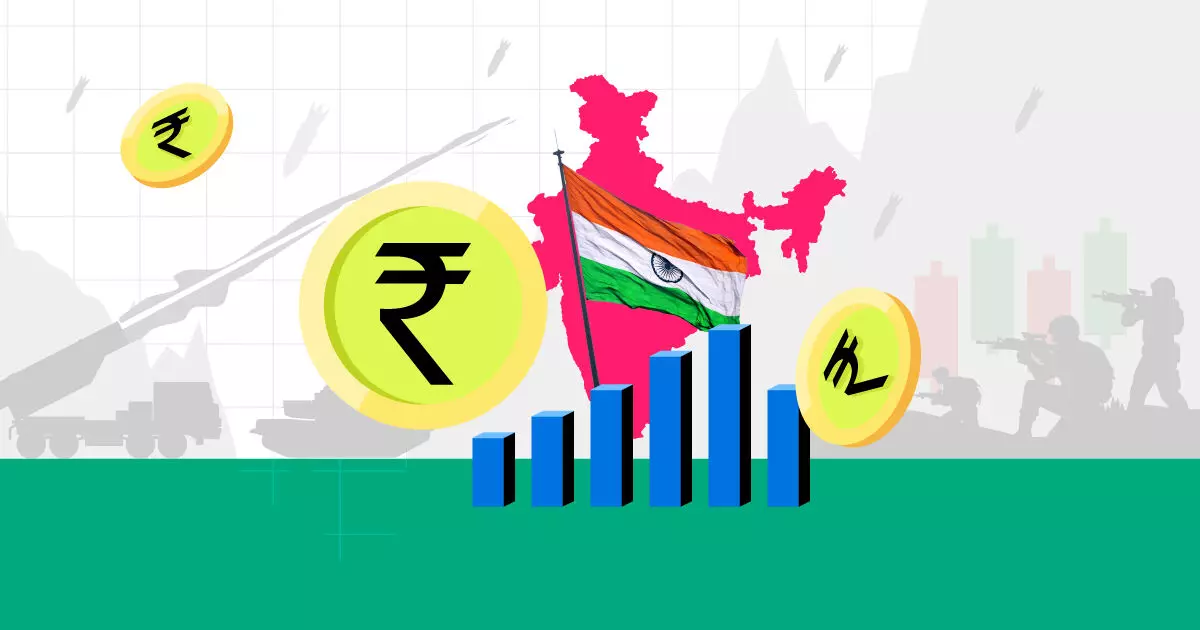
India’s True Leverage Is Economic, Not Geopolitical
- The Take
- Published on 13 April 2026 4:02 PM IST
A war it didn't start is costing India dearly. But history suggests the economy always finds its next engine of growth — and it may already be accelerating.
While India’s social media pundits wring their hands over New Delhi’s absence from the latest US - Iran negotiations, one vital question that deserves more attention at a time like this is this: Which domestic industries will power the Indian economy through this era of geopolitical turbulence?
History shows that India’s economic engine is remarkably adaptable.
Looking back, more than a decade ago, telecom services drove national advertising spending — a reliable leading indicator of broader economic dynamism — before the sector consolidated into a heavily indebted oligopoly.
The vacuum was quickly filled up by, among others, telecom hardware, with global giants from Vivo, Oppo, Apple, Xiaomi to Samsung constantly vying for consumer attention.
This has been a decadal growth story even as India’s smartphone population races towards the 700 million mark.
Similar cycles of creative destruction have played out across other sectors. The insurance industry’s massive spending spree eventually gave way to a new wave of fintech aggregators.
Then came the e-commerce titans, pumping billions of dollars into subsidising customers to build market share before maturing into platforms focused on targeted, festival-driven deals.
The Trillion Dollar Shift
One industry that has taken on the mantle of growth is the automotive industry, which is undergoing a profound and necessary transformation.
The energy shock precipitated by the ongoing conflict in West Asia has only accelerated India’s transition toward electric vehicles (EVs).
The numbers speak for themselves.
According to data from the Federation of Automobile Dealers Associations (FADA), overall car retail sales grew 13% to 4.7 million units in fiscal year 2026.
But the real story is in electrification: EV sales surged a staggering 84% to roughly 200,000 units.
Domestic champions Mahindra & Mahindra and Tata Motors jointly command some 61% of the electric car market.
Remarkably, EVs accounted for a fifth of the 540,000 additional vehicles sold in FY26, a sharp increase from just 8% in the previous fiscal year.
Yet, the most lucrative frontier is not passenger cars; it is commercial transport. Commercial fleets — from ride-hailing taxis to gig-economy two-wheelers and heavy freight transporters — consume 70% of India's transport fuel.
As AdvantEdge founder Kunal Khattar told The Core Report’s Weekend Edition, electrification represents a colossal near $1 trillion economic opportunity for domestic innovators and venture capital.
India's Real Power Play
As the first round of peace talks — ironically brokered by Pakistan — collapses, India must remember where its true priorities lie.
It is undeniably unfortunate that Indian consumers and businesses are paying a steep economic and social price for the military misadventures of the United States and Israel in Iran.
But while New Delhi may have little sway over the trajectory of a Middle Eastern war, it retains absolute control over its own economic destiny.
Since the liberalising reforms of the 1990s, for every sector that matures or fades, new vectors of growth reliably and invariably emerge to take the lead.
Today, despite the very real headwinds of capital flight and AI-driven labor disruptions, India’s businesses are fighting to deliver double digit growth across industries.
The rest of 2026 and beyond will be challenging and involve pain for industry, large and small. But industry will overcome it if it stays focussed with some help on achieving economic objectives.
The lesson here is simple and pragmatic.
True geopolitical leverage is rarely won by clamoring for a seat at foreign negotiating tables.
It is built at home, through relentless economic focus.
India’s path forward is to double down on the industries of the future and let its economic strength do the talking.
Core.
Core.


