



 Newsletter
 Search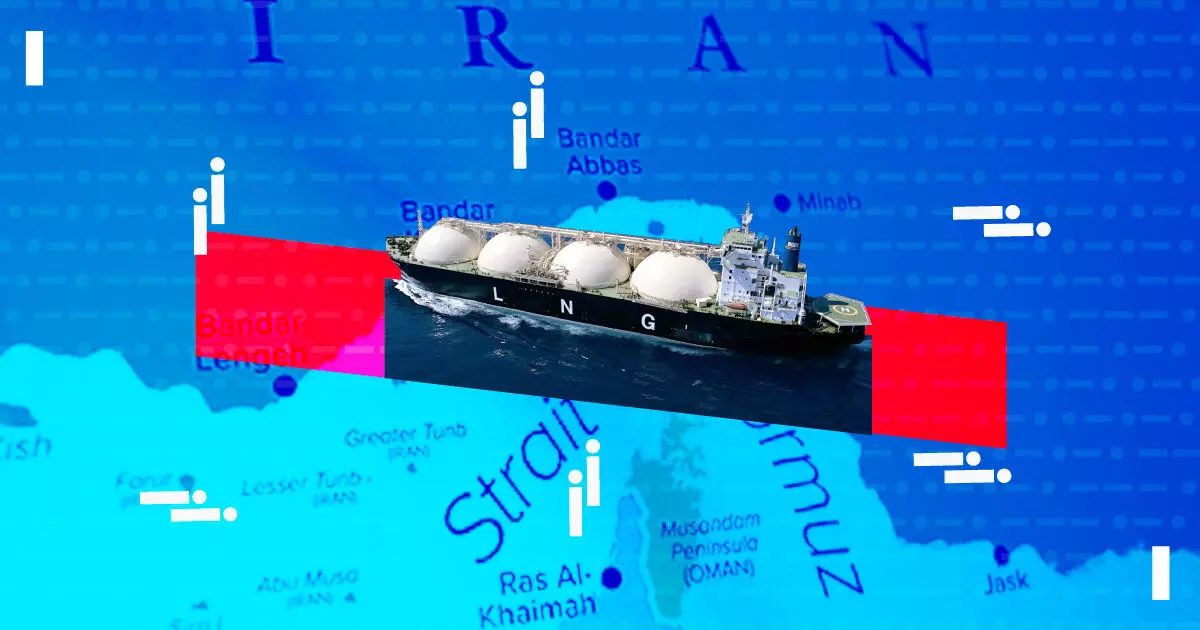
India Shields Homes From Gas Crisis As Industry Bears Hormuz Shock

With Hormuz-linked LNG supplies disrupted and prices surging, India is protecting household gas use while industrial consumers brace for curbs and rising costs.
India’s natural gas supply chain has grappled with a wave of force majeure declarations as the escalating conflict in West Asia has disrupted critical energy trade routes.
A common theme during this time from all stakeholders, be it the government, suppliers or distributors, is to prioritise the retail consumer.
While the government and city-gas distributors (CGDs) want to insulate households, the complexity of international pricing and India's heavy reliance on imports that come through the Strait of Hormuz has made total price protection challenging.
The Vulnerability In Numbers
In January, a month before the tensions, India’s total consumption of natural gas was at 5,252 million metric standard cubic metres (MMSCM). This is consumed across multiple industries — fertilisers, power, CGDs and others.
Approximately 54% of this, or 2,825 MMSCM, is met through liquified natural gas (LNG) imports. According to Crisil, more than 50% of India’s imported LNG passes through the Strait of Hormuz.
However, there is a domestic cushion, with close to half of India’s natural gas requirements that are unlikely to face supply-chain related concerns as they are procured and moved within the country.
Force Majeure And Supply Chain Paralysis
The crisis intensified last week when Qatar, one of India’s top-three suppliers of natural gas, saw QatarEnergy declare a production stoppage for LNG and associated products. The ripple effect was felt on Indian shores almost immediately.
State-run gas major GAIL (India) Ltd reported that its long-term supplier, Petronet LNG Limited (PLL), has issued a force majeure notice. Following this, the allocation of LNG quantities to GAIL under the said contract has been reduced to zero with effect from March 4.
“GAIL is currently assessing the situation with respect to any supply curtailment that may need to be imposed on its downstream customers,” the company stated. These downstream customers include large industries such as power, fertilisers, and CGD that serve as the final link to the Indian public.
A Retail First Rationing Strategy
CGDs, for now, have limited the impact on commercial users, assuring domestic consumers remain better placed.
For instance, Adani Total Gas has reportedly placed supply curbs on some of its industrial and commercial consumers, restricting them to 40% of the contracted capacity, according to people in the know.
Similar steps have been taken by other CGDs, such as Sabarmati Gas and Gujarat Gas, in the industrial belt of Western India.
Multiple tile companies over the last week have informed stock exchanges of these supply cuts from the two agencies supplying to the Gujarat markets.
In Maharashtra, Mahanagar Gas (MGL) maintained that while the current supplies to households and CNG stations remained normal, “if gas supplies to MGL are curtailed, there could be some impact on gas supply to MGL's industrial and commercial customers. This, however, would be mitigated as almost all of these customers have recourse to alternative hydrocarbon fuels like FO, LSHS, LDO, LPG (liquefied petroleum gas) etc”.
According to Petroleum Planning & Analysis Cell data, of the total CGD usage in the first-half of FY26, 7% sales was domestic piped natural gas (PNG), while the rest was CNG (59%), industrial PNG and commercial PNG (32%). In terms of sourcing, CGD is the second largest consumer of natural gas sales in India, at 1,451 MCM, of which 617 MCM or 42% was met through imports.
Mahanagar Gas, in its statement, also said that it “receives 100% of gas required to meet domestic household supplies from domestically produced gas. Similarly, a large majority of the gas required for our CNG supply is also domestically produced.”
Not just natural gas, a similar approach has been adopted for LPG, a more widely used cooking fuel. In a recent circular, the government said: “All oil refining companies operating in India shall maximise and ensure that Propane and Butane streams produced, recovered, fractionated or otherwise available with them are utilised for production of liquefied petroleum gas (LPG) and make it available to the three public sector oil marketing companies.”
The Pricing Paradox
Despite the supply-side focus on retail, price remains the real kicker. Over the weekend, India’s oil marketing companies raised LPG prices by an average of Rs 60 per cylinder.
The hike comes as oil companies factored in increased energy prices in view of the West Asia conflict. It is unclear how CGD prices, even for domestic customers, will move in the near future, even if supplies remain relatively secure. Many price calculations in India for fuel, irrespective of their sourcing, are based on international fuel prices linked to complicated formulas.
Industrial Fallout
The commercial hit is more immediate — either already facing the heat through supply cuts or anticipating it soon enough, said an association head The Core spoke to. Rating agency Crisil last week noted, “sectors such as ceramics and fertilisers, with high dependence on imported liquefied natural gas (LNG), could see near-term production impact, so will require close monitoring.”
Somany Tiles informed stock exchanges that its gas supply from Sabarmati Gas has been restricted to 50% of the daily contracted quantity, potentially impacting its Kadi plant.
Similarly, Hindustan Organic Chemicals reported that Bharat Petroleum (BPCL) declared a force majeure affecting bulk LPG supplies.
While companies like Asian Granito India report sufficient inventory for now, the long-term viability of production at current spot prices is in question.
Diversification For Domestic Gains
India’s saving grace has been a timely surge in domestic production. Output rose to 36,113 MMSCM in FY25, up significantly from 28,672 MMSCM in FY21, bolstered largely by Reliance Industries’ KG-D6 fields.
However, filling the Qatar-sized hole in the import basket remains expensive.
Outside West Asia, other major gas suppliers of the world include the US and Russia. While there are reports indicating India’s likelihood of buying more Ural crude, it is not clear how much of Russian gas is likely to be available for India.
Reports also suggest that the Indian government has indicated the availability of gas from countries like Canada and Australia. While these alternate options remain, the cost factor weighs. The cost of natural gas in the spot market has risen multi-fold since the US-Israel-Iran tensions. According to Bloomberg, Asian liquefied natural gas (LNG) soared to the highest level since 2023, with spot prices reaching $25.40 per million British thermal unit (mbtu), more than double than a week ago.
Core.
Core.


