



 Newsletter
 Search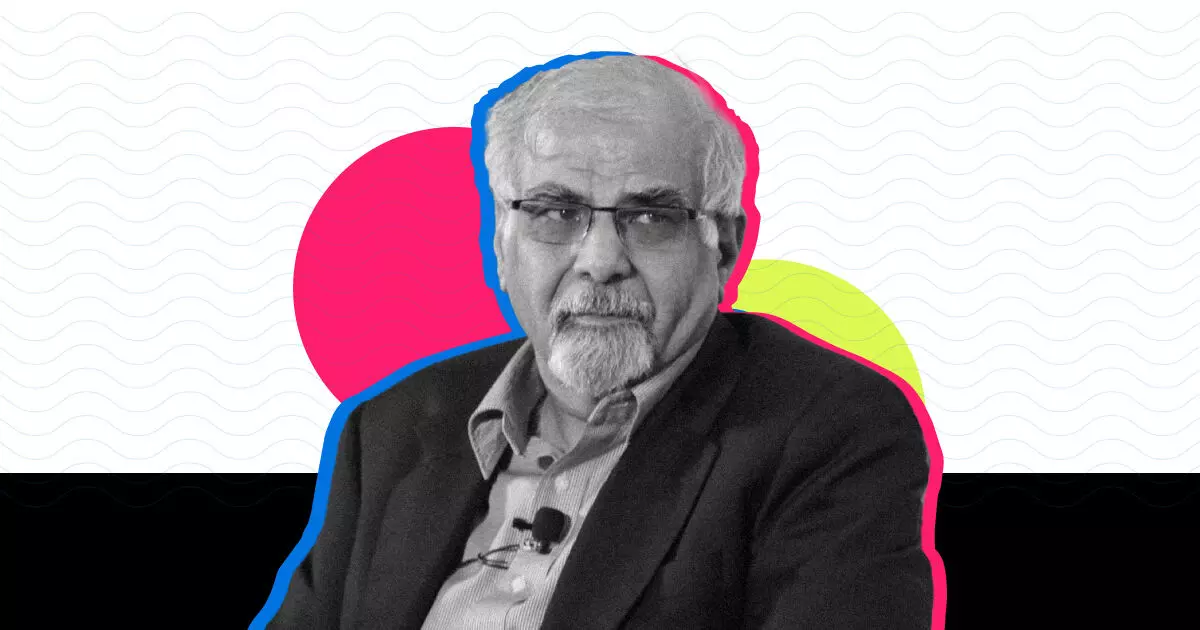
"Bad Policy, Not Global Headwinds, Behind India's FDI Decline": Surjit Bhalla
 Byline Govindraj Ethiraj
- Economy
- Published on 25 May 2026 7:02 PM IST
Reverting to pre-2015 FDI norms, ending retrospective taxation, and introducing export-linked incentives, could turn sentiment around faster than most expect, said Surjit Bhalla
In a recent article in the Indian Express that has sparked considerable furore and drawn strong reactions, economist Dr. Surjit Bhalla who is also a former part-time member of the Prime Minister’s Economic Advisory Council, made a pointed claim - the government is winning elections but losing the economy. Speaking to Govindraj Ethiraj on The Core Report's Weekend Edition, Bhalla expanded on that argument, warning that India is facing a serious crisis of economic confidence, one that predates the current global turbulence and cannot be resolved simply by stabilising the rupee.
Bhalla argues that the sharp decline in net foreign direct investment is the single most telling indicator of the problem. He traces this directly to policy decisions made in 2015, when India's Model Bilateral Investment Treaty introduced restrictive exit clauses that discouraged foreign investors from renewing long-term commitments. Combined with retrospective taxation and a poor ease-of-doing-business environment, these measures prompted both foreign and domestic investors to seek opportunities elsewhere.
"The present problem is a crisis of confidence," Bhalla said, adding that removing West Asia or currency volatility from the equation still leaves India with deep, unresolved structural issues.
He has, however, stopped short of pessimism. With the ruling government facing virtually no political opposition at the moment, Bhalla believes there has never been a better window for bold economic reform. Reverting to pre-2015 FDI norms, ending retrospective taxation, and introducing export-linked incentives, he says, could turn sentiment around faster than most expect.
Edited excerpts below.
Dr. Bhalla, thank you so much for joining me. So I am picking up on your recent article where you talked about the government winning the elections but losing the economy. So let me place that aside because I am assuming what it suggests is that the government is not giving enough bandwidth to some of the economic issues at hand.
If I were to go further down that path, would you say that the government is not responding adequately to the crisis that we are facing right now, which is the energy shock and the resultant, let's say, accelerated depreciation in the rupee, or are you referring to a longer-term time frame?
Surjit Bhalla: Yeah. So I am referring very definitely to a longer-term time frame. We can talk about, you know, the West Asia crisis, oil prices going up — that's happening to every country around the world.
And I don't think it's very useful to discuss what is happening right now around the world. I mean, nobody really knows. We thought the war would end three weeks ago.
It's still going on, et cetera. So we can speculate, absolutely. But my analysis, to which you're referring, is very much long term.
And if you will, it ends in '24 or '25. So much before this. So everything that I've tried to point out has to do with the longer term, if you will, which means that the present downturn or the angst has been exaggerated by what was already happening.
So in that sense, I am very definitely interested in the short, medium, and long run, but not the immediate short run.
Okay. So let me ask you a counterfactual. The rupee is hovering around 96 to a dollar and therefore we are at panic stations.
If the rupee was, let's say, at 84 to the dollar, which it was not too long ago, or even stronger than that, do you think we would have been responding similarly, or would we have even been looking at all the issues that we're looking at, including long-term, medium-term, and short-term?
Surjit Bhalla: You know, I think — and I've seen some very senior economists whom I respect a lot, Gita Gopinath as well as Arvind Panagariya — they've pointed out what to do with the very immediate situation, which is to let the rupee be free, and both of them are arguing, let the rupee be free and it will automatically get back to normal once the crisis has passed. And if I can use that as a departure, although they are two very, very senior economists and I know both of them and I have a lot of respect for both of them. However, my question to you, and perhaps we can discuss — let us say that the war ended today and oil prices came down tomorrow, okay?
Now, my entire article and all the data have to do with what happened prior. So in other words, that doesn't solve anything, in my view, nothing. It doesn't solve the FDI problem.
It doesn't solve the weakness in the economy. The fact is that we are not growing as per Viksit Bharat; we're growing at much the same rate as we've been growing for the last 30 years. So I don't see — that's why when you started off with a very reasonable question, which long-term or short-term are you talking about, I think it is, you know, to argue — and the second part on the same dollar has got a lot of press, etc. — that look, this is like 2013. Now, 2013 is actually a useful point of departure. In 2013, we had a big current account deficit. There was a real problem.
We were part of the Fragile Five, where the economies and the exchange rate were collapsing. And remember, 2013 came after nine years of the highest inflation rate India has ever experienced — an annual average of eight percent. And so what's the inflation rate over the last four, five years?
One of the lowest we've ever experienced. So what's the current account deficit for the last five years? One of the lowest.
So, you know, I don't see the traditional application of reasoning to understand the present problem. The present problem is a crisis of confidence. So, as I said, let's remove West Asia from the discussion, okay?
And let's remove the immediate present from the discussion. So is there a problem with the Indian economy? Yes.
And the problem is a crisis of confidence. Let's go a bit further. What is the immediate long-term or important indicator of the problem? It is a huge decline in foreign direct investment — net foreign direct investment — because net means the money coming in and the money going out: domestic money going out, foreign money coming in for investment.
Investment is the biggest and most important contributor to growth. So that's the issue that we need to tackle. That's the question we need to answer.
Why is that happening? And I try to answer that in my article, or the two articles. And the simple answer is that, you know, you studied economics — that around the world, when you want a developing country to grow, the most important factor is FDI.
Why? It's only 2%, 3%, 4% of GDP. But why?
It brings in technology. It brings in supply chains. It brings in global links.
And that's when you become part of a globalised system. What did we do? Now let's get to what we did.
In 2015, we came up with a grand idea that — and many of us, including myself, didn't… And we should go into why we didn't catch on to it until about '22, '23. Okay?
I'm happy to go into that. But basically, you know, a good departure point is — I headed the high-level advisory group on trade, HLAG, for the Department of Commerce in 2018 and '19.
And we had some very distinguished economists on the team and political analysts, et cetera. None of us talked about or even considered FDI. Why?
We considered whether the exchange rate should depreciate, whether in real terms our exchange rate was overvalued or undervalued. But we didn't discuss FDI because… And this gets to the crux of the problem.
In 2015, India decided that it was too attractive a market for international investors, that they were dying to come into India, and therefore we could dictate terms to the foreign investor. And part of the dictation of terms was that once you enter in, you can't leave. You know the song — you can check out anytime you want, but you cannot leave.
So a foreign direct investor, in our thinking, was so committed to investing in India that when they wanted a divorce from a domestic partner, they had to wait five years of constant negotiation or whatever else they were supposed to do. So that was the BITS — Bilateral Investment Treaty — the Model Bilateral Investment Treaty of 2015.
The reason it did not appear in the foreign direct investment figures we are now talking about was because FDI commitments of a foreign firm are not for two years or three years — they're for 10 years or 15 years. So they had come in before 2015, had committed to bringing in a certain amount of investment, and they continued to comply with those commitments. When the time came to renegotiate, they said we are leaving.
And that's why, suddenly in '24 and '25, every FDI treaty had been exhausted and they were not continuing. At the same time — all because of retrospective taxation and non-ease of doing business, we should call it — enforcement by the directorate, I mean basically domestic investors started to leave and find greener pastures abroad. So they said, we're not going to invest in India; I'd rather go and invest abroad.
So it's that combination. And notice, none of it is affected by the exchange rate, if you will. So regardless of the exchange rate, you don't want to come in.
So if I can deep dive into that. Now, FDI is, of course, of many kinds.
If I look historically — let's take the case of Ford and General Motors, they restructured globally and they pulled out from India a few years ago, of course. And Ford has been debating half a foot back into India, but is still not here, definitely not to sell cars, but maybe to use it as a manufacturing base. Now, other companies like Hyundai and LG have done offers for sale and taken out money, but the companies are very much here and growing and are contributing to the economy.
Now, my question really is, there is a lot of FDI which has come and has stayed and in all probability will continue to stay. And some may be the kind you're referring to — wanted to leave or exit for specific reasons. So the larger question really is, why is that distorting the overall picture so much, even illustratively?
Surjit Bhalla: No. Then there is something called QCOs — Quality Control Orders. And as I mentioned in the article, those have really jumped since 2017.
Now, Quality Control Orders are something that a domestic firm initiates to prohibit or decrease its own competition. So therefore, I bring in a QCO — I've got the foreign investor. So here the foreign investor is very much constrained by the QCO and I'm hurting other investors, both domestic and foreign, because of national security reasons or whatever else we cook up.
So we need to look at the wiring of our system — of our deep state, if you will. This is how the deep state operates. So, you know, we bring in QCOs, we require you to go to an Indian judge.
And literally in 2024, at a Niti Aayog meeting, in front of the Prime Minister as well as the Finance Minister, as well as leading officials from the PMO, I made this point right there. And I said, look, Indians don't want to go to an Indian judge. So why should a foreigner go to an Indian judge?
And everybody knew what I was talking about. So it's not as if we don't know what the problem is. We know what the problem is, we know what it's called, and yet we merrily go along.
So now, in 2025 — last year, in February — the Finance Minister made this commitment in Parliament, saying in the budget speech that two committees were set up: one for ease of doing business, and the second one to take a revised look at the BITs, bilateral investment treaties. So they knew that there was a problem with the BIT that had been introduced in 2015. Now, I can't find — no one can find — what the new BIT is, but there is speculation about what the new BIT is.
And the speculation says that, listen, instead of a five-year waiting period, it'll be three years. And then it's unclear whether you have to go to an Indian judge or you can have an international arbitration judge. There's a parallel path that — again, these are rumours until the policy happens — that you can choose right from the word go when you sign the contract, whether you'll go to an international judge or not.
I don't know why they think anybody will go to an Indian judge. But, you know, I don't understand it. I mean, everywhere — China, Vietnam, Bangladesh, Ethiopia — all of these very successful growth economies, right?
They try to encourage the foreign investor to come in. They give them tax incentives. What do we do?
We tax at exorbitant rates. I mean, it just — I don't know. But we need a fundamental revisit of our policies.
And here's where — if I may just say so — I am now optimistic, and that's what I tried to write in the article, that look, there is no downside. There's no political downside to the government. They're winning every election.
And they're winning every election both because they have something to offer that the opposition doesn't, and the opposition is offering less and less. So never again, politically, will one party be in as politically comfortable a situation as the BJP is today. Never ever again will it happen.
So I'm optimistic that if now we don't reform — economic reform — then, you know, it's very sad.
So, using the bilateral investment treaty both as an illustrative problem of our economic environment for foreign investors as well as a specific problem that you've pointed out — linked also to the feeling that we were overconfident, and so on, and I'll come back to that — but keeping that parked aside for a moment, my larger question here is: do you feel that the government is devoting enough bandwidth to addressing the economic issues of today?
And I think that's really my larger question for today. Because if we devote the right bandwidth, get the right people into the room at regular intervals, go out and do roadshows, a lot of these may be solved faster, including the immediate challenges that we are facing. How are you reading it?
Surjit Bhalla: Very good question. Now, the way I look at it — and I think many of us look at it the same way — is that you need to identify, look, politicians, Prime Ministers, et cetera, they can't be dealing with everything. So they have to have a set of advisors — economic advisors in this case — and then political advisors, foreign policy advisors.
And it seems that the economic advisors are in the PMO and nobody outside. And it's not clear that the PMO is very encouraging of different opinions. And we don't know whether the individuals in the PMO making and designing the policy ever appear in public.
So forget the Prime Minister — why aren't you interviewing the PMO instead of me? Who am I? You should be interviewing the PMO.
Please explain why the rupee is where it is. All of these questions you have to ask. I mean, that's the problem — we don't have an open system. That's a separate ballgame.
I noticed that you haven't mentioned the Ministry of Finance so far.
Surjit Bhalla: Yeah, so, you know, again, the Ministry of Finance — there is a politician at the head. And I have a lot of respect for her. But again, you know, it's the economic policy advisors that dictate and make policy.
I mean, the politician has to look at various other things, but throughout — this is not something new — in the olden days, there was a lot of discussion back and forth by the policy advisors; there was an open discussion. Now, Anantha Nageswaran is talking, but even he feels constrained. And I think we need to just, you know, have a real open discussion about policies.
You said your Chief Economic Advisor feels constrained. In what way?
Surjit Bhalla: No, no — I haven't said that; you're not interviewing him. You're not asking him the hard questions. Why aren't you doing that?
No, mind you, it's not just you. I don't see open — I mean, he writes his columns. I've attended seminars by him, but he's the only one.
And all of these are — you know, remember, even on your show, I mean, I have argued forever that we should not have secret budget-making. It should be open discussion. You know, this idea that for two weeks everything is secret — this, that — and all the policies are made in secret.
This is an ongoing process. And the world has changed — everywhere else this is the process, except here, because here we are wedded to an IAS system which was manufactured in 1800 and we haven't changed. So, you know, it's secret — we even, I think — I don't know whether we've dispensed with the halwa, but, you know, we need to modernise decision-making.
That's all — we can keep the halwa, but at least modernise decision-making, discussion, and expertise. I mean, we live in the world of AI, and the IAS is still dictating, you know, whatever they dictate, which is why we have this problem.
So for those who are trying to understand — what is the architecture then, and this is a primary question that I'm asking — what is the architecture of our economic and financial decision-making, particularly at the political level? Because you mentioned the PMO, you said that there are a lot of decisions taken within that without sufficient interaction, as you mentioned, but there's also the Ministry of Finance, and then you said that there's an economic advisor who is engaging with the world but not interacting with the world, if I've understood you correctly. So what is the architecture, or how do we understand the architecture of economic decision-making in India right now?
Surjit Bhalla: It's in secret. And, you know, all I'm saying is, look, there's a lot of expertise in India, okay? And we know that the very same Indian, when he or she leaves India, does fantastically well — they're very modern, state-of-the-art, they beat everybody — and that very same Indian in India, as a member of the IAS or the IFS, cannot deliver.
That's what is stored up. So it's not that we don't know — we know, there's a lot of expertise — but there is no communication, no interaction, no criticism, no discussion. Everything is done in secret and comes from above. Then a crisis comes and they ask, oh, what should we do?
And they're not asking you or me what they should do; they're deciding. On what basis, I don't know. Take ease of doing business.
Now, there's a report by DPIIT on ease of doing business which has got a lot of reviews, but nobody can see the report. So, you know, why can't we have an open discussion? On economic policy, we have zero — we don't see anything from the RBI, we don't see anything from there. There is the MPC that meets, okay, and it's unclear how much influence they have.
Or I haven't seen them come up with any radical departures or questioning. So we are all caught in this web.
But the Monetary Policy Committee — I mean, their contributions are linked to the setting of monetary policy, which is really their remit. But I mean, that's a separate issue. But you've been part of the government in more ways than one.
You were a part-time member of the Prime Minister's Economic Advisory Council. You are still, if I'm correct, chairperson of the Ministry of Commerce's High-Level Advisory Group on Trade. You've been economic advisor to the 15th Finance Commission.
So you've been part of the system. So are you saying that even when you were part of the system, you were feeling excluded?
Surjit Bhalla: No, no, look — when I was, as I said right at the beginning, I headed the HLAG. Look, I've never been a paid member of the government, unless you consider the IMF. These are all appointed positions — I was part of the RBI Capital Account Convertibility committee.
I think that's when we first met, something in 1998. So, you know, there were advisory bodies. And I remember writing a dissent note in almost every committee.
But yes, there was. But the advisors don't make the decisions. It was always very opaque as to how the decisions were made.
But, you know, we've had some very good — we've reformed. I mean, take — I think the best way to look at it is to take the '91 reforms, which we all admire, okay? They were a breakthrough in India.
Now, there were a lot of pieces that individuals and economists had written about what ails us — Bhagwati had that, Bhagwati and Desai had that book. So, you know, there was a lot of communication, even though they were not part of the government. And then the decisions were made.
And I think the right decisions were made. At some time, we should discuss why agriculture was not reformed by the '91 reforms. But even the fact that it was not reformed — it was a mega breakthrough.
Over time — and I would date it somewhere from the second term of Manmohan, so 2010, 2011, continuing — I think policy communication has become more and more difficult. And it's the time when we have become more and more globalised. And that is where — I started off by saying how in 2010, we thought that we would be China plus one.
And it turned out to be Bangladesh and Vietnam. Now, I've never had a satisfactory explanation of why we didn't open up. Every time, at every academic seminar or quasi-academic seminar I go to, the message is: we have to increase the share of manufacturing in GDP.
And Anantha has a very good paper and he's written — we have to. But I want to ask — I've been hearing that we need to increase the share of manufacturing in GDP for the last 30 years. It hasn't happened.
Different governments — it hasn't happened. Hence, I'm propelled — and I have been propelled — to think about the deep state. Why does every government come out with that ambitious goal — not super ambitious, but just that we have to increase it — and it doesn't go up?
So we all sit around and say we must increase it. And we all nod our heads — absolutely right, we must increase it. Why don't we put the policies in place to increase it?
So, if I can pick up on that specific illustration — let's say a couple of things that the government has been doing or has done. One, of course, is an extensive investment in hard infrastructure. The second is, let's say, production-linked incentives or PLIs, which have been offered to manufacturing firms.
So there is intent and there is definitely some action, because PLIs are effectively grants, and we are doing bigger grants for setting up, for example, semiconductor complexes. Now, let's assume for a moment that the government is doing as much as it could or should, despite, as you say, there's a deep state and so on. But let's look at the other side, which is the private sector.
I mean, one is that the private sector is not investing enough, and that's well documented now. But are there some soft issues that we are perhaps ignoring in all of this? Because either we're looking at data or we're looking at the hard facts.
But is there something softer when it comes to intent, desire, motivation, confidence, which we are perhaps overlooking?
Surjit Bhalla: No, I categorically reject any criticism of the private sector for not investing. I know the PM, I know the FM — they're all saying — I know Anantha has been earnestly asking why, and writing articles that at least I can comment on, about why the private sector isn't investing.
Does it happen anywhere else in the world? The reason is that individuals and firms react to incentives — we know that. They don't act out of humanity or because you say, please invest here.
No, you do the policies and you then find out whether they will invest more or not. So if the policy is wrong, it has nothing to do with anything else. And the sad part is that the government and the makers of policy know what policies will drive investment.
So don't blame the private sector — don't blame anybody except yourself. And that is true in every country in the world. Communist, not communist, free, not free.
Democratic, not democratic. One-party rule, multi-party rule. If the policy is wrong — and why is that so difficult for us to absorb?
So people like you say, oh, these guys are not doing enough. I'm right on — they're doing what they should be doing, which is reacting to incentives. If they didn't react to incentives, they're not rational.
And I believe in the market; I believe that human beings are rational. And therefore, they are doing exactly the rational thing. They're not investing because it's rational for them not to invest in India.
So one incentive for corporate India to invest or expand and therefore put more money on the ground is obviously if they perceive that the market is growing. If many of them are working at, let's say, less than 75% capacity, then the incentive to invest more is low. So I mean, is this a specific issue?
Is there a more nuanced demand issue that corporate India, or India Inc., is dealing with right now, which is why investment has slowed down? That's one.
But on the other hand, since you said policies, what would be, let's say, one or two policies that could change minds immediately? At one time, it appeared that by reducing corporate tax, that could have been a big incentive. And the government did reduce corporate tax.
We reduced goods and services taxes in September last year. That's also an incentive. And it's worked to some extent, at least for the automobile sector and to some extent for the consumer goods sector.
So maybe it's not all coming together. But there are a bunch of things here and there which are happening. But what is the big-ticket one that you're looking at?
Surjit Bhalla: So I think — how do we get back to ground zero? Okay. And I think these are very straightforward, simple policies which they can do tomorrow.
And you will see the effect the day after. First, we get back to FDI policy pre-2015. Boom.
We already know what that architecture is, everything else. Second, the government commits never again to bring in any retrospective tax. Okay.
Announce it. I mean, Mr. Jaitley said, you know, he couldn't remove it then, etc. He was very apologetic about having it still on the books.
That's the problem. So — no retrospective tax. FDI policy back to pre-2015, as it is in the rest of the world.
Decrease your taxation on foreign investment. Okay. And I would say — subsidise.
You bring it in, and then for Indian corporates — and you started on this — why can't we do what the Koreans did and what practically every country did? The government will subsidise if you go ahead and export.
But our deep state won't allow that. We will benefit, you will benefit, India will benefit. But the rents will go down because they will have to perform.
Rather than, you know, just take it. So they are comfortable. We haven't talked about the fact that large numbers of people — in the government, in the population, and in the corporates — are very happy with the status quo.
They're making their profits, right? And they keep blaming others. When the solutions are straightforward.
Yeah. I mean, it's just obvious what needs to be done. And that is where I'm a little bit hopeful, because the political constraints are gone and maybe the government will now take the bold steps.
If it doesn't take the bold steps, you and I will be having this discussion again in six months and nine months and 12 months — and, you know, it's business as usual. A problem in India — it's business as usual all the time. And no one is willing or has an incentive, especially in the bureaucracy and in the industry.
That's where the deep state comes in. QCO — think about why does a QCO happen?
I mean, it's obviously to create a layer of protection for domestic industries.
Surjit Bhalla: Yeah. It's the same. Nothing I've said is anything new.
We protect, and we shouldn't be protecting.
Right. Last question — there's some debate around the currency, since this is where it all started and we are still focused on that. What's your view on whether we should let the rupee float or whether we should defend it?
And linked to that, a lot of people say that, oh, you earn in rupees, you spend in rupees — so why should you bother about the dollar? So I'm putting that as a primer question. How do you read it — or rather, what are your views on this and how should we be responding or looking at the statement that says you earn and spend in rupees, so we should not really worry?
Surjit Bhalla: I would say if you let the rupee float by itself and don't do anything else, it's stupid and suicidal and won't get us anywhere. Nothing. However, you do some of these basic policies — there are three or four that I mentioned — and then let the rupee float.
There you have a story. But if you let the rupee float by itself, what will you get? I mean, you know — I mean, I just think — that's why I started off with the argument that this idea of letting the rupee float and somehow our problems are all washed away — I don't buy that at all. But after you get the policies — and simultaneously, okay, simultaneously you announce this — you wouldn't even have to say anything about the rupee.
It'll automatically appreciate. We will not be away from the crisis. If you just announce a few basic commonsensical policies.
So the short answer to your question is: don't let the rupee float by itself. If it floats by itself, it'll drown.
Yeah, and the supplemental question — we earn in rupees, spend in rupees. So should we bother beyond a point about what's happening to the currency?
Surjit Bhalla: Yeah, no. But the other thing you should know is that by most conventional calculations, the rupee is not overvalued. So it shouldn't be in a crisis situation, which it is.
It is because of these other factors, but the traditional factors — current account deficit, how much are the reserves? I mean, you know, so yeah — to me, I would not be — if anybody asked my views, I'd say I have no views on the rupee. First do these two, three things, then let's talk.


