



 Newsletter
 Search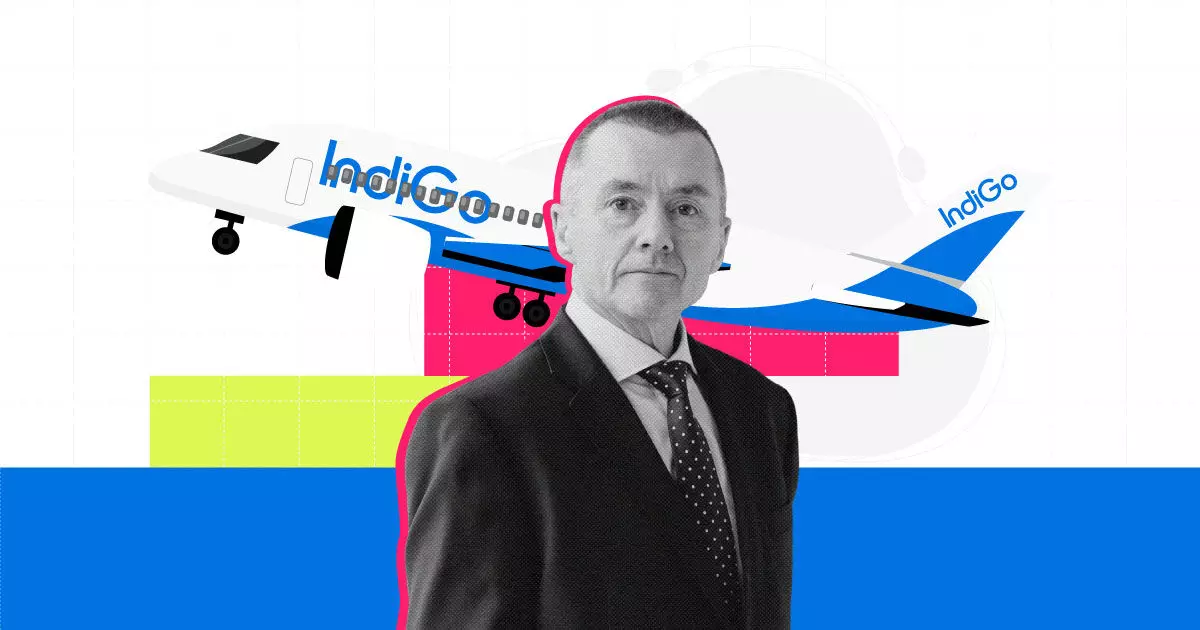
Inside Willie Walsh’s High Stakes Gamble As IndiGo CEO
 By Manish Pant
- Business
- Published on 29 April 2026 6:00 AM IST
IndiGo’s new CEO must deliver a seamless transition, navigate India’s regulatory minefield, and groom the airline’s next line of succession as he goes about fulfilling his mandate to create a leading global carrier.
When Willie Walsh, former head of British Airways and current Director General of the International Air Transport Association (IATA), takes over as the CEO of IndiGo Airlines on August 3, he will inherit all the big problems with the airline that Pieter Elbers leaves behind.
Walsh’s appointment announcement came days after the abrupt departure of Elbers, viewed by many in the aviation world as nothing short of a strategic shakeup.
Walsh arrives when IndiGo commands 63% of the world’s third-largest aviation market and is grappling with an identity crisis.
Under his predecessor, Elbers, the airline attempted to transition from a domestic budget airline to a global player. On this journey, it suffered a massive operational crisis in December 2025, which left hundreds of thousands of passengers stranded, with the Indian government demanding explanations as India’s aviation industry was crippled.
At stake is not only the stability of a carrier that has a near monopoly in Indian aviation — carrying six out of every ten Indian flyers — but also the viability of IndiGo's plans to expand its aircraft fleet to secure domestic leadership while fast-tracking international expansion.
“Walsh brings extensive experience to the role, which would be instrumental in instilling confidence in the airline,” Ajay Kumar, Managing Partner at the law firm KLA Legal and a leading aviation lawyer, told The Core. “He will be expected to navigate the carrier through difficult times, particularly in the wake of rising ATF prices, coupled with the closure of airspace in the Gulf region and increased scrutiny by the authorities.”
The Ghost Of December
To understand the gravity of the mission Walsh is accepting, one must look at the wreckage of December 2025. Elbers resigned on March 10, after his leadership came under scrutiny following IndiGo’s worst-ever operational crisis, during which the airline cancelled more than 2,500 flights and delayed nearly 1,850 flights over three days, affecting over 300,000 passengers.
While the airline initially attributed the issue to seasonal factors, a high-level investigation by the Ministry of Civil Aviation (MoCA) peeled back the veneer to reveal a total collapse of the human supply chain. The post-mortem was damning. It cited a systemic failure in "contingency planning" and a fatal breakdown in crew scheduling.
At the centre of the crisis was the Flight Duty Time Limitations (FDTL) rules, designed to curb pilot fatigue. This is currently under a temporary halt by the regulator, the Directorate General of Civil Aviation (DGCA).
According to company insiders, besides the reasons identified by the MoCA probe, the crisis also stemmed from simmering resentment among employees. Some deliberately kept management in the dark about preparedness when the new FDTL norms took effect, resulting in a collapse.
Per the norms, homegrown airlines are required to strictly monitor pilot duty hours, rest periods, and cumulative flight time to prevent fatigue. Yet differences in working styles between expatriate managers and local employees created a disconnect that ultimately devolved into a cultural clash.
“The resentment came from pilots and operations staff who felt excluded from decision‑making. Their attitude was: ‘If you don’t trust us or promote us, and prefer foreigners, let the system collapse, for only then will management take notice,’” a source corroborated. Well-placed insiders disclosed to The Core that, following the December crisis, MoCA had suggested removing the CEO, COO, and operations head.
Elbers, a veteran of KLM, reportedly believed that IndiGo’s near-monopoly status would force the hand of regulators to delay stricter fatigue rules. He was wrong. The Ministry of Civil Aviation, sensitive to public outcry, refused to blink.
“Elbers inherited a well-run, profitable airline and ended up nearly breaking it. Walsh inherits a somewhat broken airline system and the consequent challenges,” as former VP of Operations Shakti Lumba puts it.
It is also a company where the trust between expatriate leadership and the homegrown workforce has been jolted, leaving Walsh to confront both operational and cultural fault lines.
The Walsh Doctrine
Over the years, Walsh has built a reputation for cost discipline and operational efficiency. “Walsh is a seasoned manager with a reputation for cost control, having turned around Aer Lingus and later led British Airways and IATA,” an international aviation consultant said, requesting anonymity.
During an interview with Walsh in Mumbai in 2009, the writer asked about the strident opposition to his proposals for pay freezes and changes to working practices by British Airways’ workers’ union, Unite. Ignoring his media team’s protests at the question, Walsh described the union leaders as intransigent before outlining his plans for the acquisition of other European carriers.
He fulfilled that roadmap when, as CEO of International Airlines Group (IAG) from 2011-20, he not only oversaw the merger of British Airways and Iberia but also expanded IAG into one of the world’s largest airline groups.
Born into a working-class Dublin family, Walsh’s ascent from a 17-year-old cadet pilot to the CEO of Aer Lingus and later British Airways was defined by focus on the bottom line.
In the 2008-09 financial crisis, while other legacy carriers were bleeding out, Walsh was freezing pay and slashing costs at British Airways. He famously engaged in a scorched-earth battle with the Unite union, ignoring media pleas for moderation to push through a transatlantic joint venture with American Airlines.
"Walsh is a legend because he doesn't blink," says an international aviation consultant. "But IndiGo doesn't need a cost-cutter. It already has one of the most competitive cost structures in the world. It needs a diplomat who can navigate the corridors of New Delhi’s Rajiv Gandhi Bhavan."
This is the central paradox of Walsh’s new role. In Europe, Walsh was known for publicly shaming regulators and airport authorities over high landing fees. In India, such a tactic may not work.
The Indian aviation ecosystem is a labyrinth of personal relationships, political whims, and "bureaucratic minefields."
“Our regulations are not harmonised with those elsewhere in the world. Having worked with IATA and British Airways, Walsh will be familiar with regulatory issues in Europe, but he will have little understanding of the bureaucratic and regulatory hurdles here,” said Lumba.
The Expansion Gamble
The backdrop to Walsh’s arrival is a growth story that feels like a fever dream. India’s GDP is growing at 7.3%, the fastest among major economies. In 2025, 166.9 million Indians took to the skies. By 2030, that number is expected to hit 300 million.
IndiGo’s response to this explosion has been a record-breaking aircraft order book that sits at nearly 1,000 jets. Walsh’s mandate is to oversee the induction of 40 to 50 aircraft every year for the next decade. But the expansion isn't just about more planes; it's about different planes.
The next chapter will also involve deploying IndiGo’s record aircraft order over the coming decade, inducting widebody jets for long‑haul routes, and enhancing the in-flight experience on international sectors.
The airline that made its fortune on 180-seat A320s is now inducting widebody jets for long-haul routes to Europe and the Middle East. It is introducing IndiGo Stretch, a business-class product that moves the carrier away from its no-frills DNA into the hybrid territory occupied by the likes of Jetstar or WestJet, models that have historically struggled to bridge the gap between low-cost efficiency and premium service.
“Once an airline expands beyond national borders, it inevitably evolves into a network carrier,” said the international aviation consultant. “This shift at IndiGo is itself a major challenge, compounded by the need to manage India’s regulatory environment and internal power dynamics.”
Employee Engagement
Another area that Walsh will need to prioritise is employee engagement. The fact that he has himself risen from the ranks has led several IndiGo employees to be cautiously optimistic.
A person working on the operational side at IndiGo said, “Walsh will need to introduce structural reforms to strengthen employee motivation.” This includes reviewing policies on promotions, travel and transfers, retention, skilling and reskilling, and, more broadly, improving working conditions.
The person added, “He will not have the latitude to override either the board or the regulators. Ultimately, he will have to align with the will of the promoter and the Government. Since he won’t be around forever, he will have to achieve a lot within the time available to him.”
IndiGo has a powerful board comprising former industry veterans and bureaucrats, including Vikram Singh Mehta, former Chairman of Shell Group of Companies, and Amitabh Kant, India’s former G20 Sherpa and CEO of the government think tank Niti Aayog.
Homegrown Leadership
Walsh’s appointment has also reignited the conversation on why Indian carriers can’t hire homegrown talent in the leadership roles. The CEO of an international carrier told The Core, “The question is what new practices can Walsh introduce at IndiGo? If none, then his appointment risks being symbolic; a way to impress investors by showcasing a global aviation figurehead. It’s akin to buying a Rolls‑Royce to display wealth, rather than add value.”
Several industry voices argue that India must consciously cultivate homegrown leadership talent, instead of repeatedly parachuting foreigners into top roles. Unlike the Gulf states, the country cannot indefinitely run its aviation ecosystem by importing talent while claiming to be the world’s fastest‑growing aviation market.
The airline CEO added, “Sundar Pichai’s example is often cited, but it is misplaced. He rose organically through education and career progression abroad; he was not plucked from India and made CEO of Google overnight.” Another industry insider quipped, “If Rahul Bhatia could hand over the keys to Pieter Elbers earlier, why not to an Indian leader now?”
Thus, the bigger issue is leadership development. The aviation consultant said, “Indian airlines lack structured management trainee programmes, unlike Singapore Airlines, KLM or Ethiopian Airlines, which cultivate talent internally over decades.” Without such systems, IndiGo cannot suddenly produce home‑grown CEOs. Appointing a foreigner is therefore pragmatic, even if it invites criticism.”
Walsh would be in India at a time when the Government is keen on positioning the country as a global leader in commercial aviation. Salil Arora, Founding Partner at the law firm AviLeague Partners, stated, “His leadership will be instrumental in navigating regulatory landscapes, building strategic partnerships, and ensuring that IndiGo’s expansion is anchored in strong governance and a sustainable long-term vision. Importantly, his appointment is also likely to bolster global confidence in India’s endeavour to emerge as a leading aviation hub.”
So, even as he starts setting the house in order at IndiGo, it will be a period of new learnings and unlearnings. As the international aviation consultant, quoted above and who did not wish to be named puts it, “Success in rolling out IndiGo’s international strategy within two years would earn him credit; failure would be judged harshly. Walsh must, therefore, adapt quickly to India.”
Core.
Core.


