



 Newsletter
 Search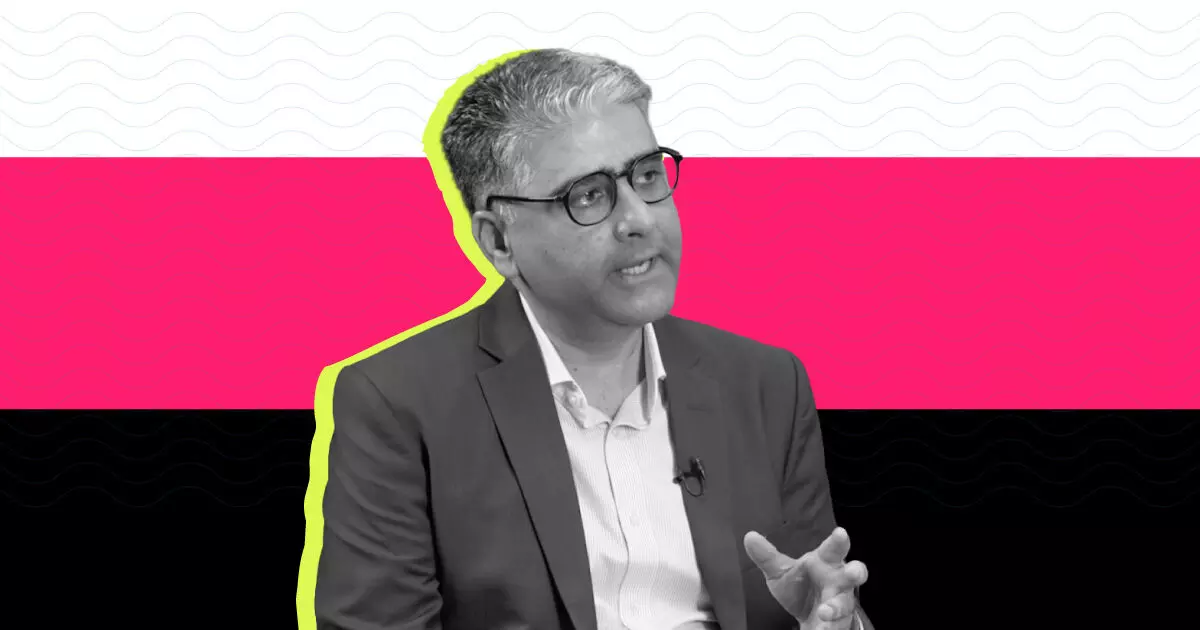
Unicus Consulting CEO Bets Big on West Asia Despite Four-Month Pause
- Business
- Published on 18 July 2026 6:00 AM IST

In this edition of The Core Report, Jamil Khatri, CEO of Unicus Consulting, talks about why the $11 billion IHC-Adani aluminium deal is just the start, and why India has emerged as a "credible and trusted partner" even as Gulf hostilities stall investment flows.
The Gist
The Core Report features a discussion with Jamil Khatri, CEO of Unicus Consulting, on investment trends in the India-Middle East corridor amidst recent turmoil.
- The Middle East was transforming before the conflict, with cities like Saudi Arabia focusing on diversifying economies.
- Investment interest from the UAE in India remains strong, though recent hostilities have caused a pause in activities.
- Indian businesses are encouraged to explore global opportunities, leveraging strong balance sheets and capital availability.
NOTE: This transcript contains the host's monologue and includes interview transcripts by a machine. Human eyes have gone through the script but there might still be errors in some of the text, so please refer to the audio in case you need to clarify any part. If you want to get in touch regarding any feedback, you can drop us a message on feedback@thecore.in.
Hello and welcome to The Core Report Special Edition. I'm in conversation with Jamil Khatri, CEO of Unicus Consulting, and we're going to be talking about how investments are shaping up, particularly on the India-Middle East corridor, in light of what's been happening in recent months. Jamil, thank you so much for joining me.
Thank you for having me on the show.
We are now in the month of July, and the last four months have been quite tumultuous in West Asia and the Middle East. We've seen a slowdown in many ways, including in terms of traffic to and fro, and yet the Middle East particularly the key cities or the emirates of Dubai and Abu Dhabi remains an important magnet for investment, both in terms of investing outward into countries like India and pulling investment in. So from your vantage point, looking back not just four months, but beyond that tell us about what this period has been like.
Thank you again for having me on the show. I think if I step back a little before the conflict started four months ago, the Middle East was undergoing a significant transformation, because the Middle East today isn't just about Dubai or what's happening in Dubai. Each of the centers, in fact, is trying to figure out what the transformation means to them and I'm talking about before the war.
For example, an amazing transformation, as we all know, has been happening in Saudi Arabia in terms of infrastructure and opening up the economy. That was the journey underway in Saudi Arabia. Abu Dhabi, which has generally been a little slow on things, realized the potential of diversifying its own economy.
So there's been a lot of activity in Abu Dhabi, again in terms of investing outward, as well as looking at how Abu Dhabi could attract economic activity beyond oil. And Dubai, of course, was always what it was. On your question about what's happened over the last four months, I think the first thing, the prevailing sentiment on the ground, is that everybody wants certainty on when this will stop.
Because irrespective of how many resources you have and the good news is that each of these economies has significant reserves built up over time, and therefore has the ability to do whatever it takes to pump-prime the economy, for any of that to be meaningful, everyone is waiting for the hostilities to stop before figuring out where intervention could happen. If I take individual centers: Saudi Arabia, given that it hasn't borne many of the attacks directly, is focused on making sure its entire transformation agenda continues. That's really what they're looking at. Abu Dhabi is effectively trying to focus on what it was doing before, in terms of diversifying its economy. Dubai, which was very dependent on hospitality, travel, tourism, and conferences, that's really where we're seeing the bulk of the impact. So in short, the region itself was going through a big transformation, which is very relevant for Indian companies and for investments coming into India. I'd say the last four months have, in some way, put a pause on that, with people reflecting on what the future looks like.
Right. And you're present in Dubai, Riyadh, Abu Dhabi, and Qatar, where you've just opened an office. Tell us about the kind of work your large team across these places has been doing—what they've done in the past, what they're doing today, and what the India interlink looks like, if any.
In terms of Unicus's own presence, we have 125 people on the ground across the four offices you mentioned. A bulk of our work is around the transformation agenda for companies. For example, as companies grow, they're investing a lot more in their risk management systems, their financial systems, and their information systems. So we do a lot of work for the office of the CFO, the chief risk officer, and the chief technology officer, really making sure the back end matches up to the front end. We've also been doing a lot of work around sustainability. That's an agenda I'll come back to.
And that's how you started Unicus.
That's right, that's how the Unicus journey started. The office of the CFO and the sustainability officer really made up the bulk of our work. And increasingly, we're doing a lot of work on AI adoption as well. So that's really what we've been doing in that region.
Right. And when you look at it from India's side, the India-UAE corridor, how are things shaping up right now, and what has it been like in the past?
I think we can break this into a pre- and post-conflict picture. In the "pre" world, there was amazing bullishness on both sides. We were seeing a lot of Indian businesses exploring the Middle East opportunity. For example, as I mentioned, Saudi Arabia was going through a big transformation in capital expenditure, and a lot of Indian companies were very active there. In fact, I was in Riyadh a few weeks ago, at the Expo 2030 site, and I saw a number of Mahindra vehicles. One of my local leaders pointed out that until maybe six to twelve months ago, there were a lot of Chinese vehicles there instead. So you could see the participation of Indian businesses growing. L&T had set up a significant presence in the region. So the infrastructure play was attracting a lot of Indian companies to the region.
Similarly, on the consumer side, there's a large Indian diaspora across these markets, which shapes consumption patterns and creates opportunities for Indian brands wanting to operate there. We were seeing a lot of that. And conversely, we were seeing a lot of investment interest flowing into India, particularly from the UAE, where sovereign funds were looking at India for opportunities. As I mentioned earlier, one of the key goals for the Middle East has been diversifying its economy beyond oil, and in pursuing that, these funds want to participate in growth stories that are more global. India was a very natural ally there.
On your question about what's happened since the war: I think it's been something of a pause. There are still investment plans for India, we've seen big investments from players like IHC, both in terms of acquisition targets in India and large greenfield projects. But I'd say that as they deal with their own situation right now, there's likely a pause before activity picks up again.
Right. If I can follow that thread for a moment, the IHC investment you mentioned was for an aluminium plant with the Adani Group, a very large investment of $11 billion. Is that representative of most of the investment likely to flow, whether on hold or otherwise?
No, actually it's quite diversified. For example, if you look at PIF, the Saudi sovereign fund, they've been buying relevant assets across the world—they own the IPL. But this is also about diversification. For instance, they own Lucid Motors in the US, which is essentially the "Porsche" of EVs. So they've been looking at all kinds of investments. Similarly, Abu Dhabi has been looking at different types of investment—the Sanam Capital transaction, for example, is in financial services. So I wouldn't say they have a fixed view that they'll only go greenfield into infrastructure or core industry; opportunities could come across the spectrum.
Right. Let me flip this around. From India's side, over the last few years we've seen a lot of ultra-high-net-worth individuals set up base in the UAE. We've also seen family offices move there, so a lot of wealth has relocated or is stationed there and investing globally. Setting the war aside for a moment, tell us how that's panned out, and what it means for the distribution of wealth and opportunity across the India-Middle East arc.
I think the beauty of the Middle East, and particularly Dubai, is that it acts as a kind of cultural proxy. I always say that when you live outside India and we have offices across the globe you tend to feel like an outsider in most places, even if you've settled in. But when you go to Dubai, you don't feel like an outsider, because everyone there is an outsider. And when everyone is an outsider, you feel like an insider. I think that's really the appeal: the proximity to India, the fact that taxation is attractive, these are all big drivers behind what you mentioned, families preferring to base their investments in the UAE.
I think the fundamentals behind that may get diluted at times, but they don't fundamentally change. We're not seeing people suddenly deciding Dubai isn't the place for them. But people are looking for optionality. If we assume financial freedom, security, and cultural proximity are the key parameters, and one of them, security, doesn't hold up, what other options do people have? That's really the conversation we've been seeing within many families and investment holding companies: is Dubai the only base, or should we look at alternatives before concluding that Dubai remains the base for us?
As for what alternatives people are considering: interestingly, I've said this before, if the UK could get its tax policy right, there's a similar cultural proximity argument, a large diaspora, and it's a gateway to Europe and the world. All of that could work in the UK's favor. But until the inheritance tax and other tax issues get sorted out, we're not seeing people move away from Dubai. Portugal, as we all know, is a place a lot of people have looked at. So the jury is still out. A lot of people are also asking whether it's better to simply stay in India and see how things develop. So there are all sorts of considerations, there isn't a clear alternative to Dubai yet.
Okay. And when you say staying in India, does that mean staying here but investing outward through routes like GIFT City, for those who want to diversify their portfolios globally?
Yes. My first observation has always been that, as Indians, we haven't invested enough outside India—both at the personal level and at the business level. Starting with business: one of the big advantages, and the reason Unicus was set up as a global company, is that the scale of the market outside India is unbelievable. Take our industry, consulting, as an example—we get excited when the media talks about billion-dollar revenue firms, but in aggregate that's about five billion dollars, which is essentially one solution provider in the United States, in probably one region. So the scale that Indian businesses can access outside India is significant.
The second reason is diversification, as you pointed out, if you're exposed to markets beyond India, you're better insulated from anything that specifically affects India. The third is the pace of technological innovation happening, particularly in the United States, which is remarkable. So, in short, we are seeing growing interest, businesses are realizing, for these reasons, that it makes sense to have operations outside India. Of course, it's easier said than done; there are real challenges as well.
And when you say challenges, you mean?
First, our track record on cross-border acquisitions has been middling. That's not to say there haven't been successes,the Birlas, for example, have been very successful outside India for a very long time, with Novelis and other ventures. JLR has been a great story after a lot of pushes and pulls. Indian IT has done its part too. But it isn't natural for Indian companies to be global the way it is for most US or European companies, where it's common for 50% of revenue to come from outside the home market. So one challenge is how familiar we are with operating on a cross-border basis.
The other challenge is striking a fine balance between respecting what's local and trying to globalize. We've seen challenges around talent—if you try to treat talent outside India the same way you treat talent within India, it doesn't work, because you need to understand the nuances of operating in different geographies. There are cultural nuances, local-versus-global considerations, and regulatory aspects as well. But from my perspective, it's all worth the effort, because the size of the opportunity is huge.
Right. So that lays the background. Now, for Indian companies or if we want to make India as attractive as the UAE, theoretically, what would it take?
I think, firstly—
What all would it take?
I think it's a journey, actually. I don't think there's a silver bullet that will suddenly make investors look at India differently. Part of that journey has already started, in certain sectors, like electronic component manufacturing, we're seeing efforts to build the ecosystem and the supply chain. But the single biggest factor holding back investors, in my experience, is the ease of understanding how they can operate in India: a clear path in terms of land acquisition and regulatory approval. There are pockets where this is already working well, and you're seeing strong investment come in as a result. The real question, and there are people more knowledgeable than me on this, is what it will take to fast-track and simplify the process for attracting investment into the country.
The second factor is how global business activity has been trending. Look at different regions of the world: in the US, a lot of the growth and activity is centered on AI. Given that, the question becomes what does India have to offer? And wherever India does have something meaningful to offer, such as data centers, you've already seen good activity. If you look at Europe, they're dealing with their own set of challenges, so I don't think the relative lack of investment from Europe reflects poorly on India, it more reflects European businesses' current ability to think about growth. The third factor is the Middle East, which we've already discussed. And the fourth is China, frankly, if it weren't for the geopolitical situation between India and China, there could be a lot more synergy between the two countries.
So overall, I wouldn't say this is a moment when everyone wants to invest in India, but if you want to create the right environment, the single biggest lever, in my view, more than tax considerations, which are relevant but secondary, is improving the ease of setting up and operating in India.
Right. You mentioned GCCs [Global Capability Centers]. Over the last couple of years, even as FDI in manufacturing or on-ground physical infrastructure has slowed, we've clearly seen a lot of GCCs come in. Are you seeing any particular trends there, and is there a link with the Middle East or other parts of the world you work with?
The Middle East has been a little slow in terms of GCCs, because they tend to keep things close to home. In fact, when Middle Eastern companies do look at GCCs, they tend to look at Jordan and Egypt as major centers, largely because of language considerations. So outside of technology, we're not seeing a big trend of GCCs flowing from the Middle East into India, it's mostly the US and Europe driving that activity.
There, we continue to see a lot of activity. And interestingly, you'd think that by now everyone would recognize the benefits of setting up in India but we work with a private equity firm in the US that has 37 large assets across the globe, and not one of them has ever leveraged India for a GCC. So there are still plenty of companies yet to experience the GCC setup. One interesting trend we're seeing is a build-operate-transfer model for GCCs, platforms now exist that will set up and run a GCC in India for a company for a period of time, let them evaluate the experience, and then eventually transfer and scale it up. That's happening.
And the one caveat on this whole GCC movement, as I mentioned earlier, is AI, which is both an opportunity and a threat. I'll explain why I call it an opportunity: we're doing some interesting work with a company that wants to set up an AI center of excellence in India, because AI talent isn't easily available elsewhere. We may not have the absolute cutting-edge AI talent that Silicon Valley has, but there's enough strong engineering talent to build a solid AI center of excellence for large global companies out of India. That's what we're seeing.
Right. Coming back to where we started, the Middle East as both an investment source and destination, how do you see capital flowing going forward? Do you expect to see more Indians, including family offices, continuing to set up in the Middle East once things settle down? Do you see other shifts happening? Taking a 30,000-foot view, how does it look?
My own assessment is that India has emerged as a very credible, respected, and trusted partner amid all this turmoil. If you look at the broader geopolitical situation, tariffs being used as leverage, ongoing conflicts, India has, for whatever reason, played its cards very well, whether through the free trade agreements it has signed or the way it has handled tariffs. So there's a lot of genuine interest in working with India. The question is what it will take to convert that interest into more foreign investment.
My own assessment is that as the broader AI-driven trade settles down, and people gain clarity on what's real versus simply following a trend, India could emerge as a strong destination for those seeking quality businesses to invest in. That's one part of it. As far as Indian businesses are concerned, my hope and I'm not saying I'm already seeing this trend is that more Indian businesses will go global, because I don't see how India can become the kind of global power we aspire to be without exports being a significant part of that story. And exports don't just mean manufacturing in India for the world, though that matters too, it also means building Indian brands and Indian organizations with a global footprint. So I'm not necessarily seeing the trend yet, but I'm hopeful that over the next five to ten years, if India is to achieve its ambitions, that's the path Indian businesses will need to take.
And if we look at corporate balance sheets, they're in some of the best shape they've been in for a long time. So there's capital sitting idle. It stands to reason that Indian companies should be looking outward. Is that one reason, or do you see other factors holding people back?
I think we simply need a bit more risk appetite. I sincerely feel that's missing. The encouraging part today is that balance sheets are very healthy, as you correctly noted, and there's plenty of capital available to back Indian entrepreneurs who want to go global, private equity would love to support that. So what's holding us back is a complex question. Part of it may be about the stage of our entrepreneurial journey, where is entrepreneurship happening most? A lot of it, understandably, is concentrated in the tech and startup ecosystem. Do we need more entrepreneurs with an industrial orientation? Perhaps. Is that happening at scale within Indian business families? Those are the questions we need to answer. There are no easy answers, but the good news is that the necessary means—capital and healthy balance sheets, have never been better.
Right. In the 2000s, when we saw that big wave of overseas acquisitions by companies like the Tatas and Birlas, one of the driving factors was the relative strength of the rupee against the dollar. But there were other reasons too, the domestic market wasn't looking as attractive at the time, and entrepreneurs like the Tatas and Birlas were feeling confident. Are you saying that confidence today is lower, even though capital is more abundant, and that the opportunities may not be as significant, that there may not be another Novelis or Jaguar Land Rover to acquire today? Or what are you seeing?
My assessment is actually that the opportunities are huge, there's no shortage of them. The Sun Pharma deal, for instance, reflects that, and there are plenty of other assets available. So I don't think it's a shortage of opportunity, and I don't think it's a shortage of capital either. What that leaves is entrepreneurship. Ultimately, it comes down to entrepreneurship. I haven't fully worked through why this is or isn't happening, it's not an area I've focused deeply on, but I think the question we need to ask is how we get more Indian entrepreneurs to think globally. Will that happen through traditional business families, or will new kinds of entrepreneurs emerge to take India global? That's probably the real question.
When we founded Unicus, my basic thesis was about how to build a global company from India. What I realized is that once you're confident that capital isn't a constraint and the market isn't a problem, you can pursue this even in an industry that has traditionally operated at a very local level, consulting, in our case. If we can take a relatively simple sector like that and build a global company from it, I'm confident there's an opportunity for many others to do the same.
Right. Last question. Coming back to where we started, the Middle East and the challenges of the last four months, we're at a point where things are on a knife's edge; they could tip over, or they could improve and become more attractive again. How do you see the region evolving in the near term, and what would you advise Indian businesses and others to do at a time like this?
I'm extremely bullish about the Middle East, actually. Saudi Arabia, as I mentioned, is on a major transformation path, it'll have its ups and downs, but that trajectory will continue. I think about it this way: what Dubai was fifteen years ago is roughly what Saudi Arabia will become within the next decade. That's essentially what Vision 2030 is about. So there's tremendous opportunity for Indian businesses that want to be there. Of course, all of this assumes the hostilities come to an end, if the region remains at war for the next five years, all bets are off. But assuming there's a logical resolution to the conflict at some point, I'm very bullish on what will happen in Saudi Arabia.
I'm equally bullish on Abu Dhabi. It's a place that hasn't been explored as fully, they're investing across the spectrum, from AI to tourism, much like what Dubai invested in fifteen years ago. So there's tremendous opportunity for Indian businesses in Abu Dhabi as well; I'm very bullish there. Dubai, I think, will take a little longer to recover, but you can never count them out, their ability to execute a plan is remarkable. From our perspective, Dubai continues to be relevant. And then there are markets like Qatar, we opened up there because we genuinely see opportunity in banking as well as energy and infrastructure, particularly for suppliers to that ecosystem, though it's a relatively smaller market. If I had to pick two big markets, I'd choose Riyadh and Abu Dhabi.
Right, that's a good note to end on. Jamil, thank you so much for joining me.
Thank you very much. Thank you, Govind. Thank you.


