



 Newsletter
 Search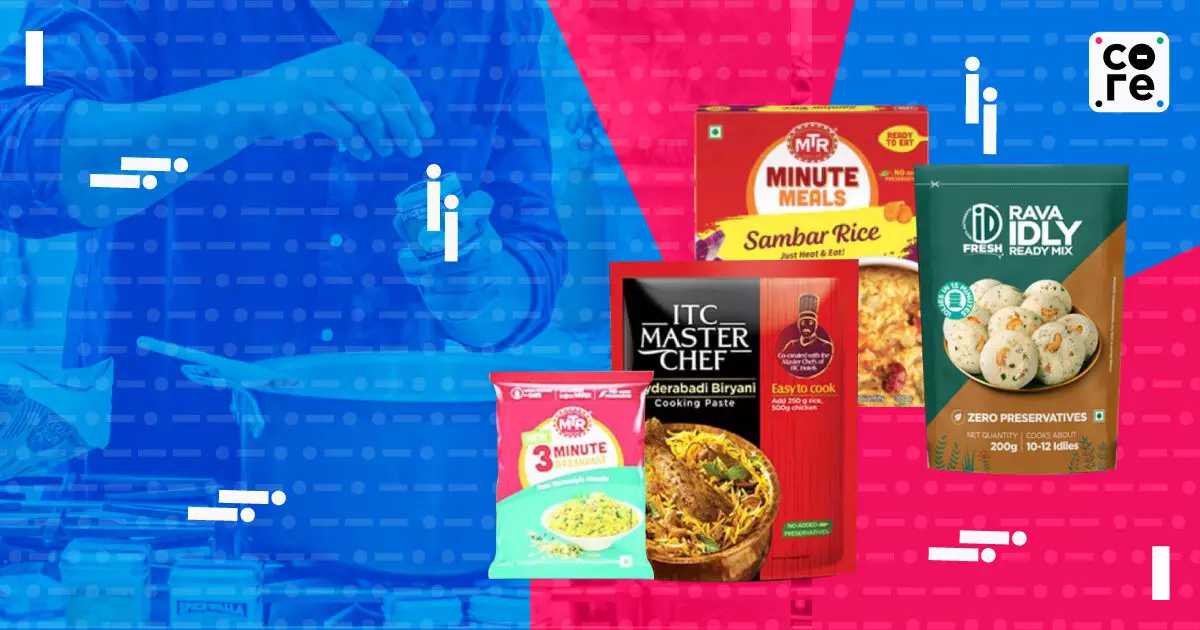
Why India's $1.1B Ready-to-Cook Boom Is Luring FMCG Giants, Startups
 By Katya Naidu
- Business
- Published on 3 Dec 2025 9:05 AM IST
An estimated 50 million Indians now form the addressable market for pre-cooked and semi-cooked meals like MTR's upma or ID's dosa or idli batter.
The Gist
The ready-to-eat (RTE) food category in India is experiencing rapid growth, projected to expand significantly in the coming years.
- The market is expected to grow from $1.1 billion in FY24 to over $3.4 billion by FY32.
- Quick commerce has made purchasing semi-cooked meals as easy as ordering everyday items.
- Urban working individuals and nuclear families are the primary consumers seeking convenient meal solutions.
Aarti Dethe, a homemaker, used to cook every meal from scratch. Now her kitchen staples include frozen fries and ready-to-cook batters for her five-year-old son, and sometimes even unexpected guests.
“I have a five-year-old son, and he asks for fries all the time. I cannot order it from a restaurant every other day. So, I buy frozen fries and keep them handy. It makes sense for me to unfreeze and heat. Also, when unexpected guests come in, it’s a boon,” she said.
She’s not alone. An estimated 50 million Indians now form the addressable market for pre-cooked and semi-cooked meals, according to a recent report by Redseer Strategy Consultants.
“The growth of the RTE (ready to eat) category is driven by busier lifestyles, higher disposable incomes, and rising comfort with packaged meals. Premiumisation, cleaner-label choices, and better cold-chain and packaging are supporting this shift,” Madhur Singhal, managing partner, consumer and internet at Praxis Global Alliance, told The Core.
This category, which includes instant foods, baked goods, meats, and a wide range of ready meals, is set to expand at a 15-20% compounded annual growth rate from $1.1 billion in FY24 to over $3.4 billion by FY32, according to Praxis Global Alliance’s data.
“The category is benefiting from rising acceptance of convenience-led formats and higher trust in packaged foods,” added Mit Desai, practice leader, consumer and internet at Praxis Global Alliance.
The ‘Q’ Of Time
Quick commerce has been a key accelerant for this segment, expanding the potential user base to around 70-80 million. These apps have made purchases of semi-cooked options as easy as ordering toothpaste.
“Typical buyers are urban working individuals, students, and nuclear families who prioritise convenience and quick meal solutions,” said Singhal.
Quick commerce has helped make ready-to-cook the fastest-growing category in the packaged foods market. In 2024, the segment grew a sharp 58%, after doubling volume in two years, found Kantar Worldpanel. This is even as the overall packaged foods market stood at 8%.
From Noodles To Rogan Josh
While the West has seen canned food and TV dinners for a very long time, India has been a slow adopter to the trend. India’s market has now evolved far beyond the instant noodles brought in by Nestle in the 1980s. Indians have since graduated to ready mix masalas, frozen foods and the latest being ready-mix sauces, gravies and more.
The ecosystem now splits into two main categories: “heat-and-eat” (H&E) frozen meals and “ready-to-cook” (RTC) enablers like pastes and sauces.
FMCG giants from MTR Foods to ITC, Godrej, Tata Consumer Products, Haldirams and Fortune have flooded the market with options. The offerings range from cup noodles and biryani kits to marinated paneer and Thai chili oil.
Regional brands and startups are carving out niches with healthier or specialised products. Companies like ID Fresh Food and Licious are expanding the market with fresh batters and marinated meats, while others like WickedGud promote millet-based noodles and clean-label recipes.
Even dairy companies like Amul and Heritage have entered the market with marinated paneers, paneer parathas and more – extending their range of offerings.
Long Way To Go?
Despite the rising number of buyers, RTC remains an unpenetrated category. A Redseer survey found that only 4% of the people said that they consume RTC products on a daily basis, and another 8% consume 4-5 such meals a week. A major chunk – 23% of respondents say that they keep it to 2-3 meals a month.
“Companies have also innovated with long shelf-life products, like those which can stay for six months without refrigeration. The cold chain systems have also evolved over time, making frozen foods popular,” said Santosh Sreedhar, partner at Avalon Consulting.
According to Redseer, it is convenience and experimentation that are driving the market.
For now, most of the consumers are in big cities, but companies are eyeing smaller ones as well.
“Metros remain the largest demand centers, but tier-2+ cities are emerging as important growth nodes due to rising aspirations, increasing incomes, organised retail, and improvement of last-mile reach. Brands are tailoring price-packs and regional flavours to improve relevance and affordability in these markets,” said Singhal.
Brands are also innovating to expand their offerings. From the earlier western only options like fries and potato wedges, Indian versions such as samosas and tikkas are also becoming available.
Several companies are also innovating to come up with healthy options such as millet-based noodles and pastas, multioat porridge mixes and pre-cooked base gravies.
A Dash Of Personalisation
The most successful products strike a careful balance, saving significant prep time while preserving the cook’s sense of agency. The ready-made batter market, now worth about Rs 3,000 crore is a good example for this. It takes away the hours of soaking and fermenting but still lets the home cook pour and spread the dosa, or tweak it how they like.
“The minimum value addition that one can do with such products is a great proposition. Most homemakers do not prefer to simply heat and provide it, as the family believes that little has been done to cook. Ready-made batters for example, offer the convenience as it takes soaking, grinding and fermenting and preparing for over a number of hours. It also gives people the pleasure of cooking something, and the advantage of personalisation,” says Sreedhar.
As quick-commerce networks deepen and product quality improves, India’s quick-cooking ecosystem is moving from a convenient alternative to a permanent kitchen shelf staple.
Core.
Core.


