



 Newsletter
 Search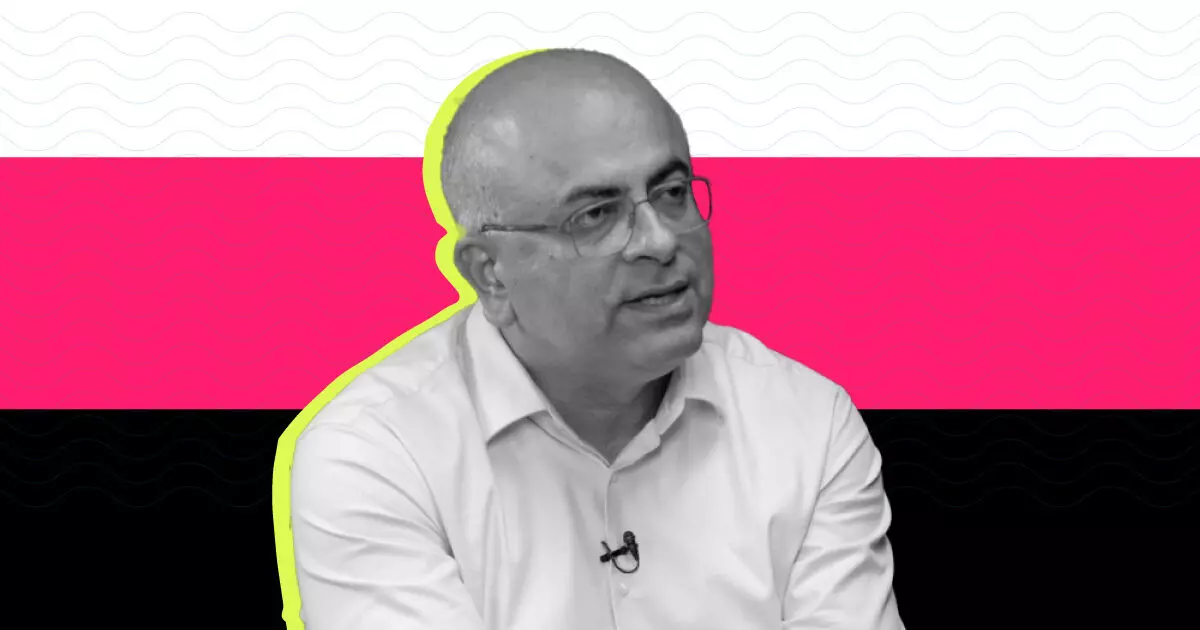
Nippon Paint India MD on India's Paint Rush Despite 20 Years of Flat Prices
- Business
- Published on 4 July 2026 6:00 AM IST

In this episode of The Core Report, Nippon Paint India's MD Sharad Malhotra talks about why per capita paint consumption is a quarter of the developed world, why prices haven't moved in 20 years even as painters' wages tripled, and why the company is racing from 7 factories to 15.
The Gist
Sharad Malhotra, Managing Director of Nippon Paint India, discusses the evolving paint industry in India and its growth potential.
- The paint industry in India shows significant growth potential compared to consumption in developed countries.
- Currently, 75% of the market is focused on decorative paints, indicating an imbalance in the sector.
- Nippon Paint aims to expand its market presence and innovate in both decorative and industrial paint segments.
NOTE: This transcript contains the host's monologue and includes interview transcripts by a machine. Human eyes have gone through the script but there might still be errors in some of the text, so please refer to the audio in case you need to clarify any part. If you want to get in touch regarding any feedback, you can drop us a message on feedback@thecore.in.
Hi and welcome to the Core Reports Weekend Edition. I'm joined by Sharad Malhotra, Managing Director of Nippon Paint India. Sharad, thank you so much for joining me.
My pleasure.
So, you know, paints are an interesting industry, and they only come into the news once in a while. For decades, since I've been following business and financial news, nothing happened. You had one or two major players, or rather one major player and a few small players, and then suddenly, in the last few years, we've seen a lot of activity, of the kind that attracts private equity and big industrial houses.
So, what's changed, and why is it that we're seeing so much activity, particularly in the last few years, compared to, say, 20-30 years before that?
I think there's a growing realisation that the paint industry has a lot of potential. If you look at the economic growth we see in India and the paint consumption numbers, they're very low compared to the rest of Asia or the developed countries. So I think there's a lot of potential in paint, and a lot of business houses are realising that. And of course, if you look at the bottom lines of some of the leading paint companies, they're all very healthy, very profitable companies.
So there's margin potential as well. I think that's the primary reason you see so much activity in the Indian paint industry, which is a very exciting place to be right now.
And per capita, where do we stand?
Hardly a quarter of what it should be, for example, compared to what's consumed per capita in the developed world.
And when you say paint, do you mean all kinds of paints?
Yes, all kinds of paint. In India, people tend to think of paint mainly in terms of a living room wall in their house. But there are paints for all kinds of different surfaces, and we at Nippon Paint are very proud of the fact that we cater to paints for all kinds of surfaces.
And what's your business and revenue split in terms of types of paints? How does that compare with others?
If you look at the Indian paint industry, it's very well developed on the architectural side, and a lot of credit goes to the incumbents who've done good work in that space. But the industrial side is very underdeveloped. Compared to other markets in Asia or the developed countries, India has a disproportionately high share of the industry in decorative or architectural coatings.
When you say disproportionate, more than 60%?
It's about 75%. It's an 80,000-crore industry in India at the moment, and approximately 75% of that is focused on the architectural or decorative sector. The remaining 25% is the industrial sector, which caters to different kinds of industrial paints — from automotive to refinishing to general industrial, coil coatings, and marine coatings. So the industry isn't very well balanced.
What would this figure be for, say, the first world?
In the first world, it would be closer to a 50-50 or 60-40 split. Since we're a Japanese company, we're predominantly strong in high-end, technologically developed paints, especially in the industrial sector, so our skew is a little different. At the moment, about 60% of our business is in the industrial space and 40% in the decorative space.
And in the industrial space, are most of your clients B2B?
Essentially, mostly B2B, but we do have B2B2C clients as well. In some sectors we service the market through dealers and channel partners.
Okay. So, to come back to where we started, why people have jumped in over the last few years. The construction industry has been growing consistently and fast for maybe two decades. The automotive industry has also been growing since it opened up maybe three and a half decades ago —
Four decades ago.
Four, if you count from the arrival of Maruti, where you worked in the past. So what changed, maybe six or seven years ago, or a little more?
If you ask me whether there was any pivotal moment, okay, this is what changed and that's why people rushed in — no, it's not like that at all. I think it's a lot of business houses realising the value sitting in the paint industry. We saw some businesses that were consuming paints and then realised, "Let's start manufacturing paints and leverage the opportunity we have in-house." And we had some big houses that saw paint companies doing very well and decided this was a sector with a lot of growth left, so they jumped in. It's a combination of factors, and of course industrial and economic growth in India has played a significant role. There's a lot of development happening in infrastructure, railways, ports, highways. That intra-development is also making people excited about the paint potential in India.
For you, is it more the infrastructure sector that's powering growth, or the decorative and architectural space?
We're growing in all categories. In India, we currently have five business areas. Decorative paints is 40% of the business and is our largest category. Then we have the auto sector, OEM and aftermarket, which is also a very significant growth area for us, and we have industrial coatings and wood coatings as well. All this while, Nippon Paint has typically operated with a BU-oriented structure rather than as one entity, and that's helped us carve out strong positions in different categories of the paint market in India. Now, considering the market competition and how the sector is developing, we're trying to adopt a more holistic approach and bring together the strengths we've built in different parts of the paint business.
Can you build on that a little more, what strengths specifically?
Nippon Paint started the decorative paints business some 20 years ago in India, and gradually over the following years we built different businesses, for example, the wood coatings business, which started about 10 years ago. The wood coatings business and the decorative paints business are predominantly sold through the same channel. The technologies and selling styles are different, but the channels are similar. So we're now trying to see how we can synergise those channels and opportunities and move as one synergised operation, rather than as two separate organisations trying to service the same market.
I'll come to the channel side of things in a moment, since that's clearly a very important factor in India. But before that — when you look around the market today, would you say things have changed substantially in terms of product over the last 20 years, or is the base technology and offering roughly the same?
I think there's been a lot of evolution. The industry is progressing technologically. You could say you had emulsions 20 years back and you have emulsions now, but the emulsions we had 20 years back are nothing like the emulsions we have today. There's evolution, new categories being developed, new sub-segments emerging, a lot of change.
And when you say emulsions have changed, what exactly has changed?
Longevity, durability, and warranty periods, what we're able to offer the market today has significantly increased. In terms of features and properties, one very interesting development in the decorative paint space is the ability to use paint to insulate houses and reduce heat inside them. There's so much evolution happening. We were the first paint company to bring in odourless paint, and today people are very sensitive to paint odours. Twenty years back, none of this existed, you knew you were in for a bit of an ordeal once painters were inside your house. Today the situation is quite different.
The odour has obviously gone away because some chemical has been removed from the mix. Why was it there earlier, and why has it changed?
I think it's again about evolution. It's not that people were shortchanging India, the whole industry is evolving, the whole sector is developing. The innovation in this sector is mind-blowing; you can't even imagine.
What are the consistent materials that make up paint today, whether decorative, automotive, or industrial? And what are the ones that have changed, from your vantage point?
I think the core materials are the same, resins, pigments, solvents, and additives. These are the four main building blocks that go into any kind of paint. In that sense, everything is the same, but within each category there's been a lot of evolution. The additives have changed. Twenty years back, you couldn't imagine achieving certain functional properties with paint, anti-graffiti coatings, heat insulation, heat-reflective coatings. There are so many different types of finishes and paint films possible today that weren't possible 20 years back.
In India specifically — your experience elsewhere may differ — what are some of the newer things customers are asking for and can afford? I'm sure some of these premium products come with premium pricing.
A lot has changed in the last few years. People want less odour, fewer VOCs (volatile organic compounds), and antibacterial paints. People want paints that dry faster, you don't want painters inside your house for 20 days; you want them out in two or three days. People want faster-drying paints, better protection, and surfaces they can draw on and erase. These are the kinds of properties that have become very relevant today.
Is antibacterial paint really a thing? How does it work?
There are different technologies at play. Some paints use certain materials that give them antibacterial or antifungal properties.
But do they last?
They do, but of course, depending on the kind of paint, the properties need to be reinforced over time.
Coming back to what people are consuming, are you saying they're consuming higher-value-added paints and therefore paying some kind of premium compared to before?
Actually, they're not. The prices have stayed largely the same, despite everything. That's partly because of competition, and partly because paint companies have generally been conscious of the fact that paint is an important and expensive product for a large chunk of the population. So by and large, paint prices haven't gone up that much, the CAGR would be about 3-4% for the last 20 years. Compare that to labour costs: a painter's cost has doubled or tripled, while paint costs haven't. That's quite interesting, actually.
And so, which brings us to where we are right now, we've had an energy shock, oil and gas prices have gone up, and I'm sure all downstream prices have gone up too. How has that affected the paint industry?
It's affected us as you'd imagine. Most raw material prices have gone up by 20, 30, 50, even 100% in the last few months. We've tried to absorb a lot of that escalation, but some of it has been passed on to consumers. That said, if you look at the long-term trend, prices don't really keep going up, and I expect that as raw material prices drop, prices in the paint industry will follow.
So you're already seeing that level off, since we went from a peak of almost $120 a barrel for crude to about $70 now.
Prices haven't come down to that level yet, because this is downstream and it takes time, there's a lag of about a month and a half to two months before prices start coming down in the paint sector.
Got it. In the manufacturing of paint, everyone adds value, but where's the real value, is it in the brand and the proposition? I'm asking from your perspective, since we've seen how some market leaders have built very strong, sustaining brands. What really changes, and what doesn't?
If you look at the enterprise value of a business, a lot of it comes from brand value. A pure industrial paint company can't expect the kind of valuation a strong brand would command, the price-earning ratios are totally different for some of the branded players in the market.
So you're saying the product itself may not differ that much, you might actually be offering more technologically than your competitor, but your competitor may have a bigger, better-known brand?
Yes. By and large, prices are determined more by brand value than by the technological input that goes into the paint though that doesn't hold true for every category in the sector.
How do these dynamics play out on the automotive side? I'd assume you lock into customers for much longer periods there, and things work differently compared to the architectural side.
Yes, they do. The requirements are totally different, OEM expectations are different in terms of what paints they want and how their production lines are set up. Everything has to be customised to their production line, so it's a very different business.
And do your global relationships carry over into this?
By and large, yes in the OEM space, a lot of global relationships do work in India. But you also have very large Indian players, so you have to do a lot of groundwork here as well.
Is there any difference in how you design the final product, its ingredients and so on, because you're in India, where the climate and weather differ from other countries?
Absolutely, it's very customised, and I think everyone does this in India, us included. It's very normal for a multinational company to assume that something working in Europe or Japan should work in India, but it usually doesn't. You have to account for local conditions and local market requirements.
What are some of the things that distinguish the Indian market, not the consumer, but the broader ecosystem, weather, and so on?
Weather is one big factor. In India, temperatures range from below zero to plus 50 degrees, so when it comes to exterior durability and performance, paints have to meet that kind of bandwidth. That's something we have to account for while developing a paint.
Is this true for both architectural and automotive paints?
Pretty much. Wood coatings are one example, for external wood applications, you need to make sure the paints can withstand the abrasion and temperatures they'll be subjected to in India.
To what extent are you able to cope with this? We're seeing extreme weather conditions now — I'm sure that's something you're working on. You're exposed to extreme rain in a city like Mumbai, extreme heat waves, which we saw only a few months ago in many parts of India, and cold waves in the north. Some of this you were probably ready for, but some of it, I'd guess, is new or at least we're seeing it with an intensity we haven't seen before.
Absolutely. But by and large, we're covered for these kinds of extreme weather conditions. In parts of India where it rains a lot, we make sure our paints are designed accordingly for those climatic conditions.
Let me come to the production process. It seems paint companies set up in more locations than many other kinds of businesses, you're more spread out. Why is that, and what's the economics behind it?
It's about the value-to-weight ratio, the value of paint is much lower relative to its weight. So you need to be closer to the consumer to stay competitive. For example, we're starting a business in East India, but we don't have a manufacturing facility there, which is something we need to work on now, because supplying from our factory in Chennai to the East wouldn't be competitive in the long run, given that we'd be up against incumbents who already have factories or manufacturing tie-ups there.
How many factories do you have in India now?
Nippon Paint has two legal entities in India, Nippon Paint India, and a joint venture with Berger. Between them, we have seven factories in India at the moment.
I know your competitors have more. How do you balance that, are you taking a bigger hit on transport costs?
For our decorative paints business, we were essentially focused on the South, so we had a factory there to cater to that region. But now that we're expanding into other parts of India, we'll need factories elsewhere too. We chose certain battlegrounds that made sense at the time, and now we're changing that strategy, we're planning to go from seven to maybe 10-15 factories over the next three years.
That's quite a jump. How complex is a paint factory compared to, say, a typical chemical process plant?
It's not overly complex. The complexity comes from the agility and flexibility you want in the process. For example, if you're setting up a factory just for the automotive sector, you have to build it a certain way, complete control over the process, no dust, nothing extraneous. But in that same factory, you wouldn't want to produce decorative paints for house walls. If you want more flexibility, you need to accept more complexity. Typically, most companies have separate factories for decorative and industrial paints, but we're now trying to be more flexible and see if we can have factories that produce more than one type of paint.
On the raw material side, you mentioned four primary categories. Where is all of that coming from? How much is imported versus domestic?
A lot of it is domestic now, but certain raw materials aren't available domestically and need to be imported. Titanium dioxide, for example, is a very critical raw material for the paint industry — India does produce a little, but the bulk still comes from overseas. There are certain additives too, required in most paints, that aren't made in India. But by and large, supply chains are getting more localised, and today there's a big opportunity for Indian raw material suppliers to venture into the export market. In fact, we're setting up a trading company to help organise and support Indian paint suppliers in supplying to the larger Nippon Paint group outside India. Ten years back, nobody wanted to buy from India — today the situation is very different.
What are the top three materials that Indian manufacturers could export into your other factories?
Epoxies are a good category being developed in India. We'd also look at resins or binders, which have good availability and quality here, and things like isocyanate-based products. There are different categories of raw materials and chemicals being produced in India that are world-class.
And do the raw materials for these raw materials themselves come from outside the country? What's our own indigenisation level for this?
Some raw materials for these do come from outside, but the supply chains are so intertwined now that it's very difficult to produce everything in one place and export.
What I'm trying to ask is, how much value do we add that makes India competitive in the slightly longer term?
It's substantial, particularly in the chemical industry, a lot of value addition is happening in India, maybe 40-50%, or even higher, depending on the material. A lot of raw materials are sourced locally and developed into components for paint locally, while certain things are imported. It really comes down to demand, supply, pricing, and whether it makes more sense to source locally or buy internationally.
Where would you say you are in this journey of nurturing these companies as suppliers?
It's something we're just working on, to be honest, and we think we'll be able to get started by the end of the year. Nippon Paint is a huge group — we're the fourth-largest paint company in the world, the largest in Asia. We have more than 100 factories outside India, always on the lookout for new, better, or cheaper raw materials. We're trying to promote India as a strong base for some of these chemicals, and there's a lot of interest within our group in buying raw materials from India.
When you look at the overall space, would other paint players also be importing similarly, or operating with a similar mix of imported and domestic materials?
Yes.
As you look ahead, where do you see the biggest innovation coming from within these three or four areas — automotive, decorative, and so on?
I think it's happening everywhere. Decorative is by itself the largest market in India, so obviously there's a lot of opportunity to create new products and innovate there. But the industrial space is specification-driven and driven by international approvals, so there's a lot of opportunity there too. For example, there's a German car company whose product we're trying to get specified in India, so it can then serve the global market, they have certain tests and requirements, and we're developing products to meet or surpass those specs. So in terms of meeting and exceeding specifications and creating new value propositions, there's a lot happening across every sector in India.
So this is an automotive paint you're making in India and hoping to export to this German company? But couldn't your own company do that from its other plants?
For Nippon Paint's automotive aftermarket business, India is ground zero. We're exporting and innovating here — we have global capability centres in India that innovate for the world market as well.
What percentage of your revenue is exports right now, roughly?
A small part, maybe around 6-7%. But it's recent, mostly post-COVID. I think COVID was a time when we all took stock of what we were doing and looked at new opportunities. It was a horrible time for the world, but for us it was also a time to reflect and do things we hadn't considered before.
Let me come back to the production process in a bit, but let's talk about channel for a while. Is your market share roughly 5-6% in decorative?
Less than that at the moment, because we're only focused on the South. In the South, it's in double digits in some of the bigger markets, but nationally, since we're not present in most markets yet, it's on the lower side.
Think of this as a B-school question. What are the factors that determine success at the channel level? We've talked about product, B2B, industries, and so on but channel is really where the battles are fought. So what, in your experience, determines success?
I think intimacy with the channel is very important but they'll only let you get intimate with them if your product is good. Surprisingly, India isn't just about price; it's also very much about quality, especially for a brand like Nippon Paint, which isn't going to be the cheapest product in the market. Customers and dealers are looking for a high-quality Japanese-technology product they can sell successfully, without tension or comebacks.
The second thing they look at is profitability. Unlike some of our illustrious competitors, we don't open every paint shop in a given market if there's one market, we won't have ten shops selling Nippon Paint; maybe just one or two. That gives our dealers a lot more comfort and a sense that they can grow faster and more profitably with us.
The third thing, which is slightly underrated but extremely important, is ease of doing business. We hear a lot about "ease of doing business" in India, but really it comes down to things like: how quickly are credit notes processed? Are commitments honoured? Are complaints accepted? Can dealers get their invoices on WhatsApp, order on WhatsApp, and pay online using their phone? It's a lot about convenience and reducing friction, you'd be surprised, even in today's world, how many friction points still exist. A stronger dealer programme with less friction and more ease makes a real difference.
Today, the market is wide open. A few years back, it wasn't like that, there was one dominant company, and everyone else was a fringe player, and that dominant company wouldn't let its channel work with anyone else. Today it's completely open, so it's all about what proposition you bring to the dealer and the channel partner. One more thing I missed helping them sell out is very, very important.
When you say "sell out," you mean?
You're selling into a channel partner, but if you can help them sell their stock on to influencers, painters, or customers — help them sell out faster — they're likely to buy more frequently from you.
What's your broad marketing and advertising strategy, given how dependent this space is on advertising too?
You don't see much advertising from Nippon Paint at the moment. As I mentioned, we're building a pan-India brand for the first time, we've never done that before. We were a South player and focused our brand-building there, sponsoring Chennai Super Kings, Royal Challengers Bangalore, cricket, football, and a lot of popular TV channels and shows. It was all South-oriented. Now we're expanding, and we need to build brand awareness across India, which is a different ballgame. We're working on a different campaign and strategy for that.
Japanese products are generally seen as having a technological edge, for various historical reasons. Is that the perception you'd like to build too?
Yes, from a marketing perspective, we'd definitely like to highlight that we're a Japanese company. We're the only fully multinational company in the paint sector in India at the moment.
What about Sherwin-Williams?
There's also Kansai, which operates in India as Nerolac. But as a purely foreign-owned international player, we're the only one, and we think that brings a lot of credibility and advantage, not just from a branding perspective, but also because we can access any of the technologies working for us anywhere else in the world and bring them to India. That really helps.
As you look ahead, I was just seeing figures yesterday showing that sales of new residential units have dropped by about 6-7% in the last quarter, though of course these things are cyclical and overall construction has been on a big upswing over the last decade or so. The automotive industry is going full throttle too, particularly after GST rates were brought down, growing at double digits almost every month. So parts of the economy are clearly doing well from your vantage point, what's doing well, and what challenges lie ahead?
There will always be some challenges, at times liquidity challenges, at other times upheavals from external factors like wars. But overall, the sentiment and energy in India is very positive, and I think it'll stay positive for at least the next decade, if not more. We're not really worried about the short term; we're very focused on the long term. We know India is the place to be, and we know we're going to double our revenues in the next three years, we don't have any doubts about that. India is a long game, not a market you can win in a day. We're here for the long haul, picking our battlefields, choosing the markets and segments we want to work in, and I think we're good with what we're doing.
In terms of takeaways from the last few decades, what stands out about India compared to your peers in Southeast Asia or other parts of the world?
Structurally, it's a different market, the sheer size of the architectural space is unseen anywhere else. That makes it clear we have to get into that market and build our business there. In terms of customers, India has everything, from very price-sensitive to very quality-conscious buyers. You can sell paint anywhere from 100 rupees to 10,000 rupees a litre, and there's a market for both.
What paint costs 10,000 rupees a litre?
We'll be launching something soon, we'll let you know. For homes, very few paints ever cross a threshold of even a thousand rupees, let alone 10,000. But there are specialised, fairly expensive paints we make, for example, one of our largest customers is Indian Railways. We're the largest supplier of paints to Indian Railways, and they're now introducing paints that are truly world-class, and definitely expensive. The government is very committed to overhauling that.
Is this connected to the bullet train, or might it be?
I can't talk about specific projects, but in general there's a lot of focus on—
I'm just trying to connect all the Japanese angles.
Yeah, I understand. In general, trains would need paint that really lasts, for engines, coaches, and so on, which is different from decorative paint.
Right. So, looking ahead, is India, in your view, a continuously growing market for construction? Is that something you're betting more on relative to other categories, or do all categories look equally promising?
All categories look equally promising. Our market shares range from low single digits to double digits, and in some places we're market leaders.
Which segment are you a market leader in?
Railways, for instance, since we were just talking about railways, we're market leaders there. There are certain parts of the market where we lead in India, so we orient our strategy based on the competition, where markets are growing faster, and then decide which battlefields to pursue.
Are there other markets in the world growing at a similar pace, not in value, but numerically?
Absolutely, there are, but none of the same size as India, their growth rates are attractive, but the scale isn't comparable. For us, India is undoubtedly the place to be, and we're glad we've invested so much time in understanding the Indian market. I think that's going to serve us well in the future.
Last question, potentially, what do you do to get a health check or pulse check on the market and what people are thinking or consuming?
We do a lot of market research and field visits. I think nothing beats meeting customers directly and talking to them. After spending so much time in the paint sector, you learn to read between the lines, even in what a customer doesn't say, and understand what he's looking for. So we do conventional market research, and we also look at publicly available data.
Has anything caught you by surprise in the last year or two?
The sheer intensity of competition we've seen in India over the last few years has been abnormal, I haven't seen this kind of intensity anywhere else in the world, at least not to my knowledge. While I wouldn't say it caught us completely by surprise, it did show us there's a lot more we need to do to be sustainable long-term in India, which I think has been good for us. It's helped us rework our plans, and today we're much better prepared for what we want to do in India.
That's a good note to end on, Sharad. Thank you so much for joining me.
Thank you so much. It's a pleasure to be here.


