



 Newsletter
 Search
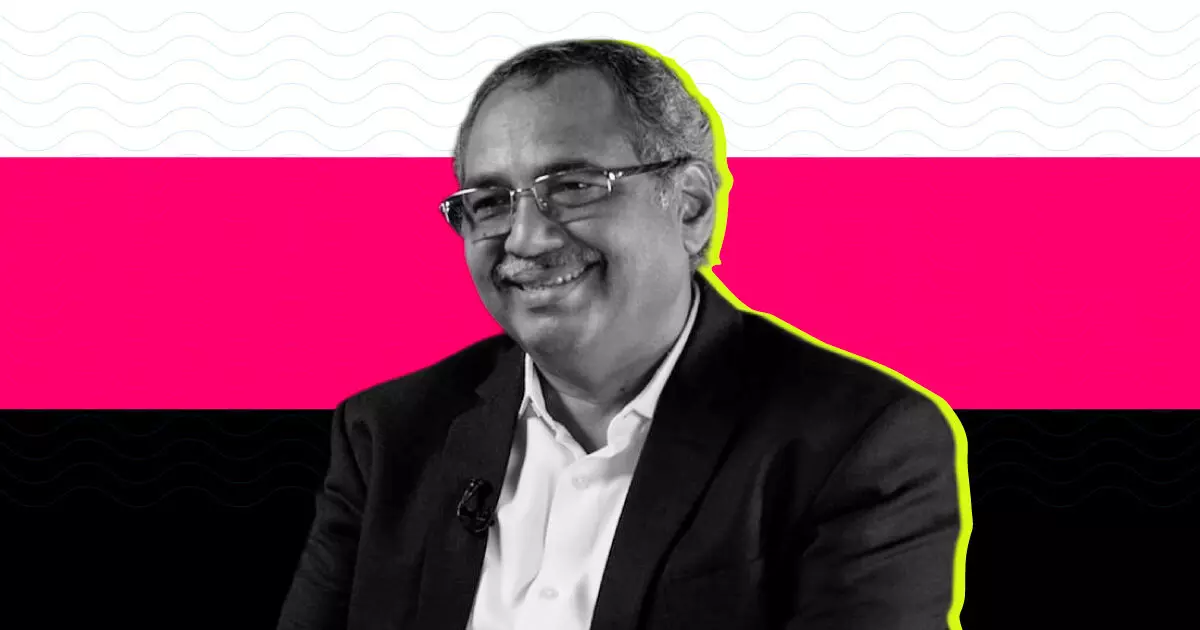
Invest in Perpetuity: Aditya Birla Sun Life AMC Chief On Portfolio Strategy After The Market Recovery
- Business
- Published on 14 Nov 2026 6:05 AM IST

A. Balasubramanian, Managing Director and CEO of Aditya Birla Sun Life Asset Management Company sees a long growth runway for India and says investors should stay in it for the long haul.
The Gist
The markets have shown a remarkable recovery, with the Sensex and Nifty up nearly 10%, prompting investors to reconsider their portfolios.
- Foreign portfolio investors are returning, indicating renewed confidence in India's economy.
- Despite previous market consolidation, Indian investors remain optimistic and continue to invest through mutual funds.
- Experts suggest a diversified portfolio approach, emphasizing core investments in India with a small allocation for international exposure.
Hello and welcome to the Core Report Special Edition. The markets have recovered substantially. The Sensex and Nifty, for example, are up almost 10%. They have recovered a lot of the ground lost in 2026. Many other changes have happened, including the return of foreign portfolio investors. Donald Trump has lost in the midterm elections. Oil prices are receding, and things look better than they did even in October.
So as an investor, how should you fashion your portfolio in this environment? Should you look at the same things you were looking at earlier? Should you reconstruct, or stick to the same old principles?
That is the question we put to A. Balasubramanian, Managing Director and CEO of Aditya Birla Sun Life Asset Management Company, who joins me today. Bala, thank you so much for joining me. It is lovely to have you back. How do you see the markets at this point, given that they have recovered in a manner most people did not expect?
First of all, thanks, Govindraj, for connecting once again. I think the last few weeks have been an incentive to celebrate the festival season and keep the mood good, and it is a blessing in disguise. The outcome of the midterm elections in the US completely changed the situation that prevailed two or three weeks back. There is a lot of uncertainty, no doubt.
Over the last year, world markets have gone through uncertainty that has not helped anyone except the AI trade, which was booming. Otherwise, it has brought back inflation and interest rate hikes. In that sense, the world was setting into a kind of self-defeat, or getting trapped.
The change in sentiment is a change even for the large US economy, which definitely benefits if oil prices stay low. From the foreign flows point of view, it also makes sense for people to look at diversification beyond the AI trade, which was a missing piece for quite some time.
People were making tonnes of money in the AI trade, whether that was logically right or wrong, and there was a huge amount of speculative activity in the space. With this change, India, a fundamentally sound economy, offers global investors a very diversified investment opportunity. So I assume the change has happened for the good of the Indian economy. India has been far better than most nations abroad, both politically and economically, yet we still had to go through a period of consolidation. I don’t call it a pain, I call it consolidation. Now, after this outcome, people globally are realising that India cannot be ignored beyond a point.
Right. What you have said so far is from the lens of an investor sitting outside India. So you feel investors are coming back to invest in India. How do things look from within India? Because for more than two years, markets have not really…
One good thing that has happened is that Indian investors, who have also seen market cycles and participated in the Indian equity market through mutual funds, continue to remain confident about Indian economic growth. Investing in equity through mutual fund schemes has seen continuous progress month on month, though we have seen a bit of consolidation in the last six months. Otherwise, Indian investors continue to show a strong mindset to stay invested.
In addition to mutual funds, institutional money, namely the NPS and EPFO, also continues to come into the capital market as part of normal allocations. That keeps the overall market intact so far.
From the policymaking point of view, look at the Make in India theme, which came out about 12 years back, India now has a reasonably good market share in manufacturing, and that output is contributing to the GDP number. Many sectors are large beneficiaries of Make in India, especially electronics manufacturing, where India has made huge progress.
We have also made huge progress in energy, and in ancillary sectors such as auto, engineering, defence and aerospace. Many companies operate in this space, and manufacturing is a large beneficiary, in addition to electronics manufacturing. This is reflected in the GDP number and therefore in the Indian capital market.
So from an Indian investor’s point of view, the overall environment is good, except for the spike in oil prices. That spike could have had a negative impact on the Indian inflation story, because of which we had to raise interest rates. If we keep that aside for the time being, the fundamentals of India are getting better, and both money managers and investors retain confidence in the Indian economy.
Right. I started by asking how you construct or reconstruct your portfolio at a time like this, when things have started looking up in the Indian market. But before I come to that, let me ask you a historical question. You have been here for almost 30 years now. If you look at the journey of the asset management industry, through the different types of schemes and products that have been created, what has that journey looked like?
The industry has only evolved. In the first 10 years, it started predominantly with equity. After the internet bubble, people realised that fixed income was an equally important asset class that could not be ignored. Money then moved towards coupon-bearing instruments, and fixed income picked up. In the second 10 years…
2000 to 2010.
Then we saw interest in equity come back, while fixed income remained very strong, given that yields were high. In the next period, from about 2010 or 2012 onwards, we saw a significant pickup in hybrid funds, which are a mix of fixed income and equity, and hybrid funds became a large asset class. So first came equity, then fixed income, then hybrid. Post-COVID, we witnessed a significant pickup in equity, largely on account of the change in taxation for fixed income investors. Fixed income was taxed at the nominal tax rate, so the incentive to invest in equity became higher than the incentive to invest in fixed income. That led to a significant shift towards equity.
As I speak today, over the last two years India has underperformed the global market, and a new opportunity has come up to invest in overseas markets. The government set a limit of $7 billion for mutual funds about 10 years back, and I still remember that the limit was hardly being used. I remember launching a fund in 2014. Investing in overseas markets is as important as diversifying within India, but we did not get a good response at that point. After that, the FAANG stocks started going up globally, and suddenly the $7 billion limit was fully utilised. Today the RBI does not give permission to invest more than $7 billion through mutual fund schemes, though investment is permitted under the LRS.
So as a fund house, we expanded our product offering to GIFT City. About six years back, GIFT City was becoming a vehicle for Indian investors to invest in overseas markets through mutual fund schemes, and we were among the first few AMCs to set up a presence in GIFT City in Gujarat. It acts as a gateway for domestic investors to invest in global markets, and for overseas investors to invest in the domestic market, instead of coming through Singapore, Hong Kong or London. We turned very bullish on GIFT City. When Brexit happened, we thought London would lose its status as a financial capital and GIFT City could become the vehicle. We also turned extremely bullish when COVID happened. People went through hell in Hong Kong and other places, and India handled COVID quite efficiently, so we felt money would start moving from Hong Kong to GIFT City, both for foreign investors investing in India and for outward investment.
NRIs remit close to $85 to 90 billion into India every year, and they may also remit through the GIFT City route. So as a fund house, we expanded our Indian asset management business to offer products for both inward and outward remittance. About two years back, once we had GIFT City as a branch operation, we launched two funds. One invested in emerging markets, and the timing was perfect. We invested in China, Taiwan, Korea and other markets, and in three years investors doubled their money, because these markets did exceedingly well compared with India. So we saw a new flower coming in.
Even today, we use this platform to provide the diversification Indian investors may need. Once you have Indian equity exposure, you can look at diversification outside the country to meet your own requirements, such as education or travel. That is a product diversification we launched, but our larger focus is to bring a large pool of money into India, from NRIs, global investors of Indian origin and foreign investors, through GIFT City. We emphasise that continuously, using the vehicle predominantly for inward remittances while also giving Indian investors an opportunity to invest overseas for diversification.
Right. I’ll come back to the overall picture in a moment, but let me stay with GIFT City. You have two schemes, the ABSL Emerging Market Equity Fund (outbound) and the ABSL India Growth Fund (inbound). Let me ask about outbound first. What size and scale are you looking at, and are there restrictions for investors who want to invest from India?
For the domestic mutual fund business, we say it will become about ₹8 lakh crore over the next three to four years. Currently we are at about ₹4.5 lakh crore. This is the kind of ambition target we set, and it is easy to predict where we should be with domestic. Overseas is actually the larger pie, so we are not keeping a target per se. The idea is to help domestic investors participate in overseas investing through our product. In the outbound segment, we have chosen an emerging market equity fund. Emerging markets comprise China, Vietnam, Taiwan, Hong Kong, Argentina, Brazil, Korea and Singapore, and all of these are covered.
And this is what you were investing in two years ago as well?
Yes. Two years ago it was the same fund, a closed-ended one with a minimum ticket size of about $120,000. Now we have made the same scheme a retail product. Investors can come in with as little as about $500 and can do SIPs, investing every month as and when they have money. We kept it at a low dollar amount because a middle-class family today may aspire to send its children abroad for studies, and this can be used as a vehicle for that. It brings two advantages. One is diversifying overseas. The second is dollar exposure, which Indians otherwise do not get to hold.
We chose this scheme because emerging markets will remain one of the larger themes for investing overseas. Some of them, like China, have a longer-term structural story that is as good as the one we see in India. A few others, such as Vietnam, Taiwan and Korea, are heavily focused on innovation and are extremely innovative nations, so they provide opportunities. But in these markets, style of investing also matters, especially after the AI trade volatility. Our fund largely follows value-based investing. If the fundamentals of a company do not justify the price at which we are buying today, it will not be part of the portfolio. Companies are chosen for their strong fundamentals. Their valuations should be justified, they should be profit-making, and they should operate in a niche segment that will have a long-lasting business impact. That is the way we have chosen this fund, and in the current market volatility it comes in handy.
Right. But in Taiwan you have TSMC, and in Korea you have SK Hynix and Samsung, so it is really those two markets for now, isn’t it?
No. Samsung is in Korea…
So in Korea it is Samsung.
The weight varies from about 10 to 12%. China will be about 20 to 23%, and Hong Kong, which again gives diversified opportunities, is roughly 13 to 14%. This can keep varying depending on the market outlook. However, the larger focus is on companies with huge profit-making capability, rather than investing now and waiting 10 or 15 years for the output to come. We avoid data centres and some of the AI companies that have been created. We prefer manufacturing companies, producing goods rather than services.
Right. So even in Korea, which has really SK Hynix and Samsung, and in Taiwan, which has TSMC, there are other companies to invest in whose stock prices are not as volatile as those three have been in recent months.
Correct.
Okay. My other question is: you have not invested in Western markets, including the US?
We do have our own fund, which we closed about four months back. It invests only in global blue-chip companies, again with value-based investing, in companies that have a large presence in their respective sectors. It is not necessarily AI. Even in that scheme, the AI trade was only about 15 to 18%, and the rest was old-economy stocks, so it was an equally well-diversified portfolio. It was a closed-ended fund. We intend to launch two more funds that invest in a global diversified portfolio, namely the S&P 500 and the NASDAQ index, to provide an opportunity to diversify. In addition, we also have an inbound fund.
We also believe that, in the current market volatility, global investors should look at India as the next big opportunity, for two reasons. First, the Indian currency is now stabilising. After the FCNR(B) deposits, our forex reserves have gone up and the rupee-dollar rate is stabilising. India also continues to focus on manufacturing for export. Incrementally, I think India will be a large beneficiary of the current global market volatility. Third, oil prices are coming down, and if they stay somewhat low, India will be a large beneficiary of that too. So we believe global investors would be better off investing in India, and we are giving equal emphasis, if not more, to encouraging them to invest in India through GIFT City.
For outbound, do you have five schemes now, or six?
For outbound we had two, in the form of AIFs. One has now been converted into an open-ended fund, so there will be three funds already on offer, and we will launch two more, the S&P 500 and NASDAQ funds. So five in all.
My question really is: how does a company like yours source the research that helps you make the right investing decisions?
It is like how investors choose a mutual fund: they trust a money manager with their money. In the same way, we do not have the expertise to invest in overseas markets by picking countries and stocks, so that is outsourced to a global money manager. In our case, the [Arga] investment fund is outsourced to a manager who runs about $30 billion in emerging markets, based in Connecticut. The fund manager has an India connection, but he predominantly serves overseas investors and looks only at emerging markets, in a value-investing style. We chose him after due diligence.
Similarly, for global blue chips, we chose an ex-Fidelity portfolio manager who runs his own boutique firm. The other two funds are mostly index-based, so we will use ETFs. So we will not do global investing directly ourselves. We predominantly use someone else’s capability, and what we bring is our own experience and due diligence.
And are others doing similar things?
More or less, everybody is doing the same.
You said that Indian citizens should think about these schemes as a way to build a dollar-denominated corpus, including for travel and children’s education. How will that work? Will the money sit in GIFT City, and can you take it out without any questions asked here?
Yes, basically under the LRS scheme, any investor…
So once it goes to GIFT City, it is as good as gone out?
It is as good as gone out. It leaves your domestic bank account and goes to the dollar account, from the dollar account it goes into the scheme, and from the scheme it is invested overseas. So it goes out of the country, and then rupee-dollar movements are linked to the prevailing market rate. Secondly, the money has to be invested. We are not taking it to keep as cash or to look for arbitrage benefits. The idea is to invest in the underlying portfolios that have been designed for the fund, so it will be invested in the portfolio in which you are making the investment.
Right. So if I put in $100 and it becomes $1,000, am I at liberty to use that $1,000 internationally for whatever purpose I see fit, without necessarily paying tax in India, or will I pay the usual capital gains?
Tax will be applicable as per Indian income tax rules. Any overseas equity investment is subject to the two-year capital gains tax, as applicable in the Indian equity market. Second, since we are investing in a fund, when you redeem, you redeem from India. The money is redeemed from the overseas fund and comes back to India, and then you can use it however you wish.
The way we look at it, the concern that always comes to mind is this: “I want to send my children abroad for studies after 10 years. At that point, I do not know what the rupee-dollar rate will be, or what the cost of education will be.” By investing in equity, your longer-term cost impact gets reflected in the stock price. Second, the outlook on currency, which takes into account various parameters, also gets reflected, so you do not need to worry about it. Nobody would have expected the rupee-dollar rate to be 95 about five years back, and similar things will always happen as we move forward. So it is an opportunity for Indian investors to diversify a bit outside the country while also diversifying within India. Within India you are exposed to the well-set ecosystem, whereas outside you can find different investment opportunities, which is what diversification provides. From an Indian investor’s point of view, I always say you should invest 70 to 80% in our own country, though everyone has different requirements.
Let me come back to the question we started with. How do you construct your overall portfolio, sitting in India, at a time like this, when we have seen an upsurge in the markets and things look a little different? I asked about your journey, and you said it started with simple equity and then evolved with market conditions. I assume that along the way you also had many sector-specific funds, which have also evolved. So what is the ideal portfolio construct today? The other thing we have seen in the last few years is the arrival of commodities such as metals, including gold and silver.
The broad point is that all these trends will keep changing, and money managers have to do the analysis continuously at regular intervals. What remains constant from an investor’s point of view is core versus satellite. The core is India, and within that core, a naturally diversified equity portfolio that cuts across all market caps, whether large cap, mid cap or small cap. These are funds that give the money manager the flexibility to make the choice, whether a flexi-cap fund, multi-cap fund, small-cap fund, mid-cap fund or even a multi-asset fund that takes commodities into account. Let the money manager make that call, so that you as an investor do not have to worry about it. That is the core.
Thematic funds cover emerging themes, such as the metals you mentioned. Within thematic, there are two types of schemes. One is structural, with a long-term story, such as the manufacturing sector. It is structurally sound and long term, but restricted to manufacturing companies, and it will not include the service sector. The other is cyclical. Infrastructure could be cyclical, banking could be cyclical, and IT could be cyclical. So one has to divide thematic into two parts. Consumption, for example, is a permanent theme, so within it you also look at core versus satellite.
Broadly, in the domestic portfolio, you have a mix of diversified equity and thematic. In my view, 65 to 70% should go into the diversified core. The third is the hybrid asset class. Most investors do not want to bear too much equity volatility. Let the money manager decide and actively manage the equity portion of the portfolio, which is what a balanced advantage fund does. In fact, a balanced advantage fund could be a good entry point for most investors. Today, SEBI also has a category called the Specialised Investment Fund, where the money manager can invest in the options and futures markets to enhance portfolio return by hedging. That opportunity was given as recently as about six months back, so it can be chosen by conservative investors.
Having said that, for the domestic investor, perhaps 5 to 10% of the portfolio could be invested outside the country, subject to your wallet share permitting. I would say about 5% could be invested abroad as part of diversification.
And is that thematic?
It is basically any diversified portfolio outside. Thematic investing is best avoided globally, because thematic sometimes…
When you say core versus thematic in India… so investing abroad is part of the thematic bucket?
Yes, it is part of the thematic bucket. So if I take 70 to 75% of the portfolio in core, maybe 65 to 70%, the balance 30% could be a mix of thematic, including domestic cyclical themes and structural, longer-term sustainable themes such as the manufacturing and consumption I mentioned. Within that, you can also consider 5 to 8% invested abroad, again in a diversified portfolio outside the country.
Okay. Some time ago, only a couple of months ago, you spoke in an interview about a 10-year bull run beyond this dip. The dip was still going on at that time, and we now seem to have recovered from it. Are you still seeing a 10-year bull run, and can you define what you meant?
Yes. The 10-year bull run is for two reasons. One is the journey of every decade, as I mentioned earlier about mutual funds, which applies equally to the market. I also believe that every three years of a down period is followed by a bull period of about one and a half to two years. Generally, bull and bear periods in India fall in the range of about one and a half to two and a half years. We have already gone through two years of consolidation, and the market has already undergone a time correction. Today, valuations in Indian markets have become somewhat reasonable. Whenever money flow starts coming in, and as the regulatory framework keeps changing, we will get the next round of bull market and growth.
I think we should not consider it merely a bull market. It is a structurally sound economy marching towards a trend-based growth path, and the road map is very clear. Look at the number of sectors being added to the market, and the number of companies now able to participate in the overall growth momentum, with their earnings getting reflected. Indian companies have strong balance sheets, which gives them the opportunity to leverage them by taking loans and building the next round of growth. India’s opportunity today is far higher than that of US companies, which are now taking on debt. Maybe the time will come when we find they have borrowed more than they wanted, and the return on that borrowing is not coming in, as with AI data centres. The investment in data centres comes from that angle, whereas India does not have any of those issues.
India seems to be the reverse, with no one taking on debt, at least not at any sizeable scale.
Correct. That is the big opportunity for investors to take a leap of faith and look at the next 10 years of growth. Last but not least, I have always seen that whenever we go through a period of challenge, like the one over the last year and a half, whether geopolitical risk or commodity-led risk for India, the Indian economy always bounces back. Policymakers have the wherewithal to recognise the issues and make a course correction so that the economy can return to the next round of growth. In my view, we are at that stage.
You talked about regulation and about course correction, separately. Is the removal of long-term capital gains tax one of those course corrections?
I think it could be. My belief comes from two angles. About two years back, when India was trying hard to get Indian bonds included in the global bond index, we were not making the changes required for inclusion. But they waited for some time, and we still got included in the global bond index.
The JP Morgan index.
Yes, the JP Morgan bond index. After inclusion, the experience for those investors was not that great. However, when we realised we needed to shore up our forex reserves, the government came out with the FCNR(B) deposit scheme. That is when they made a course correction by removing a pain point attached to Indian bond investing, namely the 5% TDS. The same government was not open to this two years back, but about eight months back it became open, which I call a course correction. The government is not rigid about recognising issues and reversing course. Of course, it needs time to understand what the impact will be. It cannot jump like a trader. It has to think things through carefully, and it did so with the TDS adjustment.
The same applies to long-term capital gains tax, which is now being talked about. When you compare us with the rest of the world, a global investor makes comparisons, and in that comparison India does not get high priority. Fundamentally we are good, but we do not get high priority because of other reasons. In my view, the government will always be smart enough to understand these gaps and make the course corrections. I believe Indian regulators and policymakers, including government authorities, are quite capable of recognising these facts. Besides, everyone wants India to reach the next level of growth, a $10 trillion economy. Who would not take the steps necessary to make this happen
Let me come to equities. You have always said that equities must be a significant part of anyone’s portfolio, including your own, as you have said in many interviews. This is a question I have also posed to some other fund managers. Is the composition of the bellwethers in India changing, or has it changed fundamentally? And if we have a 10-year bull run, or whatever-year bull run, will it be driven by a completely different set of stocks from the previous 10 years?
India has the beauty that the large components of our market are part of the broader economic growth. New sectors get added, like defence, and energy has become a larger sector. As happened in the past with IT, banking, NBFCs, financials and capital markets, I see each sector becoming large in its own way. So market-cap composition can undergo change, as we have seen with traditional companies versus new companies, but otherwise it will still be a diversified opportunity, cutting across sectors and representing multiple growth sectors in the country.
India, fortunately, has many small-scale enterprises whose aspirations are being met today, for two reasons. One is that the cost of capital in India is low. The second is that opportunity is coming in, especially with the stepped-up focus on manufacturing, including government spending in sectors such as defence, aerospace, energy, railways and roads. That has provided opportunities for many small companies in India to fulfil their aspirations. Third, there is the next generation now coming in. They hold their traditional businesses intact while also expanding over and above them, which unlocks value. In the majority of companies I have seen, they are creating and unlocking value, especially by getting into the EV segment as a new business activity. This is happening across different family-driven businesses, where the new generation wants to take the business to the next level of growth.
So my belief is that it will be quite diversified. Some will be losers and some will be gainers. In the last three years, public sector banks grew at the cost of private sector banks in terms of valuation unlocking. At the cost of these two, NBFCs grew, because their valuations were getting unlocked. And in the whole picture, capital market stocks like AMCs and broking firms became very large, and finally the exchange has also come. I think you will see this kind of transition in each sector. As large companies become cheaper than the broad market in valuation terms, they naturally start getting allocations, and that is how I see the revolution happening. Of course, some companies that do not have the aspiration to become bigger or expand to the next level may be left behind, not in terms of existence but in terms of valuation.
I have a couple of last questions. When you look at the BSE 30 or the Nifty 50, a lot of people invest in these companies. Do you feel the composition could change very rapidly from here? We seem to have gone through a phase. COVID was one phase, and the last year and a half to two years have been another, which put a lot of pressure on companies and managements. Some good ones have come out of it stronger.
Going by my own experience, there is a continuing comparison of large caps versus the rest, whether the BSE 100 versus the rest of the BSE 100, or the Nifty 50 versus the rest of the Nifty 150. As it stands today, the Nifty 50’s, or the BSE 30’s, contribution to overall market cap has come down, and the rest of the stocks have gone up. So the market has shifted. At the same time, when something grows at the cost of others, the companies there also have to justify their growth and valuations, and they may go through a consolidation phase. So my belief is that the cycle will keep coming every two to three years, so that the overall market gets lifted. As it stands today, the Nifty 50 valuation may be more favourable than that of the rest of the companies. If you adjust for growth, the rest of the companies may be more or less an investable universe. But that rotation will happen. The best way to capture it is through a flexi-cap or multi-cap fund, where the money manager keeps looking at the allocation to each market-cap segment and allocates the money accordingly.
Third, we must recognise that India also has a strong start-up culture. Some of the e-commerce-based companies in India have become very large, as their business models are sounder than they were four or five years back. They can add more value to investors by becoming large and meeting customer requirements in the country, and they get added to the overall market cap. When Jio listed, about ₹10 to 14 lakh crore was added to the market cap in a single day. Did it happen at the cost of the parent company, Reliance Industries? Not to a large extent. To some extent it did, when the holding-company discount comes in, but both are good operating businesses, so it adds to the market cap. We have seen other good companies, whether Birla, Tata or Adani, and all the new companies they have incorporated have added to the overall market cap. We have also seen some of the large start-up companies, whether Meesho, Lenskart or Nykaa, add to the market cap. When the NSE comes to market, almost ₹5 lakh crore will be added. In fact, the companies that came out with IPOs in the last three years have added close to ₹14 or 15 lakh crore of market cap.
So my view is that India will provide a greater opportunity for people who want to come to the listed space and raise equity capital. At the same time, existing companies will become increasingly efficient and discover their value, and so add value for investors. That is the journey I see evolving.
So what you are describing is a very dynamic market that constantly sees churn, as in the past, and will continue to do so.
Correct.
Last question. Many people invest in the market through you via an SIP, though they could also invest a lump sum. Where do you feel the SIP stands today as an instrument for accessing the market?
An SIP is an easy way of investing. You do not need to convince yourself that you have to invest in equities, because investing in equities is a must. Second, it brings discipline. Otherwise, the investor’s mind is very volatile. When you should invest, you stop investing, and when you should not invest, you start investing. To avoid these mistakes on either side, an SIP is the best way of investing, and people have understood that. The only disadvantage is that, because you invest in both bull and bear markets, it gives a return over a period of time that is linked to nominal GDP plus 2 to 3 percent.
When things are tough, I always say you should do a fast-track SIP rather than spreading it over, say, five years. If you have lump-sum money and markets are down, invest through a fast-track SIP. Instead of investing over a year, invest over two, three or five months. If you are a salaried person who wants to build a longer-term portfolio for a longer-term goal, think of it like the way we all save in the provident fund. Most working employees have a provident fund. Treat the SIP the same way and keep investing from your monthly salary at regular intervals. You cannot generate lump-sum money. What you have is only regular flows by way of salary, so keep investing through an SIP.
In my view, SIPs have a long runway, as more and more people are joining the working population. Mutual funds are also the only vehicle that accepts a monthly SIP of as little as ₹100, so mass participation can come through the SIP route.
Right. And as you pointed out earlier, many new companies are coming in and fresh market capitalisation is being created, so there is enough demand for all of this supply.
Yes. Investors who are coming in have to think of it as investing in perpetuity. Even with an SIP today, if somebody asks me for how long they should invest, I say: invest in perpetuity. As long as you live, continue your SIP. If you come with that mindset, the outcome will be far better than if you come expecting a one-year, three-year or five-year return. Sometimes you will feel disappointed and start cursing yourself for not making the right decision. If you come with a perpetuity mindset, the probability of success is far higher. That is what we keep saying.
So think in perpetuity is the moral of the story. Bala, it has been a pleasure. Thank you so much for joining me.
Thank you.


