



 Newsletter
 Search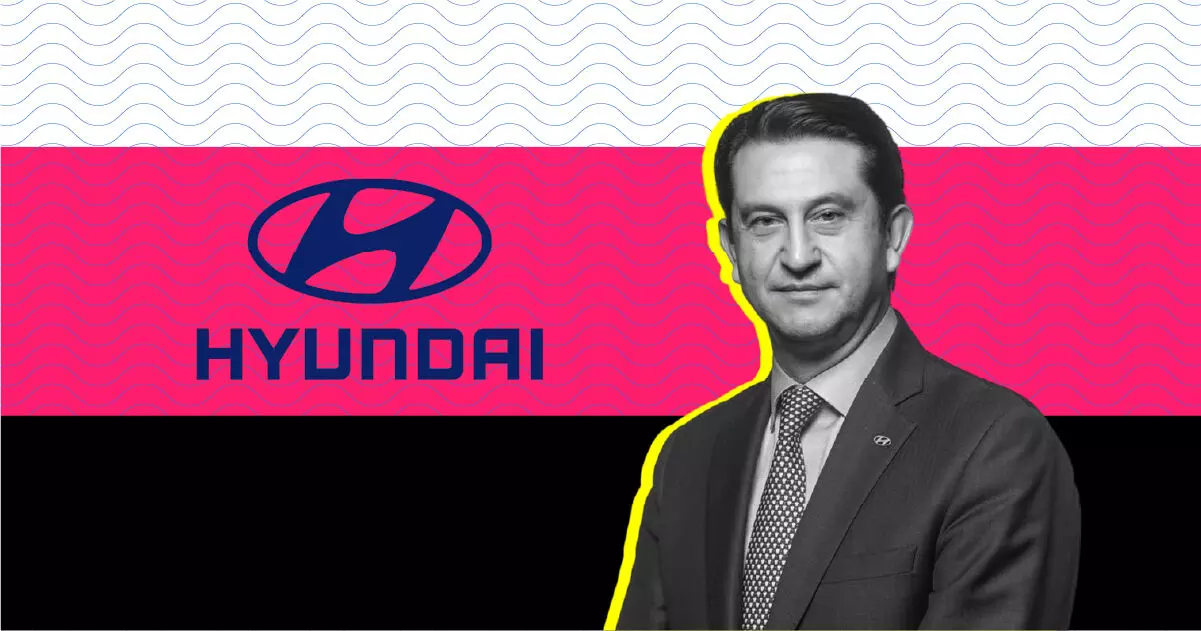
Long-Term Strategy And India Blueprint Help Navigate Global Headwinds: Hyundai Motor CEO José Muñoz
Hyundai’s chief says the group’s mix of carmaking, steel, robots and data centres gives it room to pivot, and India shows how to go local.
Sticking to mid- and long-term plans, rather than reacting to each new shock, is how South Korea-based Hyundai Motor Company is navigating geopolitical headwinds including tariffs, the US Inflation Reduction Act, wars in Ukraine and Iran, and Chinese competition in Europe, President and CEO José Muñoz said at the Bloomberg New Economy Forum 2026. He credited a group-wide ecosystem for the flexibility to adjust quickly.
Muñoz also pointed to India, where Hyundai has built a business base over three decades, as the template for deepening its local roots in other markets. “This is how we have become a kind of global player doing the same type of thing that we learned here in India as kind of blueprint,” he said, adding, “becoming local in all the markets.”
Not every carmaker can commit with confidence at critical moments, Muñoz said, and some give too much weight to quarterly results. He credited Hyundai’s executive chair, “who is always looking in the long term,” for helping the company stay steady.
The remarks come as Hyundai Motor India Limited reported consecutive year-on-year declines in quarterly net profit, with consolidated net profit falling 22.2% to Rs 1,255.63 crore in Q4 FY26 and a further 35.1% to Rs 888.6 crore in Q1 FY27.
India In Focus
Muñoz called India “the star” of Hyundai’s strategy, building on competitiveness and launches of electric vehicles (EVs).
“Nobody thought these (EVs) would be relevant in this market just a couple of years ago, but we saw it and we invested,” he said. “We are going to have the entry-level EV, an SUV EV, off-road vehicles.”
The company has earlier committed to 26 new vehicle launches in India through FY30.
About half of all Hyundai vehicles in India are due to be electrified by 2030, “which is a lot,” he said. The target counts CNG, hybrid, battery-electric and fuel-cell electric models.
The commitment to India is also backed by Hyundai Motor Group’s recent announcement that it will invest $15.5 billion in the country between 2026 and 2032 through a dedicated investment entity. The funds will go toward expanding manufacturing capacity, research and development, building up local suppliers and backing startups, and will cover both Hyundai Motor India and Kia.
Ecosystem And Speed
According to Muñoz, the US policy climate and the conflicts in Ukraine and Iran have affected Hyundai’s operations. So, a long-term approach becomes more valuable as tariffs, wars and shifting government policy disrupt global operations.
Hyundai’s answer draws on two Korean terms. Ppalli-ppalli, meaning fast and quick, and miri-miri, meaning plan ahead. Together they describe a strong plan that can be changed when needed.
That flexibility, he said, rests on an ecosystem. Beyond automobiles, Hyundai Motor Group's wider industrial ecosystem includes construction, robotics, logistics and steel production.
It also builds nuclear power plants, which Muñoz noted can supply energy to data centres. The data centres in turn could feed the data needs of autonomous driving and robotics.
“If you don’t have the platform, you don’t have the ecosystem; you cannot really handle any of the situations,” he said. “Now if something changes, we will immediately change as well.”
Muñoz further described Hyundai as a physical AI company that applies the technology where it is practical for the business. “We are a tech company that happens to build cars,” he said.
Hyundai plans to begin producing its Atlas humanoid robots in the US by 2028 with a total production capacity of 30,000 units. The company intends to deploy the robots on its own production lines to improve productivity and quality while reducing costs, Muñoz said.
He also laid stress on consistency in regulations, saying Hyundai meets the rules in each of the 200 countries it operates in. “When it changes very, very fast in an environment, would you make investments that are going to last 30-40 years?” he asked.
Core.
Core.


