



 Newsletter
 Search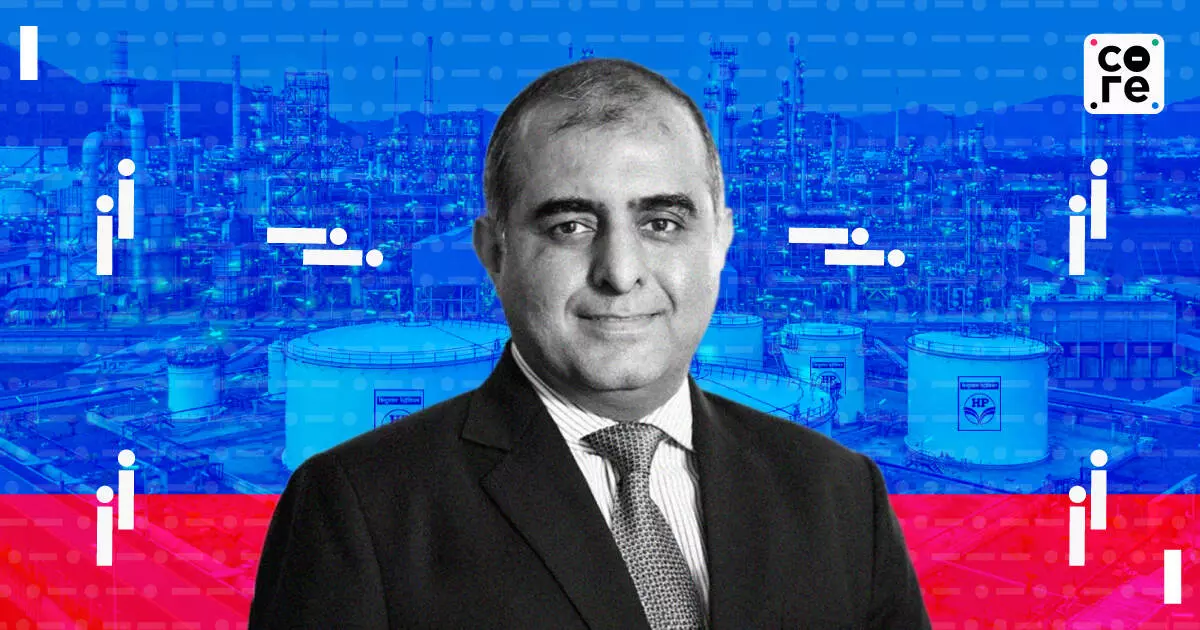
India’s Rising Energy Imports Are Set To Level Off
- Business
- Published on 22 Jan 2026 7:37 PM IST

In this episode of India Energy Week, Govindraj Ethiraj speaks with Vikas Kaushal, Chairman & Managing Director, HPCL that after years of rising reliance on imported fuel, higher domestic coal output and expanding renewables may begin reducing India’s energy import dependence.
NOTE: This transcript contains the host's monologue and includes interview transcripts by a machine. Human eyes have gone through the script but there might still be errors in some of the text, so please refer to the audio in case you need to clarify any part. If you want to get in touch regarding any feedback, you can drop us a message on feedback@thecore.in.
So, 2026 has begun in a very interesting way for the oil and gas space and the energy sector and the overall landscape perhaps. So, tell us about in a very broad way first, where does India stand today and where does HPCL stand in the sourcing of fuel that is crude to refining to distribution and everything else that we are looking at as we go along.
Great, Govind and thank you, always a pleasure talking to you. It is interesting you start the question with the sourcing one, as you can imagine that is the question we get most these days. But I will step back and talk of first the energy landscape and then I will deep dive into what we are doing in oil, gas, HPCL and then I will obviously address your question on sourcing itself.
So, if you just look at our economy itself, last quarter we grew around 8%, there is a talk of even higher aspiration for next year. All that growth requires energy. So, India will need all forms of energy, whether it is, you know, we are adding renewable at 30, 35, 40 gigawatts a year, aspirations to go up to 50 gigawatt.
Prime Minister had announced the targets at one of those, I think Glasgow Convention, the Panchamrit etc., the talks of 500 gigawatt etc., those are now in sight, you can see we are year by year getting on to those.
We have already passed our 30-30 deadline.
Yes, on one of the parameters, but absolute 500 gigawatt we still have, we are progressing towards that.
But coming back I think we need renewable energy, we are already adding thermal power, we are adding oil and gas capacities, as we speak we have 250 odd, 258 if I remember correctly, million tonnes of refining capacity in India. There is another 40-45 which is actually under construction including some by HPCL. We expect in the next couple of years this goes up to 310 plus.
And then there is a potential to add further, but this is where actually capital is being deployed. We are expanding the city gas, we are sourcing more. So, all forms of energies are going to be required.
So, India is in one of the unique economies which is actually going to grow on the traditional energies, whether it is thermal power, oil and yet at the same time taking the leap on the renewable with all kind of renewable powers, all kind of battery storages, etc. A lot of work is happening on those. So, this is a sector which is fantastically poised and also I would say lifeline in the Indian context.
So, we are blessed to be in the middle of that sector. We expect this growth to continue. People talk of peak oil traditionally, even as a consultant earlier I used to talk about peak oil around 2040 or something in Indian context.
But if you look at the latest projections, IEA projections, etc., they are actually talking of peak oil much later. So, we expect the oil also to keep growing and this obviously provides an opportunity for companies like us. So, in a nutshell on the energy sector, we expect a very vibrant, growing, expanding sector which gives opportunities to both the incumbents, the new players, you have a lot of startups and all kind of services being provided.
So, that is the whole ecosystem on the energy side. Talking of HPCL, we have traditionally been in a midstream, downstream sector, refining and marketing. A lot more skewed towards marketing, but over the recent years we have been ramping up our refining capacities also.
So, as I speak, we have close to about 25 million tonnes on our balance sheet. We also have a joint venture with the Mittal Group which adds another 13 million tonnes. And then our Barmer refinery is in advanced stages of progress and very soon we will start having that also as an additional refinery.
That is of course a joint venture with the Rajasthan government that gives us close to access to about 45 million tonnes of refining products. We sell about 50 million tonnes of product in the Indian market. And that is the core of our business.
Has been the core, is the core. Parallelly what we are also doing is we are wetting our feet onto new energies. We have been experimenting with solar, we have some wind farms also.
We are trying to find out what is the sweet spot for us. Should we do the large solar, should we do small solar, should we do directed solar at some customers, the bulk customers, etc. We have been doing biofuels.
We have one of the largest working CBG plants in Badaun. We are trying to ramp that up. It is a new nascent technology.
Everybody is getting their feet wetted on that. We are trying to ramp that up. Similarly, we have just discovered probably the lowest price for hydrogen in India for a plant in Vizag.
Besides that we have our own pilot in hydrogen. We are also doing research in hydrogen. We are expanding on the gas economy.
So, I would say as HPCL we are deep into the oil sector, growing, fortifying ourselves, expanding and yet also pivoting and preparing for the future.
So, you talked about 250 billion tonnes roughly.
258 if I remember correctly.
And going on to 300 plus. Now, tell us about how this equation is moving vis-à-vis what we are importing. Of course, we are importing more than 80% of our crude requirement.
Between how much we are producing as finished product and of which we are exporting some as well. So, between domestic production, domestic consumption and global sourcing of raw materials. Walk us through that equation.
Sure. So, I think just take, anchor it at around 260 million tonnes just to round it off. As you know crude mostly is imported in India.
Different years are different numbers but it is about 85% is imported. Remaining is Mumbai high and some other domestic fields which we are looking at. So, we are importing all the crudes.
And as a country I think we import crudes from dozens and dozens of the country. I can talk more specifically of HPCL. We in a year import crude from at least two dozen or even more countries.
We have capabilities of processing up to 200 kinds of crude in our refineries. There are other refineries in India which are slightly more complex. They can even process more number of crudes than we have.
So, that is the range we have. Now, it gives us a flexibility on sourcing the entire thing. But coming back to your question on how the whole equation works.
See, we sell about, as a nation we consume about 100 million tonnes of diesel. Another 40 million tonnes of petrol. Another 33 or 35 million tonnes of LPG.
And then there are a lot of other products. So, if you add all those up, the 260 which is being refined, I think, I don't remember the numbers exactly, but somewhere in the range of 200 or 200 plus million tonnes is what we consume in India. Maybe a shade more.
And then there are some which we export. There are some refineries which are very focused on importing and exporting. But likes of us as HPCL and some of the other state-owned oil marketing companies, they are more focused on importing and supplying internally.
Now, where is the demand growing? So, if you look at it, petrol demand, MS as we call it, is easily growing at mid-single digits. So, it is a 40 million tonne market already growing at 6, 7, 5, whatever some numbers can be, but mid-single digits it is already growing.
Diesel, 100 million tonne market already growing at, it is low single digits, not as much as MS. MS has gone, post-COVID MS has gone higher. But it is also adding a couple of million tonnes a year. LPG, a 33, 35 million tonne market, growing at 8 to 9% a year.
So, adding another 3 million tonnes. And then there are other products, Bitumen and other products.
Aviation fuel.
Aviation fuel, yeah, double digits. It is probably the fastest growing segment. Now, if you really look at it, just on the consumption side, you can translate a few million tonnes of petrol, say 2-3 million tonnes, 2-3 million tonnes of diesel, add LPG, etc.
We are roughly needing an 8 to 10 million tonnes of additional refining capacity a year, just to keep pace with the demand. The good thing is, in India we know, we do not import much now. In fact, in terms of finished products, hardly there are some specific grades people import for some things.
And there are one-off times when, like we probably are the ones who used to import most because of the refining and marketing gap. But even we have not imported a cargo for, if I remember correctly, for 2-3 years now. So, most of the refining is geared towards India, but there is certainly things being exported.
Now, in terms of sourcing, I think there is adequate amount of crude which is available globally. I know it is a very geopolitical subject and a lot of different tensions come into the entire thing. But purely looking at it as a refiner, we do have a choice of sourcing of crude.
We go to market literally every week to source cargos and we look at what is most economically viable and that is a decision we as a management team take.
So, you talked about the ability to process 200 kinds of crude which is good. What is the benchmark here? What is the most sophisticated refinery in the world? What would they be able to process?
I think that is about the numbers. I understand, I do not know for sure, and maybe Reliance folks can talk about it. I think their refineries can do up to 30s there.
So, that is about the rate. See, if you can process 200, you can process a lot of stuff. And see, to do that you need to build in more complexity in our refineries.
So, HBCL traditionally had less complex refineries, but if you read the recent news reports we had, just about a week, 10 days ago, we commissioned a project in Vizag, which actually is one of the most advanced deep conversion. What it does is it takes the bottom of the barrel and converts it into light distillates through secondary processing. That allows us to literally run any kind of crude into that CDU and through that chain.
And there are similarly other refineries that have taken different routes to the entire thing, but everybody is working on increasing complexities around their assets so that it gives them a range through, they can run a range of crudes.
So, let me ask you sort of a backward and then forward question. So, one of the things that someone in the energy space was pointing on was that 2025 was not the shock that they thought it could be, despite everything else. They said that if you look back at the year, oil prices have still remained around that $60 give or take.
And despite all the tensions, whether it's in the Middle East and now in the Americas and Russia invasion of Ukraine, which has continued, nothing has really changed. Not nothing has changed, but little has changed in terms of the final impact of oil prices and so on. But that's one.
The other thing is, of course, what has happened is obviously the sourcing is shifting around and maybe that's the most dynamic part of the market right now. As you look ahead, how are you seeing this equation from your vantage point and what has changed?
I think it's a great way you put it. 2025 was not the shock which it could have been. All I would say to all of us in the decision-making positions in the oil companies and also in the ministry, I'm sure it gave enough sleepless nights and enough chances to lose hair or make it grey.
But it never crossed a threshold where it was. Look at the challenge we had when Iran and Israel were fighting. Everybody those days and even the TV channels were showing State of Hormuz and how many ships have crossed there, which actually is a challenge because a lot of LPG India import actually comes through that channel.
So we were there monitoring has a ship crossed or not crossed and bracing for what happens if that gets blocked. But that never got blocked. It's never got blocked in the history.
But even in this fire, despite all the speculation and all media experts saying it's going to get blocked, it never got blocked. But we were braced for it. See, as organisations, as all of us as a team, and even the ministry, all of us were working hard at really what happens if this happens.
We are trying to work out contingency plans, etc. So that the supplies could continue. Similarly, if you look, you talked about the oil price.
The only time I remember is there was a period when oil, early part of the year when it went up to 70. But it never, like it's not 100. But last few months, despite all kinds of things, geopolitical tensions, it's hovering around 60 plus, minus 4, 5 dollars.
That's about it. So it was relatively stable period. So you can say there is a calm around that entire thing despite lot of noises around it.
How do I look forward to it? I think the geopolitical uncertainties are the reality of the world we live in right now. If you look at, just step back and not in my role as HPCL or your role as asking me questions, but just as simple analyst if you look at it, the number of points of tension and the pace of tension has only increased in this way.
And somehow post-COVID it seems to be a lot more agitated world in some ways. So we could expect the same trends to continue in the future. What can we do about that entire thing?
I can talk about the sector and I will talk about HPCL also. I think as a sector we can build in three or four modes if I may say so. One is a wider basket of crudes which you can run.
The reality is we are 85% dependent on imported crude. But the producers also have to sell the crude. And if person A is not selling to me, I can buy from person B as long as I can run it economically in my refinery.
So I think that is one. Second thing is with all these uncertainties, there would be moments where prices would be high. So as companies, as a sector, we can sharpen our cost structures, lower our break-evens so that we can withstand the shocks.
Yes, there will be periods where the earnings would be high. There will be periods where earnings would be low. But if you build in that resilience, you can tide over those crises.
Third, as a nation we have been actively diversifying our energy mix. Of course, we are very dependent on imported crude. But if you look at energy sources, a lot of it is actually starting to shift.
A lot of incremental addition is around renewable sources. That does not need any imports. Domestic coal production has ramped up in the last few years.
So a larger part of energy is there. In fact, in my earlier role as a consultant, I used to do a lot of analysis and forecasts on energy growth. If you project the last 20-30 years, if I am remembering the data correctly, you would see that the import dependence of Indian energy sector was always increasing.
From 1990s when we hit the economical growth patch, a lot of it was fuelled by imported energy. Crude went up, LNG imports went up, at some point of time even imported coal went up. When domestic coal production did not ramp up, the imported coal actually increased.
There were times when we were importing close to 150 million tonnes. And if you look at it, 150 million tonnes with high calorific value, the equivalent of Indian coal, you were importing 200 million tonnes of equivalent coal. Now if you look at it, we are at that period, and this trend has continued, but I believe, this is my back of the envelope analysis, that we are now living in that period where that increase is plateauing.
And in the next few years, you would see India's energy dependence on imports to start reducing. It went up from 20s to 50-55% or whatever that number is. It will plateau and in the next decade it will start coming down.
Why? Three or four reasons. As I said, domestic coal has ramped up significantly.
We have also, electricity is a lot more sort of indigenised in some ways. Solar capacity, wind capacity, even storage, pump storage, all those things will add to that. And even on a macro level globally, energy, greater amount of energy consumption is being electrified.
So we have, so India is also going to go through this change, though of course a lot of, extent of electrification of energy in India is lower than say Europe, but still the trend is towards that. So we are going to be in a situation…
You say electrification, you mean for example railways running?
Yes, and consumption is electrified. You know, at your home instead of burning LPG or natural gas, you use an induction stove. Instead of running a fuel car, you run an EV.
So that trend is slower in India, but if you look at countries like Europe etc, the extent which is used as electric, and even in industries, rather than running an oil furnace, can I use an electric furnace? So that, the trend is towards that. And in a long run, 20, 30, 40 years horizon if you look at it, if we can produce all this energy in a green manner in our country and use some of our incremental demands, incremental end consumption goes to electric route, then our dependence on the overall imports will go down.
Now, to your question on what are we doing as a company, I think in HPCL, obviously I talked about the crude part of it. The second aspect which we have braced ourselves, especially in the recent times is, we are working aggressively on our cost structures, removing the flaps which organisations tend to build in over a long period of time. We have gone public with a programme called Samrithi, which is a very targeted cost reduction programme.
The whole idea for that is, can I lower my fixed cost so that I build in longer term resilience for the organisation. There will be periods in my business when there will be shock, and my earnings will dwindle. But, if I am building that, if I am lowering my overall cost structure, I am increasing the efficiency of my assets, I am giving myself a greater breathing space.
That's what as a company we are working towards.
You talked about this unusual 2025, and what it took for organisations like yours to be alert and on their toes, so to speak, because of everything that was happening around. Is that changing the nature of the oil organisation or the energy organisation going into 2026? I am sure there are some changes, but again, maybe I am asking you this more as a consultant rather than as a CEO. How do you gear yourself for this slightly different phase?
It's a very interesting question, Govind. On the face of it, I would say nothing changes. I have done the consulting beat in this sector for almost three decades, so I have seen all the companies, including HPCL, from the other side of the table.
I saw the working of the whole sector, if I say. So, on the face of it, the sector is still the same. You have three OMCs and you have a couple of private sector players, etc.
You have a government which does the policy stuff. So, that part, nothing is changing. No dramatic news which makes headlines on your podcast in the morning.
HPCL, CMD said this is going to happen. But there are subtle things which are happening within the sector, which I would almost classify as bringing in greater agility and faster response to some of those things. So, I talked about HPCL's cost take-out programme.
My peers in other companies are doing their own versions. IOC has gone public with, I think they call it Sprint or something. BPCL doesn't aspire.
So, everybody is doing their own different ways of doing that entire thing, but they are all building in efficiencies into the sector. If you have met the ONGC chairman, he talks about a different approach on how he is shaping up ONGC. So, everybody is doing that.
Second, I see a lot more agility being built in. See, in a situation where we are going to be 85% plus dependent on imports, one of the most important part is how do we trade. So, there are initiatives, and I am not going to talk much about it because some of them are in the developmental stage right now, where we are starting to look at trading of oil in a different fashion than what we were doing earlier.
The companies have evolved themselves. Even if I talk of HPCL, the way we buy crude right now versus what we used to buy 3-4 years ago, there is a marked difference around that. Even our trading, there is…
See, typically crude buying happens in two different approaches. One is you do a term contract where you fix up with some suppliers, they regularly send, so that is like a base load. And then you go to spot every week.
Now, I can run a process where I do a tender and do the spot and do that. Second, I can run a trading desk kind of a thing where I am trying to optimise a lot more. I am also trying to look at what is available in the market, what we are…
can I reconfigure my crude basket to run that. So, there is a lot more of dynamism which has been brought in. So, like a year ago, maybe we would have been buying a very set pattern every Thursday, we will go to the market and buy.
Now, we even go in time and saying, oh, market is right, let me do two cargos right now. There are times when we actually have an offer on our desk and we do not buy it and say, no, do not hold on. This cargo was cheaper last week, maybe it will go down next week.
So, there is a lot more dynamism. So, I would say some efficiencies have been brought in. There is next step on trading which is called asset-backed trading where you start taking positions, etc.
Nobody in India has done that, but if I were to be forecasting, you would see some more initiatives in this coming out in the foreseeable future where people are starting to take positions more on trading. They are trying to pool requirements and get, think of it, 5, 5.5 million barrels per day is what India is importing, is consuming, 4.5 we are importing. That is going to go to 8, this is BP statistics, by 2050.
But even if you talk of 2030, it is going to go to 6 or 6.5, whatever that number is. We are going to be one of the largest importers.
We are second largest in the world.
Yes, and if you look at the incremental post-COVID, again depending on what cut you look at it, post-COVID, the incremental increase in the energy consumption globally, depending on what cut you look at it, between 20 to 33% has happened in India. If you take a shorter cut first two years, it is 33%. If you take a longer cut of four or five years post-COVID, 20% of every incremental jowl of electricity which was used globally actually got consumed in India.
So incrementally we are the largest sink for energy. So we are trying to see if we can get buying power together. So maybe those are some of the things which we are doing.
And to round off your question, I see operational efficiencies, I see agility. I see Indian oil companies taking more steps in collaboration. Different people are taking different approaches, doing joint ventures, doing partnerships, engaging startups.
So it is not like the old world of I am the OMC, I will sit pretty, people come to me. No, we are going out to the market and trying to do that. Even in the market we are competing much more fiercely, which is how it should be when there is active competition between different players, the consumer benefits.
So I see a lot more vibrancy in the sector than say 20 years ago.
So you talked about consumer and we have not touched on that yet. So you are obviously known as a consumer brand, whether it is for motor speed or even for lubricants, which people need in their bikes and so on. So I know there is always a lot of activity going on there.
I know that you are also adding more charging stations, for example. So it is a whole mix of energy options at your pumps. What is it that you feel is exciting or interesting you, again in this period of let's say the year or next year?
See, Govind, what is happening is, if you just flashback 10-12 years when both of us were younger, fuel stations existed as a supply point. I need petrol in my car, dad used to drive it to a petrol pump. There is one petrol pump in a small town where I grew up.
Everybody fills the pump, is happy. In fact, when I go to the town, the petrol pump is still like that, the same size because there is no other. This is in Himachal, a small town in Himachal where I grew up, a town called Solan.
It used to have two pumps on either side of the town, very small ones. It is on the main roads, you cannot do even more capacity expansion. But if you flash to a retail station right now, you see more vibrancy.
Of course, there are all kinds. We have 25,000 retail stations, there are still some which need to be modernised. But if you took a look at any modern retail outlet, they are modernised, there are lights, you can drive with your family at 11 o'clock at night, you will find it to be well lit, the dispensing units have electronic calibration, you can pay electronically, you can have other services like air, sometimes some of those will have your windshield cleaning, etc.
Somebody will come and offer you additives. So there are all those kinds of things which, I would say, are geared towards, I wouldn't say pampering the customer, but geared towards endearing ourselves to the customers. In most of it, we have toilets, we can have better toilets, we are working, all of us are working on it, improving that.
But those services are there. Then if you look at traditional fuel pumps in the past, they would either sell petrol or diesel. One dispenser for petrol and one for diesel.
Now if you look at it, even in petrol, you have petrol, in our cases you have power, which is a high octane fuel, you have diesel, sometimes you have a power version of diesel, you have a CNG station, you have the air which is there, some have nitrogen filled in, electric charging stations. So there is a range of products which are available. Then you go to a retail highway, in some cases you will have some eateries, you will have a coke dispensing unit.
But why do you have to do that? Because the customer is demanding it. If today I put in a dirty pump, you will never drive into my pump.
I need it to be like everything else, I need it to be there, meeting the customer's requirement. Then another thing which has changed, in the past, either we used to go to the pump which was available, or we used to go to the pump where there was a hair say, that guy is good, his quality is good. Now there are people who go to the Google reviews, 4 star rating, 5 star ratings, they will not go to a pump with a 3 star rating.
We are also training our dealers that, boss take care of your ratings, because people don't drive in. Now if I am driving on a highway, and I need to either fuel or charge, HPCL has an app where you can see where all our retail outlets are, what facilities are, you want to stop here, there is a McDonald's, or there is a Sagar Ratna, there is a Domino's, in that there is a toilet. If you travel from Pune to Bombay, there is one of our marquee outlets, at a place called Tajay.
You might have stopped there. So that has a very beautiful setup, it has a food court, it has a German bakery, and it has 5 star toilets. And if you travel now from Pune to Bombay, you will see 15 km from Tajay, there are billboards which are saying, clean toilets ahead.
So we are not advertising our brand, we are advertising the fact that, come and stop at our retail outlet, there are very clean toilets, and you can pick up a coffee there. So we have to be much closer to the customer. And this is only, I would say, a beginning.
In future, maybe there is fuel which you can book on your mobiles, there are some people who have tried mobile dispensing, maybe it will take off in the future. There are other ways, in consumer goods people often talk of, customer of segment of one. Maybe even fuel companies will evolve towards that.
And this is just on the fuel side. Then I also have a gas customer. I have 9.7 crore or thereabouts of LPG customers. Where I go into the house, once a month, once in two months, once in three months. How do we provide better service? How do we provide comfort, safety?
So there is a lot. We are in a business which touches crores and crores of customers every week. And we can only get better at providing customer services.
And it is an interesting thing that you talked about the toilets, because instead of saying that come to my petrol pump, you are saying come to my…
We have actually advertised that. If you go now, you will see three billboards. Post the interview, I can show you a clip. Which actually mentions, those are the highway billboards, which actually mentions HPCL retail outlet with the picture, and it says clean toilets ahead.
One specific point on that, is adulteration a solid problem?
Yes, I don't think adulteration is a problem. See when we guys were growing, what was being adulterated? Typically kerosene was being mixed into petrol.
Because kerosene was available in the ration shops, and people would buy it, and somebody would syphon it. You didn't have complete control on it. Now what exists?
From the supply side, there is no free availability of kerosene. Kerosene is only an industrial product right now, which is sold to specific industrial customer, goes in a tanker. You and I cannot buy kerosene for home.
Even if you try buying something for your ancient laltan, you will not get kerosene off the street. So the adulterating product is less available. People are innovative, they can still do different things.
The second part, which most won't know, is the oil marketing companies have actually done a phenomenal amount of automation. So of my retail outlets, any time we have 23,000 odd retail outlets, 97 or 95% of them, my team can read how much fuel is in the tank, how much got consumed. They are completely automated in that whole setup.
Right from the tank, we can read it in our control rooms. Our supply chain is automated. Right from the dispensing units to the tankers, when they leak us, they are electronically locked.
They are looking at that. So I would say by and large it is solved. What still exists is, we are a nation of very ingenious people.
So people still find a way of syphoning off some part of the product and then it goes in an uncontrolled channel. There are one-off cases like that. Now all of us as oil marketing companies are very vigilant.
We try to avoid them. But it's a large country. These things do happen.
And whenever they come up, we obviously take steps around that. But the basic problem of the era when we grew up and the concept that don't go to that petrol pump, he mixes kerosene with that, that does not exist.
Last couple of questions and I am going to come to India Energy Week in a moment. You talked about the combustion side but not the conversion side. So as you look at downstream, because that is one key focus area for most refining companies, particularly petrochemicals, how are you seeing that equation again as a top level?
I think first look at the macro. India's per capita consumption of petrochemicals is way low than global averages. Will we reach global averages?
No, I don't think we will not reach global averages. But there is a huge headroom. And people get confused with petrochemicals often with plastic and all over.
We have to use more plastic there. No, petrochemicals is way more than plastics. You know, some of what suits we are wearing, it has petrochemicals, synthetic threads in that.
Yes, man-made fibres in that entire. So that demand is only going to increase. In India, lot of companies have put in capacities or are in the process of putting in capacities.
I will talk of our capacities also in a minute. And that, we are roughly adding a cracker every 12 months, 18 months, etc. So we are putting up capacities there.
Having said that, globally petrochemicals is in a very deep down cycle right now. It is a very tough business economically. On a stand-alone basis, pretty much everybody is losing their shirt on the entire thing.
Because these are global cyclical businesses. This time the cycle seems to have elongated a lot more. Partly driven by the fact that China added a lot more capacity.
We expect the cycle to come up. And the response to that is there are some places where, maybe you caught the news recently, Korea has just announced a plan where it is going to shut down some of its petrochemical capacity. So there has to be a capacity correction in the longer run, in the global thing, for the losses to come down and prices to rise there.
The good part in India is we have a growing market. So it is not like Korea where they have to depend on exports and all those things. We have a growing market.
So if we can tide over this period, we will see a lot more vibrancy on it. But economically it is a tough thing to be running a petrochemical business right now. I am sure you know the margins, the way they look at it.
What are we doing about it? We did small pieces there. But our big step on this is two things.
One, of course, our joint venture HMEL already is in petrochemicals. It does about 2-2.5 million tonnes. They established it over the last few years.
Now, in our other company, a project in Barmer, we have a petrochemical. It is a 9 million tonne project. 2.4 million tonne is PET Chem capacity. It is an integrated refining and PET Chem complex. In fact, it will be the most complex greenfield refinery ever done in India. Most complex.
Because it starts with an integrated refinery complex, the streams going into the crackers and then going into the swing, you know, the LDP, the petrochemical downstream. So, we are expecting that project to come on stream in the next few quarters. And we are slowly going to ramp it up.
In addition to that, see, there is still basically polyethylene, people do polypropylene, etc. What I anticipate would happen is there is going to be a lot more downstream stuff in terms of further downstream. These are, you can say, L1 downstream niche products which are going to be prepared.
And I expect some of us as companies to go further into niches. We are preparing our own strategy. At the right time, we will announce it.
So, you could say, butadiene is something which comes up. You can do butadiene into a synthetic butadiene rubber. Those kinds of things.
Do rubberization of that. Convert your butadiene into that. Convert your toluene into something else.
So, you would expect some of those capacities to come up. Because if our country is going to grow at 8% or thereabouts, high single digits, we are going to need more motor cars and we are going to need more tyres and we are going to need more furniture and more of everything is going to be needed. So, in summary, I would say, macro level, there is a huge demand to be filled in and a potential to build that capacity.
At a short term basis, it is a challenging business.
Last question. And a supplement to that as well. This would be your first India Energy Week, I am guessing, as being part of the oil sector as opposed to being a consultant to it. So, how are you looking at it? What do you hope to take away?
What will HPCL be doing there? So, I have attended the earlier India Energy Week and the predecessor events also. See, India Energy Week took form in the last 3-4 years but prior to that there was Petrotech or something.
We used to hold it in Delhi, sometimes in Pragati Medan and all. So, I have been regular at that. Good thing being a consultant, you go and speak at those forums there.
I think it is amazing to see how we as a country have built this property up. I still remember attending the first few ones. I missed the previous one in Goa because I was abroad that way.
But last year in Delhi, at Yashobhumi, it was a great event. Two years prior to that in Bangalore, where the Hon. Prime Minister had come and inaugurated that event.
That was a fantastic event. Now, the vibrancy around that event is there. So, if I look at that event, it gives 3 or 4 different things.
So, one, there is a very business kind of part of it. Our calendars are full with people wanting to come. It is like us going to EDIPAC.
We do a series of meetings and the same happens out here. We were at EDIPAC and we were exchanging, oh yeah, see you at Goa in a few months, etc. So, you follow on those discussions.
So, there are a lot of bilateral talks happening. Because it is a marquee event, there are a lot of we are also preparing for some announcements at that time, some MOUs and all those kind of things which people get together, they look at it. So, I think that is that element of business.
Second, there is an element of showcasing our things to the world. In our thing we are taking this year, we are showcasing what we have just commissioned in Vizag, the RAF project. It is an awfully complex, something that complex has not been done in Indian refinery as of now.
So, we showcase, people come, talk, our peers learn. And similarly, we go to their stalls and see all those things. The third thing which is very good is IEW works around different themes.
So, you know, there is a renewable section, there is a nuclear section, all. Yes, people can go towards that and see what interests them. Fourth area which I really look at it is, it is a great exposure to our people.
So, we are sending a huge delegation from our side. We have picked in a lot of our young colleagues who we want to send it to. Of course, people want to be in Goa for four days, that's a good thing.
But more importantly, they will go there, they will see what's happening, they will interact with people from different companies. The seeing is believing. We actually ran a process internally to select who is going to go and represent HPCL.
And we picked a lot of our people from our refineries, from our field force, from our pipeline outlay, from our different parts of our organisation, so that a lot of our younger and the middle management people can go and spend that time there and see what the world is saying. So, I think it is a very vibrant place. It has become one of the largest energy conventions.
I am told it is the largest on this side of the world. So, I am really looking forward to it. I have always enjoyed it.
I would say till last year when I was going there as a consultant, I had a much more relaxed time. I could go and chat over there. I see my calendar is a lot more full this time.
Speaking of which, what is the one or two things that have changed for you in your transition from private to public sector?
I think it is interesting. One of the biggest things is, as a consultant, you do a lot of intellectual work. Of course, you work with clients and change them.
You do honest work and give them good recommendations. But at the end of it, the implementation part is with the client. You don't carry the sword on your head on that.
Being on this side, I think you carry the weight of the decisions. The positive side of it is being on and running a company like this, the speed, you can do things much faster. I joke with some of my ex-colleagues that, as a consultant, I used to run a lot of improvement programmes, big transformation programmes, one-year, two-year programmes where you lift off.
I joke with them that my fastest programme I have run on improvement is the one which I came in here because I could marry my consulting skills with the decision-making ability and also a direct contact with the great team we have here. All three of them get together. You can get to decisions very, very quickly.
In fact, we did launch that programme in April. In May, at the announcement of our annual results, we went to the analyst and gave them a guidance that this is what we are going to target in that programme. Every quarter, we report on that guidance.
I think each role has its own joys and challenges. It's a privilege to run an organisation with the legacy of HPCL, with the breadth and width of HPCL, and with the impact which it can create. I'm also blessed to have a very good team with me.
My leadership team and my large team is a fantastic team. I've also been very blessed to have a very, very supporting environment. There are times which I've never been a refiner.
If I need to know something, I can just call up. Incidentally, two of the other OMC chiefs right now, Sanjay and Arvinder, are refiners. I just have to call them up and say, Boss, explain this to me.
I think the ecosystem is very good. And then fantastic support from the Ministry, right from Honourable Minister, the Secretary, the whole setup. It's a very, very professionally run setup.
In fact, I still remember when I was in the transition, I was thinking, hey, I'm getting into the government sector. Will I be able to cope with it? The Honourable Minister actually made a very interesting comment.
He says, because you think government sector is much more complicated, for people who are outside, you think it's more complicated. And actually, we work very, very professionally here. I take my own decisions.
We talked about crude. I take my own decisions. I mean to say our team takes a whole decision.
We have committees and we have trading desks and all those things. So I think it's a joy to work here. It's a lot of work, but that's good.
I learn a lot and I've always been a curious person in my life, so learning new things is always exciting for me.
And if I can sort of supplement something with that last question. So you said when you were a consultant, you would work with organisations like this, but sitting in an organisation, would you hire a consultant?
Yes, I would. For two reasons, I would say. I think though I don't think, there are a couple of consultants working with me right now, I don't think they are enjoying it that much.
No, no, it's not. It's actually, but I'll tell you Govind, the reason I would hire. I did all my life, I prepared strategies for a lot of people.
One of the largest digital transformation programmes in an Indian oil sector was actually a programme led by me. But when it came to my own digital transformation programme, I hired a consultant for doing that. For two reasons.
One, the consultant does what he is supposed to do in terms of getting the cross section of the organisation aligned, etc. But even more philosophically, even if I have to do a strategy which I can do on my own, and I can write strategies for oil companies, but I don't want the company to be beholden to my own viewpoint. I am the CMD here.
I have the authority to write the strategy I can write. Of course, we have to take it to the board and do all those kind of things, but it is my viewpoint. There is a danger if I only extend and just, you know, if it is only my viewpoint, the company might miss out a few points.
So, as in when I have to take a strategic decision, I will necessarily take external advice because the company deserves an external advice. Even if their CEO is an ex-consultant, the company should not be beholden to my views alone. The company is bigger than my views.
Thank you. And look forward to seeing you in Goa. Thank you. And a pleasure speaking to you as always, Govind.


