



 Newsletter
 Search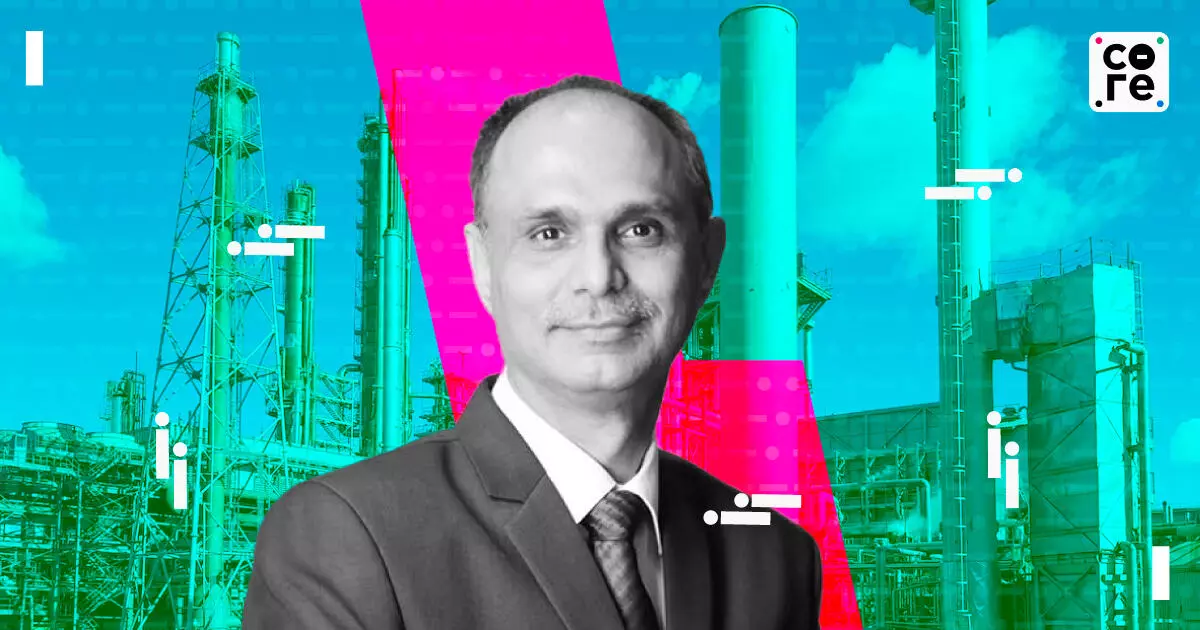
India’s Import Dependence Drove Refineries To Process Diverse Crude
- Business
- Published on 27 Jan 2026 3:28 PM IST
In this episode of India Energy Week, Govindraj Ethiraj speaks with Sanjay Khanna, Director (Refineries) at Bharat Petroleum Corporation Limited, on how India’s heavy crude import dependence drove refiners to build flexibility, cushioning supply shocks and boosting margins.
NOTE: This transcript contains the host's monologue and includes interview transcripts by a machine. Human eyes have gone through the script but there might still be errors in some of the text, so please refer to the audio in case you need to clarify any part. If you want to get in touch regarding any feedback, you can drop us a message on feedback@thecore.in.
Mr. Khanna, thank you so much for joining me today. So, let me start with a slightly broad question. 2025 was an eventful year in more ways than one. So, tell us about how things evolved or changed from a BPCL point of view and from your vantage point in the company.
Let me start with our strategic plan which we had planned way back in 2023 and we are right in the middle of the plan. It is called Project Aspire. It had two broad aspects were there.
We believe that we have to strengthen the core. Our core was basically the refining, marketing and upstream and then we knew that what are the changes that are happening in the energy sector. So, considering that we had planned for the future big bet which are mainly the gas, petrochemical, biofuel, renewable and digital.
So, this whole eight constituted our Project Aspire and our aspiration was that with Project Aspire, we will be doubling the profit and we will be quadrupling the market capitalisation and as we are in the middle of Project Aspire, I am proud to say that we have almost reached to the halfway and the way we are going, I am pretty confident we will be reaching the final destination much ahead of time.
Right. So, let me ask you about some of the elements of Project Aspire. So, one is the financial target that you said in terms of market capitalisation and profitability. That is one part. So, you said that you wanted to return to the core. So, what does that mean?
See, let me talk one by one and I can share the few key development of the year 2025. Say, let us talk about upstream. So, we were in the business for long time and two of our mega project at Brazil and Mozambique, they were stuck up for various reasons but in 2025 November, we got good news that Brazil is moving ahead now and FPSO which is a requirement for processing the crude that tender has been awarded and it is at the final stage and similarly in the Mozambique, from February 2021, force measure has halted all the activities and again in November 2025, it was removed and action has begun there. So, the way it is going, I am sure in next couple of years, we will be having product on those highly ambitious upstream project of BPCL.
Then coming to the refinery, I think refinery has done pretty well. We continue to be the market leader in the capacity utilisation or GRM and credit goes to our international trade team, refinery team and marketing team together because it is such a well oiled system is there working together in tandem for the maximisation of value for the company. We for numbers sake, we had utilised almost 115% capacity utilisation was there which was highest in the industry.
Apart from that, on the energy reduction front companies, the refineries have put a lot of effort. Coming to marketing, I think it was, I must say that it was one of the best year for the marketing where the volume was all time high but more than that, the several initiative taken by each and every aspect of marketing and we are seeing the great result. Let me start with the retail in the field of digitalisation, customer convenience and trust, I think they had put a lot of effort.
Silent Voices was another initiative where they have rolled people with disability, they were appointed and the number is rising steadily and today as I am talking to you, more than 1200 people are working at our retail outlet and they are serving the customer and the feedback from the customer is fantastic. Similarly, for our LPG business, I think customer safety was always a top priority for BPCL and keeping that in mind, our LPG team had taken an initiative called Zero Ka Dum. That is basically thumping the table and telling that come what may that no damaged cylinder will reach the customer premise.
It is end-to-end from the bottling plant to the distributor ensuring every safety aspect of the cylinder so that customer get value of it and there is no accident or incident because of cylinder from Bharat Petroleum. So that was a big achievement and we are having 56 bottling plant and I am proud to say that each and every bottling plant as of now is certified and which will be ensuring that come what may because of any trouble at the cylinder, there will not be any accident or incident will be there.
And the materials will also change, could they change? I mean we are used to seeing old hot rolled coiled steel cylinders.
That is also being talked about and the change of material of construction is also we are doing the pilot, we are planning to do the pilot soon and that is another aspect of it. Then giving the facility so that customer can get the cylinder, you know the way he can collect the cylinder at any point of time at his convenience from LPG dispenser the customer can take. Themself as per their convenience they can go and collect that also pilot we are operating it.
So these were the few things for LPG and coming to the lube I think the team has again launched MAC lubricant where along with the mechanic they have set up the shop where end to end facilities provided to the customer and the quality of the lube oil is ensured. In the field of aviation they have taken the digital initiative where end to end quality and quantity will be ensured. So all in all it was a great year even for the gas business which is one of our future big bet.
I must say that even though per se the business 2025 was a tough year for the gas but I am very happy to say that gas team has this period is utilised by them to explore the various option be in front of the procurement or maybe the alternate uses of gases. So all in all marketing had done a fantastic job for 2025.
So let me ask you about refining again or rather let me come back to refining. So you refine more than 35 million tonnes every year across three refineries. Now one of the things about 2025 was obviously there was a lot of shifts and the driving factor may be geopolitics but what it means to someone who's buying crude oil is that you have to look at new sources, you have to trade more actively, you have to price differently.
So it means a different organisation perhaps than what was there earlier. So tell us about that part of what it's been like in 2025.
Yeah as you rightly said that it was really a challenging year because there's so many variables so much of due to geopolitical situation definitely it was a big challenge and it was the main change it becomes evident very fast. So what our team had done whether it is a crude procurement from the different geographies or product procurement maybe LPG or LNG they were so agile they used to keep us on toes and we are seeing the result in that. So we procured the crude and product from the every possible geography.
I believe that in between when we had a issue with Homruz but none of the customer came to know that such and such way crude is impacted, LPG is impacted but when it comes to the ground we kept other channel open and we showed that come what may customer will not get impacted and I don't think a common man came to know when we had a several geopolitical issues but several constraint due to the product and crude availability.
And we are importing from more than 50 sources now is that correct?
Actually we call it in terms of number of crudes we have processed so when it comes to the BPCL we have done more than 230 plus crude we have processed but if you ask at any point of time our kitty will be having 30 to 50 crudes. So across every continent we procure the crude and we ensure that because of any situation the crude availability will not be there.
So if I can ask you a sort of bit of a history question here you know when I talk to energy analysts overseas one of the things they point out is that Indian refining complexes including BPCL are more diverse in terms of their ability to process wider variety of crude. So how is why did that happen? I mean why did Indian refiners or how were Indian refineries built in a way to handle such wide varieties whereas that did not happen in other parts of the world?
I will say that necessity is mother of invention. When you are producer of crude your refinery will be more aligned to that type of crude but when you are 88 percent crude is getting imported and you know that any type of geopolitical situation can impact the crude supply definitely you will be making yourself ready for the different variant of crude. So today for example my Kochi and Bina refinery can swing between very high sulphur crude to low sulphur crude.
Mumbai refinery because again it was a well-head refinery for Bombay high it is operating at 50 percent low sulphur crude but when it comes to the Bina and Kochi we get huge margin because it is designed for high sulphur 100 percent high sulphur crude processing.
Right and you talked about or rather you touched upon gas as well so what's been happening I mean or what were the sort of salient developments in the gas side in the last year or so?
I will say that gas we had a slightly tough time because of the price volatility the customer had other options and they were switching over to other option but this time was utilised for exploring like LNG how uses can happen. We are in the process of exploring the various option LNG as a bunker fuel is one of the key action which is on guard and going to happen soon then even our own LNG as a fuel we are working on it and definitely we are tying it up with the industrial customer and in view of the decarbonisation you know the chances of them coming to this fuel are pretty high in the near future.
So decarbonisation is a thrust area for you so tell us about what are the various efforts so one is of course at the consumer end to say that consumers themselves are shifting or trying to balance out between traditional fossil fuel versus renewables and so on and that's something that you are responding to but tell us about your decarbonisation strategy.
In fact when three years back when the during COP 26 it became quite evident that you know oil industry the sunset industry and the results were quite evident in the time to come but at the same time it poses a big challenge for the overall energy ecosystem and I am happy to say that today the way things are carving out it becomes very clear that every form of energy has to coexist and it's a matter of time only that some energy will get evolved more than other so in view of that but being a responsible citizen we know that the our process leads to the emission of CO2 and to take care of environment in the form of decarbonisation is one of our topmost priority and in the in that direction multiple actions are being done by BPCL.
Let me start with the first and foremost is that our energy consumption reduction in our refineries. We know that 10 to 15 percent energy reduction possibility is there by just by trimming by taking the action and reduction of the fuel or improving the efficiency of the refineries and in that direction many actions are taken by the refineries and the final testimony is that when we had a Solomon Benchmark study was done for the last year and I got the feedback that yes there is a significant reduction in the emission from BPCL refineries so that is the first. Second thing is that we were part of the government initiative to implement 20 percent ethanol blending and I'm very happy to say that from last two months consistently we are achieving 20 percent addition of ethanol. On ethanol we have commissioned our 1G plant at Bargar and it had a very safe and smooth commissioning was that and very happy to share that our 2G plant is also ready and if everything fall in place maybe by this month and even that plant will be up and running so that is on the on ethanol.
And third in the field is the green hydrogen. Green hydrogen is definitely a futuristic product and the but the way it has progressed in 2025 it's amazing. As on today we had commissioned our 5 megawatt electrolyzer plant at Bina and the plant is up and running and we have under the site to be scheme of government we were supposed to set up a 25,000 tonnes per annum green hydrogen plant and under that scheme we have already allotted order to for production of 5,000 tonne per annum plant and I'm very happy to share that we got highly competitive price and when I compare my own Bina plant and the plant which is going to come up in two years time that price difference that was close to 500 rupees per kg and this will be costing me 400 rupees per kg.
What I'm trying to say that the the two year time we are seeing the reduction in the cost and I'm pretty sure the more and more scale up of the facility will be there the price is going to go down in the time to come.
What's the price where it starts making sense for a consumer capital cost aside?
If I have to compare apple to apple the as on now the cost will be if I have to remove the capital cost that that is cost that is costing me typically two dollar per kg and this is costing me around four dollar per kg so that is a thing.
That's the target.
Yeah but but when when we started when we commissioned our first green hydrogen plant that time the cost was almost 5.5 dollar per kg so I'm saying from 5.5 we have come to 4 and it is sliding down on the continuous basis. So the innovation is is quite rapid. Exactly and in in Kochi refinery in the Kochi city we have established a green hydrogen unit for mobility purpose.
So it will be it will be giving fuel for the buses which will be flying at Kerala and we are also looking for use hydrogen as a fuel for waterways. So in Kerala. In Kerala only.
So that is on the green hydrogen and fourth in the series of decarbonisation is renewable. So again to to cater to green power to our refineries and our depots we are working on it and as on today our solar and wind portfolio total together they forms around 250 megawatt and our wish is that by this year end to the organic and inorganic way to go to 1 gigawatt and by 2040 when which is our year for the net zero we are aiming for 10 gigawatt.
That's 10,000 megawatts of power okay. So let me come back to fuels and ethanol specifically. So one is a consumer question.
So I've visited a distillery so I know how ethanol or I've seen how ethanol is made and sugar is made and so on. Where does it all get blended usually because that's a different product I mean that's a different enterprise so to speak and you are a different enterprise.
So what happens that the product will we dispatch our product to the depots and from depots this ethanol will be coming to a depot and they will be mixed there and from there it will be going to the retail outlet. So the mixing of the product happens at the depot end.
So the mixing infrastructure is new. Exactly. At obviously for all refining companies. Okay. So let me come to the demand side of things. So one of the things I saw at the India Energy Week last year and I think it was there the year before that as well was the flex fuel pavilion.
So tell us about how you are seeing that. I mean what you're supplying is one thing but what are you seeing on the demand side in terms of technology, in terms of adoption and so on apart from hydrogen which you've already spoken of.
See when we started for our for our ethanol journey if you see I think there's a great great pickup has happened over the years and I mean nobody believed that it will be rising to this level at such a short span. So coming to the specific question about the flex fuel yes flex fuel definitely is going to be one of the option but at the same time it has got its challenge because you need to have a separate infrastructure to handle the flex fuel. So right now I will say that the oil companies are working in that direction and definitely there'll be a small beginning will be there to begin with and then depending upon the vehicle availability it will get scaled up further.
So let me put the question differently. How do you see as the future of fuels and the near future I'm not talking about the distant future but in the near future what do you see happening on the fuel side particularly from a demand side and when I say demand I also mean car manufacturers or two manufacturers and what they make which can use the fuel that companies like you supplies.
As I told right in the beginning that all form of energies are going to be existing time being and when it comes to the particularly about the fossil fuel earlier the prediction was that the peak will be there in 25 then the peak got shifted to 30 and now people are talking about it may shift beyond. This I'm talking about the world but when it comes to India whatever peak was there people were saying it will be taking 10 additional year to reach the peak and there thereafter sliding down will be there. So I think and it has been it has been through our national and international energy agencies they have made it ample clear that this is what is going to be the future of energy because the demand is growing.
You just see your own personal energy consumption pattern the way it is changing the demand is growing by the day the aspiration is going by the day and we are a big country with a huge number of consumers. So definitely the energy demand for for fossil fuel fossil fuel is going to be there time being. So looking at it whatever projection is that it is it is likely to be there till 40 45 it is going and that time it will be peaking and then they'll be sliding down will be there.
So and you feel that the automobile industry is in step with this are they are they ahead of it and I mean this is a very broad question I mean I mean and again it's a demand side question.
I think because we are in touch with the automobile agencies those who are working on it whether it is a CIM or ARAI we are having a close interaction with them because we know that we have to go hand in hand together nobody can go ahead or nobody can be behind. So we are working in tandem together and so that you know the challenges will not be there. Let me give another example that right now we are working for alternate fuel alternate to ethanol option we are working on it and we are working together with the with the whether you call it CIM and ARAI our R&D team we are all working together so that tomorrow when the product comes in the market and it becomes part of the fuel no surprises will be there so all that all the detailed comprehensive testing will be done ahead of before it is getting launched. So we have to be together to make it happen.
And I think many consumers may not realise this that you know that both sides are working so closely together to ensure that you know there is a balance in terms of fuels produced and fuels consumed. So when you say alternate to ethanol what would that mean?
Right now it is it is very prelim stage it is called isobutyl alcohol because ethanol could not be added to diesel but isobutyl alcohol can be added to diesel it is the possibility is there and but it is a very prelim stage India may be the first country in the world who will be adding the this product to diesel but I will say lots I mean has to be long way to go. But I was more specific to answer your question that we all work in tandem so unless until what I propose and what has been thoroughly tested by the by the all these agencies the product will not be launched.
Let me come to petrochemicals so you know in the in the overall matrix of combustion and conversion so we talked about combustion so tell us about the conversion side I mean how do you see what is the petrochemical vision for BPCL as we look ahead 2026 and onwards.
In fact it was it was one of the very strong pillar of our project aspire about the petrochemical we our one of the big project is coming up in Bina and I am very happy to share that the progress is very well and if everything fall in place the schedule time is middle of 28 and it is it is definitely in the long run very long run it is a you know hedge against the petroleum product so and it makes a very good sense to integrate with the refinery so lot of lot of synergy can be utilised.
So our first mega project costing close to 50,000 crore is coming up at Bina and apart from that in our Kochi refinery we had already commissioned one niche petrochemical project called propylene derivative petrochemical project way back in 21. It is doing fairly well and the new project of polypropylene is coming up at the cost of 5000 crore. Apart from that Mumbai refinery is working on the speciality chemical and the project is on the verge of commissioning it is expected to get commission this month.
We are having two old cracker in Mumbai refinery and we are removing them and petrochemical feed stock based cracker is getting project is approved by the board costing 15,000 crore piece and that is also shaping up in Mumbai and our most ambitious project called Andhra refinery at which right now the work is going on that also we there we are targeting 35 percent petrochemical intensity based unit. So this is what is the petrochemical profile of Bharat Petroleum and our vision is that once the all this project will be up and running our intensity will be that 20 plus percentage.
And you feel that India has still a long gap in terms of what we are producing and importing versus what we are consuming in terms of per capita and so on.
Yeah on this I am having two pointer one is that definitely our consumption is far, far lower than the world average and with the aspirational population and to some extent it follows it provides the solution which I will say the eco-friendly even though it is a subject of debate but for me that definitely provide the eco-friendly solution that is the one part of it and second is that there is always debate between make or buy.
I think once you are having the facility of your own you get far, far better deal rather than when you are dependent on other to get it. So I feel that one side we have to hedge our refinery product and one side we need petrochemical product considering those two I think petrochemical will be having a very, very bright future in the long run.
I am going to come to India energy week in a moment but you are a chemical engineer so what are the kind of challenges that you see I mean I am talking about in your world or what you academically once been exposed to and that you feel that we should be solving for not just as BPCL but it could be as India or as the world.
I think even today you know our dependency for technology and the material and the catalyst is very high on the western world. If you ask me the top most priority will be that we should have our own system. I am very happy to share that all the oil marketing company are doing a fantastic job and today I will not say for everything but for many, many, many requirement the solutions are available in house and I wish that grow with time.
Right so you are saying build more local and indigenous and technology particularly in the chemical or chemically linked areas.
And the best part is that you know when I am looking for my Andhra refineries many solutions are available in the country, many big solutions are available in the country and which was not the case earlier and I told my team that whichever solution is available see the competency and if you have to go slightly out of way to make it happen let us make it happen.
Okay let me come to India Energy Week, so two questions one is what is it that you would like to showcase and what is it that like you would like to take away.
Let me say that first of all I think India energy week is the biggest platform and the way it is gaining its reputation across the globe I think it is a fantastic and for us also it is a it is a platform where you can showcase or you can launch something and it will put pressure back on you to making it happen. Let me give you two example in 2023 we showcase the indigenous electrolyzer and then once you show there then people ask what you are doing with it. So I am very happy to say that in our Kochi our electrolyzer unit is indigenous it had its own set of challenges but somewhere the beginning has to happen and I am very happy to say that.
So you answered the question I asked you earlier actually.
So beginning has happened so our first indigenous electrolyzer is commissioned at Kochi so there is one and last year we showcased whether carbon can be captured and useful chemical can be made out of it and again I am happy to say that in our Bina refinery we are setting up the facility and this year the unit should be up and running which will be having which will be commercially unit viability only time will tell but whether it will be having commercial grade level of carbon capture and making the chemical out of it.
Right and what do you hope to take away?
Oh see this is again a forum where we get to know what new is happening across in the especially in the field of energy and upstream and today you know lot work is happening in the field of AI which can help me to improve my productivity my reliability and so we get to know people and you know many interaction happens which becomes a foundation for the further action. Last IEW we had a lot of interaction on the SAF and that became the foundation and today the plants are you know based on those interaction. So similarly in the field of whether the speciality chemicals are there so we get the you know all specialists from across the world and you can sit across the table and you can share your requirement and you can tell them what are the possibilities here.
Now when we are going for our mega petrochemical plant there are many streams are available from the petrochemical unit where the secondary and tertiary unit can be formed. So here I get the people who are interested in those type of product but they did not know how to approach us. So this platform provides us the opportunity to meet those people and tell them these things are possible.
You can interact with the supplier, you can interact with the technology provider, you can interact with the you know with the startups because they never get chance and once you know they you I remember again two years back in the IEW we had interaction with the startup. They were doing a fantastic job in the field of digital for improving the reliability of the refineries and we just got them at that forum and you know that they are today their product is being used in the refineries.
Right that's a good note to sort of end on and let me add one question on startup. So if there was one or two areas that you would like to identify or zero in in terms of what a startup could do or is already doing what would that be?
I think my top of my choice will be the digital and AI application because I believe that a lot work is happening in that arena and brilliant work is happening and we need to we need such type of people who are doing a fantastic work. Another area can be the biofuel. A biodiverse country like India require more much more effective solution from biofuel.
So these are my top two in the wish list.
Right that's a good note to end on. Thank you so much for speaking with me.
My pleasure. Thank you.


