



 Newsletter
 Search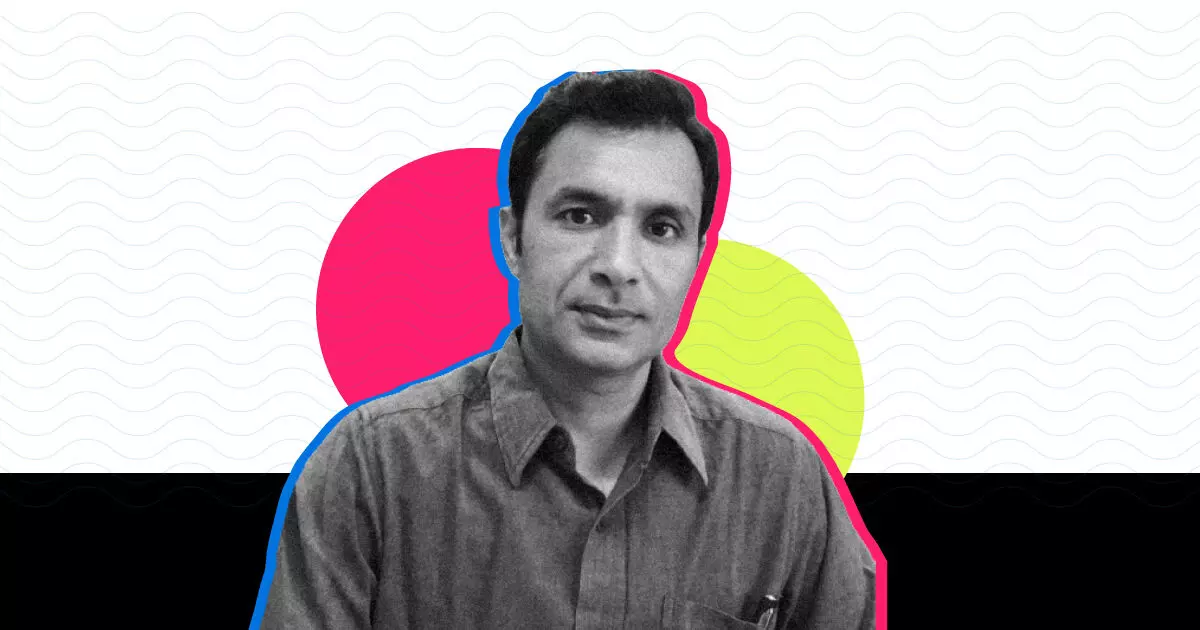
India’s Goldilocks Economy Faces Its First Stress Test
- Business
- Published on 8 May 2026 1:40 PM IST

Despite rising crude oil prices and uncertainty from the West Asia conflict, economist Prof. Ram Singh says India’s strong domestic demand, rising private investment and manageable inflation levels still provide policymakers room to navigate the pressure.
The Gist
India’s economy, which had been described as being in a “Goldilocks” phase characterised by strong growth, moderate inflation, stable financial conditions, and supportive interest rates is now facing its first major external stress test following the West Asia conflict and the sharp rise in global crude oil prices. According to economist Prof. Ram Singh, the country was in a uniquely balanced macroeconomic position until late February 2026, with GDP growth above 7%, inflation relatively contained, low unemployment, and stable market conditions.
However, the geopolitical shock has pushed oil prices up significantly, creating pressure on India’s external accounts and exchange rate. While global crude prices have surged by over 40%, the pass-through to domestic fuel prices has been limited so far, with the government keeping retail petrol, diesel, and LPG prices largely stable. Some impact has been seen in commercial fuel pricing and currency depreciation, but economists say the full second-round inflationary effects are yet to materialise.
Despite these external risks, India’s domestic fundamentals remain strong. Private capital expenditure has surged, rural demand is recovering faster than urban consumption, and vehicle sales continue to show double-digit growth across segments. Prof. Singh noted that rural India is catching up due to a combination of modest wage growth and lower inflation, which has improved purchasing power.
Inflation is still projected to remain within a manageable range of around 4.5–4.6%, according to RBI estimates, while growth is expected to stay above 6.5% in FY27. Policymakers, he argued, still have room to respond through gradual fiscal adjustments and a neutral monetary stance. However, he warned that prolonged geopolitical tensions could test this balance further, making careful management of fuel price pass-through and inflation crucial in the coming months.
The latest economic indicators suggest that India’s much-discussed “Goldilocks” phase, marked by strong growth, moderate inflation and stable financial conditions, is facing its first serious stress test. Since the outbreak of the West Asia conflict earlier this year, crude oil prices have surged, the rupee has come under pressure and concerns have begun emerging around inflation and the broader growth outlook.
Yet several indicators continue to point towards resilience in the domestic economy. GDP growth remains above 7%, inflation is still projected to stay manageable, private investment activity has strengthened and rural consumption demand is showing renewed momentum.
In a conversation with The Core’s Govindraj Ethiraj, Prof. Ram Singh said India’s current position remains stronger than previous high-growth phases because inflation and external vulnerabilities are relatively contained.While he acknowledged that some inflationary pressure from higher crude oil prices is inevitable, Singh argued that policymakers still have enough fiscal and monetary room to respond gradually if needed.
He also pointed to rising private capex, strong vehicle sales and improving rural demand as signs that underlying domestic fundamentals remain intact despite growing global uncertainty.
Here are edited excerpts from the interview:
Prof. Ram Singh: Before February 28th, 2026, we were, Indian economy was in a state that was widely described as a Goldilocks status. It was a kind of unique state situation for Indian economy and in a sense, so Indian economy for the first time tested a combination of macroeconomic situation variables that put together and describe an economic status at Goldilocks status. These variables are growth rate. So growth rate should be not very high but should not be very low. It should be something that is considered to be high but not something that will heat up the economy. The other feature of Goldilocks is that inflation should be low. So it's primarily a combination of high growth and low inflation combined with few other variables. Low unemployment rate goes hand in hand with high growth rate. So that was also the case with Indian economy. And interest rates should be what are perceived to be market friendly. And final piece of Goldilocks feature is that the risk profile of the economy should be stable. We take all these parameters in February 2026. Since then, Goldilocks status has been under serious stress test. We are still in that phase but facing serious stress test primarily for external factors, West Asia conflict to be specific.
Govindraj Ethiraj: Okay. Now it's more than two months, nine weeks plus since the war started and we've seen several kinds of pressures flowing in including of course because of fuel shortages, I'm talking about gas and fuel price rises though it may not be or not have been transmitted to retail right now. So how are you seeing both the first order and the second order impact so far, which allows us to assess what the impact on inflation or economic growth could be?
Prof. Ram Singh: So we have seen very limited pass through of crude oil price escalations, even though the crude oil prices have increased by upward of 40% but there has been very limited pass through. So retail LPG prices for domestic sector and also for diesel and petrol have been primarily contained stable. It's only for the commercial sector we have seen some pass through. The other channel we have seen some pass through is the exchange rate channel. Rupee has depreciated as a result. There has been some pass through through that channel and some of the pass through is inevitable and in my view is actually desirable because crude oil prices shock is a terms of trade shock for Indian economy. So when an economy is hit by external terms of trade shock, it is important to let some of that effect pass through to send right kind of signal. In this case, it is important for Indian household sector, commercial sector to optimise to go for a healthier energy mix in their consumption basket at households as well as for manufacturing and services sector. That's where we are heading now. In terms of the second round effect, there has been very limited pass through, there has been very limited first round effects. So the second round effects are yet to play out. But my conjecture is that the second round effects will persist for short term and will be moderated. And for that, I give credit to central government in managing the first round price effect, keeping the retail prices in check.
Govindraj Ethiraj: Right. And, you know, of course, in this case, we are talking about a shock because of war. Usually when economies exit Goldilocks phase, what happens and what is the trigger or what often is the trigger?
Prof. Ram Singh: So the same variables that go to describe Goldilocks status, we have to watch out for the same set of variables. What happens to growth forecast? What happens to inflation trajectory? What happens to the exchange rate? What happens to the interest rate guidance? We have to watch out for these variables. But these variables take time before they show up in actual numbers. So in the interim, we can watch out for high frequency indicators. Exchange rate is a very good signal. So as you know, that yesterday we witnessed dropping crude oil prices to the tune of 8 percent. And that immediately showed up in our stock market performance becoming better. Rupees strengthening by, I think, around 75 paisa, 67 or 70 paisa. So crude oil prices and exchange rate good indicators to watch out in the short term. Also, we will be watching out for any percolation of this price phenomena by way of second round effects in the wider economy. So WPI will also be a variable of interest.
Govindraj Ethiraj: Right. So therefore, from either a monetary or a fiscal response standpoint, what is it that we could be doing and should be doing?
Prof. Ram Singh: When we frame our fiscal and monetary policy responses, we can still draw a lot of comfort from the fact that the state economy is in today. It's still unprecedented. You know, this is not for the first time that we are in a high growth phase. So we have had in the past at least two rounds of high growth phase. But those phases, like from 2003 to 2012, was high growth phase, but was combined with also with high inflation. Today, on that front, we are uniquely placed. So growth rate is still high, seven plus. And we can expect in fiscal year 27 also to clock upward of 6.5 percent GDP growth. And inflation will still be contained in a manageable state. So around 4.5, 4.6 percent is the inflation forecast by MPC of the RBI. On foreign exchange front also, we are in a much better state than we were back then. So these sources of strength are there. And also other thing is that the growth momentum that was picked up last year in the Goldilocks stake, it's still playing out. So last year, we witnessed private investment, private capex building up and actually performing better than public capex. So last year, private capex saw a growth rate of more than 40 percent. And in terms of new projects, it's actually about 70 percent growth that we witnessed. So that momentum will still last. Consumption, private consumption also grew at a healthy growth rate. That momentum will also be there. So we can build up on this momentum. And if we can manage the price front, then we should be doing OK. In terms of the fiscal policy response, I would recommend that the pass through should happen, but in a staggered way so that the second round effects are not kind of rippled, but they are more moderate. So that would be primary recommendation. Government has done a very good job of providing credit guarantee, extending credit guarantee for working capital, for MSMEs and also for the corporates. That will also be a saving grace. But we should watch out and do more if needed to be done. On monetary policy front, we should be watching carefully the incoming data. But at the moment, I do not have a sense of alarm. If West Asia conflict gets resolved in the next two weeks or so, then we would have passed the stress test. Goldilocks period can still be extended at a manageable level, from a very comfortable level to a manageable level. That's where we will find ourselves.
Govindraj Ethiraj: So the other aspects of Goldilocks phenomenon is obviously that we are not leading to recession, nor are we overheating. And I think what you're saying is that we should not be worrying at this point about overheating because inflation levels are low. But that could obviously change if, let's say, the war continues and there is some price transmission for fuel or could be some other areas as well, for example, food because of monsoons and so on. So I'm just trying to get a sense on how are you seeing it from a top down view?
Prof. Ram Singh: Some price pass through is inevitable. You know, whatever we decide from fiscal point of view. So there will be, if we allow pass through, there will be direct effect and also second order effect. If we decide to, let's say, go for higher fiscal deficit, then that will also put some upward pressure on prices. So some upward pressure on prices is inevitable. And because of supply side disruption, some hit on growth front is also inevitable. My point is that at the moment, we are not in a situation where we should be alarmed. I repeat, you know, if the conflict gets resolved in coming weeks, then at some relaxing of the fiscal prudence, we should be able to, perhaps my recommendation would be, let there be limited pass through, not the complete pass through. Let it be staggered. Give support to MSMAs and some direct transfers to other groups if need be. So on the monetary policy, just be, remain watchful in a neutral stance so that we can, we have ample scope, both on fiscal front and also monetary policy front. We have ample leeway to respond to the situation. But I would also like to add that in my view, this conflict should get resolved in coming weeks. That's the kind of signal that one is receiving from West Asia or from countries that are involved in the conflict. I hope it answers your question.
Govindraj Ethiraj: Yes. So, you know, assuming let's say growth does slow down a little bit for various reasons, including let's say companies being not investing enough in CapEx at this point, as opposed to what you said when it had overtaken public CapEx. Do you think we are in an interstate environment which is conducive for further investment or does that not matter beyond a point?
Prof. Ram Singh: So investment environment still remains conducive. So let me give you two data points. One is that if you look at sales of vehicle sales for April, which happens, you know, in the thick of West Asia crisis, whichever way you look at commercial vehicles, private passenger vehicles, whichever way you look at rural sales, urban sales, two wheelers or four wheelers, whichever way you look at. So the growth rate has been in double digit and rural areas actually doing better than urban areas on several count. So that is one signal that, you know, there's an underlying demand and there's a domestic fundamental still remains strong. And other is that activities index as captured by HS, this is PMI index, also signals that companies both in manufacturing sector and also service sector, services sector, they expect demand to be there. Our exports or also services exports have done very well last year and they seem to be doing well as of now also. And we expect them also to be in steady state. But I would say that this is an occasion for us to think seriously about some structural reforms for the economy, both on the prices front, energy prices, and also other factors that hamper our competitiveness in the exports front. This is a good time to act on both the fronts.
Govindraj Ethiraj: So one is you pointed out that rural demand and of course, this is backed by figures that we've seen from the automobile dealers has been much higher than urban demand. And that's been the case for some time, particularly entry level four wheelers, two wheelers and so on. A very broad question. So why is that happening? Is it because urban is slowing down? Or is it that rural is accelerating now beyond or catching up with demand, which was had not been fulfilled earlier?
Prof. Ram Singh: So urban is not slowing down, Govind. It's rural India that is catching up. And there are two reasons for that. One is that in last few years, there has been some modest, but increase in real wages. And last year, I think it was the low inflation that gave double boost. So what we are witnessing today is the combined effect of moderate wages, nominal wages, growth rate, combined with low inflation, giving them additional purchasing power to rural India. So it's rural India is catching up in my view.
Govindraj Ethiraj: Right. Professor, thank you so much for joining me.
Prof. Ram Singh: It was a pleasure, Govind.


