



 Newsletter
 Search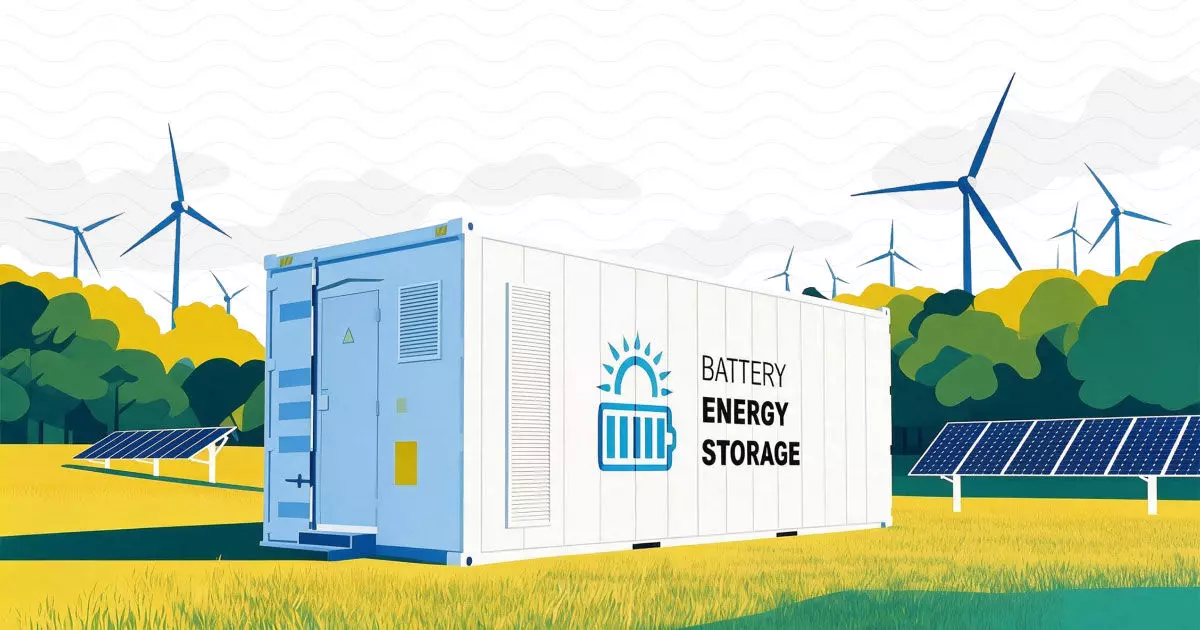
India's Battery Storage Push Faces An Execution Problem
- Business
- Published on 18 Aug 2026 6:00 AM IST

India's battery storage race is on, but low tariffs, inexperienced bidders, and a China dependency are testing if targets can survive contact with reality.
India is building battery storage projects faster than ever, but some recent contracts have been awarded at prices so low that developers may struggle to actually build them.
This raises questions about whether the country's storage ambitions can keep pace with its target of 500 gigawatt (GW) of renewable energy by 2030.
The reason for the rush is simple. India needs to meet its interim net zero goals by 2030, and renewable energy is key.
The catch is that solar power is available only when the sun is shining, while electricity demand continues even after dark. Batteries are needed to store some of that excess power and release it for round-the-clock power supply.
That makes storage essential as India adds more solar and wind power. States such as Gujarat and Rajasthan, where renewable energy is growing fastest, are already seeing the need for it.
Battery Energy Storage Systems (BESS), that store electricity in rechargeable batteries are increasingly being paired with solar and wind projects, storing electricity when supply is plentiful and releasing it when demand rises.
That can help lower costs and reduce India’s dependence on thermal power plants.
But the race to build storage has created a new problem — the bids are too low to see power projects through.
The Race To Build
India’s total tendered energy storage capacity jumped from 6.8GW in 2018 to 90.7GW by 2025, more than 13 times in just seven years, according to a recent JMK Research report.
Much of this growth has come in the last 12 to 18 months, with standalone BESS tenders making up the largest share.
Falling battery prices helped drive that growth. Government support also played a role. A government scheme called viability gap funding helps mobilise investment by enhancing cash flow for battery storage project's capital cost.
But some developers may have pushed the prices too far.
“These have been accompanied with some aggressive bidding in these BESS service projects in the recent past, with tariffs as low as Rs 1.48 lakh per megawatt (MW) per month, which in ICRA's perspective is much lower than the tariff needed to meet the debt servicing requirements for such projects,” Ankit Jain, vice president and co-group head of corporate ratings at ICRA, told The Core.
He added that developers likely expected battery costs to keep falling when those bids were made.
Instead, battery prices have started rising again. A weaker rupee has also pushed up costs.
The lowest tariffs (cost of storage) for a two-hour battery system was Rs 1.48 lakh per MW per month. For four-hour systems, it was Rs 2.85 lakh per MW per month, JMK Research said.
The China Problem
Batteries remain the biggest cost driver in BESS projects, making up roughly 60% of total project capex. Between 2022 and 2025, tariffs fell by over 71%. But the cost of the battery packs themselves fell only 36%.
Now some of those costs are moving in the other direction.
The price of lithium carbonate, a key raw material for batteries, rose sharply in China in 2025. From April 2026, China also removed certain export tax breaks, which is likely to make batteries more expensive to import into India.
India has little room to escape those higher costs.
Recent estimates put China's share of India's lithium-ion battery imports at over 84%. India's own lithium-refining capacity is effectively zero.
That leaves India trying to build a strategically important industry while still relying heavily on a single foreign supplier.
“Building battery manufacturing domestically would reduce dependence on Chinese imports, and also help India develop the skills needed to adopt newer technologies like flow batteries and flywheels,” Avishek Kumar, founder of renewable energy advisory firm Sunkonnect, told The Core. "The real bottleneck is skilled manpower and system design.”
Kumar said that battery projects require far more careful engineering and technical planning than solar projects. If done poorly, this can lead to fire risk and batteries that simply underperform.
Projects That May Not Get Built
Things got worse in the second half of 2025, when several large projects were awarded at very low tariffs. According to JMK, this looks like companies bid low just to win contracts.
Battery storage is still a nascent industry in India, so it's natural to see some players enter the space without much prior experience in it. However, even though they win the bid, when they go to the lender, they sometimes struggle to source the money, and so the capacity ends up stranded, Prabhakar Sharma, senior consultant at JMK Research told The Core.
He added that going forward, the government could consider placing relatively more weight on technological and experience criteria alongside financial criteria while selecting winning bids.
Only 46.3% of awarded projects went to developers with real experience building standalone battery storage. And lenders are cautious; they typically want a return of 15-20% on these projects, a bar that low-priced, hard-to-profit projects may struggle to clear.
Since most of these tenders were awarded in the second half of last year, Sharma expects that many projects could be delayed by nine to 18 months due to challenges in securing funding, procuring equipment, and completing construction.
There is also a safety concern, that developers under financial pressure to cut costs could compromise battery quality and installation standards, raising fire risk and undermining grid reliability.
That risk, if realised, would work directly against India's larger goal of adding more renewable energy to its power mix.
The Fix
JMK Research suggests setting up a minimum (floor) price so tariffs cannot drop below what is actually viable, making it harder for inexperienced companies to win contracts, and rethinking how auctions are run so prices better reflect real costs.
It also suggests creating a standard system to guarantee developers actually get paid, making projects easier to finance.
On the manufacturing side, three government programs should help India rely less on imports over time. This includes the Approved List of Battery Manufacturers (ALBM), the Production Linked Incentive (PLI) scheme for battery cells, and the National Critical Mineral Mission (NCMM).
Kumar said the real problem now isn't a lack of good policy; it is execution. India needs to go beyond just offering incentives to build storage. It needs proper markets that pay batteries for the services they provide to the power grid. Countries like the UK, US, and Australia already pay storage operators for things like keeping the grid's frequency stable or supporting voltage.
As more renewable energy comes online, these services become more important. India's framework is drafted but not yet notified, Kumar said, which makes it harder to justify storage investments, even though demand from utilities is growing.
Looking ahead, he also suggested India should move beyond pilots to scale peer-to-peer electricity trading, where people with rooftop solar and batteries could sell their extra power directly to neighbours. “This would make the grid more efficient and give battery owners a new way to earn money.”
Investors Are Still Waiting
China remains the global leader in battery storage, ahead of the US and Europe, helped by rapid growth in renewable energy and strong government support.
India's battery storage industry is much smaller, but it is one of the fastest-growing markets in the world in terms of planned projects.
If India hits its targets, Kumar said, it could become one of the top four battery storage markets globally within three years. India has enough domestic demand to keep growing regardless, but attracting long-term investment will depend on making the market more predictable, building real payment systems for grid services, and growing India's own manufacturing and technical talent.
He added that India's market remains less attractive to global investors than more established ones like Japan, the UK, and parts of Europe, where earnings are more predictable and electricity markets more mature.
India's battery storage sector has moved past the planning stage and is now under actual construction, but not all of the capacity awarded so far will make it to completion; some will likely face delays, and some may be cancelled altogether. The country will also keep leaning on Chinese lithium and battery cells for the foreseeable future, even as it tries to build its own manufacturing base.
Whether this moment marks the start of a durable battery storage industry or the beginning of a correction, will depend on what happens next.
India Energy Storage Alliance suggests the country is on track to surpass 10 GWh installed capacity by year-end. If financing, execution, and pricing align, India has the potential to take a significant spot in the world's top battery storage markets within years. If they don't, it could risk becoming a story of big targets, undercut by unrealistic economics.
Core.
Core.


