



 Newsletter
 Search
India’s Financial Markets Miss Their 1990s Architects
- Business
- Published on 22 Jun 2026 12:25 PM IST
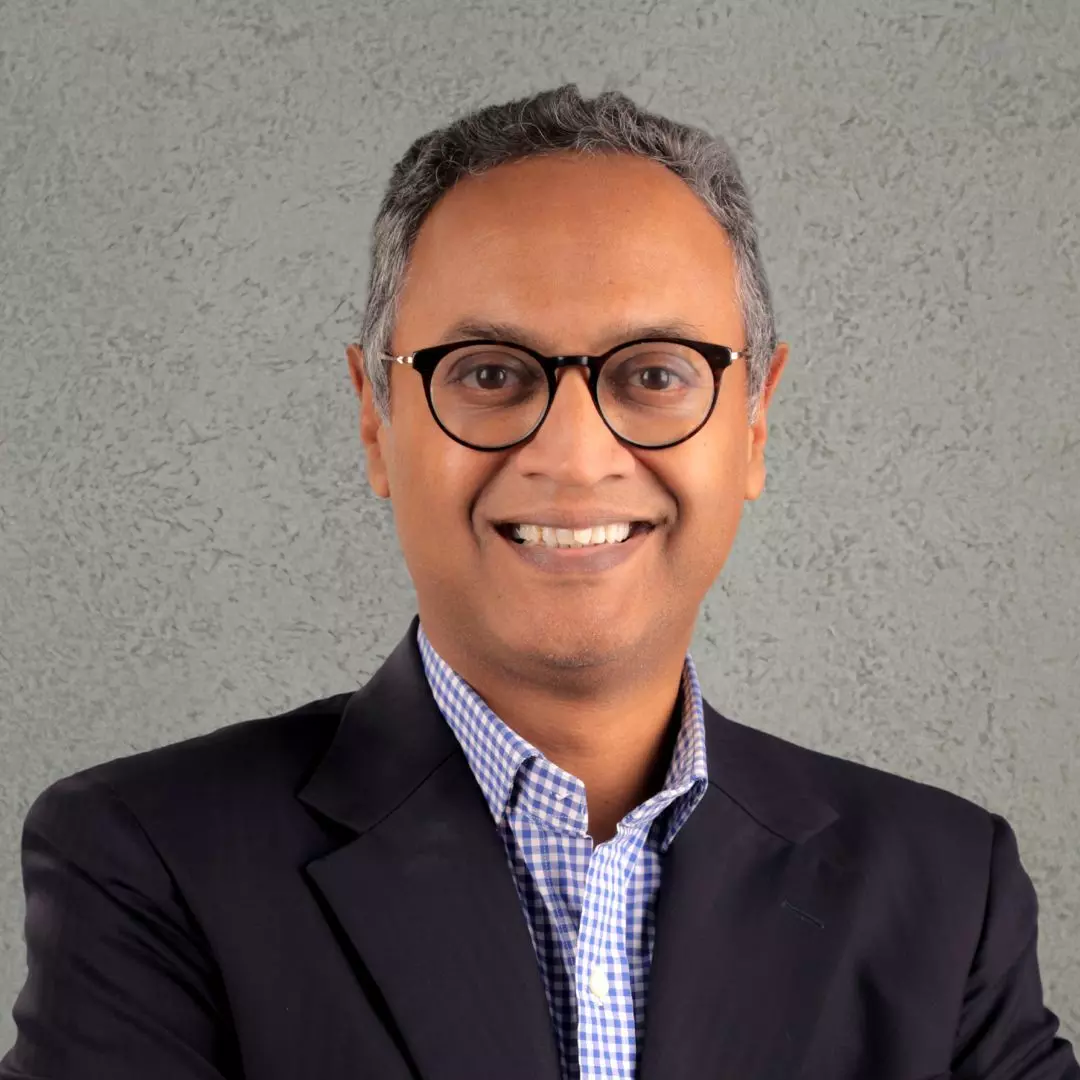
We have inherited a world-class financial infrastructure, but the visionary institution builders who created it have yet to be replaced.
The Gist
The article critiques the current state of India's financial leadership, contrasting it with the visionary figures of the past.
- It questions whether today's leaders possess the same institutional vision as their predecessors in the 1990s.
- Challenges like digital market integrity and global integration are presented as critical areas needing attention.
- The piece suggests that without strong leadership, India risks facing significant financial instability in the future.
Sometime during the optimistic economic dawn of the 1990s, I sat down to interview a leading light of Mumbai’s financial sector. Because he has since evolved with the times and achieved immense success, I will leave him unnamed.
But on that day, he railed bitterly against the very concept of the National Stock Exchange (NSE) and the reformers behind it.
Specifically, he targeted the late Manohar J Pherwani, whose committee report on new financial instruments was viewed as an existential threat by the old guard. My interviewee was a member-broker of the Bombay Stock Exchange (BSE), established in 1875 and, until then, the undisputed king of India’s broking universe.
The BSE, of course, ultimately lost that battle. The infamous Harshad Mehta stock market scam of 1992 hardened the government’s resolve to end the BSE’s monopoly.
By 1993, the NSE was launched, with Dr RH Patil, then at the Industrial Development Bank of India (IDBI), tapped to lead it.
He assembled an energetic team, including Ravi Narain, who took the reins as CEO and guided the exchange for over two decades.
At a single stroke, they revolutionised India's markets, transitioning from a scandal-prone, paper-based trading system to a modernised, electronic, and paperless architecture.
The Era Of The Institution Builders
Dr Patil, an economist by training, did not stop at the NSE. He played an important role, along with his peers, in laying the foundation for a suite of modern financial institutions: the National Securities Depository Limited (NSDL), the Stock Holding Corporation of India, the Over-The-Counter Exchange of India (OTCEI) for small caps, and the credit rating agency CARE.
While there were inevitable failures, the OTCEI never quite fulfilled its promise for instance, the successes were many.
And all these entities were capitalised by UTI, ICICI, IDBI, and IFCI, known then as development financial institutions (DFIs) .
Incidentally, ICICI and UTI also established Crisil, India’s first credit rating agency, back in 1987.
The 1990s marked a profound transition.
The Securities and Exchange Board of India (SEBI) gained statutory powers in 1992, and the sharpest financial minds in government and adjacent organisations were busy writing the architecture for a modern economy.
There was a willingness to experiment; subsequent scams and market failures simply exposed the chinks in the armor, which were addressed, over time.
This spirit of state-backed innovation extended well into the 2000s.
When you watch yet another presentation breathlessly extolling the virtues of India’s digital retail payments system today, recall the National Payments Corporation of India (NPCI) that was set up in 2008.
It was promoted by the Reserve Bank of India (RBI), India’s central bank, which astutely brought in several commercial banks including foreign banks like HSBC, as shareholders to democratise its ownership.
The Leadership Void
Today, the NSE is back in the headlines as it prepares for a highly anticipated mega-IPO.
The original government-backed institutional investors stand to make a fortune if they exit.
Some, like the Life Insurance Corporation (LIC), may hold onto their shares, likely to maintain a degree of Government holding.
The heavy lifting of building India's financial plumbing is largely over.
Policy shifts today are predominantly incremental and reactive, such as the cautious exploration of digital currencies.
But as the state rightly steps back from actively playing in the financial markets, a critical question emerges: Is India missing the visionary leadership of men like RH Patil, SS Nadkarni of IDBI, and N Vaghul of ICICI ?
While there are undeniably accomplished leaders in the current generation of financial services, few seem to possess the institutional vision of their predecessors.
Part of this is structural.
Organisations like ICICI and IDBI are now fully functioning commercial banks; UTI operates with substantial international private equity ownership. The umbilical cords to nation-building mandates have been severed.
Yet, India still desperately needs major institutional leadership.
Consider the geographic misallocation of our financial capital. The GIFT City, India’s heavily promoted international financial center, sits in Gujarat.
I can say with some authority that many of the corporate leaders who publicly praise GIFT City’s accomplishments sing a starkly different tune in private.
In 2007, a committee led by former World Bank director Percy Mistry submitted a landmark report on making Mumbai an international financial center.
Backed by heavyweights like KV Kamath of ICICI, Aditya Puri of HDFC Bank, and OP Bhatt of State Bank of India, the committee concluded that Mumbai was the natural fulcrum of the country’s finances.
It possessed the social and cultural infrastructure to rival the City of London, with the Bandra-Kurla Complex serving as its beating heart to quote a Hindustan Times article on this subject.
Why that report was shelved deserves a book of its own.
Navigating The Next Financial Frontier
Decades after the pioneering work of the 1990s, we are left grappling with a new set of complex, structural questions:
Market Integrity in the Digital Age: How do we manage the explosive growth of the stock market so it doesn't devolve into a casino for poorly informed retail investors? This is an old concern, but it has been supercharged by app-based brokerages and a relentless diet of social media "finfluencers."
Global Integration: How should India further integrate its financial systems with global economies while navigating the gray areas of assets like Bitcoin?
Capital Flight: Foreign Portfolio Investors (FPIs) have recently fled Indian equities at a scale not seen since they first entered the market in the 1990s.
Our current regulatory architecture, designed by the institution builders of the past, was years ahead of its time and has served the economy well.
But facing massive capital outflows and the gamification of retail trading requires more than just reactive regulation; it requires structural vision.
One cannot help but wonder how the architects of India's modern markets, leaders who watched the first waves of foreign capital arrive on our shores, would have tackled these modern crises.
Differently, I suspect.
Core.
Core.


