



 Newsletter
 Search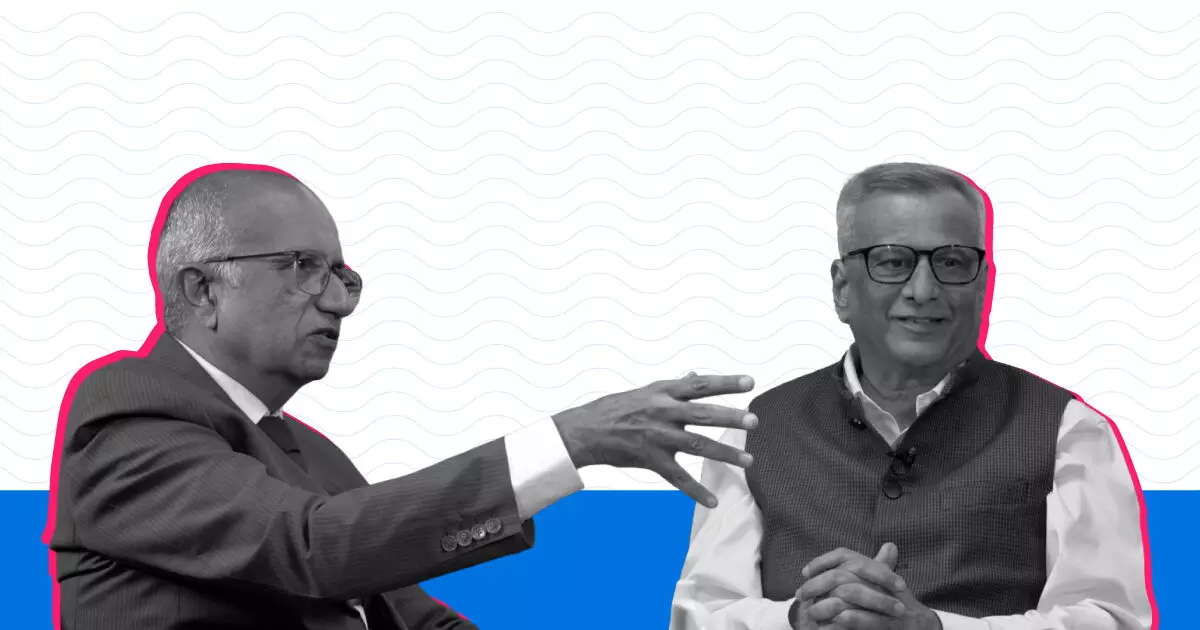
India's Net FDI Turned Negative Again in FY26: Sudhir Kapadia and Ketan Dalal on the Tax, Policy Fixes Needed
- Business
- Published on 20 Jun 2026 6:00 AM IST

In this edition of The Core Report, tax experts Sudhir Kapadia and Ketan Dalal unpack India's negative net FDI, the land, logistics and tax frictions holding investors back, and the policy fixes that could fix the pipeline.
The Gist
This edition of the Core Report addresses the decline in foreign direct investment and its implications for India's economy.
- Despite a drop in net FDI, gross FDI has shown growth, indicating potential for strategic exits and reinvestment.
- Operational challenges, including bureaucratic inefficiencies and high logistics costs, hinder foreign investments.
- Experts call for a transformative approach to policy-making and better state-level engagement with foreign investors.
NOTE: This transcript contains the host's monologue and includes interview transcripts by a machine. Human eyes have gone through the script but there might still be errors in some of the text, so please refer to the audio in case you need to clarify any part. If you want to get in touch regarding any feedback, you can drop us a message on feedback@thecore.in.
Hello and welcome to the Core Report Special Edition. We are going to talk about foreign direct investment and what we can do to unclog the FDI pipes, so to speak. So, some quick data points before we plunge into the discussion and I introduce my guests.
Foreign direct investment in India for 21-22 was negative 14 billion dollars. The next year was negative 4.8 billion dollars, the year after that plus 44 billion dollars, but then again it dropped to about 3 plus, that is, plus 3.2 billion dollars, but in 25-26, that is the last financial year, it was negative 15 billion dollars again. So, the trend is clearly negative in recent years.
So, the question is why, and what can we do, particularly from a procedural, policy, tax, and so on point of view. So, to do all of that, I am joined today by Sudhir Kapadia, Senior Board Advisor and formerly Senior Tax Partner at Ernst & Young India for many years, and Ketan Dalal, Founder at Catalyst Advisors. Thank you both for joining me.
So, let me start with you, Ketan Bhai. You have looked at this very closely. What would you say are the first or the most important issues that are currently holding back foreign direct investment?
Ketan Dalal : So, you know, Govind, one cannot say that there is just one issue. If I were to divide it between two baskets, you know, one is the facilitating regulatory architecture, and secondly, the on-ground issues. So, from a regulatory architecture standpoint, as we are all aware, the FDI regime has been substantially liberalised.
So, you will have some areas like, say, banking, and, you know, some parts of NBFC, pharma, etc., which are under what we call the government rule, and of course, the one which we call the land border, which is Pakistan, China, etc. But really, the regulatory architecture is relatively very benign and very welcoming. The problem is that there are several other dimensions which are on-ground and operational, which are constraints.
So, if I might, you know, set out four or five of them. Availability of large tracts of land is a serious constraint. So, of course, the digitisation of land records is happening.
I am not saying it is perfect, but some progress has been made. But availability of large tracts is a very serious issue, and in order to set up large manufacturing setups, you need large tracts of land. So, this is one.
The second is, you know, we don't have, you know, proper industrial clusters of the type that, say, China or even Vietnam has. So, let me give you an example. For say electronics, say textiles, say pharma, now I can't remember the names of those clusters, but as per what we call the cluster maturity index, China is, let's say, 10. Vietnam is 7. India is at 5. So, you have, let's say, an auto cluster in Pune and an auto cluster in, say, Chennai.
But the larger ecosystem is not there. So, if you are making a car, you know, somebody who is making the silencer pipe, you know, is somewhere in Madhya Pradesh, for example. That is the second part.
Third, you know, logistics cost and ease of moving logistics are a significant issue. For example, I think our logistics cost, government says it is 8 or 9%, but I think it's closer to 11 to 12% of GDP. China is 8%.
So, you know, your ability to transport goods, you know, the rail system there is significantly more developed. So, I think India has made a lot of progress. But there is this kind of thing, you know, and there are many others, but let me just sort of pause here.
And we can then move forward and take it.
What would you focus on or highlight when it comes to this? The reason we are obviously discussing this now is because there is so much discussion, because we are not getting enough dollars, because there is a forex problem.
Sudhir Kapadia: Yeah. So, Govind, I would just take a step back and look at the figures which you rightly quoted, which are what is called net FDI. One thing I would like to place on the table is that we have to acknowledge one fact: that actually, first of all, the gross FDI has grown and is growing actually quite well.
So, these are the statistics of gross FDI, and they will tell you the story. Now, when it comes to net FDI, there are two contributing factors, one of which I think is a positive from an investor's point of view, whether you are a strategic investor or a private equity investor, which is to say that I have invested in India, and after 6, 8, 10 years, I have done a strategic sale.
And I have been able to take money out of India without friction. Investment bankers will tell you, fund managers will tell you in private that in China, it has not been that friction-free, and the returns have not been so great either.
Now, there is another discussion or debate around, you know, overpriced markets in India. But my point is, a market is a market; you can't second-guess the market. As an investor, I am happy that despite the recent depreciation in the rupee, I have been able to take money out of India profitably in a clean, efficient, reasonably friction-free, legal manner.
So, the net FDI part of those figures you see is because of successful exits, which I think is a positive. So, that is one. The second, which needs more research, is outbound FDI by Indian conglomerates, which by itself is not bad, because, again, we need more Indian MNCs; you need, for all the reasons Ketan rightly said, to be part of the global value chain. That is not a problem.
Then there is another subset, which I think needs more research. There have been some recent books written; there is, as Sanjay Barua says, the cessation of the successful. How much of that is happening, I think, is a topic that probably deserves another podcast.
That is something every country should be, you know, conscious of. So, I think, first of all, the FDI story, to my mind, if you really look at it in a nuanced manner, is not as negative as the headlines suggest. The second part, which, you know, Ketan rightly pointed out, is about the realities on the ground. There I would just like to add two points. One, which we all know, is that today the story is really at the state level. You have CMs and CEOs of each state.
And without getting into details and names, we know that certain states are inherently extremely friendly for setting up businesses. And when I say that, it is not just about the entry; I always say that this is the policy, you get these incentives, you get this, which is very important, the land availability. But what is more important is that during the life cycle of my project, I am here forever.
We have so many Indian multinationals which have been around for 100 years. So, when I get a new foreign investor, I, as a state, as the state industry leader in the government or a state CM, would like to say: how do I get this business to work and prosper in India, to be in India and prosper for the next 100 years? How do we create the next cohort of Indian multinationals, as I would call them, which we have seen happen since independence with a few private companies, despite the draconian FERA provisions of the 1970s?
So, that's the second part. And the third part, if I may say, is a transformative mindset that political leadership needs to bring in with the lower-level bureaucracy. And what is that transformative mindset, which I have also written about in one of the pieces in the Print? It is that the mindset should not be to come and say, you know, what did you do wrong this summer?
The mindset should be to say, what friction can I remove so that your business can prosper even better than it does today? That, I think, is the key.
Okay. So, the reason, like I said, we are talking about FDI today, or the lack of it, is that taking your point about gross FDI increasing in this period, it is because of where the rupee is.
And that has exposed the problem of not enough dollars coming in. So, even if gross FDI is going up, as you say it is, and it is, there's no denying that, but clearly there's no counterbalance to it.
Sudhir Kapadia: No, no. And, you see, it's never enough, right? It doesn't mean that we have everything in place.
So, I'll give you two other positive examples, in my view. And Ketan can have a view on that too. In my experience over the years with the Income Tax Act, I don't think, since the inception of the Income Tax Act, there has been a single legislative provision that gives you certainty as far ahead as 2047.
There have been two provisions in the last budget which I think have not been talked about enough. One is for GCCs, to give certainty on what your tax markup is for transfer pricing purposes.
The other is that where foreign companies procure data from companies in India, you won't create an unnecessary additional layer of tax presence. I was pleasantly surprised to notice that both of these have been put in place with a date of 2047. So, it is that kind of stability which, of course, in a democracy, someone can rescind later.
But it's a very powerful initiative, which I think no successive government will find it easy to undo. The point I'm making is that these are two good examples. But I will add a third, where I think more can be done.
To give an example, during COVID, because there was a mini crisis, or actually a crisis, what we did was bring in a capital gains tax exemption for sovereign wealth funds and pension funds, because they don't pay tax in their home countries. We said, you invest in infrastructure, the deadline is 31st March 2030, and in future, when you sell, you will not have capital gains tax.
Which is good. What we have been telling the government is that even the definition of infrastructure circa 2020 is dated. We all know what is happening in what you might call infrastructure now: AI, data centres, and so much more.
Why do you want to restrict it? If you don't want certain things, have a small negative list, and otherwise say, please come, to your point. While we may be doing okay on gross FDI, why can't we make it 2x?
Why can't we make it 3x? So, one single thing: we want long-term patient capital. To me, sovereign wealth funds and pension funds are the best sources of long-term patient capital.
We have a great enabling provision. Take a leaf from your own other two examples, and say, you know what, we will extend it to 2047. Any investments you bring in, this law will remain in force until then.
It will not be subject to capital gains tax as long as you are a bona fide sovereign wealth fund or pension fund in your home country, with a sliver of a negative list where you don't want, you know, tobacco, plantations, gambling. Everything else is productive, right, in the economy. So, just another simple example. I think these steps can go a long way in giving investors what they want, which is tax certainty, but now, I think, it's not just tax certainty but stability of the tax regime as well.
So, you are saying, and let me put this question to both of you, starting with you: going by what Sudhir was saying, we are getting most things right. The reason for the rupee being where it is, which triggered this round of conversations, may have more to do with foreign portfolio investment outflows rather than a slowdown in direct investment, or even direct investment outflows as well, which could include things like private equity firms taking out their money, or LG and Hyundai exiting through OFS, and so on.
So, do you feel that it's a swallow in the summer, or is it a trend?
Ketan Dalal: It's difficult to answer it like that, but, you know, on the point you made about FPI and FDI, I think it's also to do with services exports having taken a hit—software companies, for example—as well as the fact that when you have 88% dependence on imports for oil, and given what has happened with the US and Iran, and hopefully we are seeing the end of it, you will have that problem. But, a couple of other things, taking off from what you said, and to answer your question: you used the words "patient, long-term capital." Sovereign funds, I understand.
But, you know, if you look at total FDI, first of all, it has increased only marginally. In fact, compared to five years ago, it is roughly the same.
If you exclude reinvested earnings, gross FDI is about the same as it was five years ago, with maybe a marginal increase. So, it has not gone up that much, and that is itself a cause for worry. The second point is, you know, on this certainty issue as well.
Yes, Sudhir correctly brought up the GCC certainty and the data issue and all that. But you have to look at it as part of a larger landscape. So, I have a slightly different view.
You have to look at it as part of a larger landscape. And when you look at the larger landscape, the problem is that you have so many sudden surprises springing up, and that becomes a problem. Of course, many years back, there was Vodafone, and I think, Govind, we still haven't lived that down, even now, 15 years later.
Then you suddenly had Tiger Global. Now, the Tiger Global judgement—and many of the viewers and listeners to this podcast may know this, but just to make sure we are on the same page—Tiger Global was dealing with a situation involving an investment made before 1st April 2017 by a Mauritius company, which was supposed to be grandfathered. The whole purpose of the grandfathering was that you would not be charged capital gains tax, and the government itself went into litigation. The Supreme Court, unfortunately, held what it held.
And that has created tremendous discomfort. The third point I want to make is that even out of that $58 billion, almost half, or slightly more than half, is private equity. And private equity—is it the same as FPI?
It isn't. So, it's not that they will come in tomorrow and leave the day after. No. But private equity works on the basis of carried interest.
Obviously, carried interest is what drives private equity. The world of private equity is driven by carried interest. So, their horizon is 3, 5, or 7 years, usually 5 to 7 years. So, it's not like an IBM, a Lever, or a Siemens investing in India. So, that money going out as well is a problem. What we really want is long-term capital coming in by way of primary infusion, particularly in the manufacturing sector.
I did some research and found that about 50% of the FDI, at least in the last one or two years, has been secondary buyouts—either buyouts or minority stakes—which means that capital formation is not happening. And that has a whole host of second- and third-level impacts, say, on employment.
So, again, when we look at FDI, there are so many nuanced questions. You can't look at FDI as just FDI. Is it private equity FDI or strategic FDI? If it is strategic FDI, is it a buyout or an infusion? And I think the real FDI we need, to unclog the pipe, as you mentioned, Govind, is primary investment, and more of it going into employment-generating, heavy-capex manufacturing, because I think that will have a significantly positive cascading effect. Okay, Sudhir.
Sudhir Kapadia: Yeah, so, this part about FDI, we can debate. And I think your question was more about the recent challenge with the rupee, and…that's triggered all these conversations.
That's why we have…
Sudhir Kapadia: So, there are two things here, right? We all know that today, if you step back, in any economy in the world—in my experience, and from talking to so many policymakers—actually, more than the capital markets, the barometer is the bond market. Because, as we know, if you look back at the EU crisis, there were Greece and Portugal, and we saw how their bond yields shot up because people wanted a huge risk premium on the bonds.
So, in my view, the recent measures by the MOF, along with the Reserve Bank, are in the right direction, because you have started by first addressing GSEC, and hopefully the opportunity on FCNRB to bolster the deposit side of forex remittances. And if you are able to stabilise interest rates, that is not unattractive to foreign investors either. At least it is not perceived to be such a risky issuance from India that you have to pay such high interest rates. And therefore, the measures that have now come in on GSEC are, I think, the foundation. To get a little more specific…
But we are paying higher on FCNRB.
Sudhir Kapadia: No, no, well, it's the hedging.
Providing the hedge.
Sudhir Kapadia: In my understanding, at least, what we did in 2013 was actually pay higher and also provide a hedge. Here, we are only providing a hedge. So, it's good, and on top of that, our interest rates are low.
But the more important thing…
But that's solving a slightly different problem.
Sudhir Kapadia: No, correct. So, that's the start on GSEC. What I am saying, coming to the micro level, for instance, we had a 5% withholding tax on interest on any securities, any external borrowing, right?
That had a sunset clause in 2023, and it was allowed to lapse. So, once again, the suggestion is that for GSEC, you have exempted withholding tax—good move. You should bring back that 5% for non-GSEC and now make it more permanent.
Don't make it a sunset of two or three years; these are all band-aid measures, because the reality is that on an after-tax basis, when foreign lenders look at their returns, they have to take taxation into account. And that is the only reason why it is so important, even though it is a micro tax matter.
So, that is the second part, on debt. Now, coming to the larger part of investment—we talked about the non-tax frictions and what more we can do, and there can be a lot more detail on each sector and how to attract investment given global competition, etc. If you look at it—I alluded to this—what is the investment cycle?
It is entry, then the life cycle, that is operations, and then exit. An investor looks at all three. I personally think, all said and done, that on entry, India is now very competitive.
Do we tax anybody on entry? The answer is no. Do we lay out the red carpet?
As I said, most competitive states now know how to lay out the red carpet. What happens after that varies from state to state. So, on entry, it is, generally, a good experience.
And you are saying federal as well as state?
Sudhir Kapadia: Federal as well as state. Now, when you come to the life cycle—let's focus there. One is the non-tax part, which, as I said, is at the state level and obviously can be improved.
On the taxation side, what do I, as a foreign investor, remit back to my home country? I remit back dividends, I remit back interest, sometimes I remit back fees for technical services, etc. So, just to put it in a nutshell, we traditionally had a very competitive 10% rate.
For tax, which, if you look at ASEAN countries, is generally the rate. Then we made it 20%. Then we said, no, you come through a tax treaty and you will get a lower rate.
The best way, in my view, to avoid any kind of day-to-day friction on the operating side is to reinstate the 10% rate, which means that, as a foreign investor, 9 out of 10 times you won't even need treaty access. And the reason I don't want treaty access is because that's where the friction comes in. Are you a resident of this country?
Is your tax residency there? There is subjectivity, and somebody will challenge it. That's what irritates foreign investors.
So, I'm removing those irritants. I'm saying, okay, anyway, you are getting 10% under a treaty—just take 10% under domestic law. That's what China does.
Speaking of stability, the Chinese tax system on foreign investments, for capital gains or for withholding taxes on the items I mentioned, has probably been stable for the last 20 years, at around 10%. So, that is what I am advocating.
Keep it at 10, keep it competitive, keep it, as in your other two examples, until 2047. At least you are giving a clear signal of certainty and stability, and you are avoiding unnecessary potential investigation by the tax office, most of the time for no urgent reason.
So, that's the friction part. And then we come to the exit. As Ketan alluded to, some of these provisions on GAAR, etc.
Now, on exit, I personally think—and I'll give the China example again—if you have a reasonable rate of long-term capital gains tax, apart from the treaty route, there is hardly any treaty where you get a capital gains exemption anymore. So, going forward, you can actually make it very friction-free by saying, today the rate is 12.5%; hopefully you can make it competitive, make it 10%.
Go back to 10%, as it was before 2024. Just pay your 10% tax and be done with it. Take away your 90%.
Most countries don't even tax non-residents on capital gains. We need 10%. We are a developing country.
As I said, ASEAN countries are at around 10%. Remove the need for treaty access. I think India did a great thing.
So, you are saying ASEAN countries charge 10% on capital gains?
Sudhir Kapadia: Oh, yes.
So, that means they are getting taxed on both sides. Yes, of course.
Sudhir Kapadia: ASEAN does; developed countries don't.
Okay.
Sudhir Kapadia: But what I am saying is, make it a very simple 10%; pay it without filing any forms; pay it, forget it, take the money out. You remove friction from the system, so that your entry, your life cycle, and your exit are all as smooth as possible.
Okay. Ketan, let me take a step back and ask you the same question in a slightly different way. Both of you do a lot of cross-border advisory and transaction work.
Among the two or three leading potential or existing investors you have spoken to in the last six months, what would you say their primary concerns have been?
Ketan Dalal: So, as I mentioned, you know…
And I'll put the same question to you.
Ketan Dalal: Yeah, I think we talked a lot about tax, but, as I was mentioning earlier, I am looking at FDI much less from an exit standpoint. A strategic investor—will he exit? He can.
Do you want him to exit? No. You may accept the fact that a private equity investor will exit, but a strategic investor, logically, you don't want to exit.
I have a corollary question there. If you take two 10-year blocks, 2016 to 2026 and 2006 to 2016, would you say the composition of the 2006-to-2016 period was different—less private equity, more strategic?
Ketan Dalal: Possibly, yes. But I think there is a larger issue here too. Sudhir mentioned entry. Yes, but during the life cycle and I would like the life cycle to be, so to speak, forever, it's a mixed picture. It depends.
I think there are a variety of challenges. I'm looking at a situation where a large multinational is looking to expand. It's struggling for land. We want 50–60 acres of land. We're not getting land in one location with clean titles. So, more than tax, more than exit, the larger enabling factors, we spoke of logistics, we spoke of industrial costs.
Let's look at another one: the cost of power is higher here. And the bureaucracy, interestingly, the latest cover story in India today is about cutting red tape, which you mentioned, Sudhir.
So, yes, have things been done on that front? Of course, they have. Is it exhilarating? Yes, somewhat. But we are starting from a very low base. Sometimes I feel, I don't know how to put this, that the way the bureaucracy approaches ease of doing business, unfortunately, the net result is reducing unease rather than creating ease. Ease is welcome. Whereas this is more like, "I will allow you, I will not make you feel uneasy." It sounds like semantics, but it is a real issue in the mind of the foreign investor.
So, I think it's less to do with tax, except for private equity and FPI, of course—and more to do with day-to-day compliance, land, logistics, power, and infrastructure. Those are the issues we really need to address.
And you're saying that, otherwise, they see the market offering the same opportunities it did a decade ago and would want to continue to invest or expand, but they are facing these issues. Otherwise, the market opportunity, the purchasing power, all of that, they are okay with, at least the investors you're talking about.
Ketan Dalal: I also want to make one point: what has happened, Govind, is that the large multinationals have already come in. And, of course, we would want them to invest more.
So, it's like the big ones are already here.
Ketan Dalal: The problem is the next level, they face the prospect of dealing with this complicated country. A $20 billion company is different from a $1 billion company. And the smaller companies say, auto component suppliers, as opposed to carmakers are struggling because they don't know how to deal with these complexities.
We have to make it much simpler for them. And I think we need to do a lot more on that front, actually.
So, again, the question is: among the three or four clients you've spoken to in the last six months, what would their primary concerns have been from an India-entry point of view?
Sudhir Kapadia: I think we have to divide this between the US, China, and the rest of the world. With China, we have a policy in any case, and China's priorities are very clear. So, let's set that aside.
My personal opinion, whether it was Trump's first term or the current one, is that the reality is, if you ask businesses, large, medium, and small, in the US, in private, they are very happy increasing their investments in their home country under the Trump administration. Because one thing Trump has signalled very clearly is that he is pro-business; he is not a big fan of regulations.
And his tax proposals are all out in the open. He has made it very clear that the more you invest here, the more we will facilitate it. So, the narrative that the political leadership under Trump has created is very clear: it is that he has no qualms, if I may say so, about going on delegations with CEOs of businesses, whereas the political signalling in India, unfortunately, is that you should not be seen in the company of business leaders, or else you will be criticised.
And then you become sensitive to that criticism, given the setup we have in our country. So, what I am trying to say is that, first of all, there are black sheep in every sector of society. I think India's political leadership should mature and build consensus on one thing.
In any case, at the state level, you are attracting business leaders, and you want them to come and visit and sign MOUs in your state. So, let's cut out that hypocrisy at the centre. And, at the moment, I am referring to the current opposition.
It may change, whoever is in opposition. But let's cut out the hypocrisy. Either you say, "I don't need any private investment, and I won't have it in the states where I govern," or you accept that, okay, we have to play by the rule book, but we need private investment, because a country cannot run on government funding alone. And that narrative, that you are welcome as a private investor, I think is important.
But it also suggests that people don't feel that way. The very fact that you are saying it, after all these years, suggests as much.
Sudhir Kapadia: Any book by retired bureaucrats or retired economists talks about reforms by stealth in our country. And I think what is happening now is that we invite private investment by stealth. That's the signal.
We need investment, the figures show that and, of course, you have to say that investors have to come in the right way, with the proper, equal level playing field. All of that is fine. That's what every country aspires to do.
So, coming to your question, if I'm a US-based business, my first line of sight is: what more can I do in the United States? That's my personal view. So, we are in a de-globalising world.
So, that's one.
Sudhir Kapadia: And there is a very positive framework, narrative, and ecosystem provided in the home country, the US, which says: you do more here, and you are welcome to do more here, regardless of whatever other controversies the regime may be embroiled in. So, that is what we are up against, in my view, and that's a very high hurdle. Therefore, we have to raise our game on multiple fronts.
But I'm emphasising this one in particular because it may seem like a soft factor, but when you talk to businesses in private, it counts for a lot. Why do you want to attract business by stealth? Why can't you have the courage to say that we want private investment, not just at your state investment fairs, but as a matter of policy?
So, that's one important part. Now, the second important part is, about what they see as challenges in India versus elsewhere. My personal view is that today, as a business, as a multinational, there is a network effect.
When I say network effect, I mean that if there is a cluster of manufacturing excellence, like China or Vietnam has, that's a network effect. You can't overturn it overnight. So, a boardroom in the West will say, okay, if it is GCCs, why can't it be done in India? And if it can't, I will look elsewhere and it is the reverse for manufacturing.
We have seen exceptions, in the public domain, we have seen Tata Electronics, which is a great exception. We have seen the auto clusters, which Ketan mentioned, and I think we can have many, many more such unconventional clusters of excellence beyond services, if we apply our minds, have the will, and are upfront, and cut out the hypocrisy, and invite not just FDI but domestic capital as well, and say that we are favourable to business, we are for business, and we are pro-business.
So, that is the point that keeps coming up: why should foreigners invest when domestic capital itself is so shy? What's your sense, Ketan?
Ketan Dalal: I think we need both, as he said. I don't think it is one versus the other not that domestic capital should take the lead and then foreigners will follow. But the very fact that domestic capital has been shy and at every large forum, you see the Commerce Ministry, the Finance Ministry, and even the Prime Minister saying so, shows that it has not happened.
Now, in some sectors it has happened, say in steel; in certain sectors, it has happened, but it needs to be far more widespread. And I think the reason, both for domestic and even more so for foreign investment, is the entire enabling environment. We spoke about many of these let me add a couple more. Our judicial reform process also needs to pick up.
In the High Courts, we have 64 lakh cases pending 64 lakhs. Many of these are smaller cases, but they have clogged up the system. For example, in order to address that, there has been talk about mediation, because you need an alternative dispute resolution mechanism as another enabler.
We have the Mediation Act, promulgated in 2023. We are now in 2026, three years on, but the Act is not yet effective; the mediation board has not been set up. So, these kinds of delays are also worrying international investors, because they say, "God forbid I should get into some litigation, I don't have a credible alternative dispute resolution mechanism." And look at productivity, for example. Our productivity is much lower.
I was looking at the cost of labour in China, and it has definitely gone up, so, in that sense, we are better off. But the problem is productivity.
So, I think we need skilling, for example, it's not just one thing; 20 different things will have to come together. Maybe some will move faster, some slower. But one of the biggest issues, and this is a softer one, is that we have to first acknowledge that we have these problems. I am a firm believer that you cannot solve a problem you do not expressly acknowledge. We have to start acknowledging this. We have made a lot of progress.
But we have to say, yes, despite this progress, we have these constraints, and we are working on them, with concrete steps. We had a draft industrial policy circulated two years ago, which made me quite hopeful. Now, just like the Mediation Act, that has not seen the light of day.
So, I think we need to work on multiple fronts to attract large, strategic FDI—not just private equity, not just secondary buyouts—because the impact of strategic, longer-term investment, both on employment and on ground-level improvement, will be substantial.
Okay, so I think we've covered the tangible part—the cost of power, the ability to get good, title-friendly land, and accessibility with the right amount of land, labour, and other resources at your disposal. These come up consistently, and they are a very important part, particularly for strategic direct investment going into on-the-ground manufacturing.
So, let's look at the soft side as we sum up. What do we need to do on the soft side, where sometimes people just feel that India is an exciting country and want to invest, and the numbers come later? Whereas right now, we seem to be facing the opposite problem. Fifteen or twenty years ago, people said India was happening, it was buzzing. Davos was the flavour of the season.
Sudhir Kapadia: I have a nuanced view on that. I hear you, but I think the world has changed, Ketan alluded to this as well. Today, is there a buzz about any country at Davos? I doubt it. Because everybody is now looking at their own situation, it's almost a pre–World War Two scenario, in a sense. So, I don't think there is a buzz about any particular country anymore. Everybody is trying to find buzz in their own country.
So, I think we have to live with this new reality: there's no excitement outside the home country, in general. That is one part of it.
As a corollary to this, with all the geopolitical upheaval, businesses are, rightly, looking at their own supply chains and figuring out where it makes sense to build linkages. If it is rare earths, it can't be India, we know the reasons. If it is oil and gas, it can't be India, we know the reasons. If it is services, at the moment it is India, and hopefully more complex services as well. If it is auto, yes, it is India.
So, that's the point: look at five futuristic programmes or sectors where India can play a meaningful role. We are talking about green energy, that's great. We are talking about semiconductors, that's great. We are doing more on the value chain in AI and so on. So, take those and say, let's just focus on those, and see how we can be part of the value chain. So, to your question, the buzz and excitement will come sector by sector, company by company.
So, you're saying everyone is excited about AI, everyone is excited about semiconductors, and they go to Taiwan, they go to South Korea.
Sudhir Kapadia: No, I'm not an expert on this, but many experts are writing more balanced views now, even from the likes of Mr. Rajan and our CEA, to say that, operationally, AI is here to stay, but the froth in the capital markets, is it permanent? Nobody has that confidence. So, I think we have to wait for that bubble to play out. But yes, India is not part of that excitement, that part is true.
But again, I would ask, Govind: even the buzz and the excitement around AI for a Chinese company or investor, it's in China; for a US company, it's in the US. It's not that the US is excited about a company or two in Korea or Taiwan, again, that's supply-chain dependent. Their excitement is in their own country. That's all I'm saying. So, I think we should not worry too much about the excitement factor of a particular country.
Extending that argument, should we really not think so much about FDI at all, and focus only on portfolio investment instead?
Sudhir Kapadia: No, not at all. I am not saying that. I am saying that the template of "Incredible India," with an elephant arriving in Davos, is no longer relevant.
I was using Davos only figuratively.
Sudhir Kapadia: I am also speaking figuratively, I don't know whether an elephant actually went or not. But I am saying that those are very clichéd and templated images, in a different world order.
We absolutely have to think about attracting FDI. To me, the colour of the dollar is still green, to my knowledge. The print may change, but the colour remains green.
And the photograph might change too.
Sudhir Kapadia: So, I think FDI is welcome, not only welcome, we have to do everything to encourage it. I think the excitement will be in the nuts and bolts. The excitement will be in specific sectors and in working harder on them. It's always like this: when you start up, the excitement is different.
When you have to run a business and scale it up, arguably, it is less about excitement and more about making things happen—nuts and bolts and ensuring that the vision is in place, so that I reach the Viksit Bharat goal the way I want to. So, I think that's the point I am making.
Okay, Ketan, my last question. We started with you pointing out a lot of the tangible challenges we are facing, as well as some of the tax issues and legislative changes that should have been seen, changes that would have made doing business easier, particularly for foreign or direct investors but that has not happened yet, though it hopefully will. There is obviously a backlog in the legal system, which does cause concern among investors, because if your own venture goes into litigation, when does it come out?
So, all of this is a given. What do we now do, or what can we do, to address these concerns in the near term? Going back to where we started: we have seen 50 billion dollars go out in portfolio investment. We are net negative on direct investment right now, and a lot of the investment, as you pointed out, is coming through the private equity route, which is by nature shorter-term.
So, what's your one or two key prescriptive points?
Ketan Dalal: Taking a cue from what Sudhir said, I think, as we discussed, there are multiple issues here, but let's assume the government picks five or six sectors.
So, both of you are saying that the sectors should lead the way.
Ketan Dalal: I think so, because there are too many things going on. So, where should the focus be? I think we are very much behind in the AI race; in semiconductors, we are lower down in the value chain, it's one thing to do assembly, but there is a whole lot more involved. In green energy, in solar, for example, we are ahead.
So, I think we should pick four or five sectors and focus a lot on those, especially the sectors where global traction is much higher, because that's where, for example, in AI, we have lost traction; we have possibly missed the bus, but we can catch the next one. Provided we focus on four or five sectors and put a lot of effort into making it easier, welcoming investors, and tracking it, and making sure things happen on the ground, I think a lot will follow if it is sector-led, and if we really make international investment welcome. Because, remember, it's not just that they bring money, which is, of course, very important, they also bring technology and best practices, and that has a cascading effect across the board.
We've seen it when MNCs come in look at the quality of cars Indian manufacturers are now making. It has gone up substantially. The trend started with international companies making cars in India, and things like that followed.
Okay, on this last point, let me come back to you. Assuming we focus more on sectors, and there are two or three sector leaders, and we put all our effort into it, do you feel that some of those clogged points in the pipeline will also get cleared up? Will it create sufficient gravitational pull?
Sudhir Kapadia: 100%, I think.
Because if we struggle to fix the problem from the bottom up, could we then fix it some other way?
Sudhir Kapadia: That is the question. Look, it's always, since I have the glass here, half full and half empty. And I always say this: if you go back through history, look at the average growth rate of the economy. That doesn't mean we shouldn't do anything, I'm not suggesting that.
But if you think about it, just take the late 80s till now, look at the global and domestic upheavals we have gone through. Just visualise that chart.
Yeah.
Sudhir Kapadia: And I don't have to repeat all those events. At the peak of those events, it looked as if we were doomed—where would we go from here?
So, it doesn't mean that there isn't enough talent and enough resilience in the Indian ecosystem to get over it. And therefore, on average, if my memory serves me right, we are still at about a 6% secular average growth rate on GDP, which is no small achievement. And that is across regimes and across all kinds of ideologies, if you like.
So, that's one part of it. The second part, I alluded to this earlier, is doing things differently. Maybe we used to do this once upon a time, but because of the very contested political space, we have become shy about it, saying political leaders go to foreign countries, but businesses don't go with them. I think we should change that narrative.
The third is, maybe the time has come, we allocate cabinet responsibilities along very traditional lines: home, defence, and, of course, industry and commerce, which are very important. But do we need a minister for FDI? I would say, why not?
What is the harm? We have enough talent in any government of the day. Focus on that. One person would be accountable, because we know that to work across sectors, I need to coordinate with at least three ministries.
Today, the bureaucrats are doing what they have to do, but if I have a minister who is accountable and responsible, and perhaps, this is, in a way, happening at the PMO level, arguably, but again there is a bandwidth issue, but if I have a minister, I am also signalling to the world that I mean business, that I want investment to come into my country, and that here is a bright, qualified minister whose job is not only to attract investment but also to help investments that have already come into the country.
So, when we talk about these measures, I think we should also and I mentioned going outside the usual template these are some of the things which are not just for the sake of narrative but will actually make a difference in substance.
Right. So, let's hope that on the next trip our Prime Minister takes, there is a planeload of CEOs, just as Trump took to China quite recently, and that will hopefully set things moving. Thank you both for joining me.
Thank you. Always a pleasure. Thank you so much.


