



 Newsletter
 Search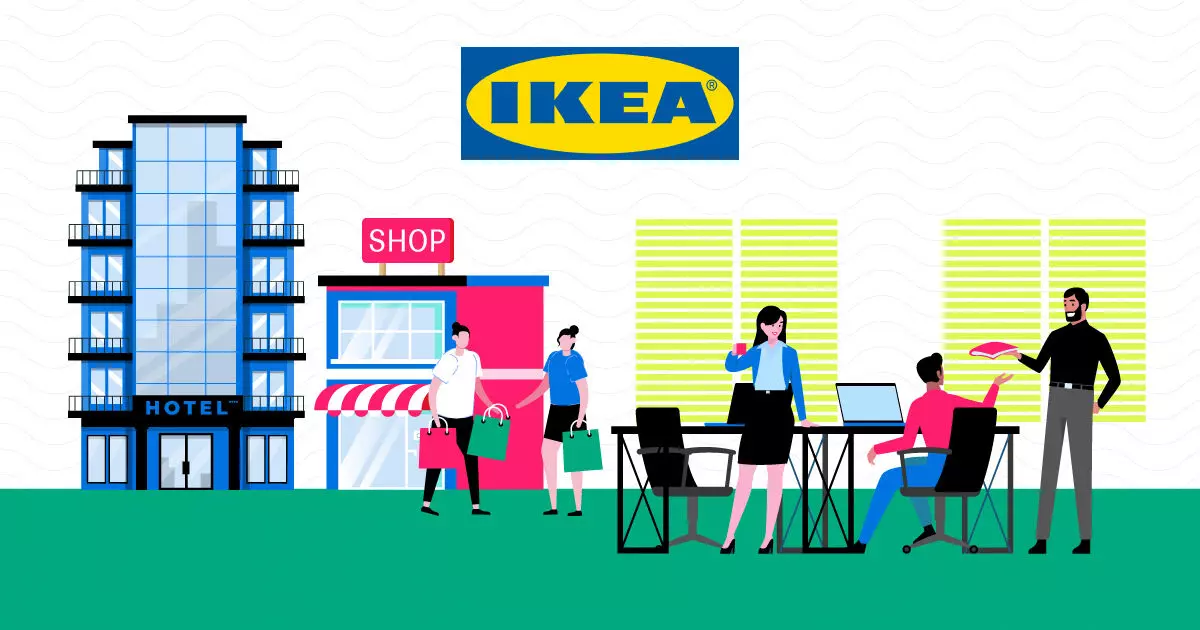
IKEA Bets On Hotels, Offices To Expand India Footprint

IKEA is expanding beyond furniture retail with mixed-use developments featuring hotels, offices and shopping centres, while scaling up smaller stores and local sourcing in India.
The Gist
- Two large projects in Gurgaon and Noida will span 2.5 million square feet each.
- CEO Patrik Antoni emphasizes the importance of leveraging foot traffic to support surrounding businesses.
- The company is also shifting towards smaller store formats and increasing local sourcing to adapt to changing shopping habits.
IKEA is looking beyond furniture stores to drive its India expansion, with two large mixed-use developments near Delhi that will combine shopping centres, offices and hotels, as the Swedish retailer looks to capitalise on the country’s growing consumer market.
The developments, planned for Gurgaon and Noida, will each span 2.5 million square feet and include an IKEA store alongside other commercial spaces. The projects, expected to come up in a few years, represent the company’s biggest investment anywhere in the world, according to Patrik Antoni, CEO of IKEA India.
“The hotels and offices are quite new; we have mainly done these mixed-use developments in China before,” Antoni told The Core in an interview.
The strategy marks a broader push to expand IKEA’s presence in India, combining new retail formats, increased local sourcing and investments in large developments as the company adapts to changing shopping habits.
Why Hotels And Offices?
IKEA’s mixed-use model builds on its existing strategy of attracting shoppers to its stores and using that footfall to support surrounding retail businesses.
The company initially built large stores that drew customers from across cities. It subsequently developed retail parks and shopping centres around these stores, bringing other retailers into the same locations.
The next step is to integrate more commercial spaces into these developments.
“The idea is really to benefit from the footfall that IKEA has and use it to earn other income,” Antoni said, explaining the rationale behind the shopping-centre model.
He added that the developments could also increase traffic to IKEA stores, as consumers visiting the shopping centres might shop at IKEA, and vice versa.
The inclusion of hotels and offices is also linked to the availability of development rights in India. Antoni said the company wanted to make the best use of the floor space index (FSI) available for these projects.
Smaller Stores, More Online Sales
Alongside the large developments, IKEA is changing its approach to physical retail. The company traditionally operated stores of around 400,000 square feet, typically located on city outskirts where land was cheaper and customers could drive to shop.
However, changing shopping habits and the growth of online retail have prompted it to reconsider that model.
“We see that we need to be closer to people; the willingness to travel an hour or two to a store is not as high as before,” Antoni said.
The company plans to expand through smaller formats, including stores of around 70,000 square feet and 25,000 square feet, in shopping malls and potentially on high streets.
IKEA’s online channel already accounts for around 30% of its sales by value in India, Antoni said. Its expansion strategy will allow consumers to choose between shopping online, visiting a nearby store or travelling to a larger outlet.
The company is focusing on Delhi and Bengaluru, which Antoni identified as its biggest markets. IKEA plans to open a second large store in Bengaluru in November and a few more in the city over the following year. It is also opening a smaller store in Pune.
Local Sourcing To Support Growth
IKEA is also strengthening its domestic supply chain as it prepares to expand. The company currently sources products worth around €400 million, or Rs 4,000 crore, from India, most of which are exported to its stores globally.
About six months before the interview, it opened a product development centre in India, joining China, Sweden and Vietnam as its global product development locations.
The centre is expected to help the company develop more products for Indian consumers while identifying opportunities to export locally developed products.
IKEA has already introduced mango wood products and is exploring other materials available in India. It is also looking to increase furniture sourcing, although Antoni said certified wood, modern factory infrastructure and machinery remain challenges.
For IKEA, the India strategy is built around a young population, urbanisation and households beginning to establish themselves.
The company sees an opportunity to grow alongside these consumers over the coming decades, with its expansion extending beyond selling furniture to creating retail destinations and developing products suited to local needs.
Core.
Core.


