



 Newsletter
 Search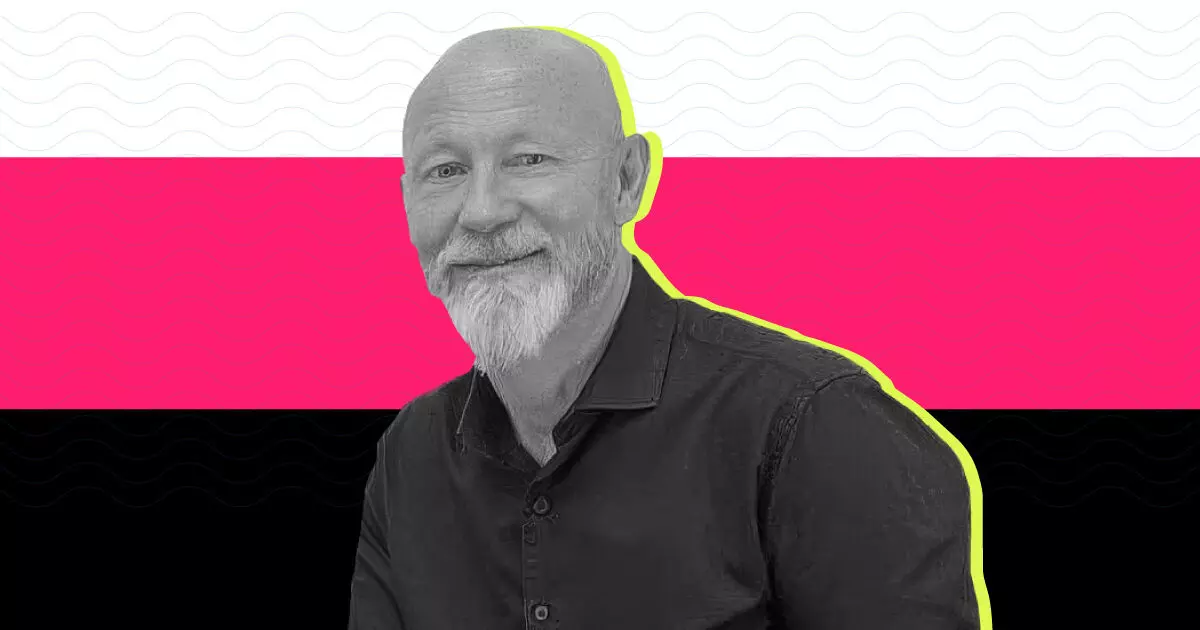
We Don’t Charge More: IKEA India CEO On Why a Brand Seen As Aspirational Hasn’t Raised Prices
- Business
- Published on 10 Oct 2026 6:00 AM IST

In this episode of The Core Report, Patrik Antoni talks about how IKEA sells the same range at similar prices in India as elsewhere, even as shoppers see it as a brand to aspire to. He explains the smaller stores, Rs 4,000 crore sourcing push and Delhi mega-developments that come next.
The Gist
In a special edition of The Core Report, IKEA's India CEO Patrik Antoni discusses the company's journey and future in India.
- Since opening its first store in Hyderabad in 2018, IKEA has expanded to Mumbai and Bangalore.
- The company paused expansion during COVID-19 but is now focusing on local sourcing and product development.
- IKEA aims to adapt its store formats to meet changing consumer shopping behaviors, including smaller formats and online sales.
Hi, and welcome to The Core Report Special Edition. I’m speaking today with IKEA’s India CEO, Patrik Antoni. We are at the IKEA store in Mumbai, where a big celebration is going on outside. We’ll talk about that in a bit, but first let’s find out a little about IKEA’s journey so far in India and where it’s going from here. Patrick, thank you so much for joining me.
Thank you for having me.
You’ve been here since 2018, which has been much profiled and written about. If I asked you to sum up this journey and its phases over the last six years or so, how would you do that?
I first came to India back in 2013. It was a lot about the start-up: setting up and trying to get foreign retail accepted by the Indian regulatory system. The first task was to set the scene for what we call single-brand retail: how we could operate, the local sourcing requirements, and being allowed to sell on the internet. Many of these things were not allowed back then. It feels strange today, but it was only ten years ago, and it was a different setup.
Then we opened our first store, as you say, in 2018 in Hyderabad. It was a big start, with lots of visitors and very exciting. We went on to open in Mumbai and then in Bangalore, and the business started to run at a bigger scale. Then Covid came, and the results were not as big as we had expected, so we began to rethink. We didn’t have enough local supply, and we were challenged a bit with the range. So we paused the expansion for a few years, though we built a good supply setup. We didn’t build more stores.
Then, about a year and a half to two years ago, we came together again and said that India is the future. The demographics, the economic development and the migration to cities all point to this being a place for the future. So, together with the whole IKEA ecosystem, we put a new plan in place, and that is what we are now rolling out. You hear much more talk about expansion again, and about more local sourcing; many things are going on right now. Coming back to India a year ago, it really is the right time to be here.
You have been in and out of India over the years, and you have worked in other countries as well, including Portugal and Russia. I’ll touch on that a little later. But tell us about sourcing levels in value terms. How have they increased? You said that at one time you felt it was not enough, and today you are at a more satisfactory level.
Today we source around €400 million, or Rs 4,000 crore, of product value, most of which is exported out of India to the other IKEA stores around the world. About half a year ago, we opened our own product development centre in India. India, China, Sweden and Vietnam are now the four places in the world where we develop products. This is a great opportunity for us to develop more range in India, for India. So far we have launched some mango wood products, and we are looking at other materials that are not available in other markets. Because we can source and produce them here, we hope to export them soon as well. They are already on sale in the store here.
And you’re saying that China, India and Vietnam are design centres for domestic markets, or is it global?
It’s global. The idea is always global, because we are a company that runs at a big scale. We produce a lot and get good prices, so more people can come and shop. However, we sometimes need to start small, so we have some setups that run only India to India. But the ambition is that these suppliers should grow with us and, over time, be able to export.
When you say design centres, these are essentially product design centres, not artistic design?
Yes, product design. The biggest design centre is in Sweden.
The reason I’m asking is that three out of your four design centres seem to be in the East rather than the West.
That’s because most of the suppliers sit in the East, to be honest. IKEA is unique in that we design all our products ourselves, so everything fits together. Colours are coordinated and sizes are coordinated, so it’s very easy to shop at IKEA. That’s why it has to hang together. Sweden is the major part, but we have also set up three centres in markets where we produce more, so we get closer to the supplier. You can work more easily on the factory floor, and you can see what kind of equipment they have and how they produce. I can make a small tweak to my design and cut the cost. If we work closely with suppliers, we can make a big difference to the outcome at the end.
And lower cost means better affordability for the many. Where are you finding the design talent, which is different from the engineering talent one would typically find in, say, Bangalore?
So far, we also have a Swedish leader at the moment in this product development centre. So it’s a mix: we bring some of the Scandinavian genes with us, and of course the talent grows here today.
You will also have an Indian designer who has worked in Sweden for many years coming to talk about design at our event today. You also repositioned, or changed, your positioning, and now say that “it all starts at home”. Tell us what led to this.
Obviously, we’ve done a lot of research and engaged with customers. We see how big a role home plays in India. Family and home have always been important, but in today’s more hectic world they take on an even more important role. So we wanted to say: your life and your dreams start at home. Depending on how you set up your house and how you engage with your family at home, you set the preconditions for your future, whether that is how you study, how you work or whether you set up your own business. It all starts with what you get at home.
We also want to structure our communication around a few pillars that sit under this: small-space living, living with children, sustainable homes, and always being inspiring. We are trying to make these more concrete.
How is this different, if at all, from other markets where IKEA is present, including in this part of the world?
India is different in that it has such a young population, and it is really just setting out. We want to be a partner in life over the coming 20 to 30 years of India’s rise. We are seeing 400 million Gen Zs coming out now. How can we be a partner to them when their life is about to start, and their life starts at home? That inflection point makes India very interesting right now. In Europe or China, you have a much more mature target group, which may have a different purpose in life. Here, we are really just starting, and I think we have a very exciting 30, 40, 50 years ahead as young India develops.
You’ve already talked about how you’re going to expand your store presence in India through multiple formats. Can you walk us through that again, and how you look back and ahead?
Classically, IKEA built big stores of around 400,000 square feet, with a big warehouse and large exhibitions, normally on the outskirts of the city, where land was cheap, people generally had cars and were ready to travel. It was a very easy model: we produced a lot, shipped it to the store, and the customer picked it up, drove it home and assembled it.
Then, back in 2016–17, something changed. The internet came, ways of shopping started to change, and that affected the setup. Now people shop in all kinds of ways, and we need to see how we can meet customers better. Online, we of course have our own app and website. The big stores in India still work as our anchors, from which we distribute. But we see that we need to be closer to people; the willingness to travel an hour or two to a store is not as high as before.
We still believe in the big experience, because IKEA is unique in the experience we create in our stores, but we are trying to get closer by being in shopping malls and perhaps on the high street. So a lot of the expansion in the coming years will be in smaller formats. They are still big stores: some are 70,000 square feet and some are 25,000 square feet. They are not small in absolute terms, but they are small in comparison, and the aim is to be closer. Customers can then choose how they want to shop: online, in a nearby store, or at the big store. We see different formats for different purposes. If I’m redecorating a corner, I have one need; if I’m furnishing a new house, I have a different need.
About 30% of your sales are online today in India. Is that in value?
Yes, 30% in value.
It’s not in product count?
No, it’s about 30% in value.
What are the dominant categories online? Or are online and offline almost similar?
We sell more furniture online, which is perhaps surprising. But I believe it is because our stores are set up to expose customers to a lot of range. They see all the small, interesting things at very low prices. You can take this, you can take that; it costs ₹200 or ₹400. So of course you pick up more things when you are in a store, because you get exposed to them. Online, you look for your sofa and you see the sofa. We might offer an add-on of a pillow and a throw, but we don’t sell you any kitchen items. If you come to the store, you come for the sofa, but you go home with a frying pan, a throw, a flower and some candles. That’s why I think the proportion of furniture is higher online: you go for what you want, and you get it.
The Indian market is large and obviously growing, as you’ve said. How do you define the market today and your specific position in it? Is it premium, value, or something else? I know that’s changing too.
In general, we are good value, but we are a bit aspirational here in India. In Europe we are not so aspirational; we see ourselves as low price with a meaning. It’s not only low price: IKEA comes with design, sustainability, quality and function. In India, though, it is a little more that people would like to associate themselves with IKEA, because it’s a brand. Still, we offer great value, mostly because of democratic design as our key model. Each IKEA product has to have great function, be sustainably made, have a nice form and good quality, and all of this at an affordable price. That creates great value.
My sense is that you are also fairly premium in some categories, particularly furniture. That’s what the market seems to feel. I think you have gone out to premiumise in some areas.
No. The range we sell in India is the same as we sell everywhere else. It’s exactly the same range. If you compare with the more organised sector, we are not premium-priced. If you compare with a local carpenter in a smaller shop, there could of course be a difference in price. But that comes with many things: how we source our materials, how we treat people in the factories, how we pay our taxes and so on. That may change the price, but we have an affordable offer, and I think it is a big opportunity for everybody to shop at IKEA. It’s not a premiumised brand in that sense.
Let me flip the question. Perhaps when you came in, you were similar to what you were in Europe, which is low price with value. You started similarly in India, but perhaps you realised that India is aspirational and that you are therefore in a position to charge more than you otherwise would have.
I would say we don’t charge more, and we haven’t lifted the price level in India. Prices are similar in India and everywhere else. What we have adapted a little in the last year is our exhibitions: we have moved them somewhat higher up the price range, making them a bit nicer, with more props, nicer materials, more pillows and so on. We see that this segment is the one most attracted to us at the moment. In that sense, we have lifted the exhibition a little, but the price level itself has not shifted. We are still the same affordable brand, but we put together furniture displays in a different way, perhaps to attract a somewhat higher-income target group.
As you expand within India, how are you deciding where to go, particularly on the physical front, and what sizes are you looking at?
Our key focus areas are Delhi and Bangalore, where we see the biggest markets today. In Bangalore, we have one large store at the moment, and we are opening a second one in November. We will open a few more in Bangalore in the coming year. In Delhi, we are building two big shopping centres on the outskirts, one in Gurgaon and one in Noida. They are big developments of 2.5 million square feet each, with an IKEA store, a shopping centre, offices, hotels and so on. They will come up in a few years and will be the anchors. Today we operate two smaller stores in Delhi, in Saket and one in Phoenix. In the West, we are also opening a small store in Pune.
But the big ones are Delhi and Bangalore, and then we will of course do Hyderabad, Mumbai, Chennai and Pune. It’s a start, and we are looking at a strong, solid backbone. We have a very good supply network set up today, and we will utilise it. So we will not go much further than this. We are looking at Lucknow, Chandigarh and Jaipur around Delhi, and at some cities around Mumbai, but it’s more about using the backbone that we’ve built up.
You talked about hotels and stores. Is that model somewhat different in India, or is it similar elsewhere?
We have built shopping centres in many markets: in China, in Europe and in the US. We often build a shopping centre around an IKEA store, so that’s not new. The hotels and offices are quite new; we have mainly done these mixed-use developments in China before. At the moment, the two centres outside Delhi are the biggest investment IKEA is making anywhere in the world, and I think it’s quite cool that they are here in India.
Can you tell us a little more about the thinking behind that?
Traditionally, we built an IKEA store, and then everybody else built shops around it, because there was a lot of traffic and they started to benefit from it. Then we built retail parks: we bought bigger plots of land and allowed other people to build the boxes. We saw that worked, and asked how we could make it even more integrated, so the shopping centre idea came. It’s really to benefit from the footfall that IKEA has and use it to earn other income. At the same time, when we have the shopping centre, we also get more footfall, because it becomes a better marketplace. It’s a day out for the whole family. People come to IKEA and visit the shopping centre, or they come for the shopping centre and visit IKEA. Everyone benefits from this symbiosis.
And then you have hotels and offices as well.
That’s more to use the FSI in India. You get a lot of building rights, and you need to use them in the best way.
What other factors are similar to China, which you said has a similar model? Let me rephrase that. What do you see in India that is similar to China in terms of consumption habits and your response to them?
I think it’s not similar. Today it’s a different market. In China, the whole population is at a more evolved stage, with higher per capita income, but also older. So there is a different focus there. It’s not so much on the young and growing; it’s more about how we take care of seniors. Here, it’s a very exciting point, when India is really going to come out, so to speak. Lots of young people are coming into the workforce with big needs. They will move into the cities for the first time and create families, and when people create families, that’s when all the needs start. IKEA can really be a partner here. So for me, we’re in a very good space in India.
When you look around the world, you worked in Russia, which I know you wound down like many others, and in Portugal. Where are Indian consumers similar to the markets you have worked in or elsewhere, and where are they not? I know I’m asking the same question a little differently.
For IKEA, India is in a similar space to where Russia was about 15 years ago. It was coming out and starting to grow, having emerged from the communist era and started to develop. Portugal was also a relatively poor country, but it joined the EU and started to develop, and IKEA came in. India is now really about development, and IKEA is starting to grow. I think we will grow together in a very nice way. In all those markets, the connection between people and the brand was very strong: in Russia, in Portugal, and now in India. I hope we can build the same, growing together with the market. That’s unique when you come in at, so to speak, the right time.
Let me come back to the sourcing part. How are you seeing sourcing, and what are the newer areas you are expanding into, particularly from India for global markets?
Traditionally, we have sourced a lot of textiles, plastics and metals. We started sourcing in India almost 50 years ago, so there is a long history. For the global market, we are now trying to get into more furniture, because of bulky items. At the moment it is rather challenging, because we need certified wood and modern factory setups with canteens. We really look at the whole sustainability angle and at how people are treated, so it’s a bit tough right now, but we are finding some good suppliers. We already export sofas out of India to the Middle East, and I believe that in a few years you will see a lot of furniture exports as well. But it depends on wood sourcing, factory modernisation and machinery. Many things have to come into place before it works.
You’ve touched upon sustainability throughout. What does sustainability mean to a consumer when he or she buys an IKEA product?
First of all, they can be confident that the materials are sourced in a way that minimises the impact on the planet. They can also be confident that the factories where products are made run on energy-efficient systems, most of them on solar or green energy. The products are very clean in terms of chemical usage: whatever goes into them, whether glue, components or paint, contains very few chemicals. It’s a very safe product to use. We joke that you can basically eat the kids’ products; that’s the level of safety. We are really careful with the way it’s done, so you can feel confident about people and planet, and that it’s safe to use.
Last question. When you walk around IKEA stores, what are you looking for? I know you’ve been doing this for many years. How has your own approach to spotting what’s going on changed, if at all?
The big thing for us is local relevance. We need to study how people live at home, so we do a lot of home visits and ask questions to figure out their problems, challenges and dreams. When I go into the store, I always ask: what is uniquely Mumbai in this room setting? The person who created the room has to say, “I built this based on the story of a person who lives in a small flat, who has these and these problems.” In any room setting, you can see that someone lives there, and that all the solutions are made for that person. There is a whole story in each room setting, and we really try to dig into that so we present things that are real here. People should come and say, “That could be me. I could live here,” instead of seeing something that looks like a Swedish apartment. That’s interesting to look at, but it’s not what you want to move into. So it’s a lot about local relevance, to make sure people feel at home in the IKEA store.
And that changes even within India. For example, Bangalore could have bigger houses?
Yes, definitely. All the stories in India are different. In Mumbai, of course, there are fewer square metres, so the room settings are smaller and you go much more on the walls. You try to go cubic. In Delhi and Hyderabad, you have even larger spaces, and in Bangalore to a certain extent, though I think Hyderabad and Delhi are bigger. In Bangalore there are also sometimes fewer people in each house, because more migrants are coming in as new workers, such as IT workers. They have different needs from a more traditional market like Hyderabad or Delhi.
If I can add to the last question, I didn’t touch upon food. What does the food universe look like, and what new things will you be doing there?
Food is very important to IKEA. It has been a part of IKEA since the first store, when the founder found out that food is a good sofa seller, because people stay longer in the store when they can eat. IKEA is actually one of the top 10 restaurant chains in the world in terms of sales. Looking forward, we are doing more and more India–Sweden combinations, trying to make exciting dishes using Swedish ingredients and Indian flavours. If you go to different stores, you will see different types of food, because India is even more local when it comes to food than when it comes to living. We are also trying to make more consumer-packed goods, things you can take home that are Swedish-related, so you can bring a part of Sweden home with you. So the restaurant offer may be more fusion, and what you take home more Swedish.
That’s a good note to end on. Thank you so much for joining me.
Thank you very much.


