



 Newsletter
 Search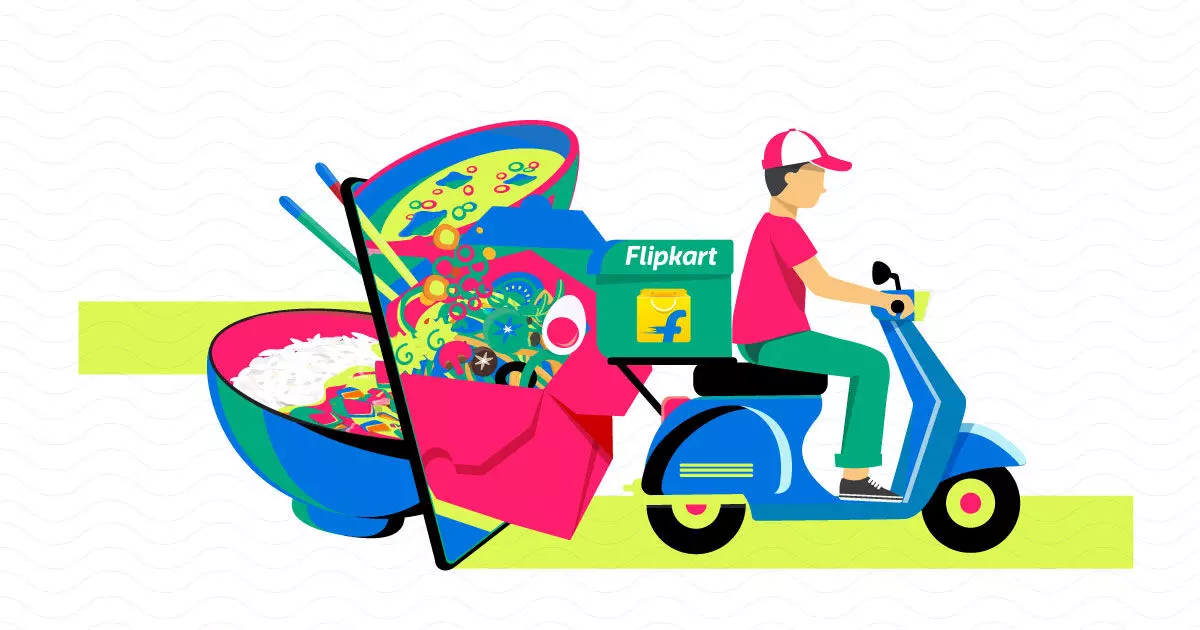
Flipkart Wants A Piece Of Food Delivery, Can It Succeed?
- Business
- Published on 30 July 2026 6:00 AM IST
A new entrant, an old duopoly, and a market that's about to triple
The Gist
Flipkart is set to enter India's food delivery market, marking its first major venture beyond e-commerce.
- The company is still determining whether to create a standalone app or utilize the ONDC network for orders.
- With the food delivery market projected to grow significantly, Flipkart aims to leverage its existing logistics network.
- However, competition is fierce, with Zomato and Swiggy dominating over 90% of the market, making entry challenging.
What?
Flipkart is preparing to enter India's food delivery market, its first serious push into a completely new consumer category beyond e-commerce.
The company hasn't launched the service yet and is still working out the basics: whether to build a standalone app or route orders through the government-backed ONDC network.
"Flipkart is already established in e-commerce, and they're trying to get into fast-growing categories. This fits that pattern," Sandeep Abhange, Research Analyst, Consumer & Midcaps, told The Core.
He added that the company's own leadership has downplayed the scale of the effort so far: "According to the CEO, there isn't much focus on this yet. They're experimenting."
On logistics, Flipkart isn't starting from zero. It already runs Flipkart Minutes, its quick-commerce arm, which operates more than 800 dark stores concentrated in metro and tier-1 cities.
"In terms of logistics, they're already into quick commerce, and they're trying to combine synergies," Abhange said. "It's not a big problem in metro cities. The setup is already there. They'll just add delivery partners for food delivery."
Why?
The category is growing fast. India's food delivery market is currently worth around $9 billion and is projected to reach nearly $25 billion by FY30, according to Jefferies estimates. That kind of growth is hard for a company like Flipkart to ignore.
But it's also a market with just two real players. Zomato holds roughly 57% of gross order value, and Swiggy around 43%; together, they control more than 90% of the organised market, according to Datum Intelligence's tracking.
"It's a difficult category to break into," said Satish Meena, Founder of Datum Intelligence. "Taking share away from them is difficult. They're both gourmet and affordable, and what they give customers, above all, is convenience."
It's also expensive to compete in. "This is a $20-25 billion opportunity, but it needs a lot of cash," Meena said, pointing to how both Zomato and Swiggy spent years burning money before turning profitable, largely by charging restaurants commissions of around 30% per order. Uber Eats tried and failed here before selling its India business to Zomato back in 2020.
New challengers are already testing different models. Rapido has launched Ownly, a food delivery app that charges restaurants zero commission and instead earns from a flat delivery fee paid by customers. Swiggy itself has launched Toing, a cheaper, no-frills version of its main app aimed at price-conscious students and young professionals. "Rapido is trying to build on lower commissions for restaurants. How that goes, we'll have to see," Meena said. "It's very early. Let's see."
Why It Matters?
The pressure point for all of this is the restaurant, not just the customer.
"Restaurants need footfall, through dine-out, or order volumes, because commissions are so high," Meena said.
"If volumes are low, platforms will have to offer lower commissions. Restaurants don't have much leverage today, but with more platforms entering, they'll have more options."
For Flipkart specifically, the advantage isn't awareness or capital, both of which it already has through Flipkart Minutes and its metro and tier-1 city base. "The customer is already there. That's not the problem," Meena said.
Execution will be key for success. "Flipkart isn't an unknown name, and it depends on whether they can provide real value. Food delivery takes time to build. It's a time-consuming business."
Analysts say its worth watching a well-funded, well-known company entering a market that two others spent a decade building, at a moment when the market itself is growing quickly.
Whether Flipkart can turn its existing base into real food delivery share, and whether that changes pricing and commissions for restaurants, is still an open question. As Meena put it, it's early days.
Core.
Core.


