



 Newsletter
 Search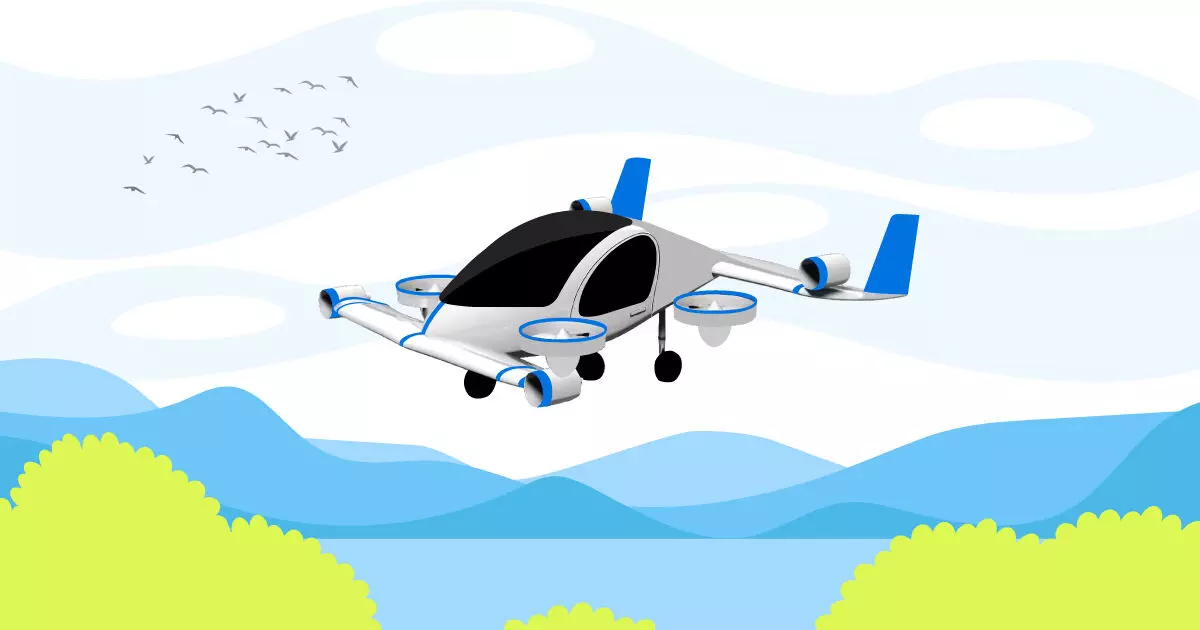
The Next Layer Of Transit: India’s Air Taxi Era Takes Shape

Electric Vertical Take‑Off and Landing (eVTOL) aircraft are battery‑powered and crude‑independent, and could reshape urban and regional transport.
A quarter‑century ago, the thought of police gliding above rooftops in flying pods, Jetson‑style commuter craft, or Korben Dallas’s yellow air‑taxi slicing through a vertical city felt like pure sci‑fi.
Today, those scenes read less like fantasy and more like the opening chapter of a mobility revolution. The machines that once defined Minority Report and Blade Runner now resemble early product demos for a sector racing toward low‑altitude, high‑frequency flight.
Electric Vertical Take‑Off and Landing (eVTOL) aircraft are battery‑powered and crude‑independent, and could reshape urban and regional transport and shield it from air turbine fuel (ATF) volatility and geopolitical chokepoints. This short-distance electric airborne vehicle becomes even more relevant in light of the West Asia shock.
The New Airspace Frontier
India’s electric aviation sector has moved from prototype to production with ePlane’s launch of a new 60,000-square-foot facility at IIT Madras.
The site, researchers claim, is the country’s first integrated manufacturing hub for electric aircraft. While high-level political interest has kept the industry in the spotlight, the opening of this hub represents a tangible move toward localised assembly in a competitive global market.
“This facility is the engine of our commercial future,” said founder Prof. Satya Chakravarthy.
India is preparing to overhaul its low-altitude airspace as it moves toward the commercial deployment of eVTOL aircraft.
The sector, often categorised as Advanced Air Mobility (AAM), aims to utilise the space below 500 feet for short-distance, on-demand travel. These aircraft use electric propulsion to perform vertical take-offs and landings similar to drones, while maintaining the cruise efficiency of traditional fixed-wing planes.
Industry proponents argue eVTOLs will create a new urban transit layer, providing quieter and lower-emission alternatives to traditional helicopters for air taxis, medical evacuations, and regional logistics.
India’s Regulatory Backbone
India’s regulator is moving faster than most emerging markets, with low‑altitude aviation finally settling into a coherent, future‑ready framework. The Directorate General of Civil Aviation (DGCA) issued two circulars in 2024 to govern the nascent sector. The first one provided guidelines for the commissioning of vertiports, adopting safety and planning standards similar to those used by the U.S. Federal Aviation Administration (FAA) and the European Union Aviation Safety Agency (EASA).
A second circular outlined airworthiness requirements for eVTOLs and vertical commuter aircraft. These directives build upon the Drone Rules 2021, which introduced risk-based classifications and digital flight permissions for unmanned aerial systems (UAS) operating below 400 feet.
The DGCA has not yet issued a full Civil Aviation Requirement (CAR) for eVTOLs; The second circular mentioned above functions as the interim framework, with the final CAR expected once FAA and EASA complete their powered‑lift standards. It is pacing its rulemaking to stay aligned with those global benchmarks.
Business Aircraft Operators Association MD (Retd) Captain RK Bali told The Core he expects the first Civil Aviation Rules for e‑VTOLs within two years.
Plans Ready
India has finished evaluating five AAM sandbox (a safe, controlled testbed for early eVTOL and low‑altitude mobility trials) sites — Mandvi, Sabarmati Riverfront, Amreli, Kurnool, and Puttaparthi — and issued both airworthiness and vertiport guidelines, but eVTOL flight trials have yet to begin.
The programme remains in the pre‑trial setup and OEM‑onboarding phase. Startups ePlane, BluJ, Nalwa, and operator JetSetGo joined multi‑agency teams in assessing the locations.
These sites weren’t chosen at random. Each represents a different operational environment — urban, semi‑urban, rural, coastal, and controlled‑airport — giving India the full test matrix needed for certification‑grade trials.
None of the sites has completed the infrastructure, safety zoning, vertiport pads, charging systems, or UTM integration required for flight testing, making 2027 the realistic start line for structured eVTOL trials.
First Flights To First Order
The move from airports to rooftops is underway, and India is stepping in at the right time. Over 300 eVTOLs are in development globally from Joby and Volocopter to EHang, Archer, and Lilium. India, too, is racing ahead on policy, talent, and partnerships.
The ePlane Company — the first private Indian firm to secure both Design Organisation Approval and Type Certification application acceptance from the DGCA — has already flown its full‑scale eVTOL, the e200X, India’s first compact electric air taxi. With an 8m × 10m footprint, the smallest in the world, it is built for true rooftop‑to‑rooftop operations.
“Tethered hover tests begin mid‑March, proving safe, controlled lift,” said Vishnu Ramakrishnan, Senior Vice President - Advanced Air Mobility Strategy, ePlane co. “Prototype 2 enters free‑flight trials by July–August.”
The e200X will debut in air‑ambulance service, backed by a landmark $1‑billion order from the International Critical‑Care Air Transfer Team — 788 aircraft over six years, the strongest commercial commitment yet in Indian electric aviation. The aircraft is positioned as the backbone of a district‑level emergency‑response grid.
“This cuts air‑ambulance insurance costs from Rs 4 lakh an hour to nearly Rs 1 lakh,” said Ramakrishnan. The company is fusing indigenous manufacturing with a global tech stack, using digital‑twin certification and integrated simulation pipelines with NVIDIA, AWS, Dassault Systèmes, and CADFEM‑Ansys.
Bengaluru‑based Sarla Aviation, led by India’s first female pilot, is developing the SYL‑X1, a six‑seat electric–hybrid eVTOL. “We’re moving from validation to build, and commercial conversations with airports and operators are getting very real,” CCO Payal Satish told The Core. Commercial operations could begin in 2028–29.
Chandigarh‑based Nalwa Aero, which holds DOA for its five‑seat Aphulas eVTOL, has signed initial agreements with three helicopter operators to deploy services on pilgrimage routes and is progressing its first full‑scale prototype.
Hyderabad’s BlueJ Aerospace has completed VTOL lift‑off with its 500‑kg unmanned cargo prototype and is advancing a hydrogen‑electric VTOL designed to carry 100 kg over 300 km using hybrid hydrogen propulsion.
The Real Test
The real test for eVTOLs will be how quickly the ecosystem can align to make them viable. Manufacturing scale is still emerging, public acceptance must be earned as low‑altitude traffic grows, and high‑capacity charging and hydrogen‑refuelling networks remain in their early stages.
A functioning AAM system will need a lattice of elevated vertiports across rooftops, hotels, hospitals, and public spaces — backed by emergency touchdown zones and next‑generation traffic‑management platforms capable of coordinating thousands of low‑altitude craft.
“AAM will be defined by ecosystem collaboration, not standalone innovation. It’s encouraging to see Bangalore International Airport Ltd and industry partners driving practical conversations beyond MoUs,” Clem Newton‑Brown OAM, CEO and Founder of Skyportz, told The Core.
Skyportz, a specialist in air‑taxi infrastructure, has a strategic partnership with Vertiports India of Hyderabad‑based Gomsons Aviation, positioning them among the earliest movers preparing India’s vertiport network.
Rollout Readiness Roadmap
India’s AAM rollout will unfold in phases. End of 2026 brings limited demo flights and controlled airport–tech‑corridor shuttles in Bengaluru. 2027 adds Delhi and Mumbai with early vertiports and pilot operations. 2028 sees multi‑OEM entry as certification milestones land. By 2029–30, India transitions from isolated routes to a connected urban‑air network linking airports, business districts, and tech hubs.
Bengaluru leads operationally thanks to BIAL’s land availability, multimodal planning, and lighter airspace constraints. Delhi is the most policy‑aligned, though dense, with no‑fly zones and winter fog slow scale. Mumbai has the strongest commercial demand- the airport, BKC–Navi Mumbai corridor is a natural early route, but land scarcity, monsoons, and coastal ATC complexity make it the hardest to build.
Goa is positioning itself as India’s first coastal aerial‑mobility model through Sarla Aviation’s MoU with the state government and its partnership with Kairali Aviation to develop DGCA‑compliant vertiports.
InterGlobe Enterprises’ MoU with Archer Aviation aims to deploy the Midnight eVTOL across Delhi, Mumbai, and Bengaluru, with plans to finance vertiports, train crews, and potentially acquire up to 200 aircraft. The service targets a 27‑km Delhi commute — Connaught Place to Gurugram — in about seven minutes.
Core.
Core.


