



 Newsletter
 Search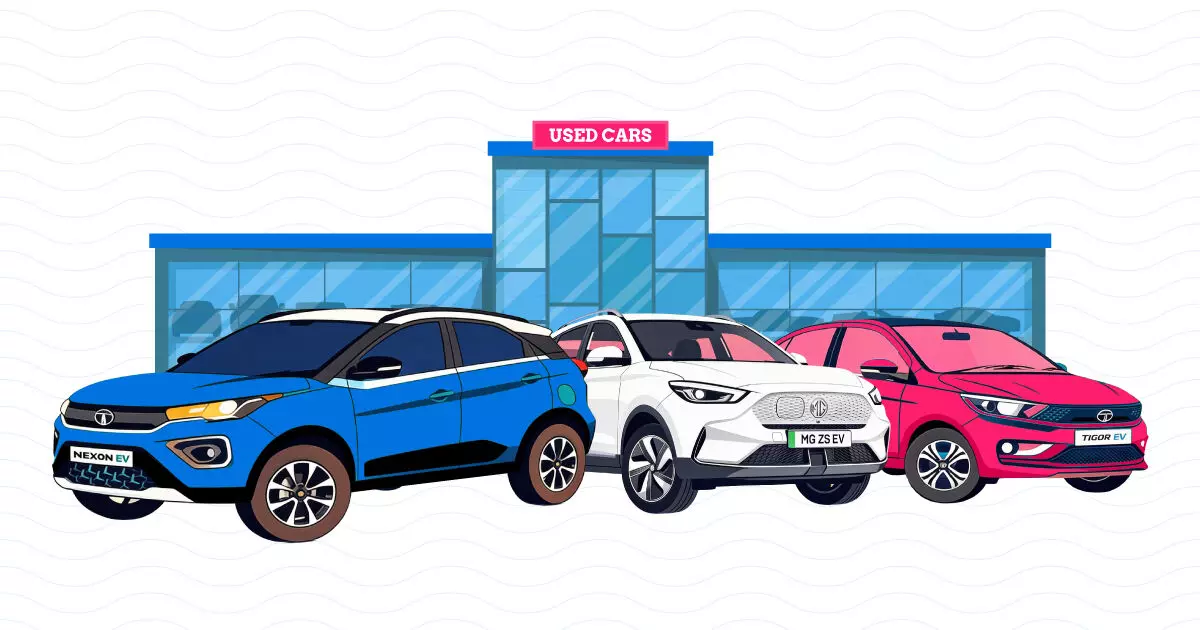
Battery Blind Spots Cloud India's Used EV Market
- Business
- Published on 16 Jun 2026 6:00 AM IST

First-gen EV owners are ready to sell. The market isn't ready to buy, at least not at the price they're expecting.
Rajesh, a Delhi resident, bought his Tata Nexon EV (electric vehicle) four years ago, convinced that he was making a smart, future-proof choice. He was right, until he tried to sell it.
Dealers quoted figures well below what he expected. He eventually sold it directly to another buyer, at a price he describes as acceptable but not satisfying.
His experience is not unusual, and it points to a problem India's EV market has not yet solved.
The country is buying new EVs at a record pace. In FY26, electric passenger vehicle retail sales grew 84% year-on-year to 1.99 lakh units. But as the first wave of owners prepare to move on, the used car market finds itself facing a question it has not had to answer before: is the used car market ready to receive them?
The answer, industry players said, is more nuanced than a simple yes or no.
Currently, the inventory is thin, pricing frameworks are still forming, battery health remains an unresolved variable, and insurance products are still catching up.
How quickly the ecosystem closes these gaps may determine whether the pre-owned EV segment becomes a missed opportunity in India's electric mobility story, or one of its crucial accelerators.
A Market Taking Shape
Hyderabad-based Rishi Arora purchased his MG Comet EV in May 2024, but a used one was never on his radar. At the time, he said, EV technology felt too early-stage and the second hand market too thin to inspire confidence. "Given my lack of knowledge of the product, I was not confident I could properly assess a depreciated EV," he told The Core.
For Arora, as for many first-time EV buyers, the uncertainty around what he was buying was reason enough to go new.
Used EVs currently account for a modest slice of the overall pre-owned car ecosystem, but that slice is bound to grow. Most listings on the Cars24 platform fall within the Rs 6 lakh to Rs 18 lakh bracket, depending on the model, battery configuration, and age.
Compared to their petrol and diesel counterparts, used EVs tend to have clocked fewer kilometres, Vikram Chopra, Founder and CEO at Cars24, told The Core. Demand in the mass market remains concentrated in metros, where charging infrastructure and consumer familiarity are more developed.
Shailesh Chandra, Managing Director and CEO of Tata Motors Passenger Vehicles, earlier flagged resale value as a sensitive issue in India's EV market, noting that demand on the used EV side is yet to be created.
At the luxury end, the numbers tell a different story. Pre-owned luxury car dealer Big Boy Toyz (BBT) said it has seen a roughly 25% rise in EV and hybrid inventory over the past 18 to 24 months.
Demand is concentrated in the Rs 70 lakh to Rs 2.5 crore band, with the Mini Cooper SE, BMW i7, and Mercedes EQS among the fastest-moving models. Yet petrol and diesel vehicles retain a significant advantage, including a stronger resale predictability and broader market confidence.
What’s Driving The Demand?
The motivations pulling this small set of buyers toward used EVs vary sharply depending on which end of the market one is looking at.
At the mass-market end, Chopra said the decision is increasingly deliberate, driven by lower running costs and growing familiarity with EV technology. For many first-time buyers, a pre-owned EV represents the most accessible entry point into a segment that was, until recently, the preserve of early adopters. Demand remains anchored around available nameplates, including the Tata Nexon EV, Tata Tiago EV, and MG ZS EV.
At the luxury end, Jatin Ahuja, MD and Founder of Big Boy Toyz, said their high-net-worth clientele is motivated by instant torque, acceleration, advanced technology, and the appeal of owning something that is future-forward.
For HNI buyers, the stronger underlying trigger is smart money, specifically, avoiding the steep first-year depreciation that accompanies a new luxury purchase. "Many see pre-owned luxury EVs as an opportunity to access premium technology and performance at a more rational entry price," he said.
Environmental consciousness features in the conversation, particularly among younger buyers, but it rarely closes the deal, Ahuja added.
Challenges: Battery Anxiety And Confidence Gap
Transparency and standardisation gaps have effectively kept the resale EV market from gaining meaningful traction.
The economics of the used EV market are being shaped by forces that work against the first-generation owner, according to Abhik Mukherjee, Automotive and EV Market Analyst at Counterpoint Technology Market Research.
Mukherjee noted that the rapid decline in lithium-ion battery prices is accelerating the depreciation of first-generation EVs in India, with the battery pack alone accounting for 40% to 50% of a vehicle's cost. Vehicles with out-of-warranty batteries are hit hardest, as the prospect of replacement adds to buyer hesitation.
"Newer EVs now offer better range and technology at competitive prices, reducing demand for older models. The absence of standardised battery health certification in India adds further uncertainty, putting additional pressure on residual values," he told The Core.
It is a dynamic that platform operators are seeing play out in real time. Battery-related concerns remain the single biggest barrier to purchase, Chopra said, compounded by questions around charging accessibility, particularly among first-time buyers.
Even at the luxury end, battery condition is among the most critical determinants of resale value in a pre-owned EV, Ahuja said. In a segment where buyers spend upwards of Rs 70 lakh, the margin for ambiguity is negligible.
The Resale Problem Nobody Prepared For
Unlike petrol or diesel cars, whose resale value can be estimated with reasonable confidence from age and mileage alone, an EV's worth depends on a host of less visible variables, and the due diligence required is considerably more rigorous.
Its evaluation framework goes well beyond standard mechanical inspection, encompassing battery State of Health (SoH) analysis, charging cycle and degradation evaluation, thermal management checks, and real-world range assessment. At the centre of it all is the battery, which ages differently from the rest of the car, making used EV pricing considerably more fluid than its petrol counterpart.
The data on SoH, a critical metric that reveals how much useful life a battery has left, remains largely inaccessible to EV users today.
The problem is compounded by the absence of any universally accepted standard in India to measure or certify battery health for resale purposes. Chopra noted that Cars24's valuation models factor in vehicle age, kilometres driven, brand perception, and broader category trends, but the direction the industry needs to travel is toward standardised, data-led pricing intelligence that any buyer, seller, or financier can rely on.
The complexity could deepen further under a Battery-as-a-Service (BaaS) model, Mukherjee noted. When the battery is leased rather than owned, the vehicle and battery are valued as separate assets. The resale price reflects only the chassis, powertrain, and hardware, while the battery remains tied to a subscription agreement. Transferability of that agreement, remaining contract terms, monthly costs, and battery performance guarantees all become part of the valuation equation.
It is a framework, he said, that adds layers of due diligence most used car buyers in India are not yet equipped to navigate.
India has taken early steps. NITI Aayog has recommended supporting a battery passport system containing battery health information, while Ministry of Road Transport and Highways (MoRTH) has formed a committee for implementation of the Battery Aadhaar System to digitally identify and track batteries across their lifecycle. However, the real-world impact of these initiatives is yet to be seen.
For the broader used EV market to function with confidence, battery health will need to become as standardised and legible as an odometer reading. It is the central blind spot in this market, and until it is addressed, little else can fall into place.
The Insurance Blind Spot
Insurance adds a further layer of complexity that buyers rarely anticipate, and it is where the battery transparency gap becomes most financially consequential.
Paras Pasricha, Head of Motor Insurance at PolicyBazaar, noted that for the same age and segment, a used EV typically costs more to insure than a comparable petrol car. The Own Damage (OD) premium, reflecting higher repair costs, battery replacement, complex electronics, and a less mature repair network, is the primary driver.
The government's 15% EV discount applies only to the third-party component, not to OD, and rarely offsets the higher underlying cost, he told The Core.
The Insured Declared Value (IDV) gap compounds the problem further. Unlike ICE vehicles, where depreciation curves are well-established, EV resale benchmarks are still forming, and battery health is not uniformly captured at the point of insurance.
Who Owns The Battery Warranty?
Cars24 points to OEM-backed battery warranties as an increasingly important factor. Buyers arriving at the used EV market today are markedly better informed than those from even a few years ago, with questions around warranty coverage, battery lifespan, and long-term ownership costs better understood at the outset.
At the luxury end, Ahuja said that most premium EV manufacturers offer battery warranties transferable to subsequent owners, while Big Boy Toyz ensures clarity around remaining tenure, verifies service and software history, and runs each vehicle through internal quality certification before delivery.
He added that the dealership does not offer any guarantee beyond the manufacturer's warranty, as its role is transparency and evaluation, not a substitute for OEM coverage.
PolicyBazaar added a caveat that buyers would do well to note: standard comprehensive motor policies do not cover inherent battery degradation, natural ageing, or gradual State of Health decline. Coverage is designed for sudden events, including accidents, theft, fire, flood, not the slow attrition of battery performance over time.
Battery-related protection is available only through specific EV add-ons, and even then, subject to exclusions. "Battery replacement can be a significant share of the vehicle’s value, so buyers are more willing to evaluate add-ons than they might be for a used petrol car," Pasricha said.
The Road Ahead
The used EV market, taken in its entirety, is a story of a segment that has arrived ahead of the ecosystem meant to support it. Battery health sits at the centre of nearly every unresolved question: pricing, insurance, warranties, and buyer confidence all trace back to the same gap.
Mukherjee warned that while organised players are investing in assessment tools and warranty programmes, much of the independent dealer network lacks the technical infrastructure to evaluate and price used EVs with confidence.
As volumes rise from lease returns and fleet replacements, the pressure on the ecosystem will only intensify. Stronger battery health standards, transparent valuation frameworks, and wider service support, he said, are not optional rather prerequisites for a used EV market that can function at scale.
This market’s immediate future will be shaped by demand and whether the ecosystem around it can mature quickly enough to sustain it.
At the luxury end, Ahuja observes that HNI buyers are investing in dedicated home charging infrastructure, a signal of growing commitment. Yet luxury EVs remain deployed primarily for urban commuting and chauffeur-driven city runs. For most ultra-HNIs, the EV remains a supplement to an existing collection rather than a replacement.
A unified Battery Health Certificate, Mukherjee argued, is crucial to building a transparent and scalable used EV market in India. A common State of Health framework, he said, would improve buyer confidence, enable more accurate residual value assessment, and ease financing for pre-owned EV purchases.
The caveat, however, is timing. The used EV market in India remains at a nascent stage, and Mukherjee does not expect the necessary infrastructure to be meaningfully in place before 2030. For now, the framework that could unlock the market's potential remains, at best, a work in progress.
Until India makes battery transparency a priority, the used EV market will continue to operate with a blind spot at its core, and the buyers navigating it will continue to do so largely on trust.
Core.
Core.


