



 Newsletter
 Search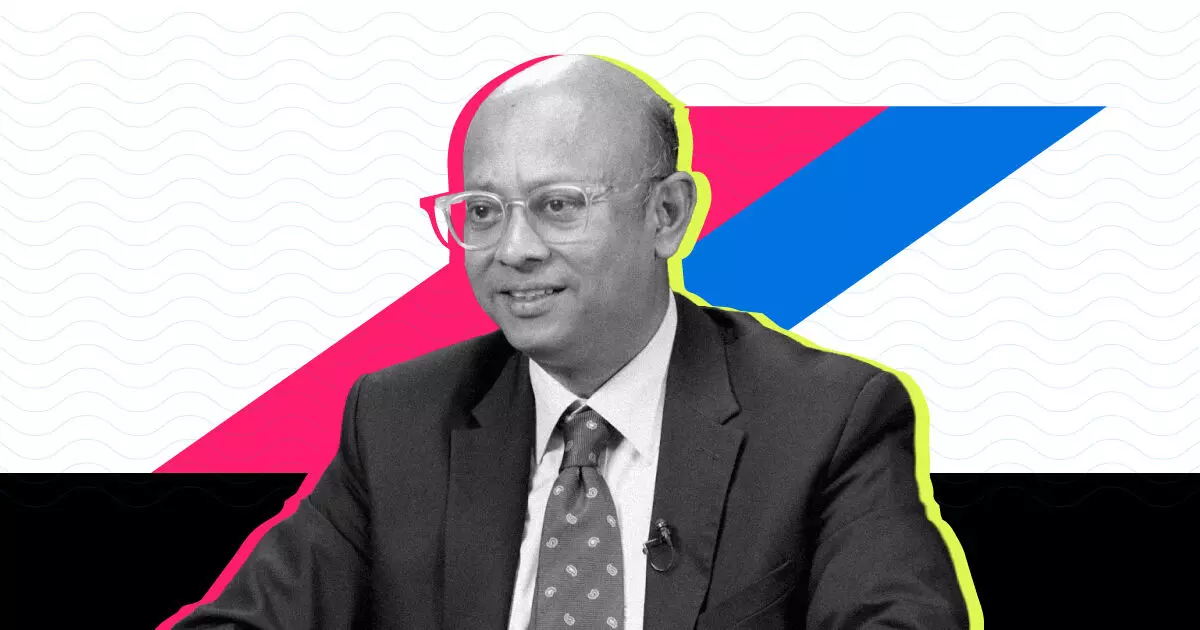
Aviva India CEO Asit Rath Says Trust, Protection Awareness Key To Insurance Growth In India
- Business
- Published on 16 May 2026 6:00 AM IST

On this edition of The Core Report, financial journalist Govindraj Ethiraj speaks with Asit Rath, Managing Director and CEO of Aviva India on insurance awareness, retirement planning, protection products and the future of life insurance in India.
The Gist
Asit Rath, Managing Director and CEO of Aviva India, said India’s life insurance industry continues to face challenges around consumer trust, product awareness and underinsurance despite significant improvements in claims settlement and digital capabilities. Speaking on the Core Report Special Edition, Rath noted that industry claim settlement ratios are now close to 98%, while Aviva India maintains a 100% claims payout ratio within regulatory timelines.
Rath said life insurance remains difficult to sell because consumers often fail to understand long-term protection needs and retirement planning. He highlighted that many Indians remain underinsured, citing Aviva’s average claim payout of only Rs 15 lakh despite serving largely affluent urban customers.
He defended ULIPs as long-term tax-efficient wealth creation products, while acknowledging that mis-selling during the 2000s damaged consumer trust. Rath argued that post-regulatory reforms have improved transparency and reduced charges significantly.
The company is increasingly focusing on protection-led products, critical illness coverage and retirement solutions, while also using AI-driven underwriting, digital wellness platforms and personalised engagement tools to improve customer acquisition and retention. Rath said younger consumers are showing greater awareness of protection products following the Covid-19 pandemic.
He added that retirement planning represents a major untapped opportunity for the industry as Indians continue prioritising consumption over long-term savings. Rath also stressed that reducing mis-selling and shifting toward consultative selling will be critical to improving trust and expanding insurance penetration in India.
NOTE: This transcript contains the host's monologue and includes interview transcripts by a machine. Human eyes have gone through the script but there might still be errors in some of the text, so please refer to the audio in case you need to clarify any part. If you want to get in touch regarding any feedback, you can drop us a message on feedback@thecore.in.
Hello and welcome to the Core Report Special Edition. I'm joined by Asit Rath, Managing Director and CEO of Aviva India. Asit, thank you so much for joining me.
Thank you, it's my pleasure.
Asit, let me, I mean insurance is a very interesting industry. We all need it but not enough of us are subscribing to it.
And that's maybe a problem in some countries but not all countries. And you worked in other parts of the world as well. So what is, why is insurance, that's life insurance, not taking off the way it should in India right now?
Lovely question to start our interaction. In fact, I believe life insurance should be more closer to a social industry because you know we pay the claims. I mean if you look at the industry data, the claim ratio of the industry is at 98%.
So we don't have a claims issue. So you don't have a situation where a large number of customers are coming and saying, hey you know what you never paid me a claim. We pay pensions on time.
I mean like Aviva is one of the companies where all the payments are happening within regulatory tariff and we are one of the few companies which are at 100% ratio. So we can't get better than that. So which means that you know paying over a long duration to the customers even for pension customers where their liveliness proof is now digital is something which is a strength for us and it's happening across the industry.
So what really then makes us so difficult to sell because you know whenever there's arguments around what commission should be paid, everybody will say, hey you know what life insurance is very difficult to sell. The difficulty is because sometimes the product design is so complex and so difficult to understand that people you know they are just not, the distributor is just not able to explain it out to the customers. So when the privatisation happened you know the Ulips became some of the products which are very transparent.
And Aviva was one of the early entrants.
Early entrants, yes we entered in 2002 and whether it was bank insurance or whether it was Ulip products, I think a lot of new things to the market we introduced. But you know the distributor and the way they explained and sold the product was something so while the design was for a very very long duration but because markets were doing very very well so it got sold as a very short-term product. So in 2009 the market crashed up to 2009 you would see that any insurance company which had a licence was growing at a very very fast pace and typically on the Ulip side because it was transparent and the markets were giving great returns.
But when the market stand and then it became flat to around 9 to 13 that's the time when there was a lot more pain and a lot of publicity around what why Ulips are toxic and why the first year charge is such a bad you know bad thing and so on so forth start coming through. And expenses on the product side became something of a large scrutiny. So of course IDA took notice of that, took corrective action and the irony is after that action the sale of the product also came down right because not enough is now being written about how good these products have become.
So while I will not say that they are better than mutual funds but over a duration like the mutual funds have their own place similarly the Ulips have their own place which is a longer duration because over a period of time if somebody were to make it tax efficient you know by investing less than whatever you know two and a half lakh slab which allows the corpus to remain tax free then it becomes something which is extraordinary because the FMCs are low, the corpus is going to be tax free and even in case there is volatility like what you are seeing right now the customer can take a debt to equity you know defensive stand without attracting any short term capital gains.
So let me ask you a couple of conceptual questions for those who don't know. Ulip is a unit linked insurance plan and you talked about how Ulips did very well because the markets were doing well. So that also was the embedded incentive for someone to take that particular product that you know that you are giving money to an insurance company but it's not just going to protect your life or rather act as a safety deposit of sorts for the day you are not there but essentially acting as an investment as well.
So now what is worked and what is not worked in this? So what is clearly not worked is our narrative like you know. So let me go back a step.
So why we as a country I know that everyone is doing Ulips. So why do we have to even offer an investment option to something that is about creating a let's say a corpus for someone and his or her family beyond them?
A very good question. In fact why do you have to have a saving product at all? I will spin the question.
Why do you need a saving product at all in the insurance portfolio? So I will take you back to LIC where it was you know LIC products were sold where the customers was told that you know this is your summer shirt. They didn't know what the premium was and the maturity was somewhere near the summer shirt.
So typically the customer was starting a saving journey over a long duration but in case of death the summer shirt was always available. So he would plan keeping the corpus in mind what he wanted. So there was no other instrument at that point of time or even now where if something the customer is not there to you know give the future contributions the same corpus can be given to the family.
So while I'm a great fan of NPS, very very low margin you know great returns etc.
You're talking about the national pension scheme.
But the national pension scheme also will not put contributions if I am not there for a retirement of my wife. So typically in India we plan for a retirement of a family. We don't plan for an individual.
So that's why these products with a certain cover have to be designed and calibrated in a way that the future corpus that somebody is imagining is protected. So if I'm thinking of a 10 crore corpus for a pension then I would put that cover and the mortality and the saving they operate very differently. So I mean the mortality is equal to whatever is being charged mostly as far as the you know term insurance is concerned and the saving can invest in the same instruments as any other you know instruments barring a few you know rules that IIDA puts on us.
For example we cannot invest in companies which have not shown a profit for a certain number of years etc. Which is more conservative but over a duration it still makes you know it still makes sense.
But do Indians I'm saying I know you I'm sure you do a lot of surveys. Do have Indians change their outlook on insurance let's say in the last 20 years and I'm talking about term insurance.
So term insurance we have seen a dramatic change. First incident was COVID which made people feel that yes we are all mortal and something can happen without us planning for it. So we have seen a very big change in the protection percentage of the industry and you would have seen a very remarkable effect of that on the health insurance side as well which is pure protection business.
So you know so the consciousness now today is very high. Now the problem is that how much is the right insurance cover. Okay so people depend on the employers that okay my employer will take an insurance for me.
But employer has a different motive and a family has a different motive for insurance.
Employers take health insurance.
They also take term insurance. They do take term insurance and their motive for giving term insurance to their employees is to give a buffer to the family to get up on their feet financially and start their lives again. So which means it's multiple of your salary.
Two times, three times, four times. Whereas when the individual is looking at his or her own financial value, they are looking at all the future years they are working and you know trying to put a number there and you know giving the family a corpus where they feel that even if I'm not there, I should be present financially with my family. So the both the things are diametrically opposite to each other in terms of the philosophy and hence there is an under insurance gap also even corporate employees and bringing you to Aviva itself.
I mean I was surprised I asked for the data that what's the average claim that we have paid last year. It's only 15 lakh rupees. Now I don't understand how is it possible that we operate in you know these top cities and you know typically well-to-do customers are taking insurance policies from us.
Their life cannot be worth 15 lakh rupees. It has to be more. So which means a lot more has to be done in terms of just making customers aware what's the right cover.
Then their decision of taking it or not is completely with them.
So which if they're taking on average 15 lakh rupee covers that means they're not really taking it to create that corpus for future.
Many of them have taken just a saving cover so that you know the corpus remains tax-free but they have really not forgotten to take the real cover protection cover that is required by their family.
And the fact that you're paying out that means they actually passed away or I mean earlier than maybe they thought they were. Absolutely you're correct. Right okay so as you look at the post covid now since covid was a clear sort of start point in many ways.
How are consumers between let's say younger and older consumers responding to insurance in general and to the kind of work that you're doing?
So younger customers also today are aware and we see a demand for pure protection products from them. Because they don't so typically when someone is really really young they don't want to save. If they're coming from a well-to-do family I mean they would start thinking about still borrowing from their parents in the first few years of their careers.
But still protection is something that they do understand and there are a lot of students whose parents have invested in education loans etc before they start their careers. So it has now become a you know completely new trend where insurance companies are going into colleges and offering us cover to students who are in their final year. Whereas earlier you know 10 years back even underwriting a student life would have become something which would have been like you know the person is uninsurable.
So the trends are changing but definitely there's an awareness and demand for certain kind of products the health insurance and the protection of products. And eventually what will work for insurance industry is for the distributors and the companies to be more patient, acquire these customers, engage with them, give them you know reasons to engage with the insurance companies. And when they start their life phase after marriage and you know once they have kids their automatic ability to start thinking of saving more increases.
And at that point they are great customers for the saving side of the business as well.
So you're saying that there is a bit of a challenge on the last mile where the consumer connects with the product via the distributor and that's where you're saying that there is not enough let's say guidance because I'm assuming everyone understands the importance or the need for insurance at least theoretically. But if they're not taking that step or if they are under insuring to your 15 lakh rupee example it's because they just don't feel the need for it.
Also the distribution is not used to selling protection. See because protection sales are not easy. It requires good understanding of underwriting the documentation to be taken, getting the customers to do medicals.
So obviously you know while we are at almost 99 percent claims ratio right now is because we had underwritten these lives very very well. So you would have asked the right questions at the time of taking the policies so that when eventually the claims did come for you know to us we didn't ask any questions and pass them very quickly. So it is little onerous and the entire sales teams and distribution teams are not used to selling because the currency of success in insurance over the last 20 years has become APE.
Like you may also ask me what's your APE growth whereas the real currency of success is when you acquire these younger customers. APE is annual premium estimate. So obviously the saving products will have much larger premiums and the protection products will be much lesser premiums and the effort to issue a protection policy is more than it is to a saving policy or at the same time.
So let me flip that around slightly. So if I were to ask you why do I need to take an insurance product? What would you tell me and maybe you could give me two answers one for a older me and one for a younger me.
So for a younger you it is first you should be able to take the protection product because if the parents have put in invested money educated and put somebody into a job then certainly there is a financial value. If nothing it can go to the parents if somebody is not even married. So that should be the first start and at that point of time if you have a great experience with a company then you know at the time you have kids and you start thinking of much longer duration.
For example I would ask you when did you first start thinking of retirement? Possibly when your kids started giving you less attention. Right so which means that you would be you know either in your late 30s or early 40s.
So once you have these things in your mind then of course you will start on a long duration saving programme and in the long duration saving programme only there is uncertainty where you need a hedge which means you need a saving you know a protection cover which is commensurate to what you are starting. So at least in Aviva India from 2022 onwards we have one philosophy with which we are designing the saving products that in case of the customer being there you know no more during the duration of the policy premium payment time then all future premiums should be paid by the company. So that has become a core design philosophy for our saving products.
So it's not just that we keep the policy alive we contribute the same money that somebody wanted to contribute every year. So that the customer has a reason to take these policies against other financial instruments where these contributions will not come through and hence these longer duration makes sense if somebody is coming for a five-year premium payment and sixth year they want to take the money out it's not going to make a significant difference but if somebody wants to you know save for the next 20 years for a young child then it makes a lot of difference you know as to whether the last 10 premiums are paid or not.
But I think that is an interesting point you're saying if I'm the if I'm a young person and who's let's say just transitioning out of college into work or in that zone I should be thinking about the money or funds or resources that have been invested in my education and therefore I should be taking some kind of term insurance so that the family is protected but obviously people don't think like that and which is where the problem is.
Which is where the awareness and education comes through. So how do we connect with customers because we do see as I said you know certain companies have gone to colleges and issued policies that means there's a demand there as well because there were students who wanted to take that and hence they made a business out of it so younger customers will of course become more and more aware and they will start taking these prudent decisions because it doesn't take much like a you know young person taking a one crore cover would be not even 20,000 rupees a year. So it is well within their affordability range and with they can take a motor insurance of similar or more amount then it just needs some good distributors to talk to them or some good person in sales to talk to them to convert them.
But the intuitive and I'm going to come to the older me also but the intuitive thinking I guess is that let me take insurance for hospitalisation or medical exigencies but life is something that because in a way I'm thinking that if my life is going to end then why really
Of course I mean it's not that's why life insurance is not as easy to sell as a health insurance product right because health comes naturally. It's like I can get injured in school I broke an arm so it's very easy for somebody to relate with the health insurance but as far as life is concerned you need someone to tell you know them and convince them why they need it they may decide about taking it or they may decide not to take it right but making them understand what's their life value and how it can benefit their parents is something which is a thing that should be done by the insurance and that's an interesting point and and
and how would you address the older me and for the younger me for example
persons we have also come up with critical illness covers etc which are more the medical side so it's important for us to you know kind of get them on that journey how does a critical illness so we have a standalone critical cover which covers 49 critical illnesses and in case of you know diagnosis the pay the money is paid out without waiting for the reimbursement or you know waiting for the hospitalisation that's a life insurance product not a general insurance product it is a life insurance we are our licence allows us to create some health insurance products also like critical illness okay and also we can create defined benefit health insurance products so it's for us to you know kind of make relevant products so it's not linked to
hospitalisation per se but it's definitely linked to contracting yes an illness and so on okay so
how would you look at an older person so the older person again what we are fighting with the older of course I don't know about you but certainly the young people who are now married and have kids when we are looking at how they are saving they're not only not saving in life insurance they're actually not saving anywhere so money is going in malls money is going in buying a better watch better phone foreign trips and so on so forth so the first task for a financial services professional is to tell them to save now after they've decided to save then of course there are different durations so any short duration for example someone looking to do a quick MBA you know in the next three four five years their you know their interests are best served by you know other instruments they are not life insurance customers but if they want to retire early right and they want to save something for the next 20 years because they know there'll be some continuity of income etc then those are places where you will need you know something which can be set aside and a simple rule that I have observed is life insurance products wherever it has come out of somebody's monthly savings those policies have gone on to stay till maturity and I'm telling you out of my own personal experiences and if somebody has put their bonuses into life insurance thinking I mean over invested those policies have not you know continued sustained I mean wherever there's an exit option people will see that feel that you know I have put too much into savings I need to live my life so the life insurance distributors job is to ensure that the right balance is promoted not every money that you have needs to come to life insurance products but anything which can be saved maybe five percent ten percent of the income that can be saved from the monthly you know salaries that somebody is getting which they can sustain for a very long period of time that if it starts coming to us we will see far significant you know better trends as far as maturity is concerned or stay of the customers are concerned today the average stay is not long enough from a life insurance person.
Interesting so you're therefore saying that as we are in a sort of consumption economy and clearly and in an early stage of a consumption economy at two thousand five hundred six hundred dollars per capita and growing so we are still not in a position to think or maybe perhaps we are not thinking about life beyond a point because consumption is a immediate felt need yes so anyway so I'll ask you about how you fight that but before that on the other hand you do have people who are signing up and that's how you're growing as a company so who are these people I mean what is their profile like?
So typical customer sales is happening from customers between 30 to 45 years now at that age they've become conscious about protection needs and they've become conscious about long-term saving needs and some of them are coming purely because if you know over a long period of time the corpus grows to a very significant number so whatever they can get out of that as tax-free because you would have seen the taxes are something that you just can't avoid yeah right so some of the business is coming purely because over a long duration if something can remain tax-free that money is flowing to us as well so all the combination of this is helping us to grow as a company.
So you're saying that they're putting in money because they're financially astute or is because they're more concerned about their future?
So one from protection yes they're more concerned about their future and from a saving they're looking at because there's so much of publicity of you know hard sell on insurance etc so the only very financially savvy astute customers are coming to us in a large number where they want a certain thing out of insurance so for example a businessman who comes to us and puts a corpus which is protected under MWPA is doing it because he wants to create a separate stream of income for the family which can hold if his business goes down and you know there are debtors wanting to take whatever he has earned over the period of time etc so the time for specialised selling what is MWPA? It's Married Women Property Act under which if you endorse a policy then the debtors cannot assign it to themselves right so that's something which is which has been going on for quite some time but it is something which is very rare for a business person to know unless a very good distributor has met him and made him money.
And what's the split broadly if you're if you know between let's say self-employed in your current let's say pool of people who have Aviva plans self-employed versus professionals or employees?
So we would be more skewed towards professionals because largely we are operating in the top cities plus we have a very large presence in the group side of the business we are we have more than thousand corporates which do group term insurance with us so that's why we will be skewed more towards you know the salaried professionals but we are developing plans especially in Uttarakhand where we are the lead insurers where we can sell very easily to the you know business people as well.
And tell us about how you're seeing as you look ahead now we are in 26 these are back to uncertain times because I mean the last year has been uncertain and many businesses are affected how are you seeing the insurance industry grow and what will your role be in shaping it in the next couple of years?
So I think there are a lot of reforms which are happening right now it is and I will not speak about the market right now I'll speak about more from a regulatory perspective so there is a very clear understanding from RBI, IIDA that the policies have to be sold we have to grow but in a certain way and I also personally believe that what is holding us back as a life insurance industry is the kind of trust that we you know that that we elicit when somebody is talking about life insurance products so if you knew that you know I will talk about very good products versus you knew that somebody is going to sell just because there is a lot of commission involved then immediately the level of trust which is there you know between the consumer and the seller it reduces.
So we have to now move towards more consultative selling and the outcomes especially on the claim side on the pension payment side etc have to be far more clearly articulated by us as an industry so that we carve out a space for ourselves. So the regulatory oversight on how to curb misselling is good news because ultimately it will increase the trust and the sales will happen far better and that will allow customers to stay long get the best benefits out of the customers and kick in a positive cycle. From a market perspective if the markets are going flat if they are going down etc I think that is not a very big deterrent for life insurance industry because much of our business in the industry is actually deployed in guaranteed or endowment policies which are not affected so much by the equity markets and how you know they go up and down and even for companies like us which is you know 66% of our business last year came from ULIPS. We believe that you know customers when we have you know when the markets go down they see it as an opportunity and it also you know kind of helps us to acquire more in terms of renewal premiums and over a period of time it will balance out.
So we are not a short term industry we rarely publish 1 year, 3 year, 6 month returns. We are more interested in what is the 10 year, 15 year, 20 year return when we solicit a policy. So from a market turbulence it doesn't make too much of an impact over a medium run of course it can have some impact as far as present results are concerned.
And you've been focussing a lot on digital transformation or digital sort of connect with consumers. So tell us about how that works or how it's working at a time when also you have last mile challenges in convincing customers about what to buy and why to buy.
So I think one of the things that has helped for us is we have been able to come up with a wellness app and that has become a connector. So we are trying to create products on the protection side which are going to be giving some sort of a you know incentive for customers to develop healthy habits. So one of our products as I mentioned the critical illness product has a clear linkage to how much the customer is working and similarly we are thinking of more such products which are going to be you know encouraging customers to you know kind of adopt healthy habits.
Now what that does is it brings in lot of new to Aviva customers to us and once they are well engaged with us then of course we have proprietary channels on which we are very bullish and we will be making sure that you know those customers are serviced well and then the second and the third and fourth policy can happen as the customers become more and more aware and of how the brand is and so on so forth.
And the critical illness piece also is a survival benefit. So as if we have a 99 percent of claims in a critical illness side then it also means good news as a customer can you know go back and tell other customers about us whereas mostly in a life insurance cover that's not possible it's always the family who can speak about us.
So you're saying that people are buying more insurance by understanding and let's say diving into what is available on the digital front as opposed to meeting distributors and trying to be convinced about.
Especially on the protection side they like to do their research online and then they want to meet somebody and you know take that policy but also aggregators like Policy Bazaar have done a great job in terms of reaching out and you know getting the you know policies sold online completely or maybe digitally assisted. So the protection side is something which has benefited tremendously from both the aggregators as well as improvement in the technology because we are now able to look at data engines, underwriting engines which are far more advanced than what it was 10 years back to be able to acquire customers at scale. So the insurance for all on the protection side will happen purely because of leveraging technology but that won't mean that retirement for all will happen only on technology that you know that set of distributors who are selling saving products will require very good intuitive tools which will have the you know advanced data analytics as well as you know an AI layer built on top of it to be able to get those interactions you know very contextual and also making sure that there is no mis-selling which is happening.
So all of it then is a different way in which we will be leveraging technology as we move further and grow our business.
Right and when we started you talked about claims and I mean and let's say the trust factor that builds because of the perception of whether you are responding to claims effectively or not. So what is the let's say learning that you can share with us having dealt with obviously maybe tens of thousands of claims in terms of how people should be looking at claims and what should they be sort of guarding against even as they apply for new policy?
Yeah so I think on the life side they have to be very sure that the disclosures are all right and so that you know there is no chance of a repudiation which can happen at a later stage. So any insurer which is asking them to go for a medical versus an insurer not asking to go for a medical my advice would be go with an insurer which is asking for those medicals so that the disclosures are pristine at the time of taking the policy. I think that's the only guardrail as far as the protection policies are concerned.
In case of the health policies whether critical illness covers etc they have to spend time to understand what it covers what it doesn't cover. We are trying to simplify those documents but at the same time the emphasis on understanding the policy so that there is no disillusionment at the time of actually going to a hospital and claiming is very very important. So one of the principal reasons why we are more focused on the defined benefit products where we have listed down the 49 critical illnesses and we have said that this is what is going to be covered so they all just have to come with the diagnosis but even then there may be some nitty-gritty of what is covered what is not covered so they do have to spend that time with their distributor understanding what is not covered rather than understanding what is covered on the health side. On the saving side of course they have to look at who is dealing with them what is the planning for and once they have hit upon what they need to plan for so for example somebody wants to plan for their child's marriage then what corpus they have in mind 15-20 years later they may have a ballpark figure but then to reach that corpus what is the kind of instrument that they want from a very aggressive instrument on the ULIP side to a very very passive instrument like a guaranteed return products there will be a range of products and then the customer can actually decide without compromising on what the corpus is that they are looking for.
Right and the other point is about how medical inflation is changing all of this and tell us a little bit about how that's changing.
The more you look at medical inflation you will start thinking that how do I even plan for it because it's 12-14% which means that every 5-6 years the medical inflation is doubling and that's one of the reasons.
Which means if I am getting treated at 2 lakhs today 5 years later it will be 4 lakhs for the same illness same patient care and so on.
Absolutely and you would have witnessed it in Bombay and you know other you know top cities so one of the things that insurance companies or at least Aviva you know wants to promote is these healthy habits you know so that you know it is it is fine to plan for your you know critical illnesses and you know hospitalisation in advance but you never know there will be certain invisible certain inflation so even if from a general insurance company if you are covered for 50 lakhs today for cancer will it be sufficient 20 years from now 25 years from now there is no proof while technology has the ability to reduce the costs over a period of time but we haven't seen that happening in the medical you know side of the you know of the business but so you know adopting the right habits making sure that you know on a daily basis people are taking care of themselves is very very important and that's the only way we can reduce the cost or the burden on the health care system because somebody has to pay for it either it's insurance company or it's the customer itself you know where it will come out of pocket so if you look at Bombay, Delhi you know all the metro cities the lifestyle the sedentary lifestyle you know that is that that that is there you know in the in these cities people hardly move out and you know you may be living in an apartment with great sports facilities but nobody turns up right so that needs to be something which needs to be promoted not just by insurance company but by society at large governments you know anyone who's responsible employers because you know as employer also we promote a lot of active living to our employees right and then we will be able to fight some portion of it as far as the medical outflow is concerned but for a prudent customer having beyond insurance a separate stream of income that he can look at to dip into for treatment is something that I would like to advise.
Right and let me you know we also started by talking about what insurance is and why people should take insurance and how they should distinguish between types of insurance and what they need when particularly a younger person older person how they need to approach it so if I were to sort of ask you to wrap up one is what else do you think the insurance industry needs to do to connect better with consumers to grow further that's one secondly what will what are the kind of products that you are planning or thinking of which could further add to the mix I know you have a very large portfolio already.
Yes so we believe that we have now got a very good protection product mix with ourselves but we are not so good at the retirement side we are designing products but it's not resonating with customers so we have to look push further create more innovations because protection and healthy retirement because that you know with the advent of AI the number of years to retirement I don't know how long it will be 60 years it might come down or it might go up it's very unpredictable but the survivability of people is increasing yeah right so the post retirement number of years that someone has to live is so you're saying your life is more secure than your job yes absolutely so retirement is a space which you know the entire industry including us can focus on to grow the business and on protection we have to do even more to win over the trust where people can just walk in and say hey you know I need it till now it's still not the case I mean it started happening happening like that on the health insurance side but certainly not on the life insurance pure protection products
and if I can supplement that I mean you touched upon AI though on at the distributor end how are you using AI to let's say better understand your customers or potential customers and how is that making the process including the digital connect easier or more efficient so AI has allowed us to
partner with a lot of health tech companies so we've been able to design you know the digital kiosk where you know customers can interact with us and basis that interaction we are able to promote a few products like you know a protection product or a health insurance product etc but we do try and add value to the customer even when they are not interested in taking life insurance products so that is something which AI has enabled us to do similarly AI has also enabled us to do underwriting and personalisation of products at scale like I said we have a product which can be different from for you and me in with the number of steps that we do work and it can also nudge you separately so our engagement with the customers has improved so this is already on offer already on offer link to steps link to steps is already on offer and similarly underwriting like I also believe that claims and the way we conduct ourselves on claim has a very large bearing on how the trust will build over a period of time so the advancement in machine learning is also helping us to get into databases and depend more on databases than on disclosures so if I ask people are you smoking or not versus I dip into a database to infer whether someone is smoking or not is two different can you do that I mean you can't do it now but I think the databases in the country are becoming better and better like if you look at the health insurance side government is trying hard to you know kind
of get all the data so you may have disclosed somewhere else that you're a smoker and with
consent of course because dpdp is coming through so if I could just look at data like when I look at KYC data from Aadhaar it's far more safer than asking you whether this is your right address and impersonation etc then you know dipping in and depending on what the government is already
does impersonation happen in insurance as well oh it does okay quite a bit so that is the only
thing that we have to be careful about that while we use some bit of people are impersonating
because they want to show a younger person's profile or something like that or mostly people
impersonating have a you know want to commit a fraud at later stage so you can have dead people turning up in your insurance database unless you are very very careful and that's why the more and more we get into databases the more and more we will move towards a regime where claims will be paid is not going to be a question it's going to be a norm right and that will you know improve the trust factor and it'll be good news for the insurance industry per se to grow right so you've
been in insurance most of your working life what are the one or two things that you feel have taught you something or shaped your thinking of why this industry has potential and given you
confidence or hope so I look at how the society is not planning for retirement I look at how people get devastated when the right covers are not given to them so I feel it's a very very relevant it's a beautiful business to be in because you are focused on something which is which is really ailing the society however what has really not happened is that we have got a very large amount of number of intermediaries and sales people whose only motive is not to solve that problem but to maximise their earning so once we do that transition of getting them all the distributors aligned to you know just focussing on the problem because money will of course flow we are not saying that distributors will not get paid but money will flow and if we just focus on these two core problems the industry can become really large the reputation can improve from where we are to becoming one of the most loved in the industries in the financial services and that's what is exciting because I feel it's possible and that's what I owe back to the industry it has given me so much.
Wonderful note to end on I say thank you so much for joining thank you so much lovely meeting
likewise thank you for calling me here yeah thank you.


