



 Newsletter
 Search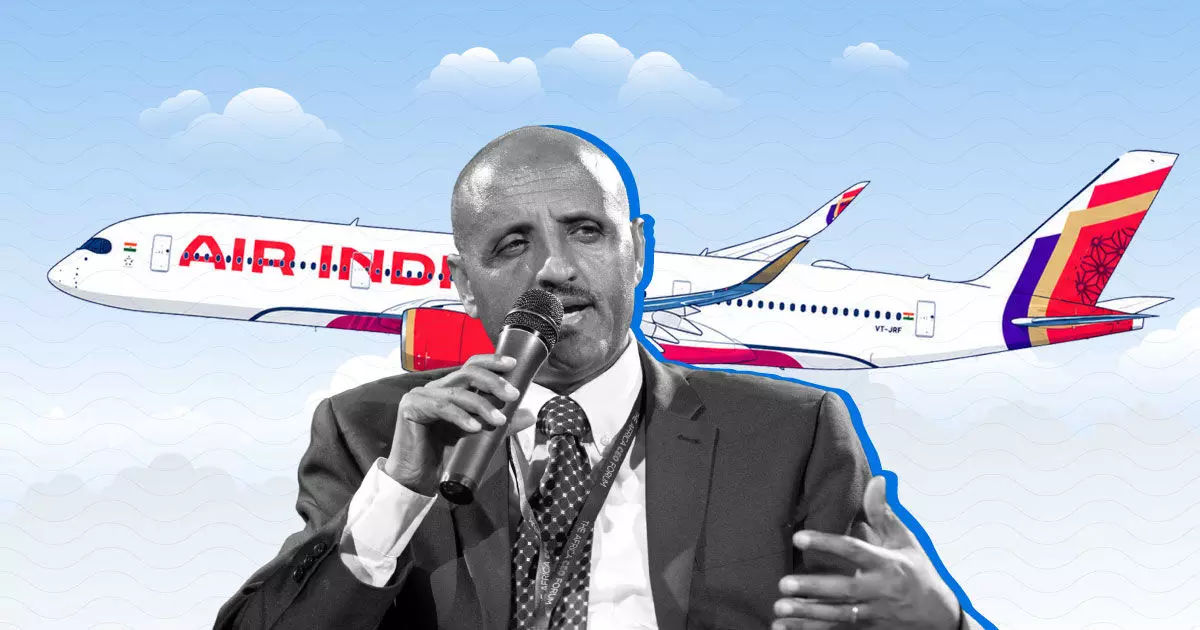
Tewolde Gebremariam’s Experience Could Be Key To Air India’s Reset
 By Manish Pant
- Business
- Published on 11 Aug 2026 6:00 AM IST
As the former Ethiopian Airlines CEO prepares to take charge at Air India, the turnaround man faces the enormous task of reshaping the carrier into a world‑class airline amid serious headwinds.
The Gist
- Gebremariam is tasked with addressing safety issues and improving operational efficiency.
- The airline's current challenges include high losses and an inexperienced management team.
- His experience from Ethiopian Airlines may guide Air India in navigating its complex recovery journey.
Beyond cricket and wars, India recently once again edged out its not-so-friendly western neighbour. And this time in aviation. On August 5, Air India named Tewolde Gebremariam as its new chief executive, beating Pakistan International Airlines, which had also approached the former Ethiopian Airlines boss.
Bureaucratic delays in Islamabad and the relative strengths of Air India under the $149 billion Tata group tipped the scales in favour of the Maharaja.
Gebremariam, the former Ethiopian Airlines CEO, has his work cut out for him at Air India, India’s beleaguered national airline.
“I trust the Air India board would have examined Ethiopian Airlines with a fine comb: fleet then, fleet now, expansion attributed to Gebremariam, and so on,” Jitender Bhargava, former executive director of Air India, said, adding the search for a CEO was never easy.
Gebremariam inherits an airline bleeding money, struggling with safety, ageing systems and a weak management. He must fix operations while expanding in a volatile market.
The Ethiopian Turnaround
Now in his mid‑60s, Gebremariam joined Ethiopian Airlines in 1985 as a transportation agent in cargo handling. He rose through sales, overseas management and operations before becoming CEO in 2011.
Over 11 years, he turned Ethiopian into a diversified pan‑African aviation group. Annual turnover grew from $1 billion to $4.5 billion, the fleet from 33 to 130 aircraft, and passenger traffic from 3 million to 12 million before COVID‑19.
He expanded the global network, built Addis Ababa into a hub, and developed cargo, maintenance, repair and overhaul (MRO) and training businesses, positioning Ethiopian as one of the world’s most successful independent carriers.
“Gebremariam has a reputation for managing a strong transition story at Ethiopian that his critics initially called unrealistic, but one he delivered ahead of planned targets. This might be a big reason that influenced his choice, and possibly what Air India needs desperately in the next 12 months is execution discipline,” S Vasudevan, CEO of infrastructure consultancy AeroInfraStratgiX, told The Core.
A Long Flight Ahead
Air India remains one of Tata’s most troubled verticals. Losses have mounted even after its return to the salt‑to‑software conglomerate in 2022, following 69 years under government ownership.
The group’s carriers, Air India and Air India Express, have accumulated losses of nearly Rs 490 billion between FY2022‑23 and FY2025‑26. The latest year alone saw a combined net loss of Rs 222.38 billion, the largest since privatisation.
Chairman N Chandrasekaran, reappointed for a third term in July, noted in the holding company Tata Sons’ annual report that Air India’s transformation should be seen as a “five‑ to ten‑year journey”. He cited the need to overhaul legacy systems, culture and fleet, address supply‑chain disruptions and build a cadre of aviation professionals.
“Rebuilding Air India is a long journey: fleet renewal, training, service transformation, network expansion. Every great airline in history was built over decades, not quarters.”
Bhargava said that this long-term perspective made sense. “A 570 aircraft ordered won’t be delivered in less than ten years. Growth has to be planned over that horizon. But aviation never gives you a smooth ten‑year run, as from 2026 to 2036, you will face upheavals.”
He felt Gebremariam could deliver on targets.
In October 2025, Air India was reported to have sought a $1.1 billion capital injection. Singapore Airlines, which owns 25.1%, said it was not in a position to comment. Tata Sons holds 73.82%, with employees owning 1.08% through a share‑benefit scheme.
Vasudevan warned of the scale of the challenge. “This is not a good place to start for any incoming CEO. While a large part of the losses can be attributed to interest, forex and external shocks, the operating ecosystem still needs a major overhaul and can be fixed if core priorities like network, fleet expansion and non‑fuel costs are managed well.”
Safety First
The most pressing issue is safety and compliance.
The prolonged probe into the crash of Air India Boeing 787 flight AI171 from Ahmedabad to London Gatwick in June 2025, which claimed 260 lives, along with pending Aircraft Accident Investigation Bureau (AAIB) and the US Federal Aviation Administration (FAA) reviews, has made credibility on safety the biggest talking point.
Vasudevan said, “Gebremariam is someone who has gone through a similar experience with the tragic Ethiopian Airlines ET302 B‑MAX crash in 2019 and is known to have steered the carrier through the crisis and the questions that came with it. That experience could really count in fixing fissures and weak links in the safety and compliance architecture of Air India.”
The 2019 crash killed 157 people and grounded the MAX fleet. Gebremariam had to manage intense scrutiny. Then came COVID‑19, which devastated aviation. Ethiopian distinguished itself by continuing to fly, aggressively pivoting to cargo and repatriation services.
Air India has also reported other issues with its Boeing 787 fleet, particularly the 787‑8. A pilot flagged a defect in the fuel control switch earlier in 2026, while the FAA mandated modifications to door assist handles.
A global aviation consultant, requesting anonymity, told The Core, “Air India made a mistake by not building its own MRO capability earlier. Without reliable aircraft, you can’t run a cohesive schedule. Gebremariam’s relationship with Boeing will be critical here.” The airline is building a major MRO facility at Bengaluru’s Kempegowda International Airport, due to be operational in 2026.
Thus, reclaiming operational integrity is key. “Operational integrity drives profitability, yet fuel prices, war, and diversions over Pakistan airspace, these are beyond control. A single disruption on a long‑haul flight can wipe out profits for weeks,” said the consultant.
Gebremariam’s India links go back three decades. In 1995, he was appointed Regional Director for India and Southeast Asia, based in Bombay (now Mumbai).
The consultant noted, “Ethiopian has expanded aggressively, even into India; ten years ago, nobody thought they would connect to Chennai, now they fly to multiple Indian cities. Cargo is another area where Ethiopian has done well, operating freighters; Air India has a gap there.”
This experience in operational reliability, fleet support, and cargo expansion will shape his priorities.
Expansion vs Retrenchment
Speculation has swirled around Air India paring down services and orders. Experts caution against it.
“If Tata’s rethink is to slow expansion, that’s the wrong philosophy. The Indian market is growing, and the government isn’t giving bilateral rights liberally to foreign carriers. Who should harness this growth: our homegrown carriers,” said Bhargava.
Air India has cut 29 international routes between June and August 2026, suspending six and reducing frequencies on others, as record‑high fuel prices and West Asia airspace restrictions squeeze margins.
India’s current bilateral policy allows designated foreign airlines to operate scheduled services under Air Services Agreements, subject to points of call, traffic rights, capacity limits and regulatory approvals. The DGCA issues permissions once requirements are met. Gulf carriers have described the restrictions as constraining demand, but the policy is part of India’s strategy to develop its own hubs.
Air India is participating in the government’s hub‑and‑spoke model, connecting Tier‑2 and Tier‑3 cities to major international airports. Delhi, Mumbai, Bengaluru and Hyderabad are the four identified international hubs, linked to 40 spoke airports. Air India operates flights from Varanasi and Amritsar to tap tourist and diaspora traffic through its ‘Easy Connect’ services.
Speaking at the Amritsar launch of the service, Civil Aviation Minister Kinjarapu Ram Mohan Naidu noted, “The hub‑and‑spoke will also help our airlines to increase their revenue per flight, as well as strengthen their presence on long‑haul international routes. The scheme is designed for building India’s aviation sovereignty.”
Vasudevan added, “Tewolde’s main task, therefore, will be to stop losing long‑haul traffic to the Gulf hubs and convert domestic feed into a coherent hub, maybe with some strategic ownership of regional routes under the refurbished UDAN regional connectivity scheme.”
People and Culture
Another challenge is employee morale and middle management. Shakti Lumba, former vice president of Flight Operations at IndiGo and Executive Director of Alliance Air, said, “Air India’s middle management is raw. They made the mistake of eliminating what they called legacy employees. All the experienced people took the VRS (voluntary retirement scheme), and the juniors were hastily promoted into middle management. Those people aren’t seasoned or savvy enough.”
Around 4,500 employees opted for the VRS announced by Tata in June 2022. Lumba said the lack of experience on the operational side was glaring.
“Air India once had a wealth of experience, with a management cadre that included some highly competent people. The real troublemakers were at the lower levels—the unionised staff—not the management cadre. But they painted everyone with the same brush.”
There is also a disconnect between aviation veterans and personnel inducted from the Tata Administrative Service (TAS) and consultants from non‑aviation backgrounds. One employee said, “As a result, some departments operate in silos, with next to no communication between teams. It often feels like we are still in the initial experimental phase, when the airline had newly returned to the Tata fold.”
In February 2023, this tussle became public when Nipun Agarwal, Chief Commercial & Transformation Officer, posted on LinkedIn claiming credit for what he described as Air India’s “840 aircraft order,” comprising 470 firm aircraft along with 370 options and purchase rights. The post was later deleted after the Tata group instructed executives not to disclose details beyond the official press release.
Another flashpoint came with Satya Ramaswamy, chief technology & digital officer, who recently resigned. Based in San Francisco, he hired external talent to manage the airline’s website, app and data functions rather than relying on Tata Consultancy Services (TCS), which already serves leading global carriers.
His nearly 1,000‑member team was located in Kochi, far from Air India’s Gurugram headquarters, creating communication gaps. The global consultant said, “His (Ramaswamy’s) mindset was to recreate every single system in the airline, to reinvent the wheel. Due to all these challenges, whatever [the outgoing CEO] Campbell Wilson has managed to achieve is significant, but the good work often got neutralised.”
The responsibility before Gebremariam is, therefore, enormous. At stake is a brand that most Indians feel a strong sense of ownership towards. The global consultant offered advice.
“Leaders are judged by presence; how they speak, how they carry themselves, even the cut of their suit. [IndiGo’s] Willie Walsh held a Town Hall on day one. Style matters because people far removed from decision‑making have no other way to judge you.” He added that if Gebremariam projected confidence and clarity, he could turn apparent disadvantages into strengths.
Gebremariam has successfully executed this earlier. On becoming CEO at Ethiopian, he inherited Vision 2025, a 15‑year strategic plan launched in 2010, and became the key executive responsible for implementing it. Its four pillars—fleet renewal and expansion, human‑resource development, infrastructure expansion, and improved systems—were delivered ahead of schedule.
Now, as he prepares to take over Air India from Wilson, he inherits Vihaan.AI, a multi‑year transformation programme to rebuild the airline into a world‑class carrier, spanning fleet expansion, digital modernisation, customer service, and organisational restructuring.
It’s clearly history repeating itself, although the future is not yet known.
Core.
Core.


