



 Newsletter
 Search
‘The Inspired Leader' Book Excerpt: How To Turn Strengths Into Purpose
 By Anil Sachdev
- Books
- Published on 6 Oct 2026 9:48 AM IST
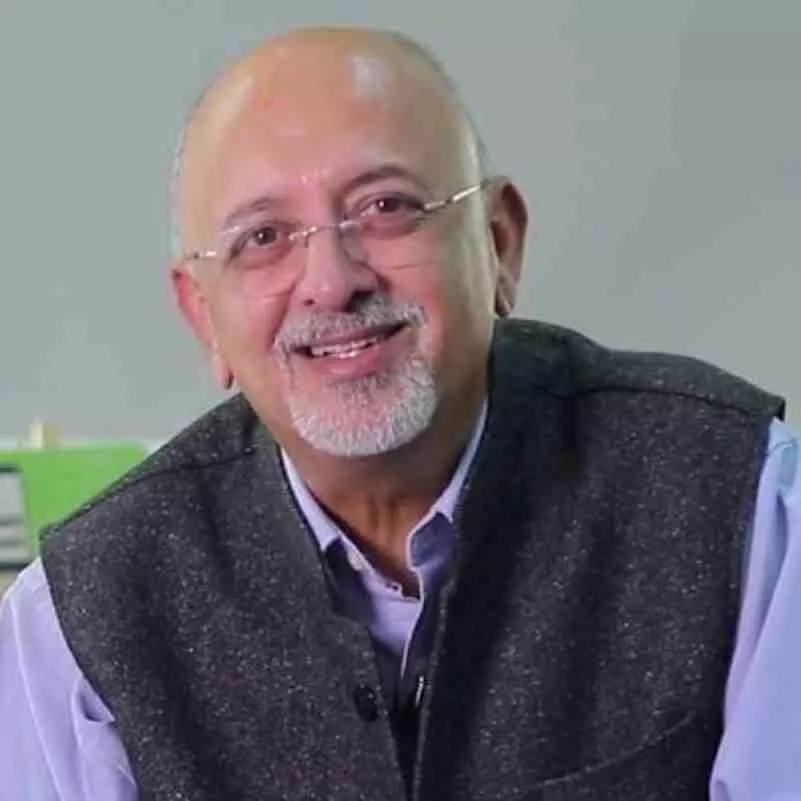
In the book The Inspired Leader, author Anil Sachdev writes about using your strengths to serve others and find purpose.
The Gist
The Importance of Relationships: Human connections are vital for personal and professional growth, shaping our identities and experiences.
- We thrive through collaboration and support from others.
- Our interactions with virtuous leaders inspire us to take meaningful actions.
The language that we use to describe both high and low points can either empower us or trap us. Those of us who share credit for success with parents, teachers, friends, colleagues, supervisors and mentors build the capacity to source and spread well-being. Those who hold others responsible for their low points use the language of victims and get trapped in their own limiting stories that prevent them from overcoming the challenges in their lives.
The human brain naturally focuses on what is missing in our lives, often dwelling on problems and gaps. Instead of appreciating what we have, we tend to regret the low points we have experienced. However, when we consciously focus on the moments at our ‘happiest best’, we begin to uncover the ‘gifts’ within us. These are the sources of our best work, and by leveraging them, we can consistently make a positive impact.
It may be argued that it is not wise to ignore areas of development and opportunities for improvement, as they may hinder our ability to meet expectations in a role we are required to perform. Even this becomes possible by asking, ‘How may I leverage my strengths to become better at an aspect that is important for me?’ As an example, if my role requires me to network extensively with people and I am an introvert who is shy of such work, I may ask, ‘How may I leverage my strength of empathy and compassion to build trusting partnerships with some people and take their help to build networks?’
We have been gifted with the capacity to learn. As children, we learn effortlessly. We use our senses, perceive the world around us and use our curiosity to explore. We experience emotions, build relationships, understand cause and effect, generate innovative ideas, make choices and learn to plan and implement ideas that give us desired outcomes.
As we get older, we form biases, develop fears that block our creativity, get burdened with expectations and experience stress that prevents us from being at our best. We experience negative emotions, challenges in relationships, difficulties in making decisions, failures and lost opportunities and develop guilt and regret.
However, inspired leaders have a practice of conscious learning that enables them to keep growing and developing even as they accept new roles and higher responsibilities and transition through the distinct stages of their lives.
We humans have been bestowed with the gift of our intellect that gives us the capacity to think. This powerful feature is not present in other living beings, and it enables us to make conscious choices in improving our lives as well as making the world a better place. From early childhood, we begin to make sense of our experiences and tart appreciating what we need to do to get our needs met.
The baby cries when she feels hungry, and when the mother responds by feeding her, she learns to repeat the same in the future. As we become older, we begin to understand cause-and-effect relationships. We recall what has happened earlier and use memory to interpret new situations. As we learn languages, they help us think and form questions that give us new awareness and understanding. We develop analytical skills to grasp complexity, define problems and identify the causes of these problems. We tap into our creativity to find solutions and learn to make important decisions. As we study the impact of our choices, we become wiser and learn about our own mental models, biases and assumptions that are contributing to our thought processes. This develops our critical thinking skills, and we continue to improve and grow in the process.
The capacity to relate to people cannot be overemphasized. We cannot do anything in this world without the support of others. We, humans, are social animals. We need to interact with others and build relationships. We need each other and build an identity when we belong to a community. It all starts in the family and then extends to the relationships between children and parents, as well as siblings. As we get older, we form friendships in schools, the local community and the extended family. Later in life, as we begin to work, organizations become the primary source of relationships, as most of our waking hours are invested in building our careers. We gain meaning by being part of communities, where we serve the well-being of others, engage in sports, pursue spiritual quests, and indulge in hobbies such as music, cinema, trekking, fitness and dance.
No matter how powerful one’s vision is and how sound one’s thinking is, unless we take responsibility to act, it remains only an intention. We need to allocate time, resources and energy to every choice we make. It then becomes a decision. At any point in life, we are drawn to many things, experiences and people. We cannot do everything our minds want. We must prioritize, make informed choices and take full responsibility for our actions. As children, we watch what our parents do, not just what they say. As adults, we are inspired by the actions of virtuous leaders and become fellow travellers on the path they take. We are moved more by their deeds than by their words.
At some point in our lives, we ask ourselves the question, ‘Why was I born?’ Some of us answer this in simple and practical ways, saying, ‘I was born to get a good education, get married, raise a family, do my duties and finally get ready to leave this world.’ Some of us are not satisfied with these simple answers. We continue searching for the true reason for our birth.
Some of us feel that their purpose is to be successful — earn a lot of money, become famous and wield power and influence. Others are not satisfied with this so-called success and say that they want to discover the path to true happiness. They say money, name and power are the only means for short-term pleasure. They are searching for long-term, lifelong happiness.
When the School of Inspired Leadership (SOIL) Institute of Management started operations, we invited the great spiritual leader and global head of Chinmaya Mission, Swami Tejomayananda, to address the students. When he asked students to talk about their goals, many students said they wanted to be successful. When Swamiji asked them to describe success, they talked about money, position and fame. When he asked them to reflect on why these aspects were important, they all shared that what mattered most was to lead a life full of lasting happiness.
Swamiji used a quote from an ancient Chinese philosopher to shift the students’ focus from short-term success to lasting happiness: ‘If you want to be happy for an hour, take a nap; if you want happiness for a day, go fishing; if you want happiness for a month, get married; if you want happiness for a year, inherit a fortune; and if you want lifelong happiness, discover ways to make others happy!’ People who discover meaningful ways to connect what they do to serve others and spread happiness find the key to their own well-being and happiness.
Buy the book here.
Excerpted with permission from Penguin Random House India.
Core.
Core.


