



 Newsletter
 Search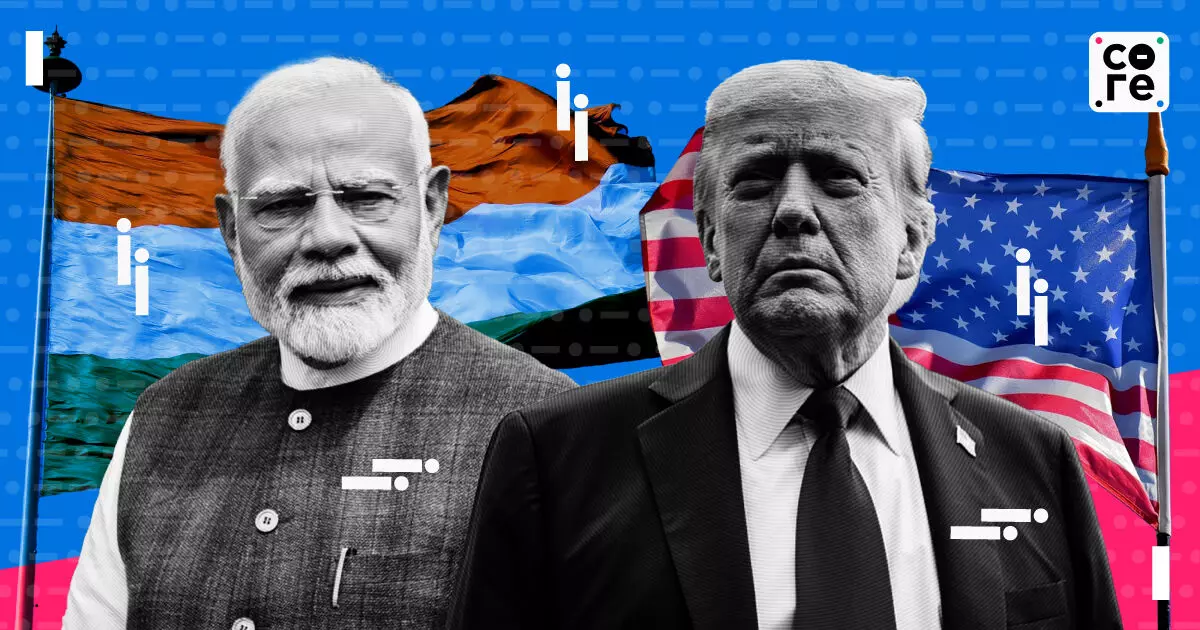
The Great Indian Trade Train: India Needs Its Own ‘Table Setter’
- The Take
- Published on 12 Jan 2026 1:49 PM IST
India’s cautious trade style contrasts Washington’s speed, raising questions whether reforms, empowered negotiators and faster decisions can drive 1991-style pivot.
For a country boasting amongst the world’s largest railway networks — one that, contrary to stereotype, largely runs on time — the response to the US Commerce Secretary Howard Lutnick’s recent jibe was curiously off-track.
When Lutnick said that India had "missed the train" on a tariff deal, the natural retort could have been simple: So what? There are always more trains to catch.
Or perhaps: Our track record in running actual passenger trains is considerably better than yours.
That would have hit home. After all, the United States has spent decades struggling to build even a half-decent passenger rail network.
Instead, the official and unofficial commentary in New Delhi dissolved into a painstaking — and utterly pointless — dissection of Lutnick’s claims, complete with even more meandering forensic analysis of timelines.
In doing so, India’s chattering classes missed the forest for the trees.
Diplomacy Meets Reality
The fundamental point is that Prime Minister Narendra Modi is not a businessman like Gautam Adani, nor is he Dhirubhai Ambani.
For that matter, he is not Donald Trump.
While the Prime Minister hails from the mercantile state of Gujarat and may possess a certain mercantilist instinct — honed during his days as Chief Minister — he is not a negotiator in the mould of the 47th President.
And for that, we can perhaps give thanks.
Trump is a real estate developer cum beauty-pageant promoter turned President.
He brings a distinct set of skills and a worldview that the rest of the world is now rediscovering, often to its horror, on a daily basis.
Modi, by contrast, is a career politician used to dealing with other career politicians. For good or for bad.
Could he have responded in "three Fridays," as Lutnick suggested was expected of countries like Thailand and Vietnam?
Possibly, but likely not.
Expecting India’s vast, multi-layered political process to crank up and deliver a flat-tariff agreement in a matter of weeks is to ask for the near-impossible.
And some quick background here: The India-US tariff deal was, in Lutnick's words, "all set up."
All that remained was for Prime Minister Modi to make the "closer" call to President Trump, Lutnick said in a podcast last week.
But the call never came. Lutnick noted that the Indian side seemed "uncomfortable" with the transactional nature of the demand.
While New Delhi deliberated, the "train" left the station.
By the time India called back three weeks later, the US had already signed deals with Southeast Asian neighbors — at higher rates — and informed India that the "first stair" price was no longer on the table.
Stuck In Neutral?
India has moved at a glacial pace on economic policy for decades.
On trade, by all accounts, matters have been slower, if that were even possible.
Global trade negotiators I have spoken to have often called the Indian side "difficult" (they usually reserve "tough" for the Chinese).
We should not expect overnight miracles now.
It is also worth remembering that until the Trumpian tariff tidal wave began hitting our shores, India had been raising its own tariffs for the better part of a decade, reversing a two-decade trend of liberalisation.
We were becoming more protectionist, not less.
Only recently has the government decided to reverse course, with a spate of policy moves ranging from tax cuts to easing the regulatory burden on manufacturing.
But expecting deals at the snap of the fingers is asking for too much. Neither the domestic industry nor the farm lobby — a group the government worries about far more than Lutnick’s deadlines — would allow it.
Nevertheless, India’s trade negotiations have been on a weak footing for over a year and that is how long this has almost been.
Something has got badly misaligned.
And not all of it is linked to India’s refusal to accept Trump’s insistence that he mediated a peace deal between Pakistan and India.
India Needs Its Lutnick
India’s current trade leadership struggles to match a sharp, lifelong investment banker like Lutnick, whose previous act was running the $16 billion Cantor Fitzgerald.
Would a Mumbai-based banker like Uday Kotak have been a better match for the staircase model that Lutnick said Trump had been following while making deals with other countries?
Possibly. But India rarely sees such private-sector talent move into high government office. Even if they did, there is no guarantee they would survive the rough-and-tumble of Delhi’s bureaucratic labyrinth.
The silver lining is that India continues to degrease its regulatory pipes.
One hopes the Union Budget 2026 to be announced mostly on February 1 will see more dramatic announcements along the lines of the last few months, including further tariff reductions.
These moves should be made not because Washington is demanding them, but because, as we have discussed on several occasions of late; India’s own growth trajectory requires them.
In the meantime, New Delhi must find sharper, more empowered negotiators — its own counterparts to Howard Lutnick.
We have the talent, but rather than using them as faceless advisors in industry-ministry meetings, it is time to bring them to the fore.
Lutnick boasted that he "sets the table" for Trump.
India needs its own table setters. If 2026 is indeed to be a radical economic pivot a la 1991, it is time to experiment with new players on the field.
Core.
Core.


