



 Newsletter
 Search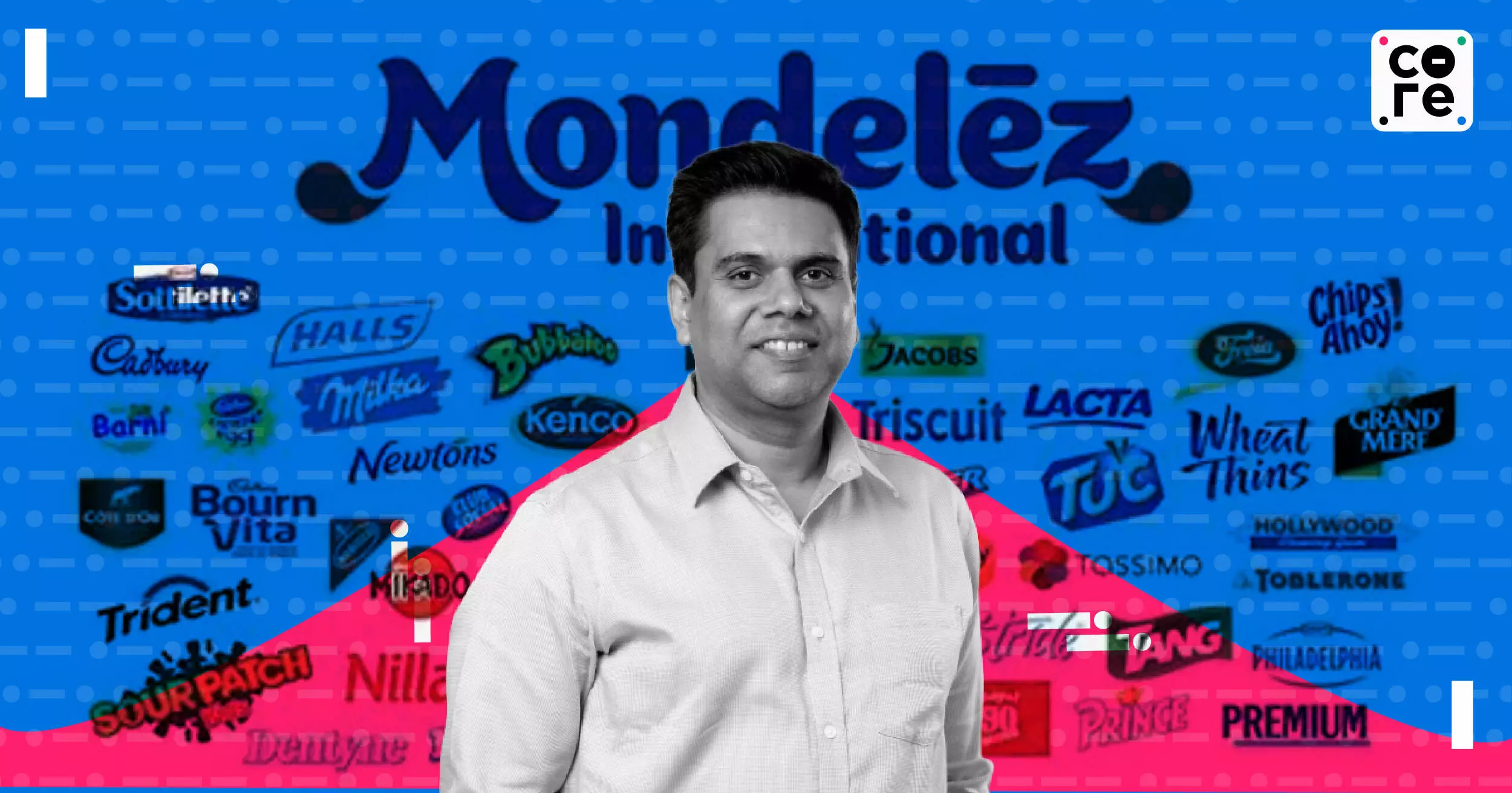
Consumer Insights Driving Mondelez India’s Playbook Across Chocolates, Biscuits and Quick Commerce
In this week’s special edition, Govindraj Ethiraj speaks with Nitin Saini, CMO at Mondelez International, on how a shift in consumer behaviour is recalibrating innovation, pricing and distribution across chocolates and biscuits.
NOTE: This transcript contains the host's monologue and includes interview transcripts by a machine. Human eyes have gone through the script but there might still be errors in some of the text, so please refer to the audio in case you need to clarify any part. If you want to get in touch regarding any feedback, you can drop us a message on feedback@thecore.in.
Nitin, thank you so much for joining me on the Core Report Special Edition. So, Mondelēz is a chocolate company, but it used to be Cadbury once upon a time, at least as I know it as a consumer. So, before I dive into what Mondelēz is, what it does and how it's split into many brands, some of which we know and some of which we don't because they're all global, tell us about what's your favourite chocolate.
Firstly, thanks Govind for having me here. My favourite chocolate is dairy milk fruit and nut. It's been like that forever now.
And that's really the Cadbury days going back to your childhood?
Going back to yes, actually even before I joined Cadbury, which was way back in 2003, even before that, you know, I used to really like fruit and nuts. I was very happy when I got the offer to join the company.
And you're a chocolate lifer, you've been with this company since you finished your B.School.
That is true. So, you know, I've been with this company ever since I joined it.
So, I'm sure you didn't take it because you used to eat Cadbury chocolates when you were a kid. So, what was attractive about working for this company versus others?
I was wanting to join a marketing, marketing function and organisation. And, you know, Cadbury is legendary, right? When it comes to the marketing work it has done over the years and some great leaders that the company has had.
So, you know, when the offer came, like it was clear as daylight that yes, that's the place to go to. Right.
So, tell us about Cadbury and from the point it was Cadbury and it became Mondelez in India. So, what's changed? I mean, the Cadbury brand, of course, we all know, but then once it merged or became part of Mondelez, then a host of new brands came into the fold.
Some of which are in India, some which are not because this is part of the global portfolio. So, walk us through the journey in whichever way you can.
Absolutely. So, I think one of the big shifts that has happened is, you know, our entry into biscuits because when Cadbury was Cadbury, the focus was on confectionery, on chocolate, chocolate was the key category we were focussing on. But when the acquisition happened, you know, we started to look at biscuits very seriously and it's a big category in India, as you know.
And our first initiative was to introduce Oreo back in 2011, early 2011, actually. Which was immediately after the acquisition. So, that I can say is one of the big shifts that has happened.
Our focus on the biscuits category. We also launched Tang, which came through, you know, as a result of the acquisition, which is a powdered beverages brand. So, we quickly launched those two brands, Oreo and Tang.
I think biscuits has remained a really important category for us then, ever since the acquisition and that continues even today.
Right. And I am going to spend some time on Oreo. But in terms of brand portfolio in India, are these the only two brands that you have from the Mondelez universe or are there others?
You mean across categories or in biscuits?
Across categories.
So, across categories, you can say, we largely play in five categories. So, chocolate, where, you know, Cadbury is the leading mother brand, you can call. But then there is a, it's a house of brands.
So, you've got Dairy Milk, you've got Five Star, you've got Perk, you know, we launched Silk sometime again in 2011. So, it's a, it's a house of brands, you know, as far as chocolate is concerned. In biscuits, which is the second category and in our category, we are really focussing on, we've got Oreo.
We have some, what we call as Choco Bakery. So, we have got, you know, a layered cake, a brownie, which we recently launched. And then there is a brand called Biscoff, which we recently launched.
So, that's the biscuits category. Then in beverages, we have got malted food drinks, where we have Bonvita. And then we have powdered beverages, where we have got Tang.
And then finally, we also have a play in candy. So, with brands like Choclairs and Halls. So, that's a relatively a smaller business for us.
But that's also the category we play in. So, you can say, these are the sort of five categories.
But Halls is a very old brand too, isn't it? Halls? Yeah.
Yes.
I mean, that's the brand, I mean, I remember from college, people used to use after smoking a cigarette, because they didn't want to be caught.
Correct. It's a refreshing candy.
Refreshing candy, yeah. So, you know, so, let's come back to chocolates for a second. And I'll come to biscuits too.
So, what is, what's the sort of composition of the market today, as you see it? And also, what's been changing, let's say, in the last five to ten years?
So, chocolates, you know, we are the market leaders. So, we have, you know, almost 65 share of the market. And the category has really evolved, Govind, over the last, you know, if you can take, if I can take us a little back, even, you know, longer, over the last three to four decades, the category has really evolved, you know, and I can touch upon some of the key sort of turning points in the evolution of the category.
And what we are seeing in the last five, ten years, particularly, is, again, the category continues to grow quite well. And, you know, there is opportunity to drive both penetration of the category, so you go deeper, but then also premiumization, because people are looking for more discerning experiences. And if you look at many CPG categories in India, this becomes quite an attractive category, therefore, because, you know, you've got opportunities on both fronts.
Many of the categories, you can argue to say, they are already saturated, well-penetrated. And there, the opportunity is more to drive, you know, premiumization or more frequency of consumption. But in case of chocolate, we have both those opportunities.
And then it's like, you know, three to four decades sort of evolution journey, you know, that we have seen.
So, in chocolates, I mean, so let's say if you were to start with five star, which I'm assuming is in the non-premium segment, and then the transition to five, is it sort of gradual and incremental in the last, let's say, 20, 25 years? Or was there some kind of jump? Because suddenly, maybe in the last few years, you've seen new brands come in, let's say, artisanal brands, chains, which are, you know, sort of selling chocolates, including at airports.
So, was there a sort of sudden turn at some point, and then it shot off, or was it all incremental?
You know, if I take us back to, let's say, the early 1980s, you know, then chocolate was seen as something for kids, something which was maybe more appealing to the more affluent audience in metros. You know, from then to now, it has kind of totally changed, right? And, you know, there have been many points in the journey.
And we as market leaders have played a key role in driving that category building, you know, building relevance for the category. And I was talking about early 1980s, it was, as I was saying, for kids, something that parents will bring for kids.
As a reward sometimes for something.
Yeah, I mean, we used to have this campaign, you know, which would talk about, you know, something that parents bring home for their kids. And if you see the journey in the 80s and the 90s, was a lot about building relevance with a wider set of audience. So, you know, we had campaigns like Khaane walo ko khaane ka bahana chahiye, or, you know, the real taste of life, asli swa zindagi ka, you know.
So, those campaigns, what they did was, they built relevance for chocolate as a category with a wider set of audience. So, with the real taste of life campaign, what it said was that chocolate is not just for the kid, but it's for the kid in you. And the Khaane walo ko khaane ka bahana chahiye was almost sort of appealing to a wider set of audience, going beyond the metros and, you know, the next set of town classes.
So, that was one big moment, I would say, in making chocolates more relevant. The other one was beginning of 2000s and a journey where we continue to be on, is positioning chocolate or Cadbury as modern meetha through the kuch meetha ho jaye campaign. You know, again, the objective was that chocolate, yes, it had become relevant with a wider set of audience, but still it was being consumed more in special occasions.
So, how can you make chocolate relevant in everyday occasions? And, you know, we do know that, you know, meetha is relevant, right, in everyday occasions. And really the idea was to position chocolate and dairy milk as the modern meetha.
And there are several campaigns then that, you know, can fall under that broader umbrella, whether it is, when somebody does well in exams, there's a campaign called Pappu Paas Ho Gaya or Shubharam, whenever you start something new, you know, start with meetha. So, a lot of campaigns, and we continue to be on that journey even today. And finally, I would say, is how we have also evolved the portfolio.
You know, we started with dairy milk, and we had five star jams and perg, but even if you look at the last 15 years, there are several new brands or variety under brand that we have introduced. So, you got a brand called Silk, which we introduced, you know, in 2010, again, which is now the second largest chocolate brand in the category. It's a premium chocolate brand, you know, it's a gold standard of milk chocolate experience, the way we call it.
Then we have…
How did you come up with the name Silk and why?
So, there was, you know, work done at that point, and it was closely linked to the eat experience, you know, it is richer, smoother, softer. And people said that how it distinguishes itself is on these three parameters. And, you know, that's where Silk has come from.
Smooth as Silk.
Smooth as Silk, exactly. And, you know, it has done really well since then. And we have launched a lot of things underneath Silk.
So, we started with plain Silk and a fruit and nut. But today, if you see, a lot of variety under Silk is very, does very well with the Gen Z and the millennial audience. So, Silk was one such example.
Then we also have Boneville, which is a dark chocolate brand, which also got introduced towards the back half of 2000, so 2008. Then we launched it and again, it's doing quite well. So, the third part of the story is how we evolved the portfolio.
And by the way, this also includes making sure you have chocolate available at the right price points. So, for example, 10 is a pretty important price point when it comes to driving penetration. I hope that gives a bit of a flavour.
Yeah, it does. So, if I were to ask you, let's say, and you've defined the sort of campaign and the transitions in the campaigns and the messaging from the brand to consumers and audiences. So, what's been the definitive or the single kind of focus in the last five years or so?
If I were to maybe take COVID and onwards, because a lot of consumer tastes have shifted during and after COVID.
So, a lot of it still remains the same. So, I think we have clarity around what our brand should stand for. So, then continuing to invest behind our brands, continue to make sure we are expanding the distribution footprint of our brands.
I think one specific focus area is premiumization, where there is a lot of opportunity with our existing brands, which are Silk and Bonewell. So, we have launched something called Silk Brownie. We launched something called Studio, which is a premium gifting option for chocolate.
We have launched new flavours under Bonewell, which is, you know, doing really well. There is a trend to have more dark chocolate. So, the premium side of things is what we are, you know, specifically focussing on.
But otherwise, you know, the core of our strategy, which is to continue to build strong brands, invest behind those brands, drive distribution of those brands. I think that remains the same.
And also, along the way, you've sort of tried to address the Indian sweets audience, I'm assuming. Because when you say, I mean, it has to be Mithai or Mithi or whatever, you are addressing all of sweets, not just other chocolates.
So, that is how we look at, from a growth standpoint, that if we position chocolate as modern Mitha, that is going to get into the consideration set of more people, make it relevant for more people. And that can be done using chocolate as a product itself. You don't need to be, you know, look like a Mithai for that.
I think you can do that with your existing form. Although we do look at any innovation that is possible in that space. So, this Diwali, we had two new offerings under celebration, which is our gifting brand.
And one had a fusion of chocolate and a traditional Indian flavour, you know, like Rabri, that kind of a flavour box. And then another innovation we did, which was to have chocolate in the shape of the Diwali icons. So, they look like a Diya and an Anar.
So, I mean, those innovations we'll do from time to time. But really at the heart of it is to see chocolate in its purest form as an alternative to Mitha.
So, gifting is a form of distribution, right? Because that's, I mean, I've received, let's say, Cadbury or boxes with different kinds of things around festival times. So, is that, if distribution and therefore one aspect being gifting is a way to growth, what are the other ones?
And also, let me supplement that. Is that sort of Mondelez's way of staying or relevant to growing against competition?
So, I think growing the category is what we really focus on as leaders of the category. And with the per capita consumption of chocolate, which is, you know, relatively lower than other countries, really the big opportunity is to grow the category. And as I was saying earlier, we have a very clear kind of strategy on how do we do that.
So, penetration is one vehicle. And that is where, you know, some of our mainstream brands come into play. Dairy milk, for example, plays a very important role.
So, making sure that, you know, we are offering it, making it as accessible as possible, both from a price point standpoint as well as from a distribution standpoint. So, that plays an important role. Then premiumization, as I already talked about, I think our overall portfolio of brands.
So, we introduced something called Crispello sometime back, which is a more crispier chocolate. Because you also realise that, you know, people have different needs sometimes when it comes to eating experience. So, there are people who are wanting to have a lighter chocolate.
That is where Crispello comes in. So, the portfolio becomes, you know, quite important as well. And then you touch upon gifting, which is quite interesting.
Because what we have seen is that as the category develops, you know, the chocolate gifting also becomes a bigger part of the overall, you know, the market. And that is again one area of focus. So, these are all the different ways in which you will try and drive the category.
And do you have a number on how many places in India now you are available in terms of retail outlets or SKUs and so on? We can give… Okay, you don't have that.
Okay, cool. So, tell me when, you know, again, I am referring to the last few years. We have seen, let's say, all kinds of new chocolate initiatives.
Startups, maybe other brands, global brands, all come in. What has changed in the consumer taste? I mean, I was asking you so far from the company side.
But what has been changing on the consumer side? And I think you did a survey last year as well, which looked at snacking preferences.
I think again, I would say a lot remains the same. And a few things change, right? Like as is true with many things.
And what we see is that there is a need for more discerning, more sophisticated experiences, which is where the premiumization trend comes in. Right? As the disposable incomes go higher, as people are more aware of the variety that is, you know, around the globe.
So, premiumization is one trend, which I think is there in many categories today. I am sure like you speak to people, you hear about premiumization as an important trend. The other is people looking for more variety, you know, sometimes under, with the same brand.
And I will give you one example. So, we were, in our consumer work, what came out was that people are looking for a brownie texture. You know, a more brownie textured experience.
And then we introduced silk brownies. So, one example of listening to the consumers and then, you know, putting something out there. But that is another trend that is coming in.
Specifically, in the chocolate category, I will say dark chocolate also is doing quite well. So, there is also a shift towards. I think what people look out of the chocolate category is taste first.
You know, I think it is for their, you know, moments of taste. And dark chocolate is doing that quite well. Because it is higher on cocoa.
But equally, you know, if you look at even bone well, you know, the taste is great. So, that is how people are looking at dark chocolate.
And when, do cocoa prices rise because chocolate companies are buying more of it? Or is it because there are other demand and supply factors?
I think there is like a multitude of factors. So, there is definitely not one factor that goes into it. I think everything on both the supply side and the demand side that leads, results in the cocoa prices.
Going up, which are pretty high right now. Okay, so let me come to biscuits, which is the other interesting category. So, this is a category that didn't exist in the form that you have launched in India.
But has become successful. So, now, Oreo is again a multifaceted brand portfolio. As I see it at least or how it appears.
So, tell us about that journey.
It has been an amazing journey. I will say, I think we are, our focus was to premiumize the category. And with Oreo first, which did that in the cream segment.
And now, we are doing it with Biscoff in the cookie segment. But I think with Oreo, the journey has been great. And we have seen great success in being able to premiumize that particular segment.
And I think, whether it is in terms of business or penetration, the journey has been very, very solid the last 15 years.
Can you walk us through the different types of Oreos that are there today? And what sub-segments they are addressing?
So, in India, we are very much focused on the core. So, you have got, you know, what we call as the classic. So, the black and white cookie.
So, the Oreo cookie with vanilla cream. I think that is really the mainstay. And most of our business is there.
Then you have got a couple of flavour varieties. You have got chocolate and you have got strawberry. And this is pretty much most of our portfolio today.
And what sort of drives the growth of this? Is it children, adults, combination of both?
So, the way we define it is that Oreo is for families. And so, it is for that parent-kid bonding moment. You know, the way we would say it is for sparking that moment of connection between the parent and the kid.
So, it is for both. Both the parent and the kid. And, you know, we have actually seen that happen in the journey.
And Biscoff is again a very well-known brand. How is that done in India so far?
We just launched it. So, we introduced it in November first week. So, it has just been, what, two and a half months.
But the response has been fantastic, you know, to the launch. There has been a lot of buzz on social media about the launch. It has been a high decibel launch.
So, we have also, you know, put together a suite of communication assets to support the launch. And the initial response from both consumers and customers has been great. I mean, they are loving the product.
And now, between chocolates and biscuits and let's say Biscoff, which is, I guess, in the baked category or the baking category broadly. It will be in the biscuits category. Okay, it is in the biscuits category.
How would you say consumers are consuming between these three categories, even as you try and differentiate what you are offering?
I mean, look at these categories separately. I mean, of course, there is this overall snacking universe, right? Everybody is looking to have a snack.
So, there will be some interplay. But other than that, I think there are very clear kind of demarcations to say, okay, chocolate plays more strongly in these moments, in these occasions, vis-à-vis a biscuit. So, there are clear demarcations.
But yet, at some level, they are all snacks, right? So, we kind of look at within the category and how we are doing.
And one of the things I think you said last year or did last year as part of your study was that thanks to quick commerce, people are snacking more. Just to understand, I mean, this, I guess, links to distribution. How is that changed or changing the way your products are being consumed?
The quick commerce is definitely doing well for us. And I think it does fuel snacking in that sense. I think provides more variety to people, you know, more accessibility.
And snacking sometimes can be impulsive. So, it also taps into that impulsive behaviour. As you could order something when you are in the mood to have something and then it can come to you in quick time.
So, those are the different insights I'll say on how quick commerce is driving snacking and snacking consumption for our categories as well. But in the end, going for us, all channels are important. While the growth might be coming from there, but traditional trade and, you know, the modern trade, they continue to remain as very important channels for us.
Right. You talked about media assets in the context of Biscoff. But I'm assuming those, you are at any point of time working on all the categories that you have presented.
So, tell us about how all of this works in the context of how people are consuming media itself. I mean, the digitalisation, the transition or the steady transition away from television and, of course, you know, out of home and so on. So, how is your or rather what's your play there?
Yeah. So, I mean, it is become fragmented and people are consuming media in a fragmented way. And what I mean by that is it's no longer one medium of communication, but multiple mediums, multiple screens in a house.
So, you have to look at everything in totality to say what makes sense for your brand on how best to then communicate to people. I think in the end, if you step back, what we want to do is to communicate with people in a meaningful way. And then you have to see, OK, where are they spending their time on?
So, we look at television and digital and then out of home as well and print and you look at everything together and say, this is how you should then allocate your money into each of these different mediums.
And is your the way you spend there and I'll go a little deeper into that. But the way you spend there, is it the same for all these categories or is there some variation? Let's say more on more television for chocolate and less for biscuits and so on.
It would be different. I think less by category and more by brand. So, let's say if a brand is, it depends on what the target audience of the brand is.
If that is more niche, more urban, they'll automatically mean, you know, spending money in a certain way. You can be more targeted on digital for sure. But when you want to reach a wider audience, you also want to penetrate more deeper is when, you know, you'll bring the whole suite of mediums with you.
And for us, both are important. Again, it will depend on the brand. So, dairy milk, for example, is a more sort of mainstream chocolate brand.
And mature. I mean, you're also targeting older audiences.
And we want to drive category penetration as well. So, you've got to go deeper there. Or something like a bone well, which is, you know, sort of more kind of narrower.
When it comes to the target audience, you can choose to have a narrower footprint.
So, what are the challenges for you as a marketer? As you, you know, on your sort of drawing board, draw out, let's say, 2026 strategy. While I take your point that a lot of values of these brands are consistent, which is good because not all brands can be so consistent over such a long period of time.
But at the same time, the marketing challenges, I'm assuming, are shifting constantly because of the way media is being consumed.
Absolutely. So, you know, if you look at brand building, you know, part of the brand building is defining what your brand stands for. You know, having a clear story to tell.
I think a lot of that has remained the same, which I think is good. You know, for our brands, because you've got to be consistent. But the way you reach to consumers, you know, that has definitely become more challenging now with all the fragmentation we just spoke of.
So, you've got to not just have a great 30 second video asset for television. You've got to have, you know, a great plan for digital, great assets for digital. You need to know how to do things like influencer marketing, how to do notifications, how to show up on e-commerce, you know, all of that.
And each of them have to be world class. So, this is a challenge that maybe the marketeers 20 years back did not have. And a lot of focus then between them and the advertising agency was how do you get a great script and how do you crack a great video?
But now you have to look at everything in totality.
And when you sort of personally monitor all of this, what are the signals that you look for in terms of whether a brand is being successful or a certain campaign is being successful? Or something that you recently launched? Let's say some variation.
You talked about Bonedale and so on.
I think you have both output metric and input metric to look at whether the innovation has been successful. So, we launched something called Cadbury Dairy Milk, milk knees in September. And I'm just using that as an example.
So, it's a chocolate with milk centre. And, you know, you would look at how is it doing versus our initial assumptions, right? On volume, on revenue, market share and household penetration.
So, that's one way to look at it. And then you'll also look at what sort of love we are getting from consumers. So, there is a number side to it.
And there's a software aspect to it, which again, you know, we encourage our marketeers to do and to go and meet people and understand on how something is working with consumers.
And, you know, you spoke about the rubbery integration, if I don't know if that's the right word, which means that you also got an R&D department. I mean, I'm sure you do have an R&D department. It's a large one, I'm sure.
How do you sort of interact? And what is the input that you give them? And what is the input that they give you?
And what are they sort of cooking right now?
So, we work very seamlessly with them and they play a very important role, of course, as you can imagine. And I mean, they also keep looking at what's happening in the, you know, in the consumer world, what flavours are being preferred, any trends around that. And of course, marketing by definition is consumer centric.
So, the starting point of any innovation is, let's take a look at what's happening in the world. And then let's try and bring it to consumers. And of course, we do our due diligence in between.
So, we work kind of quite closely and innovation is an important focus area for us. So, there is always something happening in the kitchen.
So, the chocolate is a sort of, at least perceptually, a Western product. The integration that you talked about, I'm just using the same one as an example, which is, let's say, an Indian sweet with it, is the sort of an attempt to Indianise it in a manner of speaking. Does that conceptually work?
Or is there a lot of opportunity, I mean, potential in that? Or is it a sort of limited potential thing?
I think we are still learning there. I think it worked well for us in Diwali. So, it has to, we have to see it in a particular context and with what audience and then it has to have enough scale.
So, this particular thing which we did, which was, you know, a gift box with a fusion of chocolate and an Indian traditional flavour, that did quite well. So, I think it probably, the answer lies in the context and the occasion.
And in general, you feel that, as you look ahead, do you feel consumers are looking for these kind of fusion products? Or are they happy with the traditional chocolate that Mondelez Cadbury's has always been producing and distributing?
The answer is both. You know, there are people who love to have what they really like. Right?
Like, for example, I will have a dairy milk, fruit and nut. Every time I want to have a chocolate and there are enough people like that. People love their brands.
And they want a nut inside the chocolate.
So, yeah, that's a texture people are preferring. Some people, I know, I met like a lot of people who love the pure dairy milk chocolate. But then there is also a cohort that is looking for more variety.
You know, so they love their chocolate, they love their brand. But they prefer some variety from time to time and which is where, you know, flavour innovation kind of comes in.
So, which brings us to the sort of Gen Z question. I mean, how are you kind of seeing Gen Z consumption habits? How different are they from before, either in the manner of consumption or the nature of consumption?
I mean, Gen Z is the primary consumption audience. So, many of the insights and the trends that I talked about actually do come from there. And when we look at Gen Z, you know, for us, it's not one Gen Z, but, you know, there is teenagers and college goers and early jobbers.
That's the three sort of sub-segments. And we look at what each of them are preferring today. And in the end, as I was saying, I think most of our work would tie back to what the insights we are getting from Gen Z.
And these three categories that you talked about, teenagers, early jobbers, college, I mean, are they all similar in the way they are consuming right now?
I mean, some things are similar, some things are different. Like, for example, an early jobber will have more disposable income, of course. So, you can expect the premiumization trend to be greater over there.
But in lot of the cases, they are same as well.
Right. Mondelez has a very large portfolio of brands, some of which are available maybe in smaller sort of niche food shops in India, but otherwise not. So, what's the plan there and what will drive it more importantly?
So, we always look at what is it that, you know, we can bring in from the outside. I mean, it has to have a certain scale, certain sort of consumer appeal and relevance. But that option is always on the table.
Could we bring something from what's available in the Mondelez world outside?
But what's a category that looks promising to you today? Even if you don't tell me which brand, but what's a category that you see there is some sort of, let's say, bubbling opportunity?
From a category standpoint, we are pretty much kind of focused on…
Okay. So, it would be within biscuits or within chocolates? That's where our focus is.
So, what could potentially be a new area, let's say, if you want to look at, under those categories?
Again, not one answer to your question. I think all I'll say is that innovation is an important driver. So, you'll keep looking at what more can you do, what more can you do.
Just in the last four months, we had two big launches. So, Milkinis that I was talking about and then Biscoff recently. So, it is an important driver and we'll continue to look at it.
And tell me about Milkinis. What's different from other chocolate brands?
So, the eat experience is very different. So, it's got chocolate shell on the outside and it's got milk centre. So, firstly, there is visibly you can see more white.
But then even from an eat experience standpoint, from a texture standpoint, you know, it is very different and the response we have got from people has been great.
And all your chocolates, I know because this is something I think asked someone at Cadbury's many years ago, are obviously configured for Indian conditions. As in, they can go and they can be kept in whatever, middle of hot summer outside and they will not melt and so on. So, is that something that you are thinking about when you bring in new brands?
I think that is an important consideration. Although I think again depends on the brand. If the distribution is not mass, if it is more, you know, let's say modern trade and e-commerce, then you would look at even if the thermal sensitivity is not there.
Or if you could distribute it within our Vizicooler footprint, you know, we have those Vizicoolers in traditional trade stores. So, again, it will depend upon the kind of innovation, the kind of brand. If something requires a wider reach, then, you know, for sure, making sure that at the trade, it is available in a good shape is important.
Right. Last question. So, as you look ahead at 2026, what's going to change or could change from a consumer standpoint?
You know, so, we are seeing a lot of shifts in distribution. So, we have talked about media, we have talked about distribution, we have talked about quick commerce. But are you sensing that anything could change in the way consumers will call for or consume or buy or would it be roughly the same as let's say 2025?
I think it will roughly be the same. Probably might accelerate in some cases, but otherwise the core of what we just discussed. I think that stays the same in 2026.
Right. And are you looking to add more chocolates to your personal portfolio or would you consume the same that you have been always?
I think in my role, in any way, I have to keep consuming a lot even for tasting. So, that is already there as part of my portfolio.
So, every day, do you have a…
You asked me my favourite one. So, that's fruit and nut.
But otherwise, I have a lot of other chocolate in our portfolio that I really like. So, does your sort of job profile involve every day spending half an hour eating other chocolates or?
It's not every day, but yes, once in a while I do.
You have to do it. Part of the job. Yes. It was great talking to you, Nitin. Thank you so much for joining me. Thanks for having me.
Thank you.
Core.
Core.


