

The Air India Crash Triggered Scrutiny, But Failed To Usher In Structural Reform
The Air India crash triggered scrutiny and promises of reform, but as the year ends, India’s aviation system looks largely unchanged.
The Gist
The Air India crash on June 12, 2025, reignited concerns about India's aviation safety regulations, yet experts note minimal changes followed the incident.
- The DGCA activated crisis protocols and conducted multiple audits after the crash.
- Despite heightened scrutiny, no new safety regulations were implemented, leaving the system largely unchanged.
- Airlines increased focus on mental well-being and safety culture, but critics argue that deeper systemic issues remain unaddressed.
For days after the Air India crash on June 12, 2025, the tragedy dominated headlines with political statements and regulatory briefings.
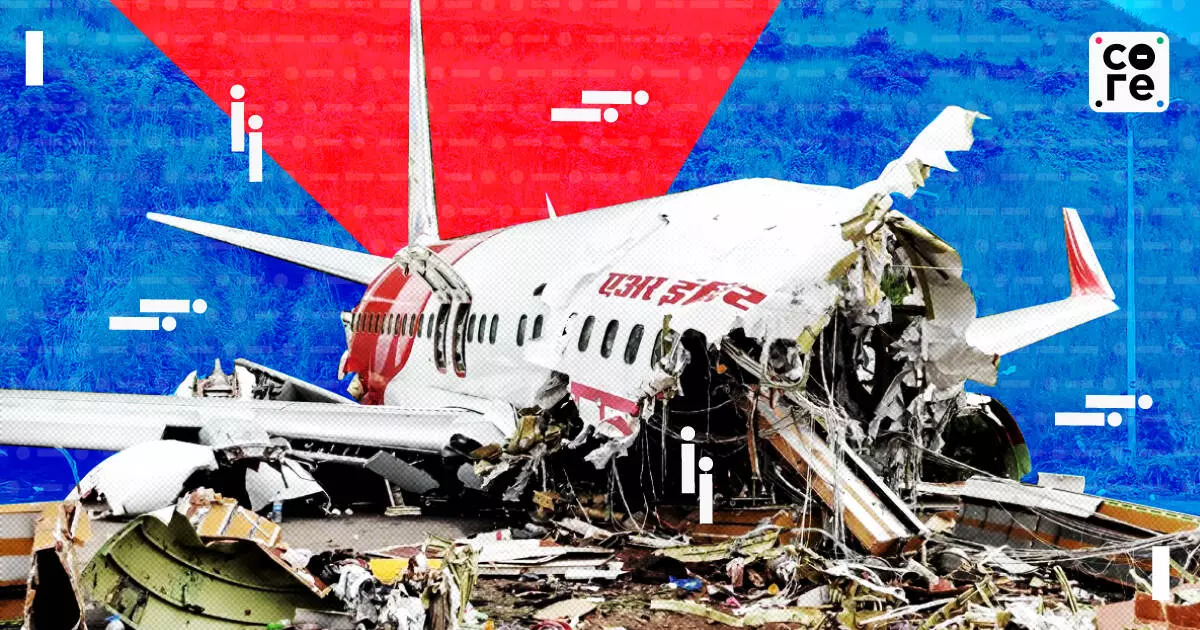
Images of wreckage, emergency responders, and grieving families put the spotlight back on India’s aviation regulation and raised questions about safety oversight, regulatory vigilance, and whether India’s aviation system had grown faster than its ability to govern itself.
As the year draws to a close, the shock has faded. Flights are full again, schedules are stretched, and airlines are back to competing fiercely on fares and market share. However, the crash triggered a series of responses — some visible, some procedural, some still contested — that offer a snapshot of how India reacts to aviation crises.
While there was much said, experts believe that the crash did not lead to any meaningful regulatory change in the industry.
“There were no immediate safety protocols announced, neither by the regulator nor by the airline. Nothing has changed after the crash. We are still exactly where we were before. That is the most disturbing part. Nothing has moved, and there appears to be no urgency,” Mark Martin, aviation expert, told The Core.
The Immediate Regulatory Response
Within hours of the accident, the aviation regulator, the Directorate General of Civil Aviation (DGCA) took charge. Standard crisis protocols were activated: a formal investigation was ordered, safety inspectors were dispatched, and the airline was asked to submit detailed documentation covering maintenance records, crew rostering, and operational procedures. A fleet-wide review of aircraft of the same type involved in the crash was also initiated.
In the days that followed, the regulator issued a checklist of compliance requirements and ordered additional inspections. Multiple spot audits were carried out, including surprise checks at major airports. Airlines were asked to submit compliance reports within compressed timelines.
But for critics, the speed of the response masked a deeper concern.
“The regulator’s response is knee-jerk. The checklist issued a day after the crash could just as well have been issued a day before,” Aurobindo Handa, former investigator with the Aircraft Accident Investigation Bureau (AAIB), told The Core.
“If the system is so experienced and so knowledgeable, why was it not done earlier? What is the value of that experience if it cannot prevent or even mitigate an accident?”
The initial findings from the investigation were limited in scope and deliberately factual. They focused on establishing the sequence of events, confirming aircraft identity and configuration, securing flight data and cockpit voice recorders, and documenting weather conditions, crew details, maintenance history, and air traffic control communications at a basic level.
According to the preliminary report released by AAIB, both engine fuel-control switches moved from the RUN to the CUTOFF position seconds after takeoff, cutting off fuel flow and causing both engines to lose thrust. The cockpit voice recorder captured one pilot asking the other why fuel was cut, but the report did not attribute actions or identify a specific cause.
Air India’s CEO noted that the report found no mechanical or maintenance issues with the aircraft or engines, and it made no recommendations for manufacturers or operators at this preliminary stage. The initial document, submitted to authorities about 30 days after the crash, focused on factual sequencing rather than causal analysis, leaving deeper questions unanswered.
Under International Civil Aviation Organisation (ICAO) norms, a detailed final accident report can take nine to twelve months—or longer in complex cases—effectively pushing definitive conclusions well into the future.
The preliminary assessment did not assign blame, identify a definitive cause, or flag specific regulatory or organisational failures. Nor did it conclude whether the crash stemmed from technical malfunction, human factors, maintenance practices, or systemic oversight gaps.
Senior officials from the Ministry of Civil Aviation held daily review meetings with DGCA leadership, airline executives, airport operators, and air traffic control officials.
Officials familiar with these discussions said the focus was “less on assigning blame and more on exposure,” identifying where weaknesses might lie and how quickly they could be addressed.
For some observers, this approach wasn’t enough.
“The problem is that if we don’t even identify our weak areas, how do we work on them? This will eventually become the standard excuse—that we are waiting for the investigation,” Handa said.
Changes On Paper Vs On Ground
In the weeks following the crash, the DGCA issued a series of advisories and circulars aimed at tightening compliance. These covered aircraft maintenance oversight, pilot training documentation, crew fatigue management, and incident reporting timelines.
Airlines were asked to review their internal safety management systems and certify that these were being implemented not just in theory, but in daily operations. Maintenance organisations faced fresh scrutiny, with inspectors paying closer attention to outsourcing arrangements and third-party contracts.
At major airports, emergency response protocols were reassessed. Fire and rescue drills were reviewed, coordination between airport operators and local authorities was tested, and communication chains were clarified. For several weeks, safety briefings replaced expansion plans as the dominant agenda item in aviation boardrooms.
Inside airlines, focus was heightened on the mental well-being of crew members.
“They have started mental wellness support sessions, webinars, yoga classes and even daily safety posters that talk about fatigue and different kinds of tiredness—emotional, mental, and even spiritual,” an Air India pilot, who wished not to be named, told The Core.
That emphasis, the pilot clarified, was not entirely new.
“To be clear, peer support groups did exist even before the crash. They were mandated by the regulator in 2023 through a safety circular on mental well-being. That system was already in place, but it has definitely been emphasised much more after the crash,” the pilot added.
The pilot described a more considerate approach from the airline, with a greater emphasis on communication, soft skills, and employee wellbeing.
Many of these changes, however, reinforced rules that already existed but had been unevenly enforced. Others reflected early lessons from the crash investigation, highlighting gaps in monitoring, escalation, or decision-making rather than outright regulatory absence.
Even as compliance activity increased, industry executives pointed out a familiar pattern: enforcement tends to spike after accidents, only to fade once public attention shifts elsewhere.
“The lessons from the Air India crash are many, and experts have already spoken at length about them. The real question is: what next? Learning lessons is fine, but what comes after that is where we often falter,” Manish Sinha, an aviation expert, told The Core.
A System Largely Unchanged
Despite months of heightened activity, one reality stands out as the year ends: India’s aviation rulebook remains fundamentally unchanged.
No new safety regulations were notified. No binding operational limits were rewritten. The DGCA did not introduce fresh statutory norms on crew duty hours, maintenance intervals, or oversight powers beyond what already existed. Instead, most post-crash action took the form of advisories, audits, and stricter enforcement of existing provisions.
Several officials privately acknowledge that the regulator relied on powers it already had. Enhanced inspections, additional reporting requirements, and temporary checks were carried out under existing frameworks. In effect, the system intensified, but it did not evolve.
“We have seen notices from the regulator, but what happens after that? An Air India aircraft was flown with an expired certificate of airworthiness and ARC. That tells you everything about the seriousness with which safety is treated,” Martin said.
Industry executives note that airlines were asked to be more careful, not fundamentally different. Safety management systems, which were already mandatory before it. Maintenance oversight norms were reiterated, not rewritten.
“If you ask me, the entire investigation should have been made public. Air India today is in a mess. Ironically, it functioned better when it was government-run. These kinds of violations, such as untrained pilots, untrained cabin crew, deteriorating aircraft, and maintenance lapses, did not surface then,” Martin said.
Officials counter that India’s regulatory framework is globally aligned and that failures stem from execution rather than regulation. Critics argue that this distinction misses the point: a rapidly expanding aviation market operating under static institutional capacity is itself a structural risk.
Inside Air India: What Changed
While regulatory reform has been limited, the impact of the crash inside Air India has been felt more acutely at the operational level. Pilots and engineers describe a period of recalibration, particularly following the merger with Vistara, followed by clearer, more consistent messaging around safety.
“When it comes to safety, I believe things have improved significantly. I came from Vistara, where safety standards were very high. After the merger, there were moments when we were genuinely confused about certain practices, but that phase has passed. Things are much better now,” the pilot said.
One of the most visible changes has been in how aircraft technical issues are handled. In the immediate post-merger period, and around the time of the crash, aircraft were often operating with multiple Minimum Equipment List (MEL) allowances. While MELs are permitted under aviation rules, their overuse can create unease among crews.
“The airline is pushing to keep aircraft in full technical fitness, with all instruments working, so that crews do not feel unsafe operating them,” the pilot said.
Beyond hardware, pilots point to a noticeable shift in safety culture—particularly in how conservative decisions are treated by management. Air India has reinforced a non-punitive approach to safety reporting, encouraging crews to err on the side of caution.
The pilot recalled a recent incident involving brake wear. “Recently, my captain doubted brake wear. Even though it was within permissible limits by a few millimetres, he chose to log it so the brakes could be replaced before the next flight.”
Such decisions, pilots say, would earlier have been more likely to trigger questions about delays or costs. Today, while occasional pushback still exists, crews sense broader alignment with safety-first calls.
“Of course, there may still be some pushback occasionally, but overall, management has been supportive,” the pilot added.
Another subtle but telling change has been in basic discipline.
“Earlier, there was sometimes a tendency—especially among senior crew—to skip walkarounds. That mindset no longer exists. No one is taking chances now,” he said.
Whether this shift stems directly from the crash, stricter oversight, or internal messaging is difficult to disentangle. But on the flight deck and on the tarmac, pilots say the difference is visible in everyday operations.
What Should Be Done?
The probe into what led to the crash by the AAIB is still ongoing. Retired DGCA official Pushkar Raj Sabharwal, the father of pilot Sumeet Sabharwal, who was flying the aircraft, has filed a plea in the Supreme Court for an independent investigation into the crash.
The father said in his plea that the focus was predominantly on the pilots’ actions and also needed to look into other factors that led to the crash.
Meanwhile, in official statements, authorities have repeatedly said lessons were being “identified” from the crash, including the need for better data sharing, stronger risk assessment, and a more robust safety culture.
The harder question is whether those lessons have truly been absorbed.
“There is a long list of things that need to be fixed. We bring in regulations, this is not allowed, that is not allowed, but we fail to think through the repercussions. Over time, an ecosystem develops around certain wrongdoings. When you suddenly try to correct one part of it, the entire structure can collapse, like pulling out the wrong card from a house of cards,” Sinha said.
While regulations may not have changed, inspections have become more intense. Documentation standards have tightened. Airlines appear more cautious, at least for now.
“In my view, those who were responsible were always doing their jobs properly. The difference now is that even those who were earlier complacent have become more careful. I can say this confidently for pilots. Engineers, from what I’ve seen, were doing their jobs earlier as well, because ensuring the aircraft is airworthy has always been their core responsibility,” the pilot said.
However, for now, India’s aviation system stands largely where it was before the crash: more cautious, more alert, but structurally unchanged.