



 Newsletter
 Search
Why Markets Have To Reckon With Two Powerful Forces
- Podcasts
- Published on 5 Feb 2026 6:00 AM IST
There are two powerful forces driving the markets now - Artificial Intelligence and Tariff Uncertainty
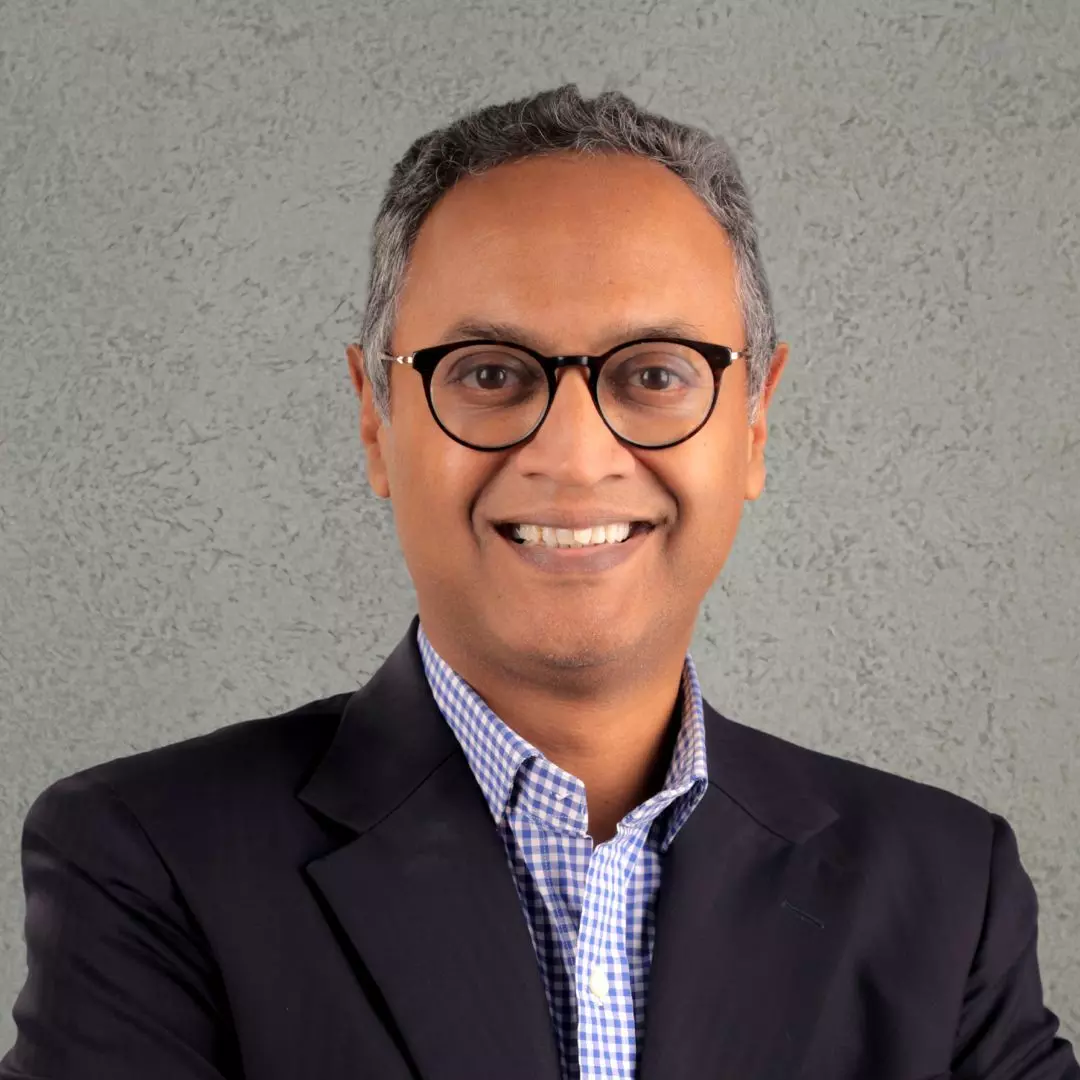
On Episode 791 of The Core Report, financial journalist Govindraj Ethiraj talks to Abhishek Bisen, Head of Fixed Income, Kotak Mahindra AMC as well as Ajay Srivastava, Founder at Global Trade Research Initiative (GTRI). We also feature testimonials from attendees at our recent exclusive roundtable discussion.
SHOW NOTES
(00:00) Stories of the Day
(00:41) Why markets have to reckon with two powerful forces
(07:11) Why are the bond markets so volatile?
(16:17) How will the India-US trade deal as we know it actually pan out?
(25:33) Walmart crosses the $1 trillion mark
(26:58) Blockchain and the DPDP Act
Register for India Finance and Innovation Forum 2026
NOTE: This transcript contains the host's monologue and includes interview transcripts by a machine. Human eyes have gone through the script but there might still be errors in some of the text, so please refer to the audio in case you need to clarify any part. If you want to get in touch regarding any feedback, you can drop us a message on feedback@thecore.in.
—
Good morning, it's Thursday, the 5th of February and this is Govindraj Ethiraj broadcasting and streaming weekdays from Mumbai, India's financial capital.
Our top stories and themes…
Why the markets have to reckon with two powerful forces and what they are?
Why the bond markets are so volatile?
How will the India-US trade deal as we know it actually pan out?
And Walmart crosses the 1 trillion mark in a shift in investor preferences.
The Forces
There are two powerful forces driving the markets now. The first is artificial intelligence which has been powering US markets for more than three years now.
Much has been discussed about the magnificent seven accounting for one third of the S&P 500 and thus having an outsized influence on the overall market performance. This of course is the case with other markets as well with even lesser AI stocks including countries like Taiwan where there is effectively one stock that's TSMC that's driving up the index. Now that in some ways was the first round.
In the current round, technologies are having a sudden and dramatic effect of appending stock prices and fortunes. Shares of Indian IT companies fell about six and a half percent on Wednesday tracking losses in global software stocks after Anthropic launched new tools heightening concerns over AI driven disruption in the IT services industry. Anthropic which is based in the US launched plugins for its cloud co-work agent to automate tasks across legal sales marketing and data analysis.
And that led to a sell off in US and European data analytics and software stocks and increasing worries about India's IT sector which is worth about $283 billion which relies on a more labour intensive model according to a sum up by Reuters. While stocks recovered on Wall Street on Wednesday, on Tuesday's session service now fell about seven percent which took its year to date losses to 28 percent. Salesforce another seven percent bringing its year that is 2026 decline to about 26 percent.
Intuit, the parent of TurboTax fell about 11 percent and is now down more than 34 percent year to date. Remember the year to date is barely a month and four days. There is of course more to come.
If a mere set of plugins can cause such a rout in global markets you can only imagine what could come next. Actually it's even tough to imagine what could come next or disruption at this scale. Whether it will happen or we will only see the threat of it for some time we don't know but the uncertainty is bad enough.
The other force is of course tariff uncertainty around the world which is keeping businesses on the tenterhooks particularly when it comes to growth and expansion. The latest uncertainty of course it's India and somewhat unusually because U.S. President Donald Trump did announce a deal with India that allows for 0 percent on exports to India and 18 percent tariff for imports into the United States which is a cause of celebration of sorts because there is a clear political signal that the two countries are back to doing business. It's also not clear how this will work and critical details are yet to come and it's not even clear how soon.
Not surprisingly and quite predictably the stock markets are already retreating though other factors are also at work. Also remember that Trump's announcement made on social media appeared to suggest all of this would be immediate from the U.S. side. So what could happen from the India side then? Anyway more on that and how it could pan out coming up.
So between the two forces of AI affecting services and tariffs affecting manufacturing companies including traditional businesses apart from all the other geopolitical concerns the markets are condemned in some ways to volatility and certainty for some time. On Wednesday Indian equity markets were somewhat flat ending a two-day rally and thanks to mostly information technology stocks which weighed the markets down at close the Nifty was up 48 points to 25,776. The Sensex closed higher by 78 points to 83,817.
The Nifty IT index was down 6% thanks to that anthropic fear. In the broader markets the Nifty mid-cap was up 0.6% the Nifty small-cap 1.2%. And gold is set for another record performance in 2026 according to a Reuters poll as analysts ramp up their forecasts with geopolitical uncertainty and robust central bank buying still the main drivers according to that poll of 30 analysts and traders which was conducted over the past three weeks and that returned a median gold forecast of $4,746 per troy ounce for 2026 which is the highest forecast according to Reuters in their polls going back to 2012 compared to $4,275 estimated in October. On Wednesday gold prices were back to about $5,100 a day after posting their best day in more than 17 years to recover from its worst two-day rout since 1983.
So essentially we're seeing the kind of volatility that you would expect in stocks and that too mostly on Wall Street in gold. To take a step back gold has hit an all-time high of $5,600 on January 29th and it fell to $4,400 an ounce on Monday. That's this week.
And now the rupee is forecast to remain in a narrow range over the next few months having clawed back only a fraction of the losses it has racked up against the dollar according to a Reuters poll this time of foreign exchange strategists. The latest poll taken after the trade deal was announced with the United States suggests that strategists expect foreign capital flows to remain sluggish. The rupee has been forecast to trade roughly around current levels at about Rs 90.19 per dollar by end April 26 and about Rs 90.63 by end July.
The poll was conducted across 27 strategists. Bank of America expects the rupee to strengthen further by the end of March after a trade agreement with the U.S. led to its sharpest gain in over seven years on Tuesday. According to an official there who spoke to Reuters, they expect the rupee to strengthen to around Rs 88.60 to Rs 89 against the U.S. dollar below the bank's previous forecast for the pair.
And oil prices are rising again. Brent crude oil futures were up 17 cents to about $67.50 after the U.S. shot down an Iranian drone and armed Iranian boats approached a U.S.-flagged vessel. Of course, all of this is retriggering fears of an escalation between the United States and Iran ahead of planned talks.
India's own imports of oil from Russia in January were down by some 12% on a daily basis from last December, according to Reuters calculations. And all of this, of course, is important and comes into view in light of Donald Trump's statement that India is stopping importing Russian oil, which, of course, is allegedly funding the Ukraine war. Kepler data quoted by Reuters says, in January, India imported about 1.2 million barrels per day of Russian crude, of which the Naira refinery accounted for 0.4 million barrels per day, IOC 0.58, BPCL 0.19, and Reliance imported no Russian crude last month.
The Bond Deal
The Indian government will use various instruments, including bond switches, to ensure record borrowings in the fiscal year starting April do not unsettle the market or push up yields, according to a senior finance ministry official who spoke to Reuters. The official said that the borrowing plan will make sure rates are competitive and the market is not disturbed. Healthy markets are equally important for us, she said, adding that uncertainty around the U.S.-India trade deal has ended, lifting investor sentiment.
With that deal in place, foreign portfolio investment sentiment will change, and the rupee has also started depreciating, she said. India's bond markets have been hit by high government borrowings, with investors expecting a record Rs 30 trillion, or that's about $330 billion, of federal and state government debt supply in the next fiscal, at a time when the central bank's rate-cutting cycle is nearing an end, according to Reuters. Earlier, Finance Minister Nirmala Sitharaman had said in her budget speech on Sunday, February 1, that the government could borrow about Rs 17.2 trillion in 2026-27, which is about 17% higher than the current fiscal's Rs 14.61 trillion.
The benchmark 10-year bond yield had jumped to a one-year high on Budget Day, but dipped a day after the announcement of the trade deal. I reached out to Abhishek Bissen, head of fixed income at Kotak Mutual Fund, and I began by asking him what was going on in the bond market and why yields had zoomed, as well as his outlook for rates.
INTERVIEW TRANSCRIPT
Abhishek Bisen: So there are multiple parts to answer this question and it's a really detailed one but I'll try to keep it short. The first and foremost was the union budget which was tabled on Sunday and the key thing which the market awaits is the gross borrowing programme. But for a normal investor or a normal person what also they should look I will just try to highlight that.
The government is focussing very very well on the fiscal consolidation which means trying to consolidate their debt and bring down their debt in terms of percentage to GDP. So which is a good augurs very well for the overall borrower's perspective that they are conscious of the debt cycle and they just probably will avoid any kind of debt trap and to put in simple words. But having said that not only they were fixated on fiscal consolidation they were trying to bring down the debt but given the size of GDP India has in just growing economy overall number it translated into a higher overall number.
Now what was that overall number on a net basis there are two numbers which market thinks the net borrowing and the gross borrowing. What is the difference the fiscal deficit typically translates into the net what is the kind of debt you are going to add on your books. Now what is the gross borrowing the gross borrowing is a number which typically every year there will be certain amount of bonds which are going to mature.
Now what the government is doing the government is maturing those bonds and again reissuing bonds against them therefore not increasing the net debt on that extent. So that number is reasonably huge to the extent of 5.5 lakh crore while the net borrowing was 11.7 lakh crore and if you add this 5.5 rounding off number it becomes 17.2 lakh crore on the gross basis and on top of it government also wants some amount of money in terms of treasury bills which is 1.3 lakh crore. So 18.5 lakh crore kind of number is coming for the overall financial year which is was a disturbing number. Now if you look at in neutral basis assuming there was nothing and suddenly this number came to you this number is not as big as it is being spoken about because market was expecting anyways between 16.5 to 17 lakh crore number and you gave 50,000 crore additional number on a base of 16.5 lakh crore is not a big number and that too on account of maturities. As I explained it to you maturities will have its own demand the guy who's having this maturity will buy something or the other. He can choose to buy a short paper or long paper depending on whatever it is but effectively there will be a demand.
So coming back to that market was disturbed because of other factors as well because globally there are a lot of issues happening the tariff issue, currency depreciation, tightness in liquidity. If you look at in the liquidity market where banks are scared for liquidity deposits are not coming and CD rates shot up significantly above 7% and if you look at the 10-year bond is trading at 665,670 and the treasury bill one year treasury bill corresponding to that is around 570. So 570 treasury bills CD rate at 7% plus indicates that there is a huge shortage of liquidity.
Now in such kind of scenario one small delta on the negative side created a big kind of scare in the market and effectively yields went up and it was cause of volatility was largely due to the tariff related issues, currency depreciation and all kind of global issues which was getting priced into the bond yields. Bond yields instead of going down they went up throughout the year it appears that it is sort of an opportunity because ideally if you just look at in terms of spread over repo technical perspective valuation which effectively everybody looks when you evaluate an equity market you look at valuation whether it is cheap or expensive and so on. Making the same corollary to the debt market long-term average spread over repo on the 10-year is 100 basis point and currently we are trading at 150 basis point.
Now how this spread can compress or correct either you take the repo up by 50 basis point or you bring down the 10-year bond yield by around 20-30 basis point to normalise the spread. Now what is more possible event so for that you need to look at the budget whether the budget was inflationary or not whether you are likely to see your inflation numbers going towards 5% 5.5% or maybe higher or inflation momentum is building up. Answer that question is probably no because government is maintaining the fiscal profile pretty good in terms of maintaining revenue expenditure constant and not growing at a significant pace and growing your capital expenditure creating assets creating jobs and likely to be non-inflationary so which gives rooms to the RBI to make sure that they can remain at easy to monetary policy in terms of policy and liquidity management and on top of it we got the straight deal announced and your currency eased so pressure likely to be easing on the currency markets will give RBI room for remaining easier for a longer period of time and therefore we may see the yields dragging sideways or easing gradually as market unfolds data and time goes by.
Govindraj Ethiraj: Okay so what this boils down to you're saying is that in the near term at least returns or yields are looking softer than what they were earlier because that sense of fear or the scare is now receded.
Abhishek Bisen: Yes so market is typically efficient markets have priced and see why is the spread higher is the market expecting a repo rate hike the answer is no no one is talking about a hike but the spread is also a function of demand supply so market is effectively priced in the over supply in 50 base point higher spread and if you look at the long run of the curve it is 70 base point higher than even that so it is 220 230 basis point over the repo which is even higher levels so a CD rates are higher b 10-year bond is higher c 30-year bond is even higher so if you look at in terms of overall asset allocation you have three asset classes fixed income equities and commodities now commodities have done exceedingly well if i give you an corollary let's say for silver especially the price almost tripled now it is corrected but assuming it tripled so it has given you almost a 30-year returns which you would have done in an FD or a bond or something like that recall it so you already got that return now people are still willing to allocate their money because they've seen this past kind of return and they are living in some kind of under allocated or a FOMO kind of situation but now you've seen the volatility what could have happened probably one year down the line so you ideally should do you reduce that allocation from the precious metal you go to equity or debt whichever you believe is in line with the risk appetite so probably one year down the line you may feel that okay the fixed income or the equity was much better bet because on relative basis both the aspect classes are
Govindraj Ethiraj: Right abhishek we've run out of time thank you so much for joining me
Abhishek Bisen: Thank you so much
—
Meanwhile, given that there is no pressing concern around growth or inflation, the Reserve Bank is expected to hold rates unchanged in its upcoming policy, the neutral stance is also likely to be maintained, as the central bank may want to keep an option open for one more rate-cut if needed, according to Bank of Baroda Research.
However, for now, it seems we have come to an end of the rate-cutting cycle. Focus will be more on infusing liquidity, said that report. In both December 2025 and January 2026, the level of liquidity surplus has come down, despite the Reserve Bank conducting open market operation purchases of about Rs 3.5 lakh crore or Rs 350,000 crore in the same period, according to that BoB research report.
India-US Trade Deal
Given the information we have of the deal so far, which of course is very limited, what do we make of the India-U.S. trade deal? And when will the new rates go into force or will they go immediately as announced? And if so, would India be able to put them into play? I reached out to Ajay Srivastava, founder of the Global Trade Research Initiative, a trade think tank based out of Delhi, and began by asking him how he was interpreting the situation as of now.
INTERVIEW TRANSCRIPT
Ajay Srivastava: We can't make much of it. Of course, Mr. Trump being Trump, he talks in hyperbole most of the time. From the Indian side, only tariff reduction from 50% to 18% is confirmed.
The rest, the Indian side is totally mum. Yesterday, the Commerce Minister Piyush Jwal tried to give some details about the deal, but we didn't know except for the fact that he said India has always been protecting and the agriculture dairy sector remains protected in this deal also. Beyond that, details like Mr. Trump said that India will be buying $500 billion worth of energy, coal, and other goods. And he's saying India stopped buying Russian oil. We don't know about these things right now.
Govindraj Ethiraj: Okay, so if I were to pick up on the 0% and 18%, you had already hinted in a note that you had released on the 1st of February, I think, where you had said that the budget had basically reduced several duties in anticipation or what seemed to be in anticipation of US imports. So is that really the ground that has been set?
Ajay Srivastava: So for the past at least one and a half years, the India has been giving concessions to US outside the trade deal. I have been a negotiator most of my life. And you know, even if I can concede something to my trade partner, I don't.
I want to concede at that table only when I get something returned for that. Trade deals are no charity. Even if I can give, why should I give?
I should get something returned. Otherwise, normal trade, we do with everyone. Here, it's a preferential trade.
So give me something, he'll take me something. But Indian government was giving unilateral concessions to the US for the past one and a half to two years.
Govindraj Ethiraj: So you're saying that the 0% that we are now saying is not much of a shift then from our position earlier?
Ajay Srivastava: So 0% in budget, we allowed duty exemption, that is 0% import from US and other countries on certain products only. What Mr. Trump is talking about zero tariff on everything. In budget, we allowed say for nuclear reactors, 5, 6 or more such things, yes.
But what Mr. Trump is saying, all trade, all products from agriculture to industry, to automobiles, to chemicals, to coal, to petroleum, everywhere where India's tariffs, they range from 0 to 150%, everything should slump down to zero. That's what Mr. Trump said.
Govindraj Ethiraj: So agriculture and dairy, as you've also been pointing out in the last year or so, let's say out of this discussion for now, but assuming everything else is on the table, what would that mean?
Ajay Srivastava: I don't think full agriculture dairy will be out. Some processed food and some processed dairy may have been allowed. We'll come to know only when we see the details.
Everything else is US, 95% of US exports to India are industrial goods. USTR, Mr. Jameson Greer, he hinted that India agreed to zero tariffs on all industrial products and some agricultural products. So if we agree to all industrial products, that means 95% of US products enter India at zero tariffs.
Govindraj Ethiraj: So that would include, for example, let's say automobiles made by Ford or General Motors.
Ajay Srivastava: That will include that. We have to remember that automobile was so far shut in all our FTAs. We didn't grant any tariff concessions to Japan, South Korea, Asia, any country.
For the first time, we allowed a small quota to UK and then a slightly bigger quota to the EU. But in US, we are not hearing about quota. We say we are allowing unlimited import of everything from the US.
Still we get the details clear. Right now, the impression is that we are allowing everything unlimited.
Govindraj Ethiraj: Okay, so let's say now we know the announcement that has been made and I'm still talking about imports into India. So assuming they would be fine print, instinctively, what do you feel could be the fine print? One is you said that allowing of some dairy and agricultural processed foods, for example, cheese or similar I'm assuming.
In the industrial goods category, what could it be? Because to me, it appears that automobiles also would be a tough one.
Ajay Srivastava: Yeah, they're a tough one. One third of India's manufacturing GDP comes from the auto sector. So India is sensitive about only calibrated and restricted opening of the auto sector.
We are protecting all our FTAs. So with the US also, I expect some quota or some arrangements for mid to high-end cars only, not for all the cars. And then tariff may not come down to zero.
It may stop, say, from 100% to 30%, 40%, 50%, like that. So I see that restriction here.
Govindraj Ethiraj: So that is cars, which is a very visible product. Where else do you feel there could be this kind of either restriction or opening up?
Ajay Srivastava: Yes, suppose we strip the tariffs on whiskeys and rums and wines from 50% to 30%. But the US imports from the US are very less. It will not make any impact, any help to India or the US side.
Other industrial goods, I think we can take it from them. They are not competitive enough. Only the agriculture sector, raw materials are very high-tech goods.
So most of the imports, except for automobiles, they will not hurt the Indian industry.
Govindraj Ethiraj: But you're saying that it could go, for example, in the case of cars to 30%. In principle, that would go against what has been mentioned or announced by Donald Trump, isn't it?
Ajay Srivastava: Yes, absolutely. But Donald Trump, in a small paragraph, how much we expect him to compress, especially given the fact that he writes all these tweets late night. And he got even the best figures wrong.
We were awake around 11pm that day, and he mentioned it will be cut on India from 25% to 18%. And we all knew that tariffs are 50% without Russian tariffs. So everybody was discussing what happened.
And people, I think they got that verbal clarification from US embassy or White House. Somebody said that it's not 25 to 50. So we could not imagine any US president or from any senior leader getting this base figure wrong.
So that means everything is done in great hurry.
Govindraj Ethiraj: I'm going to ask a quick exports question in a moment. But coming back to import. So what you're saying is that it's almost practically impossible for India to offer 0% across the board in the way at least Donald Trump seems to have written it in his announcement on Monday night.
Ajay Srivastava: Across the board is ruled out. Government will not do that. And hypothetically, suppose I am the government, I want to do that, my government will fall.
But this government is aware that they should not do it. They have never opened it and they will not open it.
Govindraj Ethiraj: Okay, on the export side, how are you seeing the 18%? Are we now on a much more equal footing? And to that extent, are things looking fairly good on that front?
Ajay Srivastava: Our minds are so coloured after Mr. Trump came and shouted almost the whole of the last year that, you know, before Mr. Trump, our average tariffs in the US were 3%. Now, Mr. Trump added 50% to that, 53%. Now these 3% will remain, 50% will become 18%.
We are very happy. We are forgetting that we are paying just 3% before him. And all these Trump tariffs may be declared illegal by the US Supreme Court very soon.
Maybe. High chances because they lost the cases in the lower two courts already. And the Supreme Court is making uncharitable comments against Mr. Trump's legality of these tariffs. So we don't know. So, you know, we have been bombarded so much by messages from him that we forgot that we were exporting just at 3%. Now 3% plus 18%, we are so happy that, oh my God, such a great deal we got.
No, it's not a great deal. It's not a balanced deal. It will never be a balanced deal.
But then it's not only for India. You know, the whole of the world. It's the case with the whole of the world.
Even Europe, they got 15%. Japan also 15%. Other countries 19, 20% or even more for that.
So nobody got a balanced deal. Everybody is buying peace with Mr. Trump. So these deals will not last long.
We have seen that the US suspended a deal over Trump's threat on Greenland.
Govindraj Ethiraj: Right. Last question. So how long will all of this take?
Since the announcement has been made, it appears that for exports to the US, the new duties will apply immediately. Would we be under any pressure to do so similarly in terms of timelines?
Ajay Srivastava: So when Mr. Trump says immediately with immediate effect, then he will expect us also to do it with immediate effect. But operationalising these things on ground, it takes time. For example, product wise list has to be prepared, it has to be approved, then it has to be given to the customs.
Customs have to notify it. All these things, they take time. We even don't have that list.
So I think some joint statement, one, two-pager may be ready at a short period. But implementing this will take time because ultimately there are more than 12,000 tariff lines and customs officers sitting there must know for a particular tariff line what is the duty agreed by the government. Right now, nobody has the clarity.
Govindraj Ethiraj: Mr. Srivastava, thank you so much for joining me.
Ajay Srivastava: Thanks, Govind.
Walmart
Retail giant Walmart has hit a market capitalisation of $1 trillion, becoming the first traditional retailer to reach that milestone, reports the Wall Street Journal, which also places it amongst a small but growing club of companies that have a 13-figure valuation, including Amazon, NVIDIA, Meta, and Microsoft. So why is this happening? Well, the stock has surged because, in part, Wall Street's enthusiasm for its online business, as well as its investment in automation and AI technology, aimed at improving efficiency.
Sales have also ballooned as more shoppers have turned to Walmart for low prices, fast delivery, and broad selection. So a good part of the technology and AI which drives Walmart's operations, including its agentic AI, is driven out of Bangalore, and we've had the opportunity to interview some of the leaders driving that effort on the core report in the past. A retail analyst at Morgan Stanley told the Wall Street Journal that the change at Walmart over the past decade, culminating with its trillion-dollar valuation, has been as profound a shift at a retail company that we've ever seen.
Most of the 11 companies that at any point reached a $1 trillion valuation are technology-focused, though investment firm Berkshire Hathaway joined that group in 2024. Drugmaker L.I. Lilly also crossed that mark in November last year, but now its valuation is back at $949 billion.
Blockchain and DPDP Act
(Roundtable Discussion)
With the passing of the Digital Personal Data Protection Act, or DPDP, the organisations have to rethink how they collect, store, process, and protect personal data.
Now that's not just a legal challenge, it's a design challenge, a technology one, and in many ways a philosophical one as well. So what does meaningful consent really look like in a digital economy built on such frictionless access? How do companies balance transparency with privacy? How do governments and enterprises modernise legacy systems without breaking what already works? On the 3rd of February, that's Tuesday morning, the CORE brought together a roundtable on blockchain and DPDP at the Quorum in Mumbai. And we also saw the coming together of voices from across the spectrum of business - investors, technologists, policy thinkers, insurance specialists, cybersecurity professionals, and several direct-to-consumer company founders and compliance leaders, to name a few.
Here are some testimonials from our conversations with them.
TRANSCRIPT
Viram Shah, Co-founder + CEO, Vested Finance
"Hi, I'm Viram Shah, I'm the founder and CEO at Vested. And the entire discussion was very, very interesting. Actually, a lot of different perspectives from lawyers to corporates to startups.
So it was good to understand how people are thinking about it. And we definitely take away from this a few insights that we can implement in our business."
Mithul Etta, Chief of Growth and Strategy, AHA Smart Homes
"Hi, my name is Mithul Etta. I'm from AHA Smart Homes. We are an indigenous smart home company.
We build everything right here in India. Discussion was good around the Data Protection Act, given that, you know, for at least for our industry, we generate a lot of data that's very intimate to the customer. What time he gets up, where he goes and so on.
Today all of that data is stored outside of this country, the country that starts with C and nobody's comfortable with that. So we have to now figure out how to put that all back in our country. So that's the reason why I was here.
And we learned a few things, right?"
Anil Kakani, VP and India Country Head, Algorand Foundation
"Hi, I'm Anil Kakani, Vice President at the Algorand Foundation. Great to be here at this breakfast meeting sponsored by, hosted by the CORE. Always good to be back with Govind, brings such great insights to the discussion.
The really exciting thing about our discussion today is that it brought together people who are with large enterprises, with startups, with investors, trying to understand what the impact of DPDP Act is going to be. And more importantly, how blockchain can help with compliance. It's a different equation for every different player in the ecosystem, but we're really committed at Algorand to helping organisations solve for this for the purpose of both protecting the privacy of individuals, but also helping ensure and improve efficiency of organisations.
So deep gratitude to Govind and the CORE team for bringing such a great group together and looking forward to the next set of discussions."
Brijesh Singh, Additional Director General of Police, Government of Maharashtra
"My name is Brijesh Singh, I work for Government of Maharashtra. It was a wonderful discussion regarding Data Protection Act and its implications. Especially regarding what kind of technologies are available to implement data protection and put the data principle at the centre of his rights."
Manisha Kapoor, CEO and SG, Advertising Standards Council of India (ASCI)
"Hi, I'm Manisha and I head the Advertising Standards Council of India. It was a really, really interesting gathering today. Timing was perfect in the morning.
You know, you get your kind of dose of a great conversation before you start your work day. And I think topics such as this and forums such as this really, I think, allow us to hear different perspectives, contribute our own. So it's been a great learning for me."
Matthew Taff, Co-founder + CEO, Natch Snacks
"Hi, my name is Matthew Taff. I am the co-founder of NatchSnacks. And I was very happy to participate in this very enlightening event with a lot of people much smarter than I am on a very complex and interesting topic.
So thank you to the organisers, and I look forward to many more amazing events in the future."
Mihirr P Thaker, CISO & DPO, Allcargo Group
"Hi, my name is Mihirr Thaker. I'm the CISO and DPO at AllCargo Group. We are a logistics major and the session today conducted by the core team was very interesting one, I must say.
It was talking about DPDP and the intersection with blockchain. DPDP being the new regulation which becomes effective in a timeline of next 18 months, clearly brought out some, the discussions here brought out some key points, focus areas for practitioners like us. Essentially things around governance, how one could look at the critical aspect of the data mapping.
It's not what is done but how is done in terms of the data processing that is important to look at. And the other aspect is around consent management. And that's where I see a lot of intersection or the role that blockchain could also play."
Shailendra Kothavale, Chief Compliance and Risk Officer, Aditya Birla Life Insurance
"Hi, this is Shailendra Kothavale here, Aditya Birla Life Insurance CRO and it was an interesting meeting today organised by CORE and Algorand and we had a nice mix of people from various sectors and someone from startups, someone from corporate, someone practising lawyer and I think the whole views exchanged on DPDP, its implementation and how each one looks at it was very interesting. A lot of food for thought and hopefully we'll continue this community discussions in terms of effective implementation of DPDP and privacy for the end consumer."
Supriya Shirsat Satam, Founder and CEO, FOReT
"Hi, I'm Supriya and today I was here at the roundtable discussing on the DPDP Act and how it was perceived by different stakeholders. We had representatives from the government to entrepreneurs to investors and how this act unfolds itself and what should be the design and the architecture. Everybody had their own viewpoint over it which is the beginning to something that is going to be built and that can create the right kind of impact not only for a but also for enterprises at large.
So thank you for having me this morning and it was your lovely meeting everybody here."
Raj Desai, Founder of Proof-of-Skill Protocol
"Hi, I'm Raj. I'm the founder of Proof-of-Skill Protocol. And the discussion was enlightening because we got to hear perspectives from many people who are building different kinds of businesses and how the DPDP Act is going to affect them."
Also, particularly, I was interested in the discussion around building new business models, given that privacy is at the centre of everything now. Thanks.


