



 Newsletter
 Search
Why Market Analysts Are Changing Their Mind On Indian Markets
- Podcasts
- Published on 12 Nov 2025 6:00 AM IST
India lacks any direct artificial intelligence beneficiary stocks unlike other markets, investment bank UBS said in a report this week
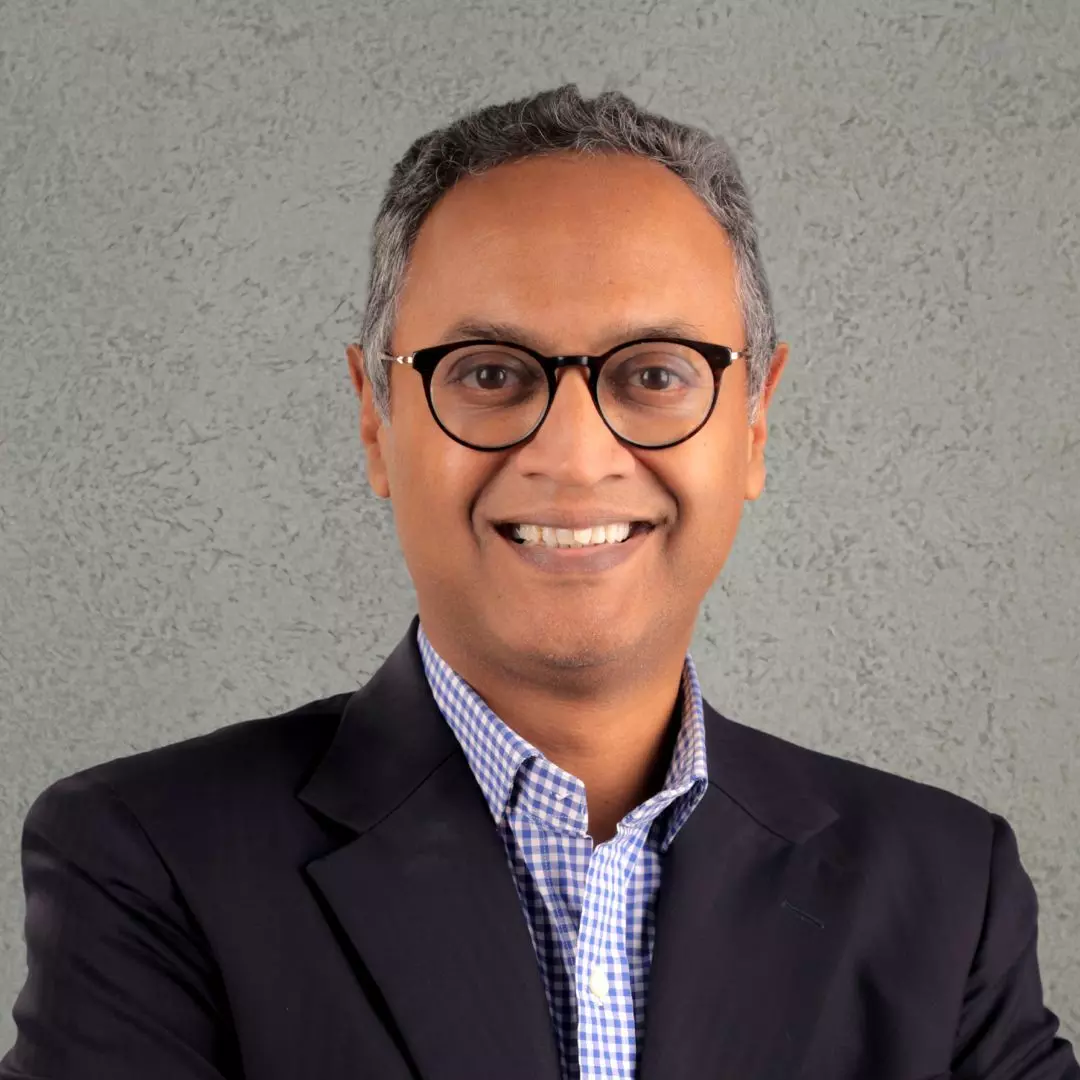
On Episode 723 of The Core Report, financial journalist Govindraj Ethiraj talks to Sanjeev Prasad, Managing Director & Co- Head at Kotak Institutional Equities.
SHOW NOTES
(00:00) Stories of the Day
(00:48) Why the more sceptical market analysts are changing their mind on Indian markets
(04:59) Is the US taking a step back from its aggressive stance on tariffs globally, including India?
(07:34) Britannia sees another sudden CEO resignation
(09:17) Are Indian investors selling their mutual funds to fund their purchases, including for festivals?
(11:00) Picking new investment themes as 2025 comes to an end
Register for the 3rd Edition of the Algorand India Summit
https://algorand.co/india-summit-2025
NOTE: This transcript contains the host's monologue and includes interview transcripts by a machine. Human eyes have gone through the script but there might still be errors in some of the text, so please refer to the audio in case you need to clarify any part. If you want to get in touch regarding any feedback, you can drop us a message on feedback@thecore.in.
—
Good morning, it's Wednesday, the 12th of November and this is Govindraj Ethiraj broadcasting and streaming weekdays from Mumbai, India's financial capital.
And our top stories and themes…
Why the more sceptical market analysts are changing their views on Indian markets?
Is the United States taking a step back from its aggressive stance on tariffs globally, including of course India?
Are investors selling mutual funds to fund their purchases, including for festivals?
Britannia sees another sudden CEO resignation.
And picking new investment themes as 2025 comes to an end.
The New Themes
India lacks any direct artificial intelligence beneficiary stocks unlike other markets, investment bank UBS said in a report this week. UBS is not alone.
Kotak Institutional Equities Chief Sanjeev Prasad told me the same thing. There is no excitement in Indian stocks, he said, and that interview is coming up later in the show because you need to find out what is exciting, in a manner of speaking. Could that lack of excitement be an advantage of sorts? Well, that depends.
UBS analysts say they prefer banks and consumer staples in the Indian context. They also say that valuations in their view still look expensive relative to the ordinary fundamental performance of companies. While retail flow still supports the markets, UBS said selling pressure from foreign investors and increasingly IPO capital raising activity by corporates must be watched.
But if you were to put UBS statements in context, Goldman Sachs has reversed an India downgrade to and to overweight with a nifty target of 29,000, while Morgan Stanley is expecting the Sensex to hit 100,000 by June 2026, which is not very far off. But the last year has been weak for Indian markets. MSCI India is up about 3.9% year-to-date and that's underperformed emerging markets by about 33%.
And on an index-weighted basis, it's trading at a 48% premium, that's 12-month forward price earnings to emerging markets. So it's still an expensive market. Back to UBS Business Standard reports, the firm assumes that the US-India trade deal will materialise and the additional 25% penalty will be withdrawn.
And the reciprocal tariff on India would be lower to around 15%, which is close to levels of other countries by December 2025 end, which is of course next month. And that also is the figure that was expected before things for some reason blew up. And finally, UBS says India could become the world's third largest consumer market in 2026 and the third largest economy in 2028 after the US and China.
And back on Dalal Street, the benchmark indices did better thanks to gains in IT and auto stocks. BSE Sensex was up 335 points to close at 83,871. The Nifty 50 was up 120 points to close at 25,694.
It was a choppy day with some sharp reversals, but this time ending in the positive. The broader indices were mixed. The Nifty Mid-Cap Index was up 0.5%. The small cap was down 0.2%. Wall Street had another strong day on Monday and investors were back in artificial intelligence stocks, including Nvidia, which was up 5.8%, Broadcom 2.6% and Microsoft 1.9%, ending its eight-day losing streak, its longest consecutive decline since 2011.
According to CNBC, we are talking about Microsoft here. Market watchers are also hoping that another historically long streak, that's the US government shutdown, could also end, which is looking like it's all set to happen, with the US Senate voting in favour for a deal to reopen the government, though it's still to pass through the House and be signed into law, which it could be overnight. And President Donald Trump has already given his approval.
Elsewhere, gold prices are rising once again, having hit their highest levels in nearly three weeks on Tuesday, thanks to expectations of a potential US government reopening, which in turn could restart the flow of US economic data ahead of a Federal Reserve rate cut expected next month. Spot gold was at about $4,142 per ounce on Tuesday morning, and that's still, of course, below its peak of $4,381 on October 20th. And then there's some tax news, which suggests that collections are steady.
India's net direct tax collection grew about 7% to Rs 12 trillion between April 1st and November 10th, according to government data, and that figure rose 7% year on year, thanks to higher corporate tax receipts and a drop in refund payouts. Refund issuances during the period declined by 18%, and that added to about Rs 2.4 trillion, compared with the same period last year. The slower pace of refunds contributed to higher net collections, even as overall growth in gross collections remained modest, according to a Business Standard report.
Tariff Fatigue
Meanwhile, a fresh state of statements on India from President Donald Trump, who said at the swearing-in ceremony of loyalist Sergio Gore as ambassador to New Delhi. At Gore's swearing-in ceremony on Monday, Trump said that Washington may soon lower tariffs on Indian goods, suggesting both sides are moving closer to a trade deal.
He said the tariffs on India are really high because of the Russian oil imports, but they have now substantially reduced Russian oil imports, so we will be bringing the tariffs down. However, CNBC reported data from market research firm Kepler saying that India's imports of Russian crude were largely unchanged in October at about 1.6 million barrels per day from September. Meanwhile, a Reuters report said that Middle Eastern producers like Saudi Arabia, Iraq and Kuwait will raise crude oil supplies to India in December as Indian refiners seek alternatives to Russian barrels, according to sources who spoke to them on Tuesday.
Many Indian refiners have paused purchases from Russia due to tightening Western sanctions, enabling OPEC producers to regain market share in India's market. Back to Trump, he said that Gore's priorities would include promoting investment in key U.S. industries, increasing American energy exports and expanding security cooperation. The larger question, of course, is if the U.S. is now starting to wind down tariffs as a strategy, having used this as a blunt weapon for almost seven months, and quite likely as exhausted by all the negotiations as the counter-countries are.
It is possible, and if that is the case, it helps India and other countries, as well as, of course, consumers in the United States who are surely facing more inflationary conditions. Now, I don't have a clear answer to this one, but it's not just the India statement. The U.S. and Switzerland are getting close to signing a trade deal to lower tariffs of 39 percent, the President had put on the country in August.
CNBC reported the President saying on Monday that White House officials are working on a deal to get the tariffs a little lower. He said he hasn't set any number, but we're going to be working on something to help Switzerland. He also said that we hit Switzerland very hard, but we want Switzerland to remain successful, and he added that they had been a very good ally.
The tariff on Swiss exports could be cut to 15 percent, which is the rate that was imposed on EU exports to the U.S., according to media reports, that is, with Bloomberg saying that a deal could be finalised within weeks. The 15 percent number is what was expected earlier and is still being expected for India, too.
Britain Sees Corner Room Turbulence
Certain CEO exits are not very common in India, despite ownership being in the hands of families, in this case, the Wadiyas today. Though this is not the first time Britannia Industries biscuit and dairy foods company is seeing a sudden CEO exit. One of the earlier ones was Sunil Alag, who himself served for several years, though earlier in March, another CEO, Ranjit Singh, resigned somewhat suddenly after serving for two and a half years in that role.
And on Tuesday, shares of Britannia Industries fell as much as 6.7 percent after CEO and managing director Varun Beri resigned after a one-year tenure, which saw Britannia moving from a biscuit maker to a more diversified packaged foods company. Now, Beri had joined Britannia in 2013, became managing director a year later. He also came from Pepsi and Hindustan Unilever.
Now, interestingly, Beri was redesignated as CEO in May after Ranjit Kohli's departure. And he also leaves as Britannia faces margin pressures amidst shifting consumer preferences and, of course, tax reforms, according to a Reuters report. Last week, the company appointed Rakshit Hargave, former CEO of Birla Opus, the paint company, as its new CEO.
Reuters reported analysts at ICICI Direct saying Hargave was expected to report to Beri and his abrupt departure could unsettle investors. Motilal Boswal, analyst, also said almost the same thing, saying Beri's long and successful tenure and his exit without a notice period could create near-term pressure on the stock. While something clearly has happened behind closed doors, we don't know what it is and what triggered it.
But the markets would also be waiting for some kind of clarity before things settle down.
Selling To Buy
Are Indian investors selling their mutual funds to fund their purchases, including for festivals? Well, the latest figures suggest that this could have happened this time or is happening.
Of course, as most personal financial advisors will tell you, having an investment target is good, for instance, to buy a car or to go for a holiday. And we've seen a big jump in car sales, notably entry-level cars after the lowered tax rates. Indian equity mutual funds have inflows have eased for the third straight month in October, which reflect investor caution, festive spending and rising valuations, according to a Business Standard report, which quoted the Association of Mutual Funds of India data, saying equity fund inflows fell about 19 percent month-on-month to about 24,000 crores from about 30,000 crores in September, though overall flows remain strong in absolute terms.
Despite the moderation, fund houses and analysts are saying domestic investor participation remains firmly intact, but with a clear tilt towards diversification and quality. Morningstar investment research analysts said that the moderation could be attributed to profit booking, given the sharp surge in equity markets, along with festive season spending. And while the pace has softened, the trend continues to reflect sustained investor confidence in equities.
And meanwhile, debt funds have seen a sharp turnaround, seeing an inflow of about 160,000 crore rupees or 1.6 lakh crore rupees, after about 1 lakh crore rupees of outflows in September, largely due to institutional money returning post-quarter-end redemptions. Gold ETFs continued to do well, and they saw about 7,740 crores of inflows in October, after a record 8,300 crores in September.
Market View
There is a clear sense of rebound in earnings after a while, the reasons for which are not very clear unless you dive deeper.
Remember, this has been a weight which has lasted several quarters, and a few false alarms. On the other hand, while the last year has been sluggish for business and stocks, there are businesses which have held strong, and looking back, they provide an indicator of the trends within the economy. Now, stock prices, of course, depend on flows, both domestic and international.
And there are some interesting insights into this which you may not have noted and are worth going into. And finally, how does the AI frenzy in stocks across Wall Street and East Asia affect India and flows here? There is, of course, an impact, but what could change? On the Core Report Special Edition, I spoke with Sanjeev Prasad, Managing Director and Co-Head of Kotak Institutional Equities.
INTERVIEW TRANSCRIPT
Sanjeev Prasad: Well, it's a lot better now compared to where we were, let's say, six months or 12 months back. And I would say there are three factors which seem to be more positive now compared to where we were earlier. Number one is the fact that, you know, we are no longer seeing earning downgrades, which used to be a big problem, you know, six months back, 12 months back.
If you look at our own numbers, in let's say, September, October of 2024, we were looking at about 1250 rupees EPS for the current financial year FY2026. We have seen huge amount of downgrades, particularly in the outsourcing sectors, IT, etc., even in the investment sectors, because of weak high investment demand, and also in the consumption sectors. And as a result of that, we are currently down to somewhere about 1100 rupees.
So we have seen a huge amount of downgrades in the last 12 months. The good news is that seems to be coming to an end, we are no longer seeing the level of downgrades which we're seeing earlier. So earnings are stabilising, that's the first positive point I would make.
The second is, if you look at FY2027, and I guess the market is now focused more on FY2027, looks like a decent year for earnings. As of now, we are looking at about 60% growth in the net profits of the 50-50 index. And for a change, I'm looking, you know, at numbers which seem reasonable, in the sense, you know, the numbers could be achieved.
And the big difference between FY2026 and FY2027 is that for FY2027, at least we're looking at growth, which is fairly broad-based across sectors. You know, most of sectors into delivering, I would say, low double-digit to somewhere about high teens kind of net profit growth. Whereas if you look at FY2026, most of the growth is just coming from two sectors, petrol mining, for very, you know, country-specific reasons, maybe you had this anti-dumping duty on steel, and also coming from oil and gas, you know, again, very sector-specific, whereas the rest of the sectors are struggling.
So that's the second point, at least FY2027 looks quite okay. And number three would be the fact that the Indian macro is still looking reasonably good, whether it is growth, you know, which would easily achieve about 60% growth, both in FY2026 and FY2027, despite all the concerns around the US-India trade issue and all that, which we can discuss later on. Inflation is very much under control.
The RPI has already cut in interest rates by this point, if anything, you could see a bit more going forward. No issues on fiscal or on the external situation. So broadly speaking, looking okay.
Having said that, on the other side, you still have very high valuations for most parts of the Indian market. So that's still one challenge which India has to, you know, go through. And I would say the second is, you know, there's nothing really exciting happening with COVID in India, you know.
Sorry to say that, but if I look at the rest of the world, you know, so much stuff going on with AI, you know, biotech, robotics, you know, and so on and so forth. And when I look at India, probably one of the reasons why foreigners are very lukewarm about India is you don't find any great, exciting stories in India. Yes, there are great companies who will do well over a period of time, but none of them really play on this, the three big emerging themes, I would say.
So that's why, you know, the Indian market has been largely ignored by foreigners over the last 12, 15 months.
Govindraj Ethiraj: Right. And I'm going to come back to the comparative view in a moment. But let's start with the stability of earnings.
So even a few months ago, this is something that you were not sure of. And your reports were also suggesting that we were not only overvalued, but we were also looking at, you know, stagnant to weak earnings. So what's changed suddenly?
Sanjeev Prasad: Suddenly, it just it's happened over a period of time, I guess, you know, so on the positive side, what we have seen is on the consumption side, in particular, we have seen three big positives, right? You had this income tax cut from the government in the budget, that put roughly a trillion rupees in the hands of the taxpayers. Then you had a series of interest rates cut by the RBI.
Now it's 100 basis point cumulative for the current rate cutting cycle. And then the big move was GST, of course, which was announced on August 15, got implemented on September 22. And that puts almost 2 trillion rupees in the hands of Indian consumers.
And this is very media because it affects more than middle and the low income households, who have had a difficult time because of income really has not grown for the low income households, affluvity has been a big issue, prices have gone up a lot. So I think this big cut in prices anywhere from 10 to 20%, depending on which product you're looking at, improves everybody's situation dramatically for, I would say the middle and low income households. And that wouldn't be the big challenge for India.
If you look at from the COVID time, you had a situation with high income household doing well, based on decent growth in income and decent, I would say a very good wealth effect. Whereas the middle and low income households struggling with low affordability, not much worth of income, the rampant increase in prices. So that's one, actually the consumption part seems to be stabilising to improving, I would say.
And the full effect of that, you will see in the second half of the current financial year. And most companies look at the commentary in the current retail season has been pretty positive. So that's one.
Number two is on the banks. And banks, remember a big portion of India's earnings are free. If you look at the 50 index, about 30% of the earnings come from the banks.
326 was going to be a bad year for the banks, simply because you had three negatives over here. First of all, NIMS were going to be under pressure, given the fact that you had a series of rate cuts by the RBI. And there's always a legal effect between, you know, the timing of the cuts, whether it is for deposits or whether it's for our trade.
So what we are seeing is a big compression in NIMS in the first half of the current financial year. Looks like it's a bottom doubt. And at least if you look at the 2Q526 NIMS, compared to 1Q26, the numbers are not very different.
So it looks like NIMS are starting to stabilise. Credit growth is on the weaker side. That's been the case for the last few quarters now.
And number three is you also had a credit quality problem, particularly for the small finance banks who have large exposure to the MFI loans. And you also had some challenges in the low ticket MSME loans. It seemed to be getting resolved, I would say, you know, maybe 2Q526 was the last quarter of, you know, the credit challenges we are seeing in these two specific areas.
If I look at 27 now, all these three factors should reverse, loan growth should improve, NIMS should improve, you know, not much, but even modestly, that makes a big difference as far as overall numbers are concerned. And credit quality timefully seems to be quite okay. If I look at the, you know, most of the retail segments doing reasonably well, corporate loans, absolutely no issue.
MSME, yeah, low ticket, there are some challenges, but broadly speaking, the higher middle level, no issue as far as MSME loans are concerned. So that's the one big area we will see a big earning growth, you know, compared to pretty much flat numbers for the Nifty 50, the banks in the Nifty 50 index, we're looking at about 17, 18% growth in the net profits for next year. So that's again, big delta over there.
And then your usual suspects, like, you know, telecom, etc, they will deliver do well, because probably you'll see one more round of tariff increases, you know, they run over the next few weeks, months, as the case may be. So that should be fine. Reliance should have decent numbers going forward, because refining margins have picked up quite nicely.
Plus, retailing business seems to be turning around and turning out quite nicely over there. And anyway, telecom will do fine. So broadly speaking, most sectors, if I now look at, you know, seem to be doing a lot better compared to where they were a year back.
And so that gives you a lot more confidence that even if you see some challenges in one or two sectors, it should not affect the overall, you know, numbers of the market significantly. Yeah, two things could go wrong in any specific sector. But broadly speaking, I have a lot more confidence this time around compared to where we were, let's say, six or 12 months back.
Govindraj Ethiraj: So, you know, when you look back at the last six months or so, or let's say six months to a year, so a lot of what you've described is, let's say, good companies riding the wave and benefiting from it or not benefiting from it. Are there any companies or teams that have stood out as in, despite, let's say, times not having been very good, they've done well, done something different, and therefore, maybe outperform the sector or the industry at that point?
Sanjeev Prasad: Yeah, I mean, one sector obviously comes to mind is the food delivery and, you know, the quick commerce companies. So, despite the fact that income levels may not have gone up that much, more and more people have adopted this, you know, food delivery and quick commerce. So, you have seen a big shift of, you know, purchases, which could have normally been done through the traditional channels, you know, of people actually going out to eat and, you know, or going to the Kidana stores or any other big box stores, not simply ordering at home.
So, despite maybe overall consumption not growing that strongly, the quick commerce companies are growing 100% plus now. You look at the GOV, the GMB that they're reporting is like completely insane in 100% plus, and that could sustain for a few more years from now, obviously, 100% every year, will start coming down, but it will still be very, very high number. So, that one sector, which is doing remarkably well, just, you know, taking share away from the traditional forms of retailing of both food and normal grocery items.
Healthcare services, again, continues to do remarkably well, I would say, whether it is your diagnostic companies or hospitals, again, doing reasonably well. And that is more linked to the fact that, you know, high-income households are doing fine. Typically, in India, the private sector, hospitals, more cater to the high, I would say, to middle-income household.
That's been used to reasonably well. And then you have, you know, pockets, let's say, for example, the whole electricity chain, that is again doing remarkably well, because there's a huge thrust to electrification. Electrification of the economy is a huge thing that will continue for the next few decades, I would say.
So, anything to do with electricity, whether it is actually generation, and we have seen a huge amount of capacity getting added on the renewable side, right? So, that is one. Anything to do with distribution, transmission, storage, all doing very well.
You know, so that's one sector, which is, again, growing very, very fast. If you look at the numbers of some of the players on electrification, for example, the cable companies, they're all doing 25%, you know, top-line growth now. Polycap or Havels in the segment are all delivering very, very strong numbers.
So, that's good news. For some teams, you know, which are long-term, structural, they can do well.
Govindraj Ethiraj: Right. And let me come to, you know, the exciting or the not exciting part of the market. And there are two or three aspects there, I guess.
So, one is, let's talk about, not the flows, but about the challenges that we are facing on the trade front. Now, at one level, we seem to have absorbed the shock completely, because at least going by the markets and their subsequent responses, and having recovered at least at one point, everything that we'd lost after the tariffs were announced. Is that something that is still an overhang?
And to what extent as we go towards the end of the year?
Sanjeev Prasad: It's clearly a worry, I would say, because you know, the market has a little bit, you know, sort of complacent about this issue, because it does not affect that many listed companies. If you look at the listed companies, except for autos, to some extent, none of the sectors really get affected. You know, we're talking about big science or large companies, and they have obviously greater ability to absorb shocks.
Obviously, something like a balkan industry, for example, and they're rather poorly, kind of second-quarter numbers obviously got affected by the very high tariffs on exports from India. So, but other sectors, you know, which the market cares about, they are doing quite okay. So, the market is not that concerned about this whole tariff issue.
But it is a big problem in the sense, you know, this country for long, obviously, it has both direct and indirect implications as far as the economy is concerned. If you look at the direct impact itself is quite high. I mean, do a simple math, if you look at a total value-add of exports to the US, if we keep aside the sector that are exempt from tariffs currently, it is still somewhere about 40 basis point to 50 basis point of GDP.
So, it's not a small number on an annual basis. Obviously, we don't expect the situation will not resolve for the next year or so. And I'm talking about 40 basis point when I'm saying is for the full year, it's still a big number.
Secondly, the indirect impact on employment. Yeah, exactly. If you look at textile manufacturing example, you have somewhere about 20 million people employed in textile manufacturing.
You have another 2-3 million people in gems and jewellery manufacturing. So, those sectors obviously get impacted. Now, also remember these sectors are sectors with very, very thin margins.
So, and typically, the smaller companies are present in these sectors. So, the ability of the companies to withstand the shocks over here is very, very limited. So, if this problem continues for longer, then I suspect you will start seeing the second order negative impact of some job losses, salary cuts, delayed payments and so on and so forth, which could also lead to some challenges on debt payment or repayment from some of the households who are in these sectors.
Hopefully not, you know, over the next few weeks, months, hopefully there's some resolution to the issue. Fingers crossed, I guess.
Govindraj Ethiraj: And conversely, if we were to have some kind of resolution there and maybe land at 15%, which was the hope before it blew up, you think that the markets will respond to that or could respond to that? Or would markets just move on because they've already absorbed it?
Sanjeev Prasad: No, 15% would be positive for the market for sure. Because the Indian market loves narratives and 15%, you know, compared to where our competitors are, most of them are at about 90-20%. So, 15% makes a difference.
If it is about 90-20%, then I don't think, you know, it's a big thing, but it still would be a positive from a sentiment perspective, I would say. Whereas 15% is the actual positive, you know, it gives a lot of tailwinds, I would assume for exports or textiles, etc. So, it makes a big delta, you know, in these sectors where the Right.
Govindraj Ethiraj: Okay, let's talk about the excitement now, all of which is not in India, it's in Asian markets, it's on Wall Street, it's in European markets. And that's something that obviously causing us some harm because the capital is either flowing out from here or continues to flow out or is not coming in at all. You've written a report recently, and you've also mentioned that India could be an anti-AI play.
But before we come to the anti-AI play, tell us about what's happening in the AI play itself. And it's more about seeing it from your lens.
Sanjeev Prasad: I'm no expert on AI, but all I can say is that, you know, it's a big thing, clearly, it's going to be a big thing. I think it already is. Especially if you look at the amount of investment that is flowing in this year alone, the US companies are going to deploy in something like $40 million into all sorts of CapEx related to AI, you know, and numbers will increase over time.
So yeah, obviously, it's a huge, huge thing. Now, the question is, where does India fit into all these things? Clearly, it's nowhere in the picture.
All the excitement if you look at is either the hyperscalers, the ones who have the large hybrid models and so on and so forth, or the companies who make all the chips, which will support the huge computing power, which is required, you know, to run the data centres, or the electricity generation companies, etc., which are again, going to benefit because of huge electricity requirement for all the data centres, you know.
So that's where the current excitement is. Unfortunately, in India, we are not even at base one in a sense, we're not even, we forget about the large language models and all that stuff, you know, or chips for that matter. At this stage, we are more getting into starting to just, you know, add a few data centres and so on and so forth.
But that should become a big win in the next few years. So even if we do not have any direct play, let's say on, you know, the chips or LLM part, obviously, you know, given the whole digitalisation, the economy should continue at a very, very rapid pace, you will need the data centres, you know, to support all that. So that could be one area where India does, you know, have some sort of an AI flavour, but not so much in the active.
Govindraj Ethiraj: And we've already seen that. I mean, Adani and Google have announced a $15 billion project in Vishakhapatnam.
Sanjeev Prasad: Yeah, you will see many more such announcements. Reliance will obviously do things in a big way. Over here, we have Karthi, which is a big player.
We have several companies actually, which are already present over here. But obviously, given the scale, you know, which we are talking about an open AI, the kind of scale it is talking about, they're talking 40 gigawatt kind of a number. Here, we are dealing within the one gigawatt itself seems like such a big deal, you know.
And then the funny thing is, you know, I don't know how shareholders are looking at it. But look at what happened to TCS, for example, you know, TCS announced plans to invest in a data centre.
Govindraj Ethiraj: And the share price fell.
Sanjeev Prasad: The share price fell. Exactly. So I don't know.
I mean, on the one side, people are getting excited by AI as well as other countries are concerned. But in India, you want to make that play. And suddenly people don't like it, you know.
So I don't know, there's always a big disconnect. What Indian shareholders seem to prefer is, you know, companies, you know, not doing anything, anything extra, if it's the right term to use, you know, focus on the core areas, generate whatever, you know, free cash flow they're generating, and give it back to the shareholders. And we have seen that, you know, the company will be rewarding companies or the shareholder rewarding companies with deliver high ROE and, you know, return all the money to shareholders.
But is that the right thing for a country perspective? I'm not very sure, because if a company is not investing in, you know, in new areas, in innovation R&D, at some point in time, it will, you know, clearly start to struggle.
Govindraj Ethiraj: Right. Last sort of set of questions. What are the things that define the last year?
And I'm also trying to get a recap from you looking back and then a little bit of looking forward was the sheer intensity of IPOs in terms of size, scale, and of course, valuations. There's been a lot of discussion on that. I'd like your views on what we've been seeing there and whether and how that can influence market and market behaviour in the near term.
And the second is looking ahead, how are you seeing the, as we go into 2026, any, anything that you're looking out as new themes or anything different?
Sanjeev Prasad: On the IPO part, I don't know whether I should be commenting too much, but I put out a report on this and moments of recent IPOs have not been very good. They've done a lot of work, you know, in terms of, you know, performance from listing and so on and so forth, numbers don't look very good. The first issue is obviously a lot of money has been raised, but the money has been raised in the form of, you know, off of a sale.
It's not really private money going into companies for investment and so on and so forth. That itself is, you know, a lot of, I don't remember all the numbers, but it's there in the report.
Govindraj Ethiraj: Yeah.
Sanjeev Prasad: Somewhere, you know, the bulk of the money are being raised in the, from the IPO route currently, you know, off of a sale and not primary issuance in that sense. Yeah. So that's one issue.
The second issue is that also tells you a story that value should be high. You know, why is everybody rushing to list a company? And you know, raise money and not even raise money for actual investment.
I can still understand if the money was going to the company and new assets were getting added, new jobs are being created. That's great. You know, but if all the money is going only to, you know, all the IPOs are doing is providing exit to the promoters or to the investors, investors, not a great sign.
And this is exactly what is happening in the secondary market. Also, if you look at numbers in secondary market, it's the same story. If I look at calendar year to date, the DIIs, which is your mutual funds, like mutual companies, cumulatively have purchased about $72 billion.
Yeah. They've invested $72 billion in the secondary market. Again, that foreigners have sold about $72 billion.
Sorry, $22 billion, what I was saying, $22 billion, which means somebody else has sold about $50 billion, right? The secondary market has to add to zero, right? Somebody has to sell, somebody has to buy.
And that $50 billion is actually coming from your promoters and the PE. Guys, you know, I've been selling simply because they think the valuations are good enough for them to make a make an exit. So what is going on secondary market is exactly what is playing out in the primary market too.
And it just that valuation is high, and people are taking the possibility to in a way cash out is that term we can use over here.
Govindraj Ethiraj: And looking ahead, Sanjeev, last word? Yeah, I mean, hopefully a better…
Sanjeev Prasad: Any new themes? Any new themes? Not really, Govind.
You know, India is not a country where you see a lot of innovation in our industry, unfortunately. So the same things will continue. You see, the good thing is we don't even need new themes.
You know, if we just keep on executing well, we'll get 6-7% GDP growth. If we execute well, you know, we'll get 8-9% although that looks a bit of a challenge as of now. And given the sheer amount of people over here, the purchasing power over here, the low levels of per capita income is still 2800.
Vegetational goods and services are still very low. So all you need to do is, you know, keep on growing every year, keep compounding over 10-15 years, you know, that makes a big difference as far as your overall per capita income and consumption levels in the country are concerned. So we don't need to do anything new, we just need to do the same thing better.
That's why, you know, that should be good enough from a very good outcome enough from our 10-15 year timeframe.
Govindraj Ethiraj: That's a good note to end on. Sanjeev, thank you so much for joining me. Always a pleasure speaking with you.
Sanjeev Prasad: My pleasure. Thank you.
---
The full interview is also on YouTube, that's the video, and you can find a link in the description.


