



 Newsletter
 Search
Why AI Scare Trading Could Continue This Week Too
- Podcasts
- Published on 16 Feb 2026 6:00 AM IST
To what extent can IT services companies retain their edge in the age of artificial intelligence?
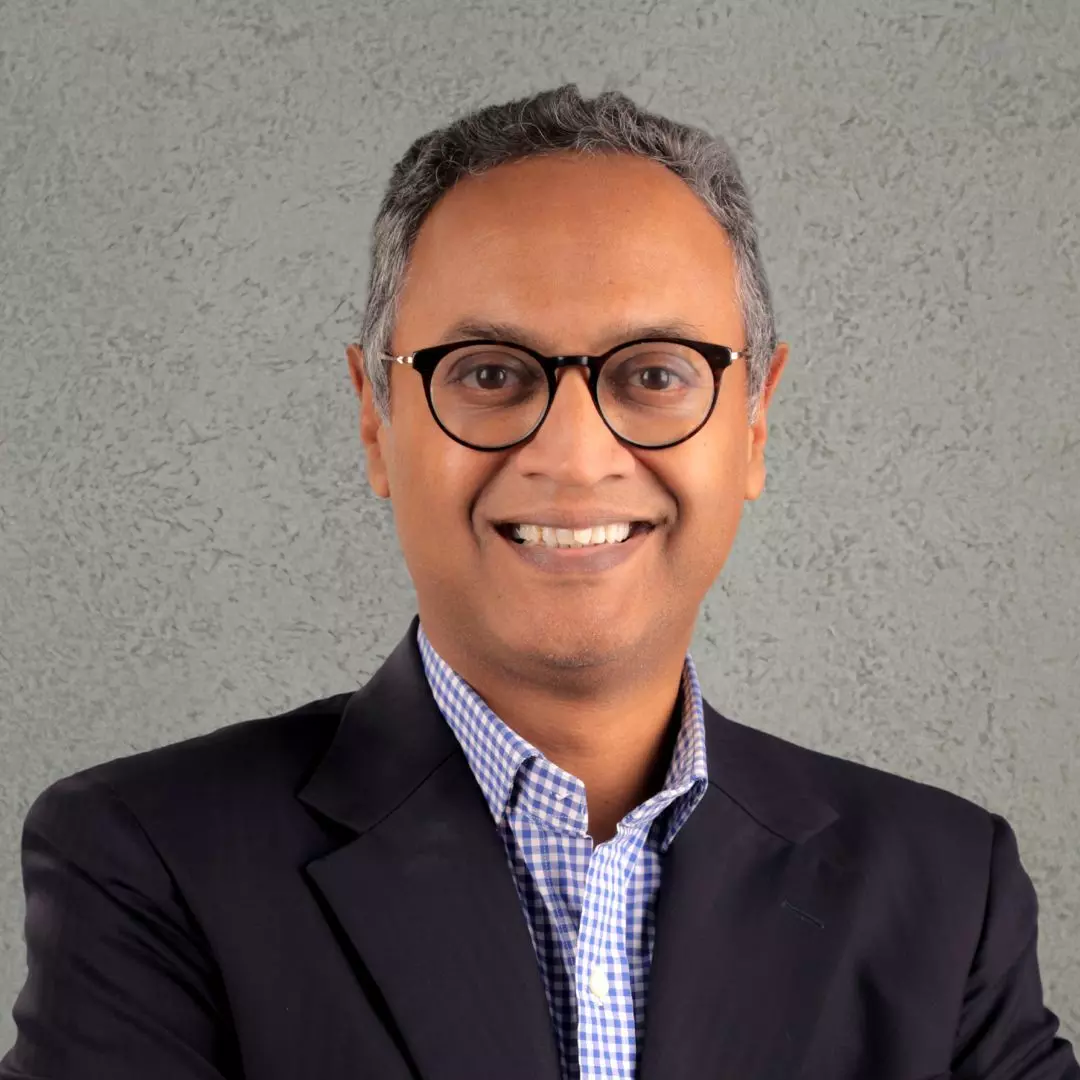
On Episode 799 of The Core Report, financial journalist Govindraj Ethiraj talks to Rahul Singh, CIO - Equities at Tata Mutual Fund. We also feature an excerpt from our previous interview with C Vijayakumar, Managing Director and CEO at HCLTech, from our 2025 series NASSCOM conversations.
SHOW NOTES
(00:00) Stories of the Day
(00:50) Why AI scare trading could continue this week too
(02:51) Were India’s IT industry leaders ready for this AI disruption?
(10:42) Investing trends as the markets emerge from India-US tariff cloud
(23:58) The Government allows more exports of wheat and sugar to keep farmers happy
Register for India Finance and Innovation Forum 2026
NOTE: This transcript contains the host's monologue and includes interview transcripts by a machine. Human eyes have gone through the script but there might still be errors in some of the text, so please refer to the audio in case you need to clarify any part. If you want to get in touch regarding any feedback, you can drop us a message on feedback@thecore.in.
—
Good morning, it's Monday, the 16th of February, and this is Govindraj Ethiraj Broadcasting and streaming weekdays from Mumbai, India's financial capital
And our top stories and themes…
Why AI scare trading could continue this week as well
Were India's IT services industry leaders ready for this disruption?
Investing trends as the markets emerge from the India-US tariff cloud and head into AI disruption,
And the government allows more exports of wheat and sugar to keep farmers happy.
Tech Disruptions
The big question everyone tracking or not tracking the tech sector in India and elsewhere was asking last week was, to what extent can IT services companies retain their edge in the age of artificial intelligence? All this will determine whether we will see, as CNBC calls it, another week of scare trading in global markets. Meanwhile, IT shares in India locked their worst week in more than 10 months on Friday on fears of disruption from AI tools that erased about $50 billion of the sector's market capitalisation so far in February. The latest sell-off was triggered by the launch of a tool by Anthropic, the tech startup which led to a global tech sell-off and heightened fears that generative AI could hit India's $283 billion IT services industry.
Reuters reported analysts at J.P. Morgan flagging investor concerns that Indian IT firms could miss growth targets as AI pushed clients to reallocate spending. Other analysts said Indian IT companies probably haven't done the greatest job in terms of communicating how they could turn AI into an opportunity rather than a threat. The IT index fell about 5.2% on Friday before recovering to close about 1.4%. The losses were led by industry leader TCS, Infosys, and HCL Tech, and more on HCL Tech in a moment.
Now, there is no doubt that companies need IT plumbing to keep their systems running. Reuters also quoted J.P. Morgan saying, it's overly simplistic to assume that AI can automatically generate enterprise-grade software and replace the value IT services firms create across the cycle. IT services companies remain the plumbers in the tech world, and if enterprise software or SaaS companies, that's software as a service, is rewritten on a bespoke basis by agents, that's agentic AI, it will need significant services plumbing to work in enterprise context and minimise AI, that's artificial intelligence, slop, according to that report.
Of course, on the other hand, we've heard several doomsday predictions that went into the weekend. The question, of course, is not at this point who is right, because like everything else, the answers could take a few years to play out, but you cannot dismiss the waves of fear either. Well, there is no doubt that IT companies themselves have to operate differently and definitely in a far more leaner way.
That is not news in itself, and they have been gearing for this era for a while. The question could be, how much? Exactly a year ago, in February 2025, HCL Tech's CEO, C. Vijayakumar, told the core report this..
TRANSCRIPT
C Vijayakumar: And now is the moment the decoupling should happen. We're already seeing the decoupling and that means more outcome-centric, more people-based services, more platform-based services. From just services, it's more IP and services. So, I think these are some of the shifts that we need to make. It's not that it's completely new. Already a lot of industries have some segment of their business in this model, but we need to really amplify that.
Govindraj Ethiraj: And what is propelling it right now? As in, if you're saying there is a linear shift towards.
C Vijayakumar: It's the productivity unlock that generative AI is able to do. Whether it is software development, we think there is 20 to 30 percent productivity improvement possible in the entire end-to-end lifecycle of software development. So, we built a platform called AI Force, which uses some of the traditional available language models, but it really covers the end-to-end lifecycle of software development. It's just not coding, it's design, it's deployment, it's support, all of that. And if you want to make a change to an existing software, to make a change impact analysis, depending on what the change is, sometimes it might take three, four weeks for an engineer to come up with or a team to come up with these other changes. But with generative AI, you can get that output in less than half an hour. So, that is the kind of change which is unlocked.
Govindraj Ethiraj: So, if I can ask you to illustrate once again. So, let's say you were working for a big bank or a retail chain. What's the kind of problem that they would have given you 10 years ago and how would that get solved right through the stream? And how would you do it differently? Or rather, how would it be done today, which reflects the productivity savings and everything that you're talking about?
C Vijayakumar: A good example would be a financial services firm, where we are part of a very large transformation programme. The client is spending almost a billion dollars a year, and it's a five-year transformation programme. It'll probably be in the second year. Now, with generative AI, we have showcased in certain segments, how can the entire programme be done in 30% less time? So, the five-year programme can be done in four years, which is, of course, a billion dollar plus saving. But more important is the time to market. If you're able to get those features, capabilities, if you can launch the modernised platform one year ahead of time, then it's a huge business value that gets created. So, I think these are the conversations which we are having, and it's fundamentally different. And how can you lead these conversations with clients to showcase that you can do something much faster that will create faster time to market? And those are the types.
Govindraj Ethiraj: And a lot of this is still rolling out. So, are you able to predict sort of substantively that this is the cost-saving I will be able to bring in time, for example?
C Vijayakumar: Yeah. So, it's an iterative process. So, we constantly engage with our customers by what we call is part of the possible, right? So, a study that is done in a limited way demonstrates that you can do things faster. It does not mean that the entire thing can be done. So, you will have to onboard the client. Clients also should be willing to walk the path with you, right? You kind of define an art of the possible, walk the path with the client. There will be some changes in the way. And as long as you have a good understanding with the client, I mean, it's a new technology. Change management is very significant in this. So, you need client's cooperation and full involvement to make this happen. So, you really have to onboard the client in this journey. And then the outcomes that you get out of this journey can be shared. The value can be shared.
Govindraj Ethiraj: So, when you talk about the art of the possible, what is possible today in a way that you could define it for people who will be watching this and what is not possible today?
C Vijayakumar: All productivity unlocking is still happening with humans in the loop. I do not foresee that a lot of this can be done completely independent of humans. I think that's probably a little bit of misconception, which we need to kind of deal with. But the involvement of humans could be much lesser, right? Like somebody who is used to developing code now needs to validate code. But that does not mean that programming concepts, the basics that are not required. I mean, that's a misconception, right? You can do everything through generative AI, but you still need very strong programming concepts to be a good developer, to deliver a good quality code. You still need to understand the architecture, right? Now, how do you kind of break that work into smaller pieces, which you can do much faster? Just developing the code through right prompting, you can do much faster. So, I think it's not that everything is getting replaced. A lot of fundamentals remain the same.
—
And that was C. Vijayakumar, CEO of HCL Tech, speaking to the core exactly a year ago. Being forewarned, of course, does not necessarily mean being forearmed, as the proverb goes, but this is just to illustrate that even before Anthropic arrived on the scene, the impact was being felt and measured, even as shifts were being discussed and anticipated as the falling headcounts and slowing recruitments already show in every quarterly result of the IT services companies.
JP Morgan said that investors have largely overreacted to the threat posed by these AI tools, and it's important to note that IT companies remain relevant, even in the age of AI, albeit with a leaner headcount. CNBC quoted UBS analysts saying that they believe the AI-driven sell-off reflects a growing disruption that is accelerating well beyond software, and warning that markets have only partially priced the credit implications. UBS expects this risk to increase through 2026 into 2027 in the United States and to a lesser extent in Europe.
On the other hand, analysts told Squawkbox Europe, that's on CNBC, that the software Armageddon is overblown, saying that stalwarts like Salesforce and ServiceNow will be core participants of the AI revolution rather than be cannibalised by it. Meanwhile, foreign portfolio investors have invested a little more than $2 billion in February after net selling continuously, some $19 billion all through 2025, and of course, January 2026, that's in India. The IT sell-off turned around sentiment once again, so we will have to see where it settles, and of course, any fresh developments on the US-India tariff front.
On Friday, the 30-stock Sensex was down 1,048 points, or 82,626, and the NAC Nifty 50 was down 336 points, 25,471. In the broader markets, the NAC Mid-Cap 100 Index was down 1.7%, the Small Cap 100 Index was down 1.79%. The rupee was steady on Friday, closing at about Rs. 90.63, down marginally from its close of Rs.
90.59 in the previous session, according to Reuters data, which also reported that gold prices were up 2% on Friday and headed for a weekly gain, thanks to weaker-than-expected US inflation data, which of course revived hopes for Federal Reserve date cuts this year. Spot gold was at about $5,022 per ounce on Friday afternoon, and had fallen about 3% on Thursday, hitting its lowest in nearly a week. Spot silver was up about 3.4% to $77.70, having lost about 11% in its previous session.
So all in all, a very volatile week for silver and somewhat volatile for gold, and that's something to keep in mind if you were thinking of entering these metals. So the last few weeks have been quite eventful, with much attention focused on the India-US tariff deal. I spoke with Rahul Singh, Chief Investment Officer for Tata Mutual Fund. I began by asking him how he was seeing the last few weeks' action, including the India-US tariff deal and the months ahead from an equity strategy perspective.
INTERVIEW TRANSCRIPT
Rahul Singh: We had a complete whipsaw, we've had two whipsaws in a week. But I think clearly the earnings is what I think the market is focused on. And there things are looking, I won't say very bright and rosy, but at least we seem to be forming a base somewhere.
This quarter we should end up with high single digit kind of EPS growth and the full year should also end up being at, you know, some kind of a high single digit growth. So the commentary which is coming out is actually more optimistic about next financial year, especially on the consumption side and banking on the credit growth side. So I think that ultimately will prevail.
We are seeing sentiments swaying from one end to another end from the trade deal and AI, as you mentioned. But once all this gets over, probably in a week's time and the earnings are behind us, we will go back to looking at valuations and the earnings growth, which I think are finally promising to look up and go up towards the mid-teens kind of growth next year. In that context, the valuations have also time corrected.
I mean, if you put them together with the fact that at least the large cap valuations have time corrected, mid and small cap have also, you know, there is a price correction as well as a time correction in mid and small cap. So overall, valuations don't look as stretched or as frothy as they looked in middle of 2024. And from middle of 2024 to now, things have normalised and other markets have done well, India has not done well.
So if the earnings pick up, we will not fully catch up with the Korea, Taiwan and the China's of the world. But I think we will deliver what is due or which is kind of deserved by the earnings growth.
Govindraj Ethiraj: Right. Specifically earnings now in the maybe the first few weeks of January or even a little later, there was a feeling that earnings were not looking as good or would be somewhat weak in keeping with the trend that we had seen in the previous two or three quarters. There seems to be a slight shift in either sentiment or data both.
Is that what you're reading as well? And if so, how does that portend for what lies ahead?
Rahul Singh: No, you're right in a way because I think initially what happens is when the results start, they're dominated by IT services, some of the larger banks. And as we progress into the earnings season, what we have seen is consumption. There has been generally a wider recovery or a big better commentary even from companies which have not delivered good numbers.
The commentary has been much better. Also, when you come to results of the PSU banks as compared to the private sector banks, even some private sector banks have delivered good numbers. PSU banks have really surprised on the positive side.
You know, the commodity companies are doing well. So overall, I would say it's always a mixed bag in India. In India, you will always find earnings as a mixed bag.
But I think as the earnings season has gone on, some of the larger companies in the spaces which I mentioned have either delivered good numbers or met the expectations and followed it up with a better commentary for this quarter and the year ahead. So that's kind of changed the mood a little bit, I would say, and also given market more options because, you know, as you mentioned about the AI threat and what it is doing to the IT services sector, the market was also looking for more options to be able to diversify the portfolio. So it definitely gets more options today in the sectors which have not done well in the past, which is primarily consumption and banking.
Govindraj Ethiraj: Right. And automotive, I guess it's a little clearer, but there too, it's, I mean, this is my understanding, it seems to be more driven by entry-level cars, which is not bad news, but that's definitely one symptom. Similarly, in other sectors, you talked about banks and state bank obviously is one of the surprise factors.
Are you able to distinguish between, let's say, a few companies doing well versus a sector doing well? Or are they two sort of conjoined?
Rahul Singh: No, it's completely stock specific. So even within the sector, even within a small sector like defence, there have been divergent kind of results. Or let's say banks is a very big sector.
So obviously, you will have a lot of divergences, even in consumption, which by and large have been positive, mildly positive to very positive. There have been divergences in terms of the, not just the volume growth, which companies have reported, but also the commentary around how much, how sharp will the recovery be or how sharp a recovery they are seeing. So 2023 and 24 and 22 was a very thematic market.
You know, you had five, six things doing well. Since 25 and 26, I think it is going to be very, very bottom of market. And we are seeing clear signs of that.
Even within IT, which is a sector which is not doing well, you have seen companies doing very different things in their results. So whether it's a weak sector, tailwinded sector, headwinded sector, you are seeing much more divergence than what we were seeing in 2022 to 2024. So it's not a thematic market anymore.
We have to pick stocks and we have to pick companies rather than sectors. Fortunately for us, but unfortunately for investors who are used to simplifying things.
Govindraj Ethiraj: And obviously this has happened before, but is it happening after a while in your own career as a fund manager? How many times do you you've seen this kind of shift?
Rahul Singh: No, it happens all the time. So for example, if I go back 2017-18 was a very narrow market dominated by large caps. It was followed up with a little bit of fraud based market.
And then again, after COVID, it was a very thematic market. In between between 21, 2021 to 23, it became again a narrow market. So it happens with very regular frequency.
The intensity can vary. Like 2018 was a very, very bad phase of the other extreme of the market, which means that it was a completely stock specific, five, six stocks kind of a market. So that's one extreme.
I don't think we are going back to that extreme because the economy is doing generally well and the macros are much better than what it was in 2017-18. So I don't think we are going back to that. But within the overall context of the 2022-24 rally, I think markets will narrow and they have already narrowed actually.
Govindraj Ethiraj: Right. In terms of let's say technical or external factors, which includes flows, foreign portfolio flows, domestic flows, within flows, gold overtaking equities, even though very slightly, how is all of that likely to play out from your vantage point in coming months?
Rahul Singh: I think we are seeing a little bit of a shift towards large cap and plexi cap within equity, which is very good, I would say, which is very welcome and something which we have been asking for for the last 12 months. Finally, it's happening. What I think can change in the next three to six months is the FPI flows, where I think emerging markets are going to get more flows.
And within that, I think the first port of call might be China, Korea, Taiwan, because they are leveraged to the AI team and the AI capex team. But India, if it's showing signs of recovery and going towards, say, a mid-teens kind of an earnings growth, we will get our share. It's not that we'll continue to see the kind of selling we have seen, that will taper down.
That's the major delta, which we have to watch out for the next three to six months. I think domestic flows will be fine. I think gold and silver flows in Feb, you should see are marked down and some of that slack will be taken over by equities.
But mostly, I think you will go to either the balanced funds, the hybrid funds or the large cap plexi cap category. So I think you will see that in Feb, reversing some of the trend which you saw in January. So domestic should be fine.
Domestic flows should be stable to maybe moderately declining, but by and large stable. But the FPI flows can really change the equation more drastically. Let's see.
Govindraj Ethiraj: Right. And in your own portfolio of schemes, are there any trends that you found interesting in the last few months in the way investors have come in or gone out or switched?
Rahul Singh: Right. I think clearly multi-asseted fund is seeing more sticky flows. And that's again welcome because we manage the gold and silver and the commodity component in that dynamically.
So I think market has finally seen the benefit of that. So that's become very sticky, which is good. And as I mentioned, a little bit of shift from small, mid and the thematic funds toward large and plexi is what we are picking.
Also some flows coming into banking and consumption. From a thematic perspective, these are the only two funds which are seeing some action in terms of flows.
Govindraj Ethiraj: Right. And valuations is something that obviously is the underpinning or overrides everything. What's your sense broadly given where we were, let's say, when we hit the peak in September 24 versus where we are today?
Of course, we've crossed that peak, but we seem to have receded a little bit after that. So if you were to look at the market over maybe one and a half year perspective or so, 12 to 18 months reverse, and then if you were to look forward, where do we stand?
Rahul Singh: So in September 24, I think Nifty was trading at a forward PE of about 22 and a half, 23 times. We are now at 20 times. So there's been a 12 to 15% kind of correction in the valuation in the PE ratio.
If you look at mid caps had gone at one point of time to an obnoxious premium of I think 55 or 60% to the Nifty in terms of valuation. That last I checked was down to more like 35, 40%. Still high, but it's down from that very high level.
Small cap, the premiums had gone to 30%. It's down to 10%. So in general, there's been a normalisation of valuations and individual stocks and individual teams.
Obviously, the correction some places have been even sharper, but I'm seeing an aggregate asset class level. This is what we have seen. And if you look at the relative to emerging markets in September 24, I remember we were trading at almost 80-90% premium to the MSCI emerging market PE ratio.
That's down to 50%. We have stayed flat, whereas, you know, the emerging market index has gone up 30%, 25-30%.
Govindraj Ethiraj: Last question. So is there a theme that you like or have been surprised by either looking back in the recent past or looking ahead that you think will be something new or interesting to anticipate or look forward to?
Rahul Singh: Pretty much everything is now well discovered. But there are things which I think are still in early stages of the commodities and I'm not talking about gold, silver here. I think industrial commodities are looking due for more as the year goes by.
And that is something which can be a surprise factor or a contra factor. The other thing which is looking reasonably solid is the healthcare side, not the pharma, but the healthcare side, which is the hospital diagnostics, because that's one segment where I see there is a secular 5-10 year story. Valuations have normalised.
We are looking at decent valuations now. So that's the other thing I like. These smaller themes are where I think the outlook is and the valuations are looking like a good combination.
Govindraj Ethiraj: Rahul, thank you so much for joining me.
Rahul Singh: Nice to be here. Thank you.
---
Meanwhile, India is hosting the AI Impact Summit this week. A report in CNBC says when the organisers called the event in New Delhi the AI Impact Summit, they may not have known how literally the markets would be taking this at this moment in time.
Outside Delhi, the event appears to have made news as much for the sky-high hotel fares, running into lakhs of rupees per night in some cases, as much, of course, as the high-powered turnout, so good for hotel stocks if they benefit. Jensen Huang, NVIDIA's CEO and star attraction, has backed out, but others are coming, including Sam Altman of Chad GPD OpenAI, Anthropic's CEO Daryo Amodee, Microsoft's Brad Smith, Mistral AI co-founder Arthur Mensch, and Meta's Chief AI Officer Alexander Wang. The government, from my understanding, is marketing and selling this event like the G20, with similar pomp and grandeur that went with that event, a rotational event between member countries.
India, of course, has seen fairly large commitments in AI infrastructure already, including in states like Andhra Pradesh, running into tens of billions of dollars, and disruption or not, India's engineering pool and customer base is extremely attractive to tech giants, particularly the AI companies.
Wheat Exports
On Friday, the government of India allowed the export of 2.5 million tonnes of wheat and an additional half a million tonne of wheat products and sugar, as the government appeared to offer some relief to farmers in the wake of the recent tariff deal between India and U.S., where India has opened up specific agriculture areas to U.S. exports, according to Reuters.
India is the second biggest producer in the world of both these commodities, and is obviously trying to support local farmers amidst protests that have started on that trade deal between India and the United States. Last month, the government had also allowed exports of half a million tonne of wheat flour and other wheat products after approving exports of a million and a half tonnes of sugar in November for the season that started October 1st. Traders told Reuters the permission to export was likely to improve sentiment in the local market, but fulfilling those allocated volumes may be difficult as Indian prices' hefty premium over other origins would be a challenge.
Oil Licences
The United States has issued a general licence to Reliance Industries that will allow the refiner to buy Venezuelan oil directly without violating sanctions, Reuters is reporting. U.S. officials earlier captured Venezuelan President Nicolas Maduro and said they would ease sanctions imposed on Venezuela's energy industry to facilitate a $2 billion oil supply deal between Venezuela and Washington, and an ambitious $100 billion reconstruction plan for the country's oil industry, that's Venezuela's oil industry, which of course is a little long on promise right now.
A general licence authorises the purchase, exportation, and sale of Venezuelan origin oil that's already been extracted, including the refining of such oil. And this obviously would help Reliance speed up Venezuela's oil exports and reduce crude costs for Reliance, which is also the operator of the world's largest refining complex. Oil prices were higher on Friday after data showed an overall slowdown in U.S. inflation, and this helped offset supply concerns as the Organisation of Petroleum Exporting Countries-Plus is leaning towards a resumption in production increase.
Brent crude futures were a little higher at $67.75, so just under $68 on Friday.


