
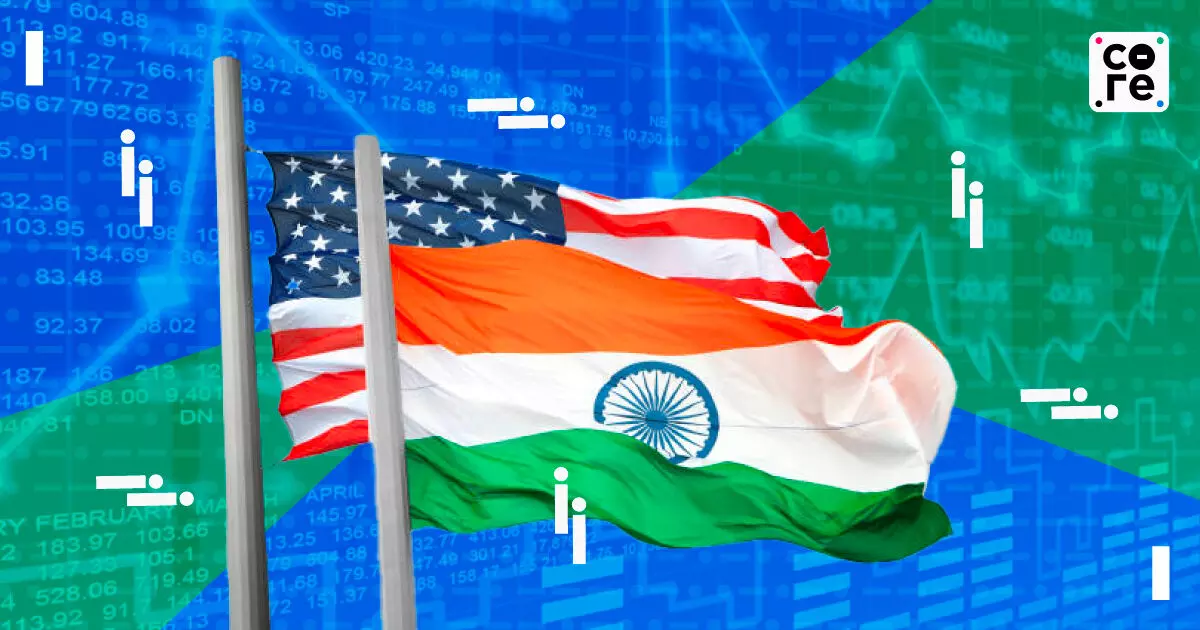
India’s US Trade Deal Forces A Long-Delayed Economic Detox
The India-US trade deal offers exporters relief but carries tough conditions, exposing domestic inefficiencies and geopolitical pressures, forcing an economic detox India has long delayed.

The Gist
India faces new trade challenges with an 18% tariff on imports from the US.
- The recent Union Budget aimed at reducing import duties on various sectors.
- Despite the higher tariff, it is seen as a compromise compared to potential 50% rates.
- Domestic industries may protest, but the government prioritises economic engagement over isolation.
The price of admission to the global marketplace is rarely cheap, and for New Delhi, the bill has just arrived in the form of an 18% tariff.
India’s recent Union Budget, which slashed import duties on everything from aircraft components to lithium-ion manufacturing equipment, was the preamble.
The main event is a trade recalibration with Washington that looks, smells, and feels like the "Art of the Deal" — Trumpian edition.
Under the new terms, the US will levy an 18% tariff on Indian imports. This seems high, compared to the 0% that existed before, but then, context is everything. While the details of the deal are still unclear, Commerce Minister Piyush Goyal has said that sensitive sectors such as agriculture and dairy are protected.
Shock To The System
Since August, Indian exporters have been staring down the barrel of a 50% tariff. So in the new transactional world of modern trade, 18% is not a defeat, it is a hard-won compromise.
But there will be a shock to the system.
For decades, the Indian industry has operated behind a comfortable veil of tariff protection.
That era has been ending, but now it is time to put the pedal to the metal.
Moreover, protests from domestic incumbents — already alleging a capitulation to Washington — are likely to be deafening.
But Prime Minister Narendra Modi’s government has little room to manoeuvre.
The economic indicators have been flashing amber:
Foreign portfolio investments have been in retreat, foreign direct investment has remained moribund and India has spent much of the last year receiving the "cold shoulder" from Washington, a chill that only began to thaw after last week’s India-EU free trade agreement.
By inkling this deal, India is choosing the pain of competition over the slow rot of isolation.
The Kremlin In The Room
But the deal isn't just about nuclear equipment and medical devices; it’s about geopolitics.
The Kremlin raised its eyebrows after Trump said India would stop buying Russian oil as part of this deal, the reason the US slapped a 25% punitive tariff on imports from India.
When asked if India might pivot away from Russian oil as part of this new alignment, a Reuters report quoted Kremlin spokesman Dmitry Peskov as being diplomatically cautious, noting that Russia "attaches no less importance" to its partnership with Delhi.
The silver lining for India in all this is that this pressure may finally force the domestic reforms that successive governments have kicked down the road.
Plumbing Time
Further lowering of tariffs on intermediates and final goods will expose the high cost of doing business in India, such as the exorbitant prices for land and commercial electricity.
India has much plumbing to do to unclog its pipes. The speed of starting a company is a favourite talking point in India, but the nightmare of closing one is less talked about.
If the 18% tariff is the stick, the carrot is a level playing field.
Indian apparel and footwear exporters now find themselves on an even footing with regional rivals in the US market.
To capitalise on this, India must go beyond paper-tinkering and address the structural plumbing of its economy.
Protectionism is a drug that masks underlying inefficiencies, and until now, India has been raising tariffs in the last decade.
By signing on the dotted line with Washington and Brussels, India is opting for a painful detox.
It’s a gamble, but in a world of 50% tariffs and shifting alliances, it’s the only and perhaps best deal in town.