
India’s AI Ambition Meets Analog Limits
Like Macron’s Marine Drive jog, India’s tech run continues; Infosys-Anthropic pact accelerates modernisation amid persistent infrastructure gaps at AI summit.

The Gist
Infosys' partnership with Anthropic signals a strategic pivot in India's IT landscape, challenging the narrative of an impending crisis.
- Chairman Nandan Nilekani argues that AI changes the dynamics of IT spending, advocating for custom solutions.
- The recent AI Summit in Delhi exposed significant organizational shortcomings, frustrating young tech enthusiasts.
- India's ability to lead in AI is undermined by outdated event management practices, illustrating a disconnect between ambition and execution.
French President Emmanuel Macron was spotted jogging along Mumbai’s Marine Drive on Tuesday morning, cutting an almost solitary figure against the backdrop of the Arabian Sea.
There is perhaps some wisdom in a prominent head of state pacing himself, focusing on acclimatisation rather than speed.
It is a lesson the global markets—and the doom-mongers predicting the immediate evaporation of India’s IT services sector—might do well to heed.
For the past week, a furious debate has raged over whether the latest generative AI tools mark the extinction event for the outsourcing giants that built modern Bangalore.
But just as the markets began to stop hyperventilating, Infosys led a smart counteroffensive.
By announcing a partnership with Anthropic—the giant-killer of the LLM world—Infosys signaled that it intends to be the jockey, not the horse, in this new race.
The Pivot to ‘Build’
Chairman Nandan Nilekani’s presentation at Infosys AI Day 2026 offered the intellectual ballast for this survival strategy.
His thesis is sharp: huge enterprises currently sink 60% to 80% of their IT budgets merely into keeping the lights on. This "technical debt" can no longer be deferred.
Nilekani’s argument is that AI flips the script on the "Build vs. Buy" dynamic.
Because AI has democratised and simplified coding, the advantage is shifting back toward building custom solutions over buying rigid, off-the-shelf software. If the future is bespoke, then the world still needs tailors. Infosys argues it is that tailor.
The Anthropic partnership hits the right notes because it acknowledges a fundamental reality: to use AI smartly, you still need humans in the loop.
Do you need armies of them writing basic code? Perhaps not. But the sector isn't getting wiped out; it is getting promoted to a higher value chain.
To misquote Vladimir Lenin, there are weeks where decades happen. The last week in the AI sector felt like a decade, but the IT majors have survived the initial shockwave.
The Analog Reality Check
However, while the corporate boardrooms in Bangalore are rapidly adapting, the state machinery in New Delhi provided a jarring counter-narrative.
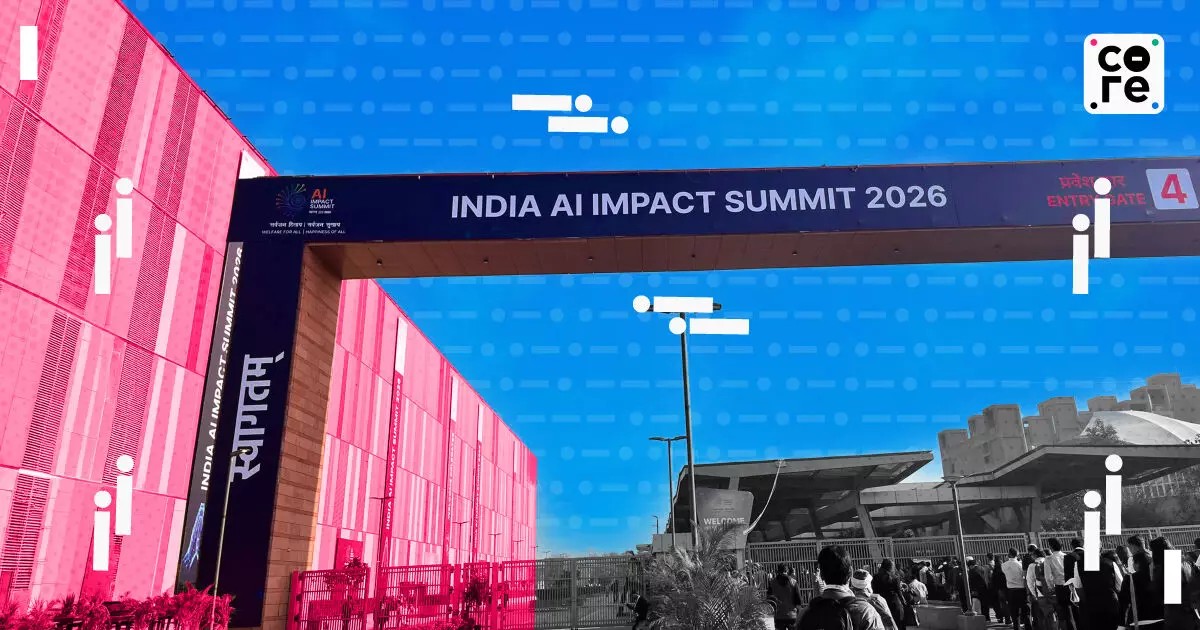
The "India AI Summit" in the capital exposed the widening chasm between India’s digital aspirations and its physical capacity.
When bureaucratic calcification collides with youthful aspiration, the results are rarely pretty.
In Delhi, this manifested as thousands of young tech enthusiasts stewing in long lines waiting to enter the Bharat Mandapam or the old Pragati Maidan complex, complaining of mismanagement.
In a twist of irony that would be funny if it weren't so damaging, attendees at a summit celebrating India's digital prowess were reportedly forced to pay cash for food.
Union IT Minister Ashwini Vaishnaw incidentally on Tuesday apologised for the widespread disruptions on the first day of the India AI Impact Summit 2026.
But one culprit behind the frustrations, as usual, was the "VIP culture" that plagues Indian logistics.
The entire event management apparatus appeared to pivot toward servicing a single visiting dignitary, leaving thousands of young delegates—the actual future of the country—stranded outside.
The Infrastructure Deficit
The juxtaposition is stark. On one hand, there were high-level policy sessions discussing deep tech funding, healthcare AI, and sovereign models—discussions that are genuinely insightful and necessary.
On the other, there were logistical failures that suggest India lacks the soft infrastructure to host the very global audience it seeks to lead.
Delhi possesses the best convention infrastructure in the country, yet even the capital has its limits.
Mixing policy wonks with a massive product exhibition crowd at this scale was a tactical error, but the strategic failure lies in the state’s inability to match the seamlessness of its digital payments with the seamlessness of its queues.
Nilekani talks about modernising legacy systems in software.
The mess at the India AI Summit suggests the government needs to modernise its legacy systems of event management and VIP protocol.
Until then, India remains a paradox: capable of partnering with the world's most advanced AI labs, but struggling to get people through a door.
Like Macron on Marine Drive, the Indian tech story is a long run. But you can't finish the marathon if you trip over your own shoelaces at the starting line.