

India’s Small-Car Revival Hands Maruti Volume, But Not Certainty
A rare tax cut sparked a 50% surge in Maruti’s small-car sales, defying the SUV boom. But this policy-driven revival is a sustainable turnaround or a fleeting spike.
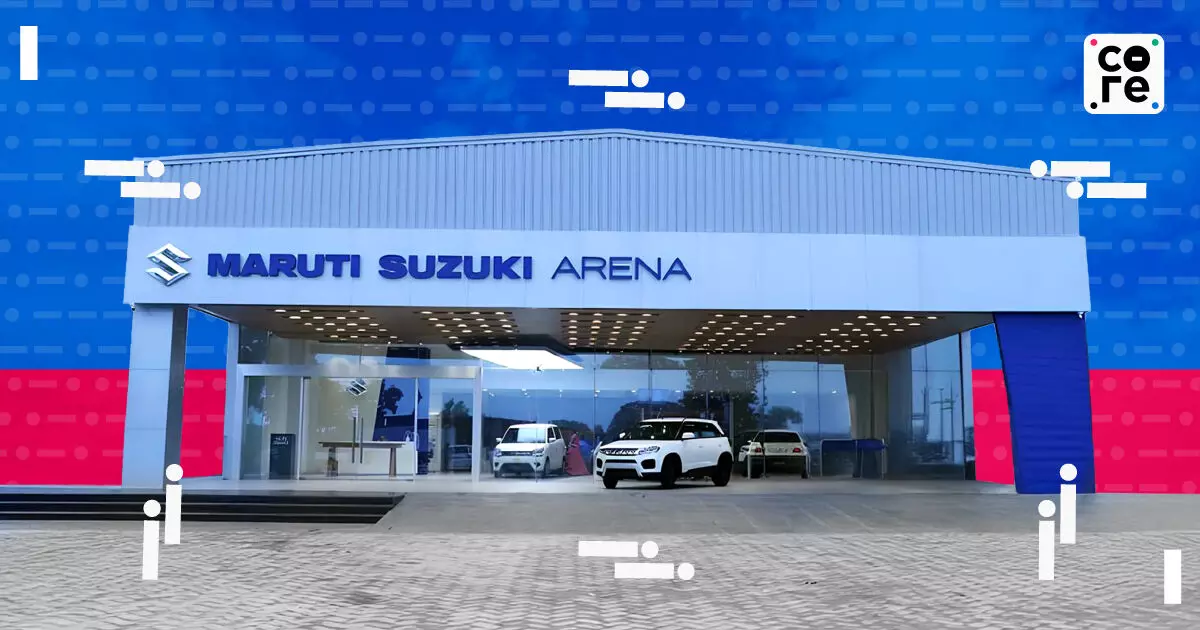
For the first time since January 2025, the country’s passenger vehicle market leader, Maruti Suzuki, saw its small-car portfolio hit a fresh peak in December last year. Volumes of mini and compact cars surged 50% year-on-year to 92,929 units, signalling a dramatic comeback for entry-level models.
"It is not common to see taxes reduced by 5-10% in a single stroke," Rahul Bharti, Chief Investor Relations Officer at the OEM, said at the company’s Q3 investor call last week, noting that such a significant stimulus was "expected to manifest" in market growth.
He confirmed that while demand has risen across all segments, the small car category — buoyed by the new 18% GST regime — drove the volume surge for Maruti Suzuki during this quarter. Bharti highlighted that this segment witnessed the largest swing, pivoting effectively from previous lows to lead the recovery.
Following the GST reduction in September last year, the collective share of Alto K-10, S-Presso, WagonR, and Celerio in the company’s portfolio rose from 16.7% before the tax cut to 20.5% after it, executive officer of marketing and sales Partho Banerjee said in January.
This recovery is notable as most carmakers are steadily shifting toward larger, feature-rich vehicles. Even for Maruti, small car sales had taken a beating for various reasons. But will this rebound be durable enough for a broader turnaround in Maruti Suzuki’s fortunes?
Maker Of The People’s Car
Owning a car was once a distant dream for millions of Indians. And the Maruti 800 changed that. “I still remember those days,” said Yogesh Kumar (68), a Delhi resident, recalling one of his biggest purchases as a young father. It was a white, standard variant that stayed with him for nearly a decade. In 1997, he bought his first car– a Maruti 800, for about Rs 1.70 lakh. For his family, it was more than a vehicle– a milestone.
For decades, Maruti’s growth hinged upon its small cars like the 800 and the Zen. Later came the WagonR, Alto, Swift, S-presso and Celerio.
Maruti Suzuki’s rise mirrored not just the growth of India’s automobile industry but the expansion of the broader economy, Vinay Piparsania, founder and principal of MillenStrat Advisory & Research and a former executive director at Ford India, told The Core.
The carmaker benefited from a regulatory environment that favoured scale, giving it an early and enduring advantage that rivals struggled to replicate amid policy constraints, supply-chain challenges, dealership expansion hurdles and localisation requirements, he said. That dynamic is now shifting as compliances converge with global standards and buyers increasingly demand higher value along with features.
How India moves in the cities looks very different in the present, in 2026. The experience of getting around has been fundamentally reshaped.
How SUV-isation Rewired Buying
If you look around, you are far more likely to spot a big, bulky sports utility vehicle (SUV), or at least something shaped like one. But the shift did not happen overnight. Manufacturers pushed SUV-styled models as consumer preferences tilted that way, and growing demand, in turn, reinforced the strategy.
Salaried households, rising purchasing power, the need for higher ground clearance on uneven city roads, and an expanding list of features have all played a role. The car is no longer seen merely as a means of getting from point A to B, but as an experience in itself.
As a result, a market once dominated by small cars has flipped, with SUV-styled vehicles taking the lead over the past many years. Between FY19 and FY25, automakers rolled out over 35 new SUV models, compared with just four hatchbacks and three sedans. Over this period, SUV sales nearly tripled, while hatchback volumes declined 25%. SUVs now command more than 55% of the passenger vehicle market, up sharply from 23.7% in FY19.
Experts note that carmakers are aggressively pushing SUV-style vehicles as the economics of small cars remain difficult. As one executive highlighted, "Small cars remain a profitability challenge for global OEMs," pointing to the delicate balance between volume growth and profitability.
Declining demand, rising production costs — especially due to stricter safety and emission norms such as BS-VI — and intensifying competition reduced sales volumes for small cars, making the segment less profitable and difficult to justify fresh investments. With this shift, the average selling price (ASP) of passenger vehicles in India has also climbed steadily, rising from Rs 7.65 lakh in FY19 to Rs 11.5 lakh in FY24.
Amid this, Maruti Suzuki continues to remain the leader in overall passenger vehicle volumes, but the carmaker that commanded over half the market for nearly four decades has seen its share ease to around 40%.
For legacy automakers with heavy investments in conventional internal combustion engine (ICE) vehicles, the challenge is to transition to cleaner technologies efficiently and profitably, Piparsania said. “Market share is the outcome; scaling volumes is critical.”
Avik Chattopadhyay, founder of brand consulting firm Expereal and a former Maruti Suzuki executive, told The Core that in an open market like India, a 40% market share is both healthy and sustainable for a leader. However, to maintain that position, he believes Maruti must redefine itself as a "mobility provider" rather than remain solely as a car manufacturer.
He argues that Maruti should stick to its core mass market strength, instead of trying to position itself as a premium player.
Cost Of Regulatory Compliance
According to Maruti Suzuki chairman RC Bhargava, the slide in small-car sales over the past six years was driven by affordability, not preference. Higher taxes and regulatory costs pushed prices beyond the reach of many buyers, creating the impression of fading demand. He cited the adoption of European safety and emission norms in 2018–19 as a turning point that raised vehicle costs sharply, particularly affecting entry-level buyers.
“Households earning above Rs 15 lakh a year make up barely 10–12% of the population. The remaining 85% operate at much lower income levels,” Bhargava said at the company’s Q2 and H1 earnings press conference, countering the view that changing aspirations alone explain the decline of the small-car segment.
He cautioned against comparisons with developed markets without accounting for economic realities. “India is not Europe, where per capita income is around $40,000. Any comparison must factor in income levels and infrastructure,” he said, describing India as, by its very nature, a “small-car market.”
Drawing parallels with Japan’s introduction of Kei cars in the 1950s, Bhargava said India should consider a similar framework. Kei cars are smaller vehicles—restricted to about 3.4 metres in length and 1.48 metres in width, with engines capped at 660 cc—and benefit from lower taxes and lighter regulatory requirements.
Chattopadhyay said the company needs to reinvent. As a possible future direction, he suggested it could develop an affordable Kei-car–style electric vehicle for India, which could be around 3.4 metres long, low-speed, seating four passengers and potentially offered under a battery-as-a-service model.
Will GST Turnaround Last?
Dealers say a large share of demand is currently coming from rural and semi-urban markets, as well as from customers upgrading from two-wheelers. Maruti dealers The Core spoke to expect this momentum to extend into the next few months, though they remain cautious about its durability. “We are waiting to see how consumers respond over a longer period once the pent-up demand is over,” a dealer said.
Maruti Suzuki, which manufactures more small hatchbacks than all other carmakers combined, maintains that the segment’s relevance is far from over. “Many carmakers will realise the true nature of the market, and I expect at least some of them to revise their product mix,” Bhargava said in October.
Meanwhile, the company's traditional strengths in fuel efficiency and reliability, Piparsania said, risk becoming constraints as Indian consumers increasingly seek more and are willing to pay for it.
Looking ahead, the long-term outlook for small cars will also be shaped by the third phase of the Corporate Average Fuel Efficiency (CAFE) norms, slated to come into force from April 2027. The industry remains divided over proposals to exempt cars weighing under 909 kg from certain compliance requirements. Maruti Suzuki argues that stricter norms could push up prices and hurt affordability. However, carmakers such as Hyundai, Tata Motors and Mahindra & Mahindra contend that any exemption would disproportionately benefit Maruti, given its dominance in the small-car segment.
If small cars receive relief under the CAFE-3 norms, Maruti could consider introducing upgrades or new colour options to refresh its models, an industry insider said. The company has already stepped up financing schemes to offer additional incentives and attract customers following the GST cut. A sustainable turnaround, however, seems unlikely.