

With India's Fertiliser Manufacturing Stuck In Policy Limbo, Imports Will Keep Rising
Since October 2019, multiple fertiliser plant applications have languished in the absence of a successor to NIP-2012. This has stalled manufacturing investment and will accelerate import dependence for years.
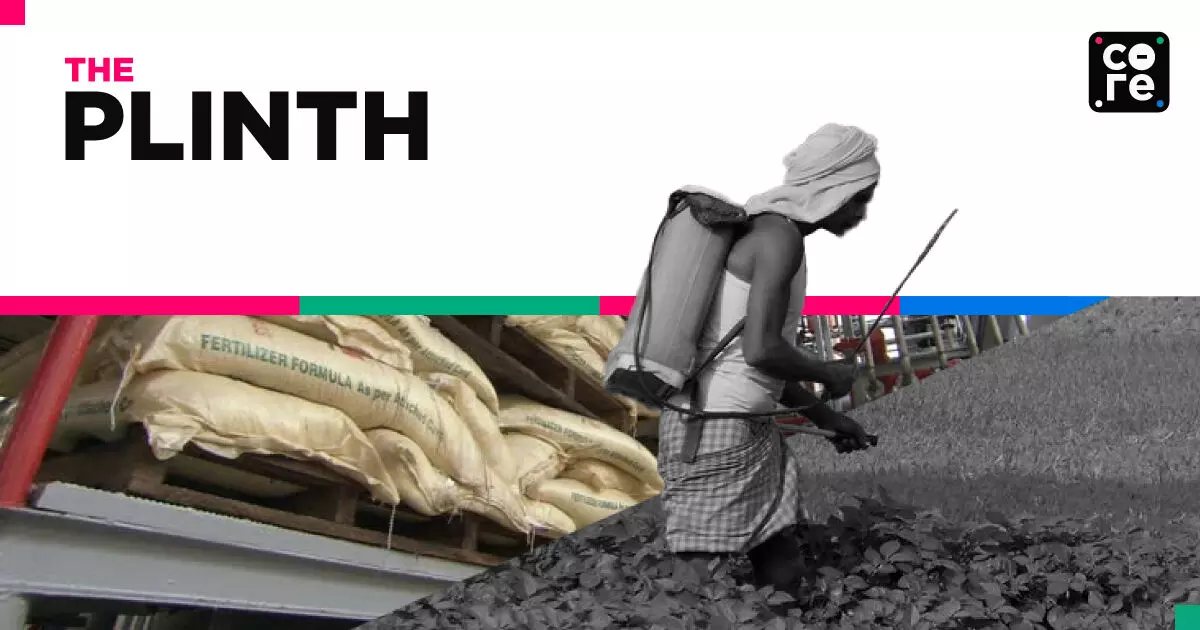
The applications exist. Industry sources confirm them. The Fertiliser Association of India references them. Parliamentary committees acknowledge them. But ask for specifics, and the trail goes cold.
Multiple applications from PSUs and private entities seeking approval to build fertiliser plants sit somewhere in the bureaucratic apparatus. What's missing: policy clarity. In its absence, even basic information about these projects remains non-public, trapped in the same limbo as the applications themselves.
The last fertiliser plant approval in the country came in March 2025 — Namrup-IV in Assam, a Rs 10,601 crore brownfield ammonia-urea complex with 12.7 lakh tonne capacity. Before that? Nothing since November 2022, when the Sindri plant commenced production. Thirty months of silence — no approvals, no movement — while the gap between domestic production and demand widens from 80 lakh tonnes to likely 100-120 lakh tonnes by decade's end.
Why So?
The New Investment Policy 2012 (NIP-2012), announced in January 2013 and amended in October 2014, successfully attracted investment and modernised India's urea sector. Six new plants were commissioned between 2019 and 2022 — four through PSU joint ventures, two from the private sector — bringing total domestic capacity from 207.54 to 283.74 lakh tonnes per annum.
The policy worked because it provided transparent subsidy calculations, clear concession periods, and the predictability that converts intent into commissioning schedules. All six plants were of 12.7 lakh tonnes per annum capacity. This standardisation was likely intentional in the policy design. Creating uniform-capacity plants simplifies subsidy calculations, technology specifications, and performance benchmarking.
The Policy That Delivered, Then Disappeared
NIP-2012’s success rested on consistency, predictability, balance between incentives and accountability. The policy established energy efficiency norms as the subsidy benchmark, rewarding plants that minimised gas consumption per tonne of urea. It specified concession periods and return parameters upfront, eliminating regulatory uncertainty.
The results vindicated the approach.
Matix Fertilizers’s Panagarh plant, the first private sector urea plant in eastern India, was commissioned in October 2017. It demonstrated that private sector capital flows when policy frameworks are credible. Chambal Fertilizers' Gadepan-III plant in Kota began commercial production in January 2019. Neither required separate Cabinet approvals—the policy framework itself was sufficient.
For PSU projects, the approach differed. In July 2016, the Cabinet approved the revival of three closed fertiliser units. Hindustan Urvarak & Rasayan Limited (HURL) became the joint venture vehicle. NTPC, Coal India, and Indian Oil each took 29.67% equity stakes. Total investment: Rs 25,000 crore for 38.1 lakh tonnes of annual capacity. By December 2021, Gorakhpur was commissioned. Barauni followed in October 2022, Sindri in November 2022. All three faced Covid-related delays of 18-20 months, but got built.
The policy's October 2014 amendment contained a critical sunset clause: "only those units whose production starts within five years from the date of this amendment notification will be covered."
That five-year window closed in October 2019.
The three HURL plants escaped this trap because the Cabinet had approved them in July 2016, well within the five-year window. Even though Covid pushed their commissioning into 2021-2022, the approvals were locked in.
Private sector applicants had no such luck. For over five years now — October 2019 to present — India has operated without a fertiliser plant approval policy. Applications submitted during this period sit in administrative limbo, unable to proceed because the rules governing investment, subsidy calculations, and approval procedures simply don't exist.
What The Vacuum Costs
India currently imports fertilisers worth $6-8 billion annually. Over a decade, that compounds to $60-80 billion flowing out — capital that could instead build domestic plants.
The Covid-19 pandemic laid bare the vulnerability. International fertiliser prices spiked from $275 per tonne in January 2020 to over $900 by April 2022 for urea. The fertiliser subsidy, budgeted at Rs 79,530 crore for 2021-22, ultimately required Rs 1.40 lakh crore, a 76% overshoot.
Each fertiliser plant employs 800-1,200 people directly, with indirect employment multipliers of 3-5 jobs per direct position. The plants needed to close India's import gap would generate thousands of direct jobs and tens of thousands of indirect positions.
A single 12.7 lakh tonne per annum ammonia-urea complex requires capital expenditure of around Rs 10,000-15,000 crore. Namrup-IV's Rs 10,601 crore price tag for a brownfield project establishes the baseline. Greenfield plants cost more. The plant operates for 25-30 years. The investment cannot be redeployed if policies shift.
The current vacuum eliminates this foundation. Without a defined policy framework, investors face not only commercial risk but also regulatory uncertainty of the most fundamental kind. Private investors respond rationally—they wait. Even Namrup-IV's approval doesn't resolve the underlying problem. It’s still operating under extended NIP-2012 provisions rather than a comprehensive new framework.
Execution Gap
The clock is running in the wrong direction. Work backwards from India's 2035 self-sufficiency goals and the math gets uncomfortable: 80 lakh tonnes of current import gap means the country needs to add 100-120 lakh tonnes of domestic capacity by decade's end. Each plant typically takes five to six years from approval to commissioning—the three HURL plants took 5.5 years despite 18-20 months of Covid delays. Applications that don't get approved in 2026 won't produce urea until 2031-2032. The window isn't closing, it's already half shut.
What's striking isn't just the policy paralysis. It's that policymakers had a working model and chose to discard it.
NIP-2012 was road-tested. Chambal and Matix proved private capital would commit Rs 10,000-17,000 crore per plant without Cabinet handholding if the subsidy math was transparent. The three HURL plants proved that even Covid couldn't derail projects when the underlying framework held. Six plants, 76.2 lakh tonnes, were commissioned between 2019 and 2022. That machinery worked.
The pending applications point to a question for India’s policymakers: Does India want manufacturing capacity or import dependence? The 2021-22 subsidy overshoot was a preview of what import dependence costs when global markets tighten. That Rs 60,592 crore surprise subsidy might also be seen as a ransom payment to international fertiliser markets.
Private investors aren't waiting for innovation. They're waiting for imitation, proof that the next policy framework will function as predictably as the last one. The 30-month gap between Sindri and Namrup-IV is a policy collapse that doesn't just delay individual projects but also reprices regulatory risk for every future application.
India doesn't need a new industrial strategy for fertiliser self-sufficiency. It needs to execute the strategy for which the template exists. The private capital is available. Missing is the willingness to treat fertiliser manufacturing as infrastructure that deserves policy continuity, not policy silence. Until that changes, expect import bills to keep rising, subsidy budgets to keep bursting, and those pending applications to keep gathering dust — along with India's stated commitment to strategic autonomy in agriculture.