

Beyond $15Bn: Sundar Pichai Plots India's 'Full-Stack' AI Sovereignty
Google CEO Sundar Pichai details $15 billion for "full-stack" AI hubs and subsea cables to link India globally.
The Gist
At the India AI Impact Summit 2026, Sundar Pichai outlined a significant $15 billion initiative to enhance AI capabilities in India.
- The project includes a major computing campus in Visakhapatnam, with a focus on gigawatt-scale data centres.
- Google's 'America-India Connect' will link India with major global locations through new fibre-optic systems.
- Pichai highlighted the need for responsible governance in AI and announced programs to support public servants and schools.
Alphabet Inc. Chief Executive Sundar Pichai on Thursday outlined a $15 billion infrastructure offensive in India, positioning the country as a central hub for the company’s global artificial intelligence strategy.
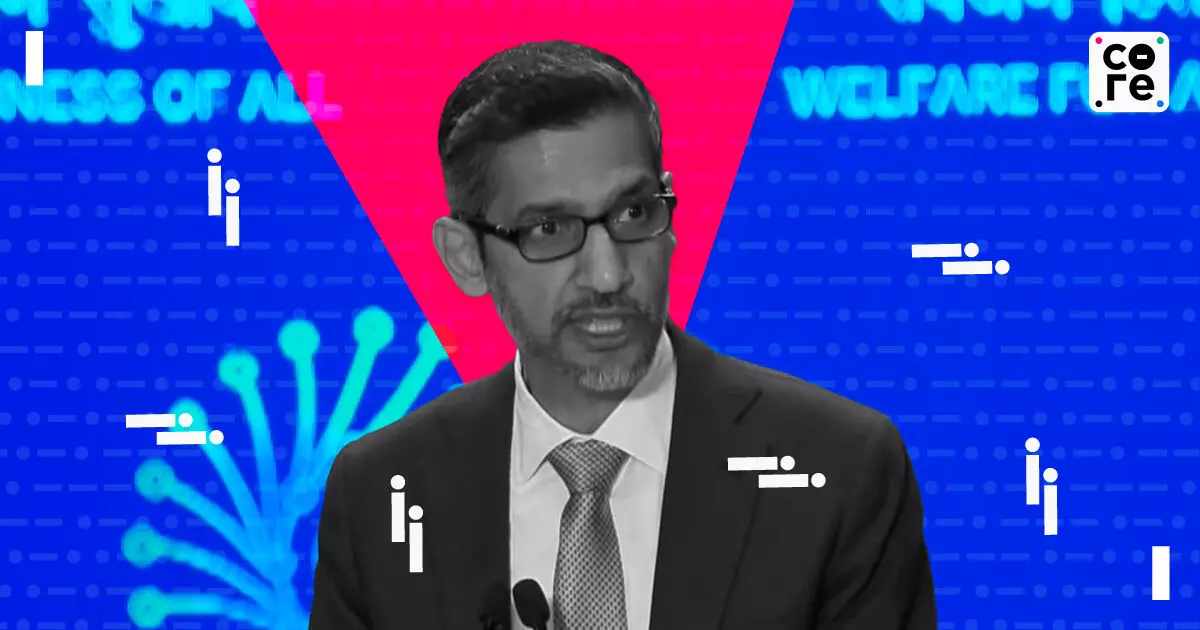
Speaking at the India AI Impact Summit 2026 at Bharat Mandapam, Pichai described artificial intelligence as the "biggest platform shift of our lifetimes," and detailed a five-year investment plan aimed at building "full-stack" AI capacity in the region.
The ‘Vizag’ Pivot
The centre of this push is a massive computing campus in the coastal city of Visakhapatnam, or Vizag. The facility is designed to house gigawatt-scale data centres and a new international subsea cable gateway.
"I remember [Vizag] being a quiet and modest coastal city brimming with potential," Pichai said, recalling his student days travelling on the Coromandel Express. "Now, in that same city, Google is establishing a full-stack AI hub... Sitting on that train, I never imagined Vizag becoming a global AI hub."
The ‘America-India Connect’
The infrastructure play is anchored by a new initiative called "America-India Connect." Google is deploying four strategic fibre-optic systems to link India directly with the US, as well as Singapore, South Africa, and Australia.
Pichai framed the move as a necessity to prevent global inequality. "We cannot allow the digital divide to become an AI divide," he told the summit. "That means investing in compute infrastructure and connectivity."
Science and Sovereign Scaling
Pichai highlighted that the technology's success is "neither guaranteed nor automatic," arguing that it requires "bold" pursuit and "responsible" governance. He cited the real-world application of Google’s NeuralGCM model, which delivered AI-powered monsoon forecasts to millions of Indian farmers last summer.
Beyond agriculture, the company announced several high-scale partnerships:
Public Sector: A collaboration with Karma Yogi Bharat to support 20 million public servants with AI tools.
Education: A program with Atal Tinkering Labs to bring generative AI to 10,000 schools.
Scientific Research: A $30 million "AI for Science Impact Challenge" to accelerate global research.
Workforce Transformation
Acknowledging that AI will "undeniably reshape the workforce," Pichai noted that while some roles will be automated, others will evolve. He pointed to the millions of professional YouTube creators existing today—a role that did not exist 20 years ago. To address this shift, Google is launching an AI Professional Certificate program in English and Hindi.
"We have the opportunity to improve lives at a once-in-a-generation scale," Pichai concluded. "I know we have the capability to do this... Now we must do the work together."